

Surviving Sit & Gos (SNG) in 2026: Strategy and Profitability Explained

Every poker format has its hype era. Once, Zoom cash games were supposed to be the future. Then Spin & Gos got marketed like lottery tickets. Recently, short-deck blew up in high-roller circles. Each of these variants had its moment, but in the end, most of us drifted back to the basics. And somehow, the humble Sin and Go (or Sit & Go, SnG) never actually left.
If you’re younger, you might not know this, but there was a stretch in the mid-2000s when SnGs basically were online poker. PokerStars and Full Tilt had SnG lobbies that never slept. TwoPlusTwo was full of threads where people posted their Sharkscope graphs, bragging about grinding 10,000 games in a year. Rakeback checks felt like paydays.
It wasn’t glamorous, but it was steady. Some guys literally built their lives around it. I knew one who rented a cheap apartment, woke up at noon, and clicked buttons for eight hours a day. He never played a Sunday Major in his life, but he cleared six figures from $30 SnGs with rakeback. It sounds insane now, but that was a career.
Of course, the ecosystem shifted. Spins siphoned casuals, rake increased, edges shrank. But even now, in 2025, SnGs still exist. They’re smaller, sure, but not dead. They’re too good at what they do: they take all the drama of a poker tournament, condense it, and let you live the full arc in under an hour.
SnGs are like espresso. Quick, sharp, and a little bitter if you’re not ready.
What SnGs Actually Are (and Why They’re Different)
At their core, SnGs are the simplest kind of tournament. No start times. No waiting for a clock. The table fills, the game launches. That’s it.
Most are single-table, either six-max or nine-handed. Some stretch to two or three tables, but that’s about as complicated as they get. Buy-ins range from pennies to nosebleeds. Blind structures change the pacing: regulars last about an hour, turbos half that, hypers blink-and-you-miss-it.
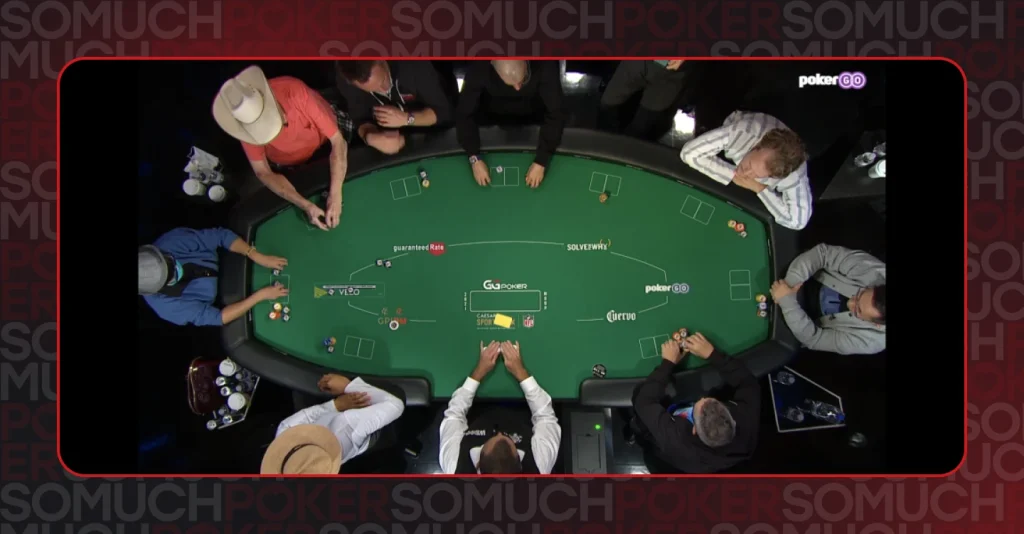
The thing to remember is that SnGs have beginnings and endings. Cash games don’t. You can sit forever in cash, fold for an hour, and get up whenever you feel like it. A SnG doesn’t let you hide. The blinds rise, stacks shrink, players bust, and eventually one person takes it all down.
Compared to multi-table tournaments, SnGs are bite-sized. You don’t risk eight hours only to bust just shy of the bubble. You know how long you’ll be there. You know the payout structure. You know it’s going to finish.
If poker formats were food, cash games would be the buffet: you stroll in, take what you want, leave when you’re full. MTTs are the big wedding banquet: you block off your whole day, get served course after course, maybe leave stuffed and happy, maybe leave with nothing. A Sit & Go? That’s a plate you order, eat, and finish in one sitting.
The Types of Sit & Gos
Not all SnGs feel the same. Think of them like different coffee brews: same beans, different kick.
Standard SnGs: The slow drip coffee. Blinds increase every 10–15 minutes, stacks last, and you get room to maneuver. Strategy-heavy.
Turbo SnGs: More like an energy drink. Blinds move at 5-minute intervals, pressure builds fast, and the game forces you to open up sooner.
Hyper-Turbos: This is straight-up a shot of espresso followed by a punch in the face. Blinds double every couple of minutes. Most hands are shoving or folding. Blink, and you’re short-stacked.
Heads-Up SnGs: Forget tables full of players; this is a duel. Two players, one winner. Every hand is a confrontation. Think chess boxing, but with cards.
The hyper-turbo experience, honestly, feels like trying to drink from a firehose. You sit down, five minutes later someone’s all-in with 7-2 suited, and before you know it, you’re out, staring at the screen like, “Wait, did that even happen?”
The Five Stages of Sit and Gos
Every SnG plays like a little story. Not always a happy one, but a story nonetheless. Early game, middle, bubble, in the money, heads-up. You don’t get to skip chapters. That’s what makes it such a brutal but brilliant teacher.
Early Stage: When Everything’s Still Calm
At first, the blinds are small. Stacks are deep. Nobody’s really under pressure yet. And that’s exactly when beginners blow it.
You’ll see someone shove pocket threes against A-K three hands in. Or punt Q-J offsuit because “gotta build a stack.” No. You don’t. Building a stack early doesn’t matter if you torch it before the real game starts.
Early strategy is simple: survive. Play premiums. Set mine if the stacks are deep enough. Otherwise, fold and be patient. The goal isn’t to “set the tone.” It’s to make it to the middle stages with chips still in front of you.
I once watched a guy in a $109 SnG bust on hand two with K-J suited. He slammed his desk and muttered something about “gotta gamble.” All he did was donate.
Middle Stage: When the Blinds Start to Bite
This is where waiting too long becomes dangerous. The blinds are big enough now that if you’re still playing like it’s level one, you’re in trouble.
The middle stage is all about controlled aggression. Steal blinds from late position. Pressure the players who are clearly just waiting to limp into the money. Raise wider, but don’t get reckless.
This is where you start to separate people who play to win from those who play not to lose. The scared money is obvious. The guy who folds every button raise. The one who types “just want to cash” in chat. Those are your targets.
And yet, don’t confuse aggression with blasting off. Shoving half your stack with K-9 offsuit because “they’ll fold” isn’t strategy, it’s wishful thinking. Play small-ball until the spots line up.
The Bubble
Four players left, three get paid. Welcome to the bubble. Every decision feels like life or death here, because in SnGs, it basically is.
This is where ICM rules everything. Independent Chip Model is the math that tells you chips aren’t money. Losing half your stack hurts more in terms of equity than doubling up helps. That’s why you’ll fold hands here that you’d fist-pump call in cash.
If you’re short, you’re in shove-or-fold land. Limping is death. The only weapon you have is fold equity. Use it before it disappears.
If you’re a medium stack, you’re in hell. Too big to be desperate, too small to bully. This is the trickiest seat at the table.
If you’re the big stack? Enjoy the power trip. You can shove garbage and force everyone else to make miserable decisions.
I’ll never forget seeing Kings folded on a bubble once. Big stack shoved, short stack had crumbs, and the player holding kings was the medium. ICM said folding was correct. The player did it, but for me it felt like spitting in the face of the poker gods. Sometimes the right play feels awful. That’s bubble life.



ITM: Okay, You’ve Cashed. Now What?
The mistake most people make here is breathing a sigh of relief. “Whew, I cashed.” Then they blind out in third.
Third place barely pays. First is where the money’s at. If you want to win SnGs long term, you need to convert cashes into firsts. That means aggression. Open wider, push lighter, apply constant pressure. If you limp around here, you’ll limp straight into third.
The difference between breaking even and actually winning is what you do after you cash.
Heads-up: The Final Duel
Heads-up play decides everything. If you’re weak here, you’re leaving piles of money on the table.
Raise almost every button. Position is king. Play a wide range. In hypers, know your push/fold charts cold. Shoving 8-6 offsuit with five blinds might look insane, but if the math says do it, you do it.
Think of it like a penalty shootout in soccer. You can be great all match, but if you botch penalties, you lose.
ICM, The Ghost That Guides You
Let’s be blunt: without ICM, you don’t understand SnGs.
The Independent Chip Model is why folding kings can be correct. It’s the math that translates chips into prize equity. It’s why busting before the money is often a catastrophe, even if the call would be profitable in chips.
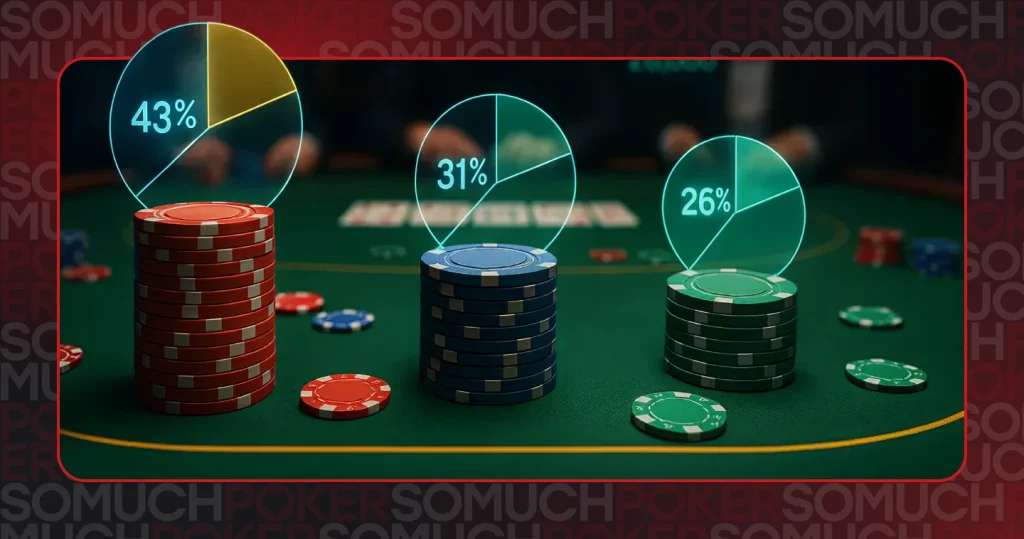
I ignored ICM for too long, thinking it was just nerd math. Then I bubbled four games in a row, calling off “good hands,” only to realize later that those were torch calls. ICM isn’t optional; it’s the compass that stops you from wandering off a cliff.
Tools like ICMIZER or SitNGo Wizard are lifesavers. Drill spots until the weird folds stop feeling like betrayal. You can find a detailed explanation of ICM, which works for all kinds of tournaments, and is an essential part of the winning SnG strategy.
Profitability: Then vs. Now
Once upon a time, SnGs were an ATM. Mid-stakes grinders in the 2000s printed money with $30 and $50 turbos, rakeback fattened profits, and the games were soft.
Now? Not so much. The poker ecosystem shifted. Rake climbed. Casuals drifted to Spins. Even top grinders admit the profits are modest.
ROI at low to mid stakes? Maybe 5–10% if you’re disciplined. That sounds fine until you factor in variance. You can bubble eight games in a row, even playing perfectly. Volume is everything.
One of my friends put in 12-hour SnG grinds 6 days a week and cleared $45k before rakeback. Respectable, sure, but it aged him ten years in three.
If you’re here to get rich quickly, look elsewhere. If you’re here to sharpen your game, welcome aboard.
Bankroll Management: The Part Nobody Listens To
Here’s the harsh truth: variance in SnGs will eat you alive if you’re under-rolled.
Regulars? At least 50 buy-ins.
Turbos? 75.
Hypers? 100+.
Ignore this at your own risk. I once took a “shot” at $20 turbos with 30 buy-ins. After three bubbles in one night, half my roll was gone. I tilted, chased, and torched the rest. Ended the week broke, jittery from too much coffee, promising myself I’d never be that stupid again.
Ego kills bankrolls. If your roll says $10 games, that’s where you belong. Poker doesn’t care how good you think you are.

Study Tools & Habits
You can’t wing SnGs forever. Winning comes down to studying as much as it does to playing.
With the help of hand tracking software like PokerTracker or Hold’em Manager, you can easily identify the leaks in your game. ICM tools let you drill the bubble until the weird folds become second nature. And don’t underestimate community. Whether it’s old-school 2+2 threads, Discord review groups, or Twitch streams, other people will catch your mistakes faster than you will.
A decent routine looks like this: play for an hour, review for 30 minutes, drill ICM for 15. It’s not glamorous, but it compounds.
SnGs vs. Everything Else
So where do they fit?
If you’ve got an hour to play and you want structure, SnGs are perfect. If you want big prizes and glory, MTTs are your jam if you’ve got eight hours to kill. If you like flexibility, cash is better.
Cash is the buffet. MTTs are the banquet. SnGs are the plate you order, finish, and walk away from.
Stories That Still Stick
Chris Moorman cut his teeth on SnGs before becoming an MTT legend. So did countless others.
I’ve seen players turn $50 deposits into thousands grinding micros. I’ve also seen talent wasted because people ignored bankroll rules or tilted themselves into dust.
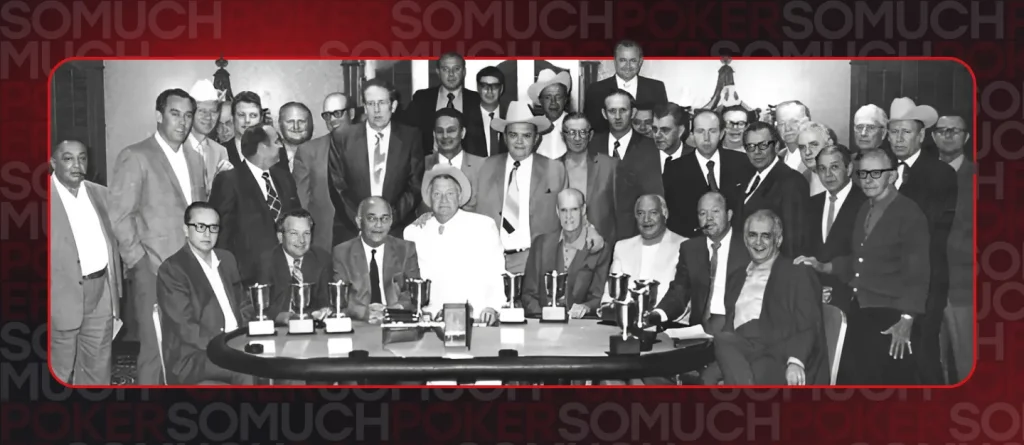
The old days had their charm too: Full Tilt lobbies, rakeback checks, endless 2+2 debates about whether shoving K-8 suited on the bubble was suicide or genius. SnGs built a culture, not just a format.
Conclusion
No, SnGs aren’t glamorous. They aren’t the money machines they once were. But they’re still alive, still teaching, still worth playing.
They force you to learn patience, aggression, ICM, heads-up play – all in a single hour. They’re poker’s espresso: concentrated, quick, and effective.
Play them not to get rich overnight, but to get better. And maybe, if you stick with them, you’ll find yourself like me—registering one after dinner, letting the blinds climb, and remembering why poker was fun in the first place.
Related Poker Game Types






Related Online Poker Rooms


About the Editor

The SMP Editor covers international poker and iGaming for SoMuchPoker, providing news, tournament coverage, and industry insights. With a focus on accuracy, clarity, and relevance, the editor helps readers stay informed about developments across the global poker community.


