Full Ring Poker Strategy in 2026: Rules, Tips, and Winning Insights

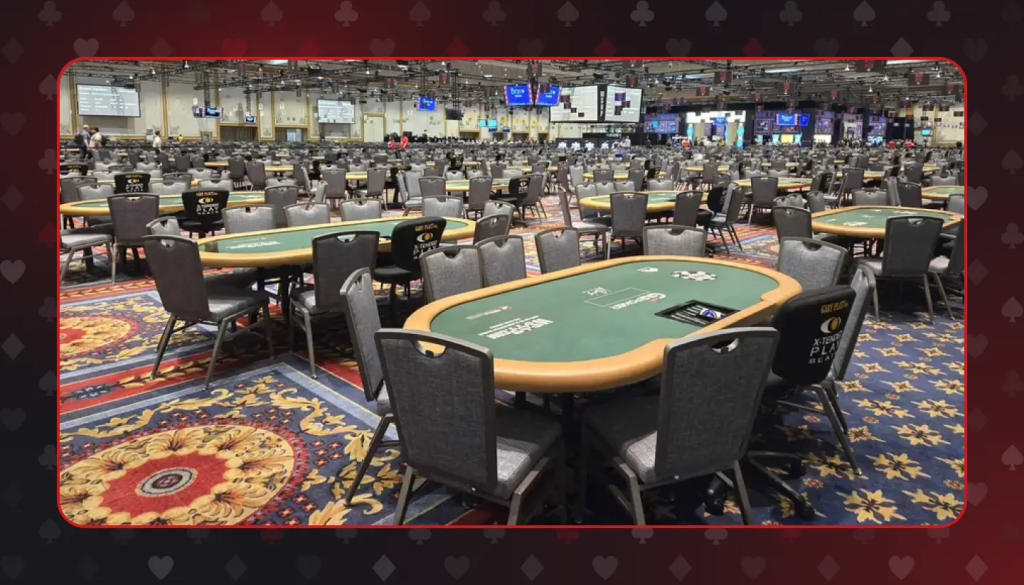
The poker room light is soft, almost yellow, the kind that makes chip colors pop. You hear that steady chorus of chip clicks, cards whispering across felt, dealers calling for fills, someone laughing just a little too loudly at a story that has probably been told a hundred times. At a ten handed table, stacks tell you who has been in the trenches. One player stacks in tidy columns that look like a city skyline. Another builds messy pyramids that list to one side. Somebody is riffle shuffling a single stack on autopilot. Two seats down, a guy wears headphones but still nods at every joke, as if he is afraid to miss something.
This is full ring - nine or ten players, sometimes a slow orbit, sometimes a storm. When you are card dead, it can feel like time has paused. When you pick up a real hand, you feel the air change. The old joke is that full ring is boring. The truth is that full ring is a patient approach, and patience is not for everyone.
Younger grinders flock to 6-max and fast fold pools because they deliver quick decisions and constant dopamine. You can learn a lot there, but here is what still matters in 2025. Walk into most brick and mortar rooms, and the regular no limit hold’em game is still nine handed. Online, 9-max sits in the lobby like a reliable friend, maybe less flashy, still profitable. A lot of strong players quietly keep a couple of full ring tables in the mix because the edges are durable, the mistakes are predictable, and the pace lets you think.
This guide goes deeper than definitions. You will see how full ring differs from 6-max, what ranges work from each seat, how to size bets against different player pools, why multiway pots are a different species, and how to manage the mental game that separates steady winners from everyone else. The goal is simple: win more often, swing less wildly, and build a game that holds up in any room.
What Exactly Is Full Ring Poker?
The term “full ring” simply refers to a table with nine or ten players. If you watched the WSOP Main Event final table at any point in the last decade, you have watched full ring at work. It is the classic layout and the historical center of live no limit hold’em.
Why nine or ten players?
It was mainly practicality.
- Tradition. Cardrooms filled seats, ten fit comfortably without crowding the dealer. The number stuck.
- Economics. More seats meant more blinds, more pots raked, more reasons for a room to spread the game.
- Pace. Ten players keep blinds circulating at a rate that rewards patience, but not so slow that everyone hibernates.
In short, full ring rewards discipline over chaos. You do not need to be a statue. You do need to wait for good spots and extract value when the table offers one.
Where you will see full ring today
- Live cash rooms. Las Vegas, Atlantic City, London, Prague, Seoul, Melbourne, the common floor game is still 9 or 10 handed.
- Online. 6-max is dominant, but PokerStars, GGPoker, and partypoker all spread 9-max cash and tournaments, especially at low to mid stakes.
- Sit and Go formats. Classic 9-man SnGs still exist, a training ground for preflop discipline and ICM basics.
- Major live series. WSOP, EPT, WPT events start full ring, then naturally collapse to shorter handed as the field shrinks.

Full Ring vs. 6-Max: Two Very Different Beasts
Both formats use the same deck, blinds, and betting structure, yet they play like different sports.
Structural differences
- Blinds paid per orbit. Ten handed, you post blinds once every 10 hands, which is about 1.5 big blinds per 10 hands. Six handed, you pay about 2.5 big blinds in the same span. That hidden tax matters over long sessions.
- Hands per hour. Online, a 6-max table can roll 90 to 120 hands per hour. Full ring tends to hover near 55 to 70. Live, 6-max is rare outside private games; full ring usually hits 20 to 30 hands per hour, depending on the room.
- Opening ranges. More people left to act means stronger hands required up front. J9 suited in 6-max middle position can be fine. J9 suited in 9-max under the gun is a routine fold.
Table dynamics
- Full ring. You will see more limp call behavior, more set mining, and more single raised multiway pots. Recreational players are common. The mood feels calmer.
- 6-max. There is more 3-betting, more blind versus blind combat, more thin value, and thin bluffs. Regulars cluster here.
Which suits you best
- Full ring is for players who value structure, patience, and making money from fewer, better spots.
- 6-max suits players who want volume, embrace variance, and enjoy constant tactical puzzles.
Many players believe they prefer 6-max because it feels more active. Their databases often show they lose slower, and sometimes win, at full ring. There is no shame in playing the pool that pays you.
The Core Strategy of Full Ring Poker
The heart of full ring is simple. Fold more hands, attack better spots, get paid when you are ahead, and avoid setting money on fire in multiway pots.
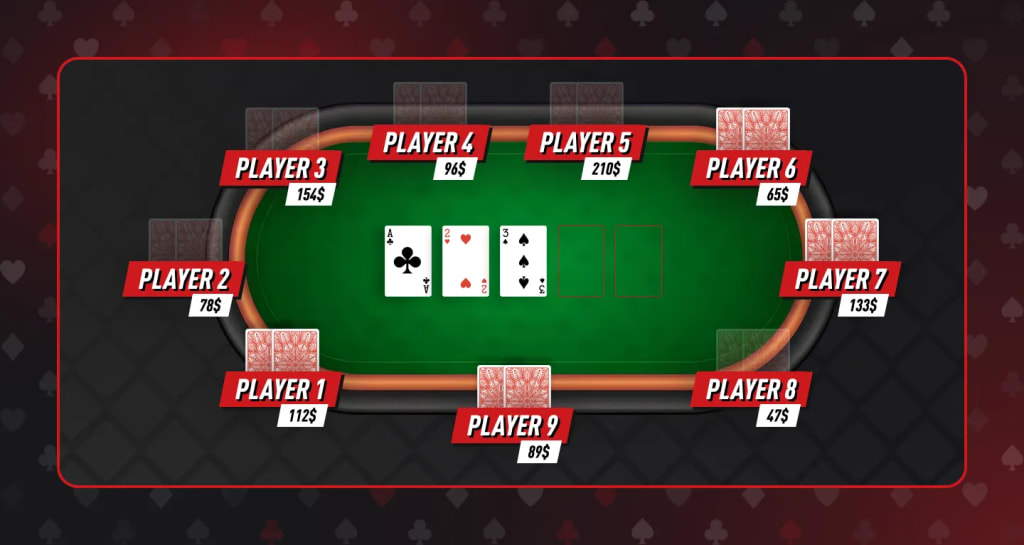
Preflop ranges by seat
These are baseline guideposts, not handcuffs. Adjust for table softness, stack depth, and who sits behind you.
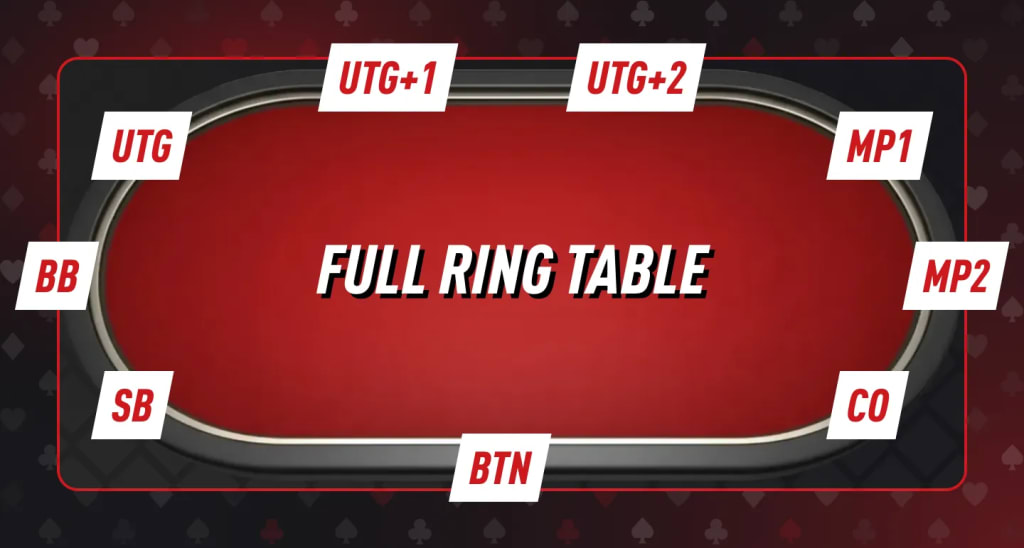
- UTG in 10-handed. 77+, AQ offsuit and better, AK, KQ suited. If the table is very passive, you can add AJs and KJs suited, but be honest about who is left to act.
- UTG+1. All of UTG, add 66, AJs, KQ offsuit in soft games.
- Middle position. Add ATs, KJs, QJs, T9s, sometimes AJo. Watch for squeeze happy players behind.
- Hijack. Introduce suited aces down to A5s, suited one gappers like 97s, and the occasional light 3-bet against obvious iso raises.
- Cutoff. Widen sensibly – most suited broadways, all pairs, more suited connectors, more offsuit broadways against tighter blinds.
- Button. This is your widest world, but not reckless. Raise more hands for position, steal more often, and still fold junk that will play badly multiway.
- Small blind. Tight and aggressive. Far too many players complete the small blind with trash, then end up in ugly spots. Prefer raising or folding. Completing with hands that flop well is fine in very soft live games.
- Big blind. Defend with price, position free, and player types in mind. Do not feel obligated to defend garbage against strong early position openings. Suited connectors and suited aces perform better than offsuit trash when you play out of position.
Blind Defense Without Bleeding
Defending the big blind is a skill. Defend too tight, and you get run over. Defend too wide, and you play bloated pots out of position with hands that fold to two barrels.
- Versus early opens. Tighten. Suited aces, good suited connectors, and pocket pairs are fine. Fold dominated offsuit broadways and weak kings.
- Versus late opens. Widen with hands that flop pairs or draws. K9 suited can defend, so can Q9 suited, T8 suited, 65suited. Avoid trash that makes dominated second best hands.
- Three bet or fold from the small blind more often. Completing the small blind creates low equity multiway pots that are difficult to navigate. If you complete, prefer pocket pairs and suited connectors in very soft games, where you will be paid when you hit.
The power of position
Position is not a cliché, it is a math problem. Being last to act lets you control pot size, realize equity more often, and pick up folds with pressure. In early position, default to tighter ranges. In late position, steal more, especially when blinds are tight, tired, or distracted.
Selective aggression
Aggression wins pots, reckless aggression donates. In full ring, bluffing into three people is a fantasy. Favor heads-up pots for continuation bets. When you do bluff, build a hand that can improve, or a line that clearly represents strength on helpful turn cards.
Multiway pots
You will see more of them at full ring. Adjust accordingly.
- Top pair does not have permission to stack off. One pair hands get trapped by sets, two pair, and strong draws.
- Bluff less. Fold equity drops sharply with extra players.
- Value bet cleanly. When you have a real hand, size to be called by worse. When the board is wet, deny equity without bloating beyond your comfort.
- Check back the thin edges. Taking a free card with medium strength hands saves stacks over a year of play.
Postflop Foundations That Print Money
A lot of full ring profit lives after the flop. Slower tables give you time to think through textures and tendencies.
Board texture awareness
- Dry high boards, like A-7-2 rainbow, favor the preflop raiser. Small bets work, especially heads up.
- Connected middling boards, like 9-8-6 with a flush draw, are land mines. Multiway, tighten up. Against one caller, favor a check call with medium value, pressure with a strong combo draw.
- Paired boards, like K-K-5, allow cheaper stabs, but remember that many live players slow-play trips. If resistance appears on the turn, slow down.
Continuation betting, simple rules
- Heads up. C-bet frequently on boards that favor your range. Size is smaller on dry textures, slightly larger when draws exist.
- Multiway. C-bet much less often. When you do bet, have real equity or clear value. A standard two-thirds pot sizing makes draws pay and gets called by worse pairs at the lower live stakes.
Live vs online, two environments
- Live edges. People talk, posture, splash chips, glance at stacks. You can pick up timing and comfort cues. You can also table select and seat select, for example, sit on the left of a maniac, on the right of a calling station you want to value target.
- Online edges. Speed and volume matter. Table select by average pot, players per flop, and waitlist length. Keep simple notes on showdowns, mark players who overfold or overcall. Even without a HUD, patterns appear fast.
The rake factor that ruins loose play
At micro and small stakes online, the rake takes a large slice of small pots. This punishes marginal calls and speculative flats. Two simple rules help.
- Open tighter in early seats.
- Favor value 3-bets over flat calls against loose opens, deny the rake by building bigger, cleaner pots with stronger ranges.
The emotional edge
Anyone can play well with aces. The real test is folding for twenty minutes without punting. The player who calmly waits, takes notes, and strikes when the table offers up a spot, wins in full ring. That steadiness creates an edge you can not see in a single pot, but it shows up in the graph.
Common Leaks and How To Patch Them
You will see these mistakes every week.
- Opening too loose under the gun. A9 offsuit, KJ offsuit, small suited gappers with no plan. Fold them. Your future self will thank you.
- Overvaluing one pair in multiway pots. Flop top pair, lose track of how many ranges are still in the hand. Check and control the size until you can clearly beat something real.
- Limping mid position because a hand looks pretty. Pretty cards are expensive. If you are entering, raise with a purpose or fold.
- Autopilot continuation betting among three people. Heads up c-bets are great. Multiway, they are donations unless the board is perfect.
- Calling 3-bets out of position with dominated hands. AJo, KQo, KJs perform badly in bloated pots against strong ranges. Either 4-bet for a clear reason or fold and move on.
- Refusing to adapt. If the whole table is tight, start stealing and watch them groan. If the entire table is sticky, cut bluffs, up value, and print.
A quick story that repeats itself. A player limps KJ offsuit in middle position. The cutoff raises big, two callers come along, the limper calls because the price “feels right”. Flop comes king high, money goes in, the limper loses to AK or a set and leaves the table muttering about bad luck. The leak is not the river card, it is the limp.
Study Habits That Support Winning
Playing well is only half of it. Sustaining it is the other half.
Review with intent
After sessions, tag tough spots. Filter for hands where you lost medium pots, not only big ones. Those are often silent leaks. Ask simple questions. Was I in position, did I have a plan for turns and rivers, was my sizing consistent with the story I told?
Build a routine
A short warm up helps. Scan notes on frequent opponents, choose good tables, and remind yourself of two focuses for the day, like blind defense and river value sizes. After play, log feelings, fatigue, and profit. Tilt patterns show up when you track mood.
Conclusion: The Enduring Edge of Full Ring
Full ring will never be the star of highlight compilations. It will not flood your feed with insane bluffs every five minutes. It builds durable win rates through structure, patience, and clean execution. If you can respect position, choose better starting hands, avoid multiway traps, and value bet when you are ahead, the game pays you over and over.
Think of full ring as poker’s school of patience. Some players graduate fast and chase the adrenaline of shorter handed games. Others stay, quietly collecting from opponents who cannot stand waiting. Wherever you end up, mastery of full ring sharpens instincts that carry into every format, from 6-max zoom to deep final tables. Next time you open the lobby or walk the floor, do not skip the nine handed table because it looks slow. Sit down, stack your chips, settle into the rhythm, and let the mistakes come to you. The edges are there, you have to wait long enough to pick them up.
Frequently Asked Questions (FAQ)
What is the most significant strategic difference between full ring and 6-max?
Fewer blinds paid and more players behind you mean you must open tighter in early seats, bluff less in multiway spots, and press value harder when you connect. The rhythm is patience first, pressure second.
Is full ring really better for beginners?
Yes, because it emphasizes position awareness and range discipline. It also de-emphasizes constant marginal spots. You still need to learn aggression, you realize it in cleaner situations.
How tight should UTG be at a 10 handed table?
Around 8-10% is a good default: 77+, AQ offsuit and better, AK, KQ suited. Loosen slightly only if the table rarely 3-bets and often calls raises with worse.
How often should I bluff in 9-max?
Less than in 6-max. Focus bluffs on heads up pots and on turn cards that help your perceived range. Avoid big multiway bluffs. They work less often than your gut tells you.
Are live full ring games softer than online ones?
Generally yes. You will see more recreational players and clearer mistakes in live games. Online has more regulars, faster decisions, and rake dynamics that punish loose calls.
How many hands per hour can I expect?
Live, about 20 to 30 on average. Online, 55 to 70 per table at full ring, depending on the site and table speed.
Why do many pros prefer 6-max?
More hands per hour and more pressure points create a higher hourly ceiling. Some simply enjoy the pace. That does not mean full ring is weak, it just means the skill set differs.
What’s the best way to beat micro-stakes full ring online?
Play tight early, value bet firmly, avoid small speculative flats that pay rake and fold equity to others. When in doubt, fold preflop rather than call and guess later.
What are the best sites to start playing full ring online?
We recommend GGPoker , WPT Global , and ACR . All of them are beginner-friendly, with lots of traffic at full ring tables, and they also offer generous welcome bonuses for new players.
Should I ever limp in full ring?
As a default, raise or fold. Limping is a niche exploit in very soft live games with multiple limpers and clear postflop mistakes. If you limp, do it with a plan, like set mining behind three limpers when stacks are deep.
How big should my iso raises be live?
Bigger than online. A useful rule: base it on 4 to 5 big blinds; add one big blind per limper, and sometimes add one more when out of position. Adjust when the table keeps calling anyway.


Related Poker Game Types







Related Online Poker Rooms


Chaar-Lee is the Editor-in-Chief and Technical Architect of SoMuchPoker. With over 20 years across poker media, television production, and enterprise software development (including WorldSkills and EuroSkills recognition as a mentor and expert) he brings rare depth to every editorial and technical decision on this platform. He works exclusively on international poker and iGaming markets.