

Donk Bet

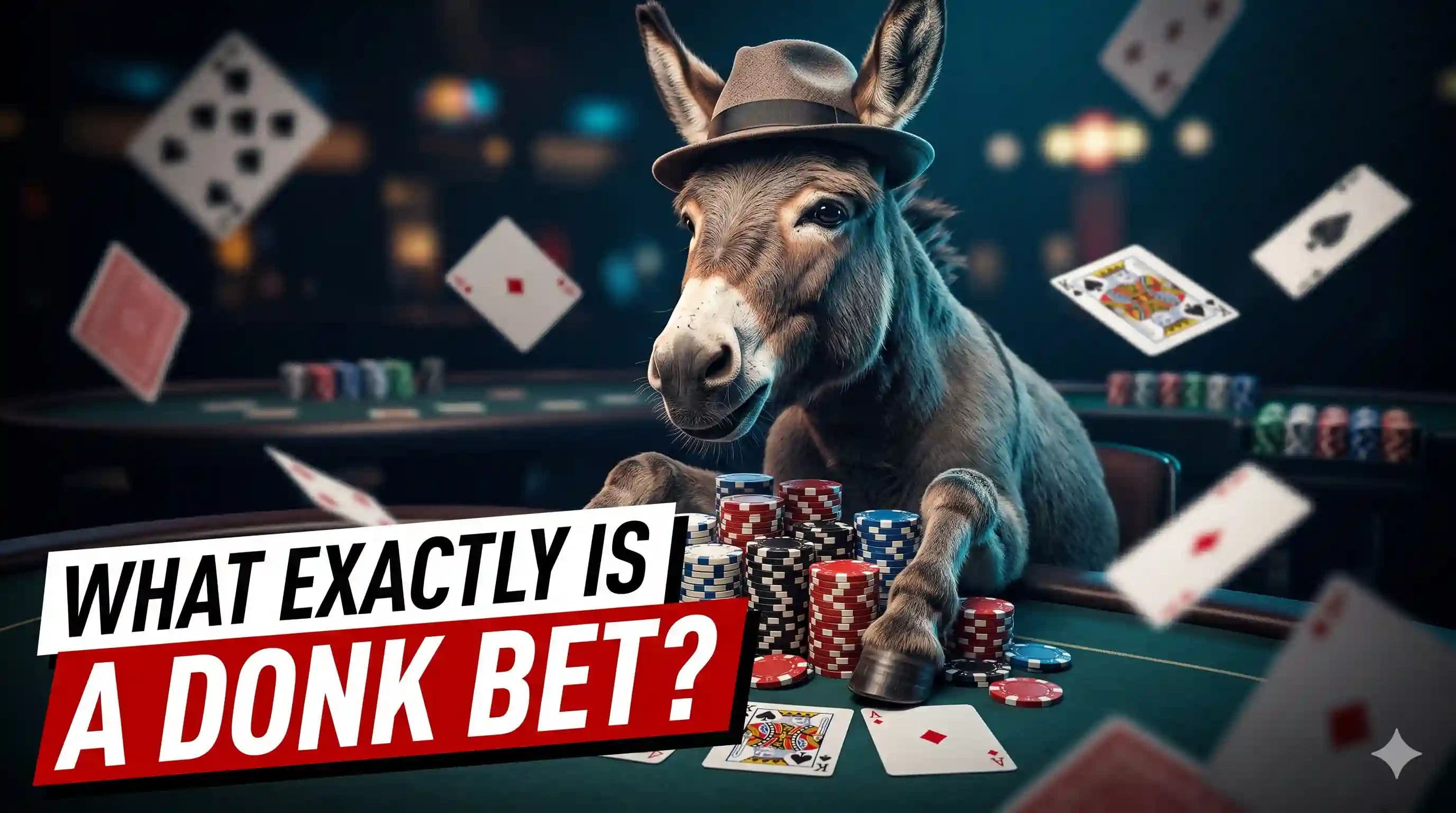
In the complex world of poker strategy, certain plays carry a historical baggage, often associated with inexperience or poor decision-making. The "donk bet" is perhaps one of the most prominent examples. Traditionally labeled as a move indicative of a "donkey"-an inexperienced or bad player-this out-of-position bet, typically made by the non-aggressor from the previous street, has undergone a significant re-evaluation in modern poker theory. What was once dismissed as a fundamental error is now, in specific contexts, recognized as a potentially powerful and highly strategic tool. This article delves deep into the nuances of the donk bet, exploring its origins, dissecting its strategic applications, and revealing how expert players leverage its unexpected nature to gain an edge.
What Exactly is a Donk Bet?
At its core, a donk bet is an out-of-position lead bet made by a player who did not initiate the aggressive action on the preceding street. Imagine a scenario where Player A raises pre-flop, and Player B calls from the big blind. When the flop lands, Player B, being out of position, decides to be the first to bet into the pot, rather than checking to Player A (the pre-flop aggressor). This proactive, often unexpected, bet is precisely what defines a donk bet. It subverts the conventional flow of poker, where the pre-flop raiser typically maintains the initiative by making a continuation bet.
The Derogatory Origin: Why "Donk"?
The term "donk" is an abbreviation of "donkey", and its genesis in poker parlance was far from complimentary. It emerged as a pejorative label for players deemed amateurish, naive, or prone to making fundamental strategic errors. The donk, in its early perception, was seen as such an error. It was thought to squander positional advantage, reveal too much about a hand's strength, and put the bettor in difficult spots, especially against more seasoned opponents. The underlying assumption was that only an unsophisticated player would deliberately forfeit the option to check-raise or gain more information by checking to the aggressor.
The Evolution of the Donk Bet: From Blunder to Strategic Weapon
While the traditional view still holds some weight for novice players, advanced poker theory and the proliferation of Game Theory Optimal (GTO) solvers have reshaped our understanding of the donk. What was once universally condemned is now, under specific circumstances, recognized as a legitimate and powerful component of a balanced strategy. The key lies in its unexpected nature and its ability to disrupt an opponent's predictable betting patterns.
Strategic Applications of the Modern Donk Bet
A well-timed and thoughtfully executed donk bet can serve several critical strategic purposes:
Protecting Vulnerable Strong Hands: When you flop a strong but vulnerable hand (e.g., a strong draw or a low two-pair on a wet board), a donk bet can protect your equity by charging opponents to see future cards. This makes it more expensive for them to chase their draws and reduces the chances of them getting a free card that could improve their hand past yours.
Denying Equity Realization: By leading out, you prevent the in-position player from potentially checking back and realizing their equity for free, or from making a small bet to test your hand. This is particularly effective when you hold hands that benefit from immediate pressure, rather than allowing opponents cheap opportunities to improve.
Confusion and Exploitation: Against experienced players who adhere strictly to conventional betting patterns, a donk bet can be highly disorienting. It forces them to reconsider their assumptions about your hand range and the flow of the game, potentially leading them to make mistakes or misinterpret your strength.
Taking the Initiative and Controlling Pot Size: A donk immediately seizes the initiative, putting the pressure back on the original aggressor. This allows you to dictate the pace and size of the pot, which can be advantageous when you want to build a larger pot with a strong hand or keep it smaller with a speculative one.
Balancing Ranges (Advanced Play): In GTO strategy, donk betting allows players to include a mix of strong hands, medium-strength hands, and bluffs in their out-of-position leading range on certain board textures. This makes it harder for opponents to exploit by guessing whether a donk bet signifies strength or weakness. However, building these balanced donk betting ranges is exceptionally complex and typically reserved for high-level play.
Understanding complex out-of-position strategies is just the first step. Put your advanced theories to the test at the tables by visiting our recommended online poker partners. Claim your exclusive SMPBONUS welcome offer today and start outsmarting your opponents in real-time.
Donk Bet vs. Check-Raise: Understanding the Distinction
It's crucial to differentiate a donk bet from another common out-of-position maneuver: the check-raise. While both involve action from an out-of-position player, their timing and implications differ significantly. A donk bet involves leading out directly into the pre-flop aggressor. Conversely, a check-raise involves checking first to invite a bet from the aggressor, and then re-raising their bet. The check-raise typically aims to build a larger pot or apply maximum pressure, often signaling significant strength or a well-timed bluff after showing initial weakness. The donk bet, by contrast, asserts immediate aggression and seeks to define the hand's direction upfront.
When to Exercise Caution: Risks and Beginner Considerations
Despite its evolving strategic utility, the donk remains a low-frequency play in optimal poker strategy, particularly for general situations. For beginners, it generally carries more risks than rewards. Misusing a donk bet can:
Obscure Your Range: It can make your hand range harder to interpret, not just for your opponents but also for yourself, complicating future decisions.
Limit Information Gathering: By leading, you forgo the opportunity to see how the in-position player would react to a check, potentially missing valuable information about their hand strength.
Lead to Over-Bluffing or Value Betting Too Thinly: Without a clear understanding of board textures and opponent tendencies, donk betting can lead to costly mistakes.
Solvers often indicate that donk betting is a correct play only on very specific board textures or against certain opponent tendencies, and even then, usually with a small percentage of your range. Mastering it requires a deep understanding of GTO principles, range construction, and exploitative adjustments.
Conclusion
The donk has undergone a remarkable transformation in poker, shedding its purely negative connotation to emerge as a valid, albeit complex, strategic option. While its namesake might suggest amateurism, its judicious application requires a sophisticated understanding of poker theory, positional dynamics, and opponent psychology. For the discerning player, recognizing when to deploy this unexpected lead can be a powerful addition to their arsenal, demonstrating a mastery that extends far beyond the "donkey" label.
| Pros | Cons |
|---|---|
A donk bet forces the in-position player to react unexpectedly, breaking their typical betting rhythm and potentially leading to misjudgments. | If your donk betting range is not balanced, opponents can easily read your hand, making you exploitable. |
By leading out, you charge opponents to continue with draws, preventing them from getting free cards that could improve their hand against yours. | By leading, you lose the opportunity to gather information about your opponent's hand strength or intentions by checking to them. |
This bet immediately puts pressure on the original aggressor, allowing you to dictate the pace and size of the pot. | Integrating a donk bet effectively into a balanced strategy is difficult and usually reserved for advanced players with a deep understanding of GTO. |
Related Poker Terms
Best Online Poker Bonus Codes


About the Editor

Bence Mitykó is a Somuchpoker poker writer, covering poker news and strategy. He spent four years playing poker professionally, primarily focusing on Heads-Up Sit & Go games, experience that continues to shape his understanding of poker strategy, online poker dynamics, and the wider poker industry.


