Calling

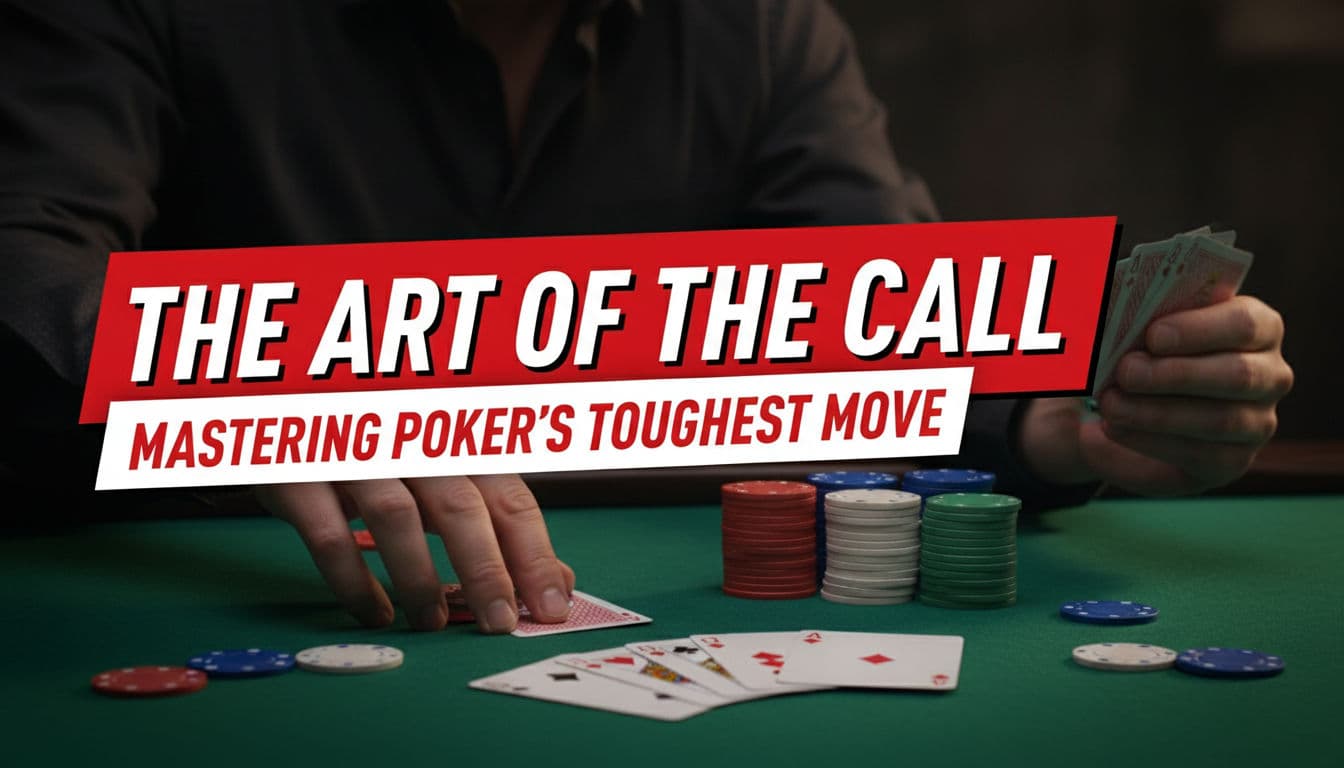
In the dynamic world of poker, every action at the table carries significant strategic weight. While the allure of aggressive raises or the perceived safety of a fold often dominates discussion, the simple act of calling - matching a preceding bet to remain in the hand - is a fundamental yet profoundly nuanced maneuver. Far from being a mere passive concession, an expertly executed call can be a sophisticated tool for information gathering, pot control, and even a precursor to a devastating trap. Understanding when and why to call, rather than raising or folding, is a hallmark of an expert player and a crucial component of long-term success at the felt.
The Fundamentals of Calling in Poker
At its core, calling signifies a player's decision to match the current highest bet, thereby committing an equal amount of chips to the pot and continuing their participation in the hand. This action is distinct from raising, which involves increasing the bet beyond the current amount, representing the fundamental call vs raise dynamic, and folding, which means forfeiting the hand and any chips already invested. The choice to call is rarely trivial; it reflects a player's assessment of their hand strength, their opponent's likely holdings, the pot's size, and their position at the table as part of a comprehensive poker betting strategy.
In the high-pressure environment of online poker , the "auto-call" check box or the clearly labeled action buttons help players execute these decisions without the risk of a verbal slip-up or a physical misstep that might occur at a live table.
Strategic Rationale Behind an Expert Call
The decision to call is seldom arbitrary; it's steeped in strategic considerations that differentiate a novice from a seasoned pro. Expert players analyze several factors before committing chips:
Pot Odds and Equity: A primary driver for calling. If the potential return from the pot (pot odds) outweighs the risk of the call relative to the hand's probability of winning (equity), a call can be mathematically sound.
Implied Odds: Beyond current pot odds, implied odds poker consider the potential future winnings if a drawing hand hits. Calling with a flush draw on the flop, for example, often relies on the expectation of winning a much larger pot if the flush completes.
Position Play: Playing from a late position offers a significant advantage. Strategic poker position play allows a player to observe the actions of opponents yet to act, gaining valuable information before making their own decision on subsequent streets.
Bluff Catching: A critical, often undervalued use of calling. Expert players recognize situations where an opponent might be bluffing and employ a bluff catching strategy to make a "hero call" with a marginal hand, specifically to catch a bluffer. This requires an acute read on opponent tendencies.
Information Gathering: Sometimes, a call is made not for immediate value, but to see another card (like a turn or river) or to observe an opponent's reaction to a new street, thereby gaining more data to inform future decisions.
Setting a Trap (Slow Playing): While typically associated with raising, a call can sometimes be part of a slow-playing strategy, particularly on earlier streets, to entice more players into the pot or to mask a very strong hand, hoping opponents will build the pot further.
When to Opt for a Call: Optimal Scenarios
Deciding when to call optimally is a key skill. Here are common scenarios where calling is often the preferred play:
Favorable Pot Odds: When the cost of the call is small relative to the chips already in the pot, making it a good mathematical proposition for drawing hands or marginal made hands.
Against Highly Aggressive Opponents: Calling against a player who frequently bluffs can be profitable. You might not have the best hand now, but you believe they'll keep betting with air, allowing you to catch them later.
With Strong Drawing Hands: Especially when facing a single opponent and there's a good chance of hitting a monster hand (e.g., open-ended straight flush draws).
In Late Position: Leverage your position to see more action before deciding whether to commit further.
Multi-Way Pots: With more players, the pot grows larger, often providing better pot odds for speculative calls.
Blocking Bets / Donk Bets: Calling a small, out-of-position bet, often called a "donk bet" can be a strategic move to control the pot size and observe an opponent's post-flop strategy.
The Perils of Over-Calling
While strategic calling is powerful, indiscriminate or loose calling can be detrimental. Over-calling, often referred to as "calling station" play, leads to:
Excessive Chip Loss: Calling with insufficient equity or against strong ranges bleeds chips over time.
Missed Value: Not raising when you have the best hand for fear of opponents folding means you leave money on the table.
Predictable Play: Constantly calling makes your play transparent, allowing aggressive opponents to exploit your passivity.
Negative Long-Term EV: Emotionally driven or habitual calls, rather than analytical ones, often result in a negative expected value (EV) in the long run.
Advanced Calling Concepts
Beyond the basics, advanced players employ advanced poker tactics to refine their decision-making process:
Light Calls / Hero Calls: Calling with a weak hand that has no real showdown value, but only to catch a suspected bluff. This is highly situation-dependent and requires an excellent read on the opponent.
Calling Ranges: Rather than individual hands, expert players think in terms of ranges of hands they would call with in specific spots, adapting this range based on opponent tendencies and board texture.
Calling for Stack-to-Pot Ratio (SPR) Control: Manipulating the SPR through calling can set up advantageous situations for future streets, especially when deep-stacked.
Ultimately, the decision to call is a delicate balance of mathematical analysis, psychological insight, and situational awareness. It is a testament to the depth of the game that actions often found in poker game theory embody so much strategic complexity, offering a powerful avenue for skilled players to outmaneuver their opponents.
| Pros | Cons |
|---|---|
Calling allows a player to see more cards (turn/river) or observe further action from opponents without committing a large portion of their stack, thereby gaining valuable information for future decisions. | Calling when you have the best hand and could have extracted more chips by raising means you leave potential value on the table, impacting your long-term win rate. |
By calling instead of raising, players can keep the pot size manageable, especially when holding speculative hands or playing out of position, preventing the pot from bloating excessively. | Frequent calling without raising can brand a player as a 'calling station,' making them predictable and easy to exploit by aggressive opponents who will bluff more often. |
An astute call can be a 'hero call,' successfully catching an opponent who is bluffing with a weaker hand, which can be highly profitable and psychologically impactful. | Calling too often with insufficient hand strength or poor pot odds leads to a gradual loss of chips over time, eroding one's stack unnecessarily. |
Calling with strong drawing hands when the pot is likely to grow significantly on later streets (if the draw hits) can be highly profitable due to favorable implied odds. | Consistently calling allows aggressive players to dictate the pace and size of the pot, often forcing you into difficult decisions on later streets or simply out-betting you. |