

Poker for Beginners: How to Learn Online Poker from Streams

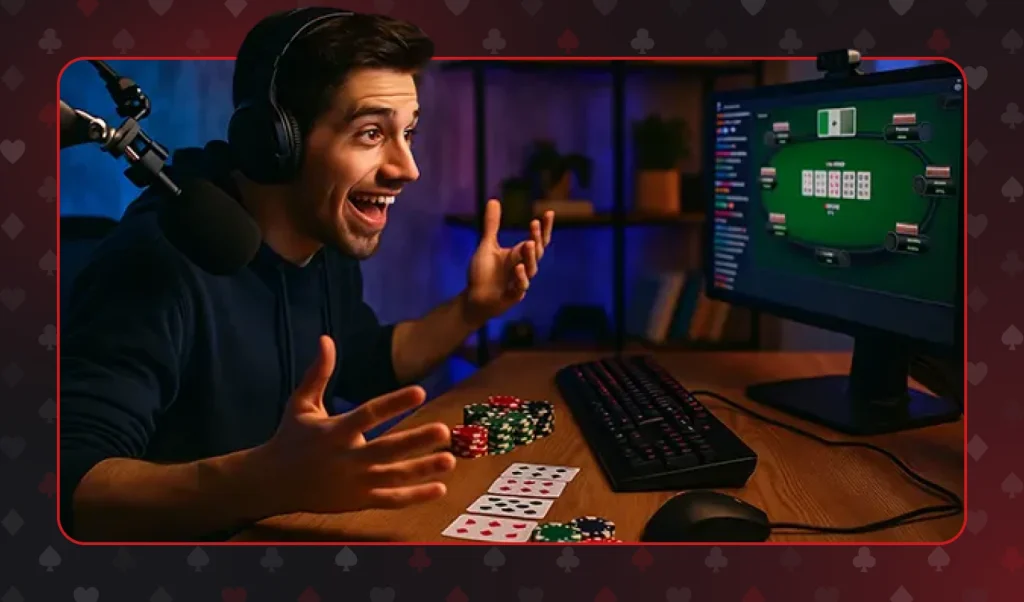
A poker stream (a live poker broadcast) is one of the best and cheapest ways to learn if you’re just getting familiar with the world of online poker. You can watch an experienced player make decisions in real time, explain their thinking, talk about hand ranges, pot odds, bet sizing, and even how they handle variance or tilt. In this article, I’ll show you how beginners should watch poker streams, what concepts you’ll run into, and how to translate what you see into your own game so you actually improve.
What is a Poker Stream, and Why is it Useful for Beginners?
A poker stream is usually a live show (or a replay) on Twitch or YouTube where the streamer plays at online poker tables (cash games, Sit & Go’s, MTT/tournament poker) while commenting on their decisions. For beginners, it’s especially valuable because:
You see real decision-making situations: not “textbook” examples, but actual, messy, realistic spots.
You understand the thought process: why check, why c-bet, why fold.
You learn the language of poker: VPIP, PFR, 3-bet, pot odds, equity, because these come up constantly.
You get free “mini coaching”: many streamers explain with an educational mindset.
The only trap is that if you watch passively, it stays entertainment instead of learning. The next sections will help you turn watching poker streams into concrete progress.
How to Watch Poker Streams so You Actually Improve
1) Choose a Stream That Matches Your Level
As a beginner, high-stakes poker isn’t always the best entry point. If the stakes are too high and the meta is extremely aggressive, the finer details behind decisions can distract you. Instead, look for:
micro-stakes / low-stakes cash game streams,
low buy-in MTT streams,
broadcasts labeled “beginner friendly” or “educational.”
2) Watch with a “Topic” in Mind (Not Just as a Show)
Set a mini-goal for every session. Examples:
today I’m focusing on preflop ranges,
today I’m collecting 3-bet/4-bet spots,
today I want to understand c-bet sizing,
today I’m looking for the difference between bluffs and value bets.
This matters because poker concepts are interconnected. Without focus, the stream experience becomes scattered.
3) Take Notes on 5–10 Hands
The fastest way to improve is to keep a simple note (Notion/Google Docs is perfect) and write down:
positions (BTN, CO, SB, BB),
preflop action (open/raise/call/3-bet),
stack sizes,
board texture,
the decision point (why fold? why call?).
Even at the beginner level, simply being able to recall the logic of a hand is a huge advantage.
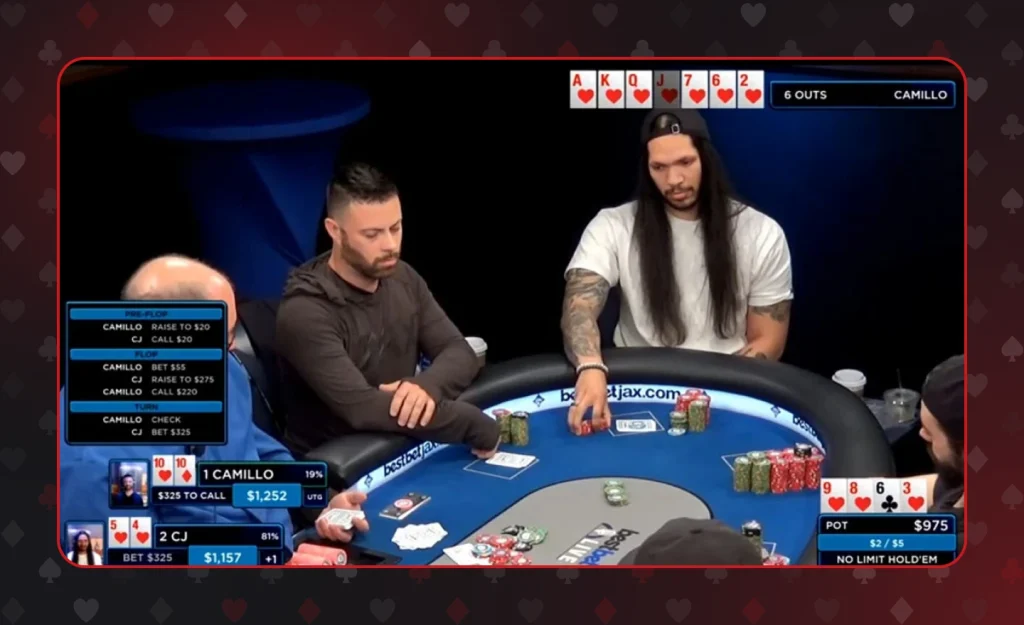
Bonus tip: occasionally pause the video before a decision, predict what the streamer will do, then compare your reasoning to their explanation. This forces active learning and quickly reveals where the biggest leaks in your game really are.
Core Poker Concepts That Come Up All the Time in Streams
Preflop Basics: Position and Hand Ranges
Position (BTN, CO, MP, EP, SB, BB) is one of the biggest “secret weapons” in poker. On streams, you’ll notice that the same hand can be:
an open on the button (BTN),
a fold from early position (EP).
A hand range means we don’t assign one exact hand to an opponent, we assign a set of possible hands. As a beginner, it’s enough to understand this: the more aggressive the action, the stronger the range we usually assume.
Pot Odds and Equity: Why Calling Is Sometimes Correct
Pot odds: how much you have to call compared to the size of the pot.
Equity: how often your hand will win by showdown.
If a streamer says, “I’m calling here because the pot odds are good,” the core idea is: you’re paying a low price to realize a decent chance of winning. You don’t need to calculate exact percentages immediately, but you should recognize the logic.
Bet Sizing: Why the Size of a Bet Isn’t Random
Bet sizing is a constant topic in streams:
small bets: cheap information, thin value, different bluffing frequencies
big bets: polarized lines (very strong hands or bluffs), heavy pressure
One of the most common beginner mistakes is: “I always bet half pot.” Streams teach you that sizing is part of the story you’re telling.
Bonus tip: after each stream, pick 3–5 hands you noted and recreate them in a hand replayer or in simple notes (positions, stacks, actions, board). Then write one sentence on what you’d do differently next time. This turns watching into a measurable improvement.
Different Types of Poker Streams
Cash Game Streams:
you can buy in and leave continuously,
spots are more stable and repeatable,
great for learning strong preflop and postflop fundamentals.
Often easier for beginners because you don’t need to understand ICM or final-table dynamics.
MTT (Tournament Poker) Streams:
blinds increase over time,
stack sizes shift constantly,
bubble, ITM, and final table decisions matter a lot.
If you want to play tournaments, watch tournament streams, because push/fold logic and risk management are completely different.
Sit & Go / Spin-Style Streams:
faster structure, fewer deep postflop spots,
higher variance,
more preflop all-in situations.
How to Spot a Stream That’s Entertaining, but not Educational
Not every poker streamer teaches, and that’s fine, just know what you’re looking for. A stream is good for beginners if the streamer:
talks about ranges, not just “I feel like calling,”
reviews mistakes honestly,
answers basic questions (“why 3-bet?” “what is a c-bet?”),
avoids being results oriented (judging a decision only by whether the hand won).
Bonus tip: if you hear explanations like “doesn’t matter, the river came anyway,” that’s often a sign of poor thinking habits.
A Beginner-Friendly Improvement Plan Using Streams
Week 1: Preflop Discipline
observe open ranges by position,
note when the streamer 3-bets and why,
learn three core rules: position, hand strength, opponent tendencies.
Week 2: C-Betting and Board Textures
when do they c-bet and when do they check,
which boards get small sizing vs big sizing,
understand “wet” (draw-heavy) vs “dry” flops.
Week 3: Turn and River Decisions
value betting vs bluffing,
when they give up on a bluff.
Week 4: Reviewing Your Own Hands
find hands in your database similar to the spots you collected,
answer: “what line would the streamer take here?”
analyzing 10 hands per week already creates a visible leap in skill.
Bonus tip: follow one streamer consistently for a week and focus on a single theme (e.g., turn barrels). Repetition makes patterns obvious, and you’ll start recognizing the same spots in your own sessions much faster.
Common Beginner Mistakes That Streams Help Fix Quickly
Calling Too Much Preflop
Streamers fold a lot, and that isn’t a weakness, it’s discipline. The “let’s see a flop” mindset is expensive for beginners.
Bad Bankroll Management
Streams often show big swings. Learn this early: bankroll is not a measure of courage, it’s more like a survival tool. If you move up in stakes, do it with rules behind it.
Tilt and Decision Quality
Good streamers talk about the mental game: when to take breaks, when focus drops, when emotions hijack decision-making. Copying this alone can save you a lot of money.
Bonus tip: track one recurring mistake you notice (like calling too wide preflop or over-c-betting) and set a single rule for your next session to counter it. Keep the rule visible while you play, small constraints create big long-term gains.
Poker Streams and Community: When Should You Use the Chat?
Chat can be great if:
you have a specific question about a spot (“Why not double barrel?”),
a concept isn’t clear (“What is a float?”),
you want a range explanation.
But don’t let chat debates steal your focus. For beginners, the best approach is: ask fewer questions, but ask precise ones, and keep taking notes.
Summary: How Poker Streams Become Fast Improvement
Poker streams are a goldmine for beginners: live decisions, real hands, and the mindset of an experienced player up close. The key is to stop watching passively and instead:
pick a stream that fits your level,
watch with a focused theme (preflop, c-bets, sizing),
take notes on hands,
follow a weekly study plan,
and apply what you learn to your own online poker sessions.
If you do it this way, poker streams won’t just entertain you, but they’ll produce consistent, measurable improvement, even if you’re starting from zero. You can find the best sites for online poker for beginners on our comprehensive review page. Enter the SMPBONUS code to get the best bonuses and perks to start your journey! Good luck!
About the Editor

Adam Biro is SoMuchPoker's Content and Creative Quality Lead, writing the site's Legends of Poker series, including From TCG to the Top and Geek Women Legends at the Poker Table, along with strategy content for newer players. He brings a background as a trading card game developer and tester, plus close to twenty years in software testing and quality assurance, to how he analyzes poker strategy and player psychology.
Related News
 StrategyOnline PokeriGaming
Mystery Bounty Poker Tournaments Explained: Rules, Strategy & Big Prizes (2026)
Learn how mystery bounty poker tournaments work, why players chase massive jackpot envelopes, and the best strategy adjustments to increase your EV in 2026.
 StrategyOnline PokeriGaming
Poker Psychology: The Ultimate Guide to Master the Mental Game
Transform your results with this comprehensive guide to poker psychology. Learn to master emotional control, eliminate tilt, build confidence, and more.
![[Poker Basics] Target Stack and Timed Tournaments: The Complete Strategy Guide](/_next/image?url=https%3A%2F%2Fimages.ctfassets.net%2Fo0c4x84rxbjm%2F6AlscPiq8eFWhuKT0DNpu5%2Fe5e2e24abc7323cb5f48f69fabeec2f9%2Ftarget_timed_featured.webp&w=3840&q=75) Strategy
Strategy[Poker Basics] Target Stack and Timed Tournaments: The Complete Strategy Guide
Learn how target stack poker and timed poker tournaments work, with practical strategy tips for both formats.
 StrategyOnline Poker
The Main Differences Between Poker Rebuy and Re-Entry Tournaments
Discover the main differences between a poker rebuy and a re-entry tournament. Learn how the rules, seat changes, and strategies affect your game.
 Side PotStrategyStories
Why Keeping Your Phone at the Poker Table Could Actually Save You Money
Think hiding your phone at the poker table is smart? Discover how keeping it handy can prevent you from playing trash hands and improve your win rate.
 StrategyOnline PokerLive Poker
The Ultimate Guide to Late Registration in Poker Tournaments: Strategy, Math, and ICM Benefits
Master late registration in poker tournaments. Discover how ICM equity boosts, shallow stack strategy, and max late regging can dramatically increase your ROI.