Runner Runner

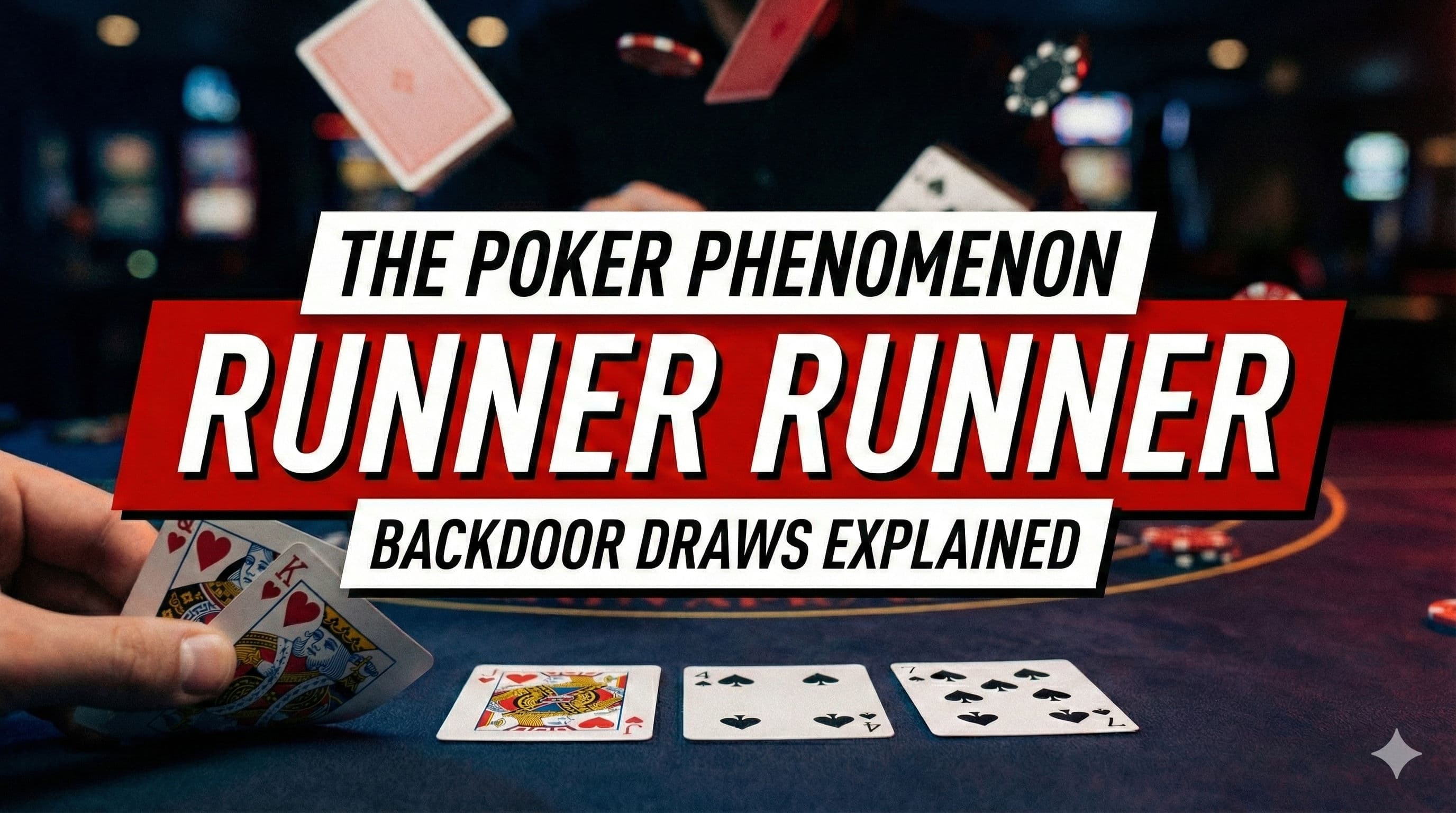
In the complex tapestry of poker strategy, few scenarios are as dramatic and statistically improbable as hitting a Runner Runner hand. Often referred to as a backdoor draw this phenomenon occurs when a player successfully catches the precise cards needed on both the turn and the river to complete a formidable hand. It's a testament to poker's blend of skill, luck, and psychological warfare, frequently leading to moments of stunned silence or jubilant celebration at the table. While rarely a primary strategy, understanding the mechanics, odds, and strategic nuances of a runner-runner scenario is crucial for any player aiming to elevate their game and navigate the unpredictable currents of a poker match.
The Runner Runner Poker Phenomenon
The term runner runner poker vividly describes the need for two successive cards to materialize on the final two streets - the turn and the river - after the flop has been dealt. This is distinct from a conventional draw, where only one card is typically required (e.g., a four-card flush draw on the flop needing one more card). A backdoor draw strategy, by its very nature, demands a perfect sequence, transforming a seemingly weak or incomplete hand into a powerhouse. It encapsulates the essence of poker's inherent unpredictability, where fortunes can shift dramatically in the blink of an eye.
In the specialized environment of online poker , this dramatic shift is visualized through real-time equity calculators built into the software, which might show a player’s winning probability plummet to near-zero on the flop, only to see those percentages tick back up with each runner card in a way that no human brain could calculate mid-hand at a live table.
The Probabilistic Landscape: Why Runner Runner is Rare
The statistical improbability of completing a runner runner poker hand is a primary reason for its dramatic impact. Unlike drawing to a flush on the flop where you might have 9 outs and a roughly 35% chance of hitting over two streets, a backdoor draw requires hitting two specific cards sequentially. To understand the math, many players use a poker odds calculator to realize that if you have two hearts and there's one heart on the flop, you'd need two more hearts on the turn AND river to complete a flush. The odds of hitting one specific card on the turn, and then another specific card on the river, are significantly lower than a single-card draw.
Example: Backdoor Flush Draw: With two hearts in hand and one on the flop (e.g., A♥ K♥ on a 7♥ 8♠ 2♦ flop), you need a heart on the turn (9 outs from 47 unseen cards) AND a heart on the river (8 outs from 46 unseen cards). The approximate probability is (9/47) * (8/46), which is roughly 0.033 or 3.3%. This illustrates the challenge of hitting unlikely poker hands.
Example: Backdoor Straight Draw: Similarly, needing two specific cards to complete a straight involves similar low probabilities, often around 4-5% depending on the specific cards required.
Strategic Decision-Making: When to Chase a Backdoor
While relying solely on a runner-runner is often a losing proposition, there are specific scenarios where continuing with such a draw can be strategically justified as part of an advanced poker strategy. This involves a meticulous assessment of pot odds, implied odds, and opponent tendencies.
Analyzing Pot Odds and Implied Odds
A crucial factor is whether the immediate poker pot odds offer a favorable price for the long-shot draw. If the pot is exceptionally large, making a call for a small bet, even with slim odds, might be mathematically sound. More importantly, poker implied odds play a significant role. Implied odds refer to the money you expect to win if you hit your hand. If you believe your opponent is likely to pay you off with a large stack when you complete your runner-runner, the implied odds might make a call justifiable, even if the direct pot odds are unfavorable.
Reading Opponents and Board Texture
The decision to chase a backdoor draw is rarely made in a vacuum. Understanding your opponents' playing styles is paramount. Against a loose-aggressive player who is prone to bluffing, a backdoor draw might gain some fold equity if you can semi-bluff on the turn or river. Conversely, against a tight player who only bets with strong hands, chasing a backdoor might be too costly. The board texture also dictates potential future developments; a board that offers many possible draws might make your backdoor less valuable, as other players could be drawing to stronger hands.
The Psychological Impact of a Runner Runner Hit
The emotional rollercoaster that accompanies a runner-runner hand is undeniable. For the player who hits it, it's a surge of elation, a moment where the poker gods have seemingly smiled upon them. For opponents, it can be a crushing blow, often leading to frustration, disbelief, and even tilt. Witnessing a player complete a statistically unlikely draw can severely impact their mental game, potentially leading to subsequent misplays and chip losses.
Real-World Examples of Runner Runner Plays
Observing runner runner plays in action helps solidify the concept:
Runner Runner Straight to Victory: "He held J♥ T♠, the flop came A♠ 7♦ 2♣. He was behind, but miraculously, the turn brought a Q♥ and the river an K♣, giving him a runner-runner Broadway straight to snatch the pot."
Unlikely Flush Completion: "She had 8♥ 9♥, and the flop showed 2♥ 6♣ J♠. She needed two hearts. The dealer peeled a 4♥ on the turn and a Q♥ on the river, completing her runner-runner flush, much to her opponent's dismay."
Calculated Risk Pays Off: "Despite the long odds, he had significant pot odds after a multi-way pre-flop pot. He decided to chase his runner runner straight draw with connected cards, and it paid off when the final two streets delivered his necessary cards, securing a massive pot."
Conclusion: Mastering the Nuance of Backdoor Draws
Runner runner poker hands, or backdoor draws, represent a fascinating intersection of luck, probability, and strategic foresight in poker. While their rarity dictates they should not be a consistent strategy, recognizing situations where the pot odds, implied odds, and opponent dynamics align to make a justifiable call is a hallmark of an advanced player. Understanding their impact, both mathematical and psychological, allows players to not only capitalize on these unlikely occurrences but also to mitigate the damage when they fall victim to them. Ultimately, mastering the nuance of backdoor draws adds another layer of depth to one's poker repertoire, turning seemingly hopeless situations into potential triumphs.
| Pros | Cons |
|---|---|
When hitting a runner runner, your hand often appears innocuous until the river, leading opponents to overcommit with weaker hands, thereby increasing your potential payout. | The statistical odds of hitting two specific cards on consecutive streets are significantly lower than single-card draws, making it an unreliable strategy for consistent wins. |
Successfully completing a rare backdoor draw can create significant frustration (tilt) for opponents, potentially leading to their subsequent misplays. It also boosts your confidence. | Consistently chasing runner runner draws without sufficient pot or implied odds will lead to significant long-term losses due to the frequent failures. |
In certain board textures, a backdoor draw might enable you to semi-bluff on the turn, leveraging perceived draws to gain fold equity even if your hand isn't yet made. | Over-relying on backdoor draws or making overly optimistic calls can make your play predictable to astute opponents, allowing them to exploit your tendencies. |
Related Poker Terms
6-Max
9-Max (Full Ring)
A-Game
ABC Poker
Backdoor Draw
Bankroll
Belly Buster
Bet Size
Bet Sizing
Blocker
Bluff
Bluff Catcher
Board
Bubble Factor
Button
Call
Check-Call
Check-fold
Check-Raise
Click-Back
Donkament
Double Barrel
First in
Flush Draw
Gap Concept
GTO
Gutshot
Hot Streak
HUD
Image
In a Row
Insta-Call
Isolation
Kicker
Leak
Limp
Limp-Fold
Limp-Raise
Middle Pair
Min-raise
Miss
Monotone
Monster
Multi-Way Pot
Nit
Nuts
One-Gapper
One-Way Straight
Online Poker
Online Poker Strategies
Open Ended Straight Draw (OESD)
Open Limp
Out of Line
Outdraw
Over the top
Over-Limp
Overblind
Overcall
Overcard
Overpair
Pat
Peel
Play Behind
Polarized
Pot Control
Potting Out
Preflop
Premium Hands
Probe Bet
Proposing Bets
Push or Fold
Put Down
Quads
Quart
Quartered
Quitting Time
Range
Royal Flush
Sit and Go (SNG)
Slow Play
Smooth Call
Snap Call
Snapped Off
Soft Seat
Solid
Steal
Suited
Suited Gappers
Tank
Total air
Trap
Two-Gapper
Under the Gun (UTG)
Underpair
Value
Value Bet
Villain
Weak Ace
Window Card
Wrap