

Wrap

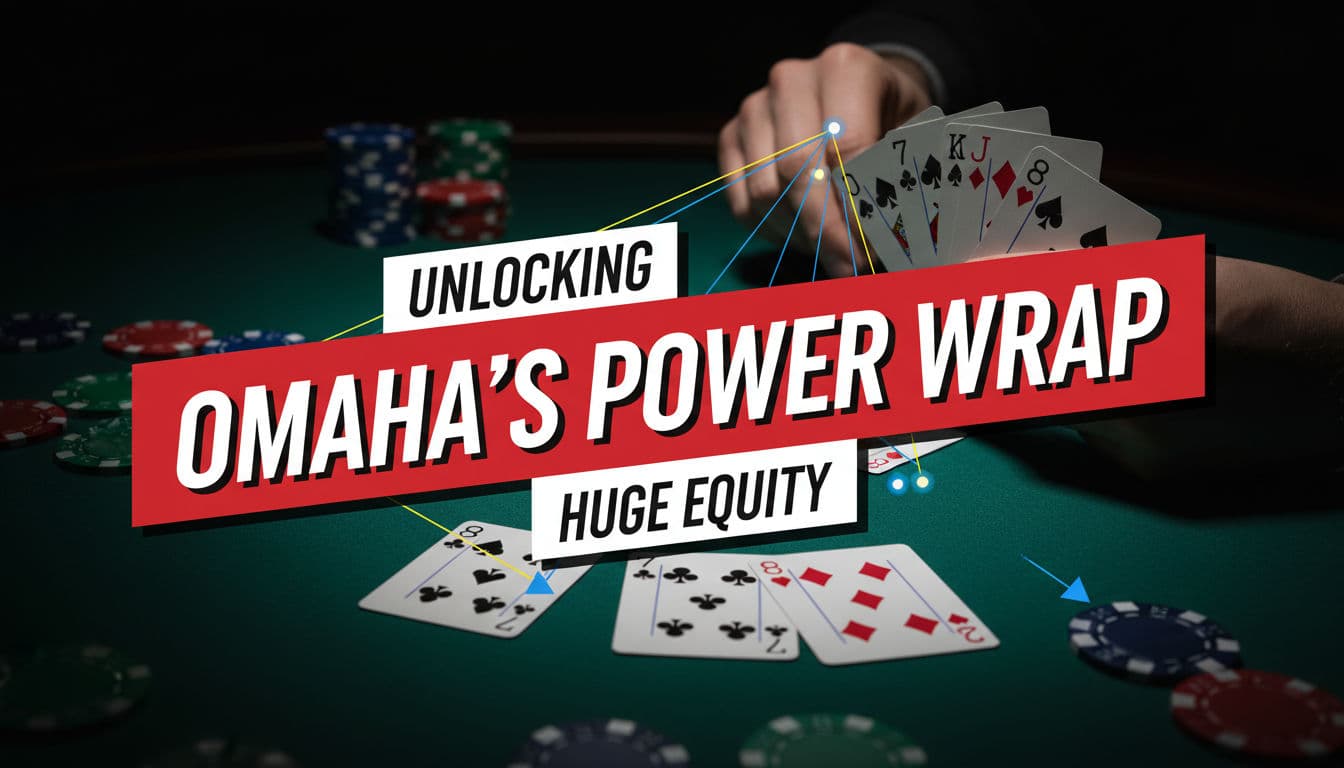
In the dynamic and action-packed world of Omaha poker, understanding advanced hand concepts is paramount to consistent success. Among the most potent and often misunderstood drawing hands is the 'wrap'. Distinct from the simpler straight draws found in Texas Hold'em, a wrap is a unique phenomenon enabled by the four hole cards dealt in Omaha, presenting a multitude of avenues to complete a straight. This intricate draw, boasting significantly more 'outs' than conventional straight draws, represents a cornerstone of skilled Omaha strategy, offering unparalleled equity even against strong made hands.
This comprehensive guide delves deep into the mechanics, strategic implications, and classification of wraps. We will explore what makes them so powerful, how to accurately count your potential winning cards, and crucially, how to integrate them effectively into your overall Omaha game plan, transforming complex board textures into high-equity opportunities.
What Exactly is Omaha Wrap in Poker?
A wrap in poker refers to a straight draw where your hole cards combine with the community cards to create multiple overlapping pathways to complete a straight. Unlike Texas Hold'em, where your two hole cards and three community cards can typically only form an open-ended straight draw (8 outs) or a gutshot (4 outs), the four hole cards in Omaha radically expand these possibilities. This enables players to form straight draws with a significantly higher number of outs, ranging from 9 to an incredible 20, making them formidable hands to play.
The essence of a wrap lies in holding multiple cards that can connect with various combinations on the board to form a straight. For instance, if you hold 8-9-T-J and the flop comes 6-7-X, you have a wrap because a 5, 8, 9, or T will complete a straight. Each of these ranks offers four cards, leading to a substantial number of outs.
The Mechanics of Counting Wrap Outs
Accurately counting outs is a fundamental skill in all poker variants , but it takes on a new level of complexity and importance with wraps in Omaha. The number of outs is not just about quantity but also about quality - the 'nut outs' that guarantee the best possible straight. A wrap is superior to a standard open-ended straight draw (8 outs) or a double gutshot (8 outs) because it leverages the additional hole cards to cover more straight-making ranks.
Example: A 13-Out Omaha Wrap
Consider the example: you hold 8♠ 9♠ T♥ J♥, and the flop is 7♣ 6♣ 2♦. Here's how the outs are calculated:
To make an 8-high straight (5-6-7-8-9): Any remaining 5s (4 outs).
To make a 9-high straight (6-7-8-9-T): Any remaining 8s (3 outs, as you hold one 8).
To make a T-high straight (7-8-9-T-J): Any remaining 9s (3 outs, as you hold one 9).
To make a J-high straight (8-9-T-J-Q): Any remaining Ts (3 outs, as you hold one T).
Totaling these, you have 4 + 3 + 3 + 3 = 13 outs. This illustrates how different ranks can complete different straights, all stemming from a single draw.
Strategic Importance and Advanced Considerations
Wraps are absolutely crucial in Omaha because traditional 8-out or 4-out straight draws are often not strong enough on their own to warrant significant investment, especially in multi-way pots. A strong wrap, however, often provides enough equity to be a favorite against strong made hands, such as top set or two pair, particularly when combined with other draws like a flush draw (giving a 'wrap and flush draw' a truly monstrous equity advantage) or even a backdoor flush draw.
Common Omaha Wrap Configurations
9-out wrap: Often involves a gutshot with additional cards.
13-out wrap: As shown in the example, often involves two-gaps in your hand or board.
16-out wrap: Typically happens when you have a connected hand, and the board provides multiple connecting cards.
17-out wrap: A very strong draw, often arising when you have strong connected cards and the board hits multiple parts.
20-out wrap: The holy grail of straight draws, occurring when your four hole cards and the board create almost all possible straight permutations, e.g., holding 8-9-T-J on a 6-7-9 flop, where 5s, 8s, 9s, Ts, and Qs all make straights.
Understanding how to precisely count both the total number of wrap outs and, critically, the number of nutted wrap outs (outs that make the best possible straight) is essential for any aspiring Omaha expert. This nuance helps in avoiding situations where you complete a straight only to find an opponent has completed a higher one, a common pitfall for less experienced PLO strategy players.
Decision Making with Wraps
Playing wraps effectively involves evaluating pot odds, implied odds, and opponent tendencies. With a high number of outs, wraps often justify aggressive play, such as betting or raising, to build the pot and charge weaker draws. However, being mindful of your position and stack depth is key. Aggressively playing a wrap out of position against a tight opponent might not be as profitable as playing it in position against a looser player. Moreover, considering blocking effects and card removal can refine your outs count and give you a slight edge in estimating your equity.
| Pros | Cons |
|---|---|
Wraps offer a significantly higher number of outs (up to 20) compared to typical straight draws, providing excellent equity even against strong made hands like sets or two pairs. | Accurately counting wrap outs, especially differentiating between total outs and 'nut outs,' can be complex and challenging for new Omaha players. |
The high number of outs makes wraps ideal for semi-bluffing, allowing you to build the pot while having strong redraw equity if called. | Without careful consideration of nut outs, a player can complete a lower straight only to be beaten by a higher wrap, leading to significant losses. |
When paired with a flush draw (wrap and flush draw), these hands become incredibly potent, often making them statistical favorites on the flop. | Despite their strength, overplaying wraps without sufficient pot odds or implied odds can lead to costly mistakes, especially in deep-stacked situations. |
Related Poker Terms
Best Online Poker Bonus Codes


About the Editor

Bence Mitykó is a Somuchpoker poker writer, covering poker news and strategy. He spent four years playing poker professionally, primarily focusing on Heads-Up Sit & Go games, experience that continues to shape his understanding of poker strategy, online poker dynamics, and the wider poker industry.


