

Check

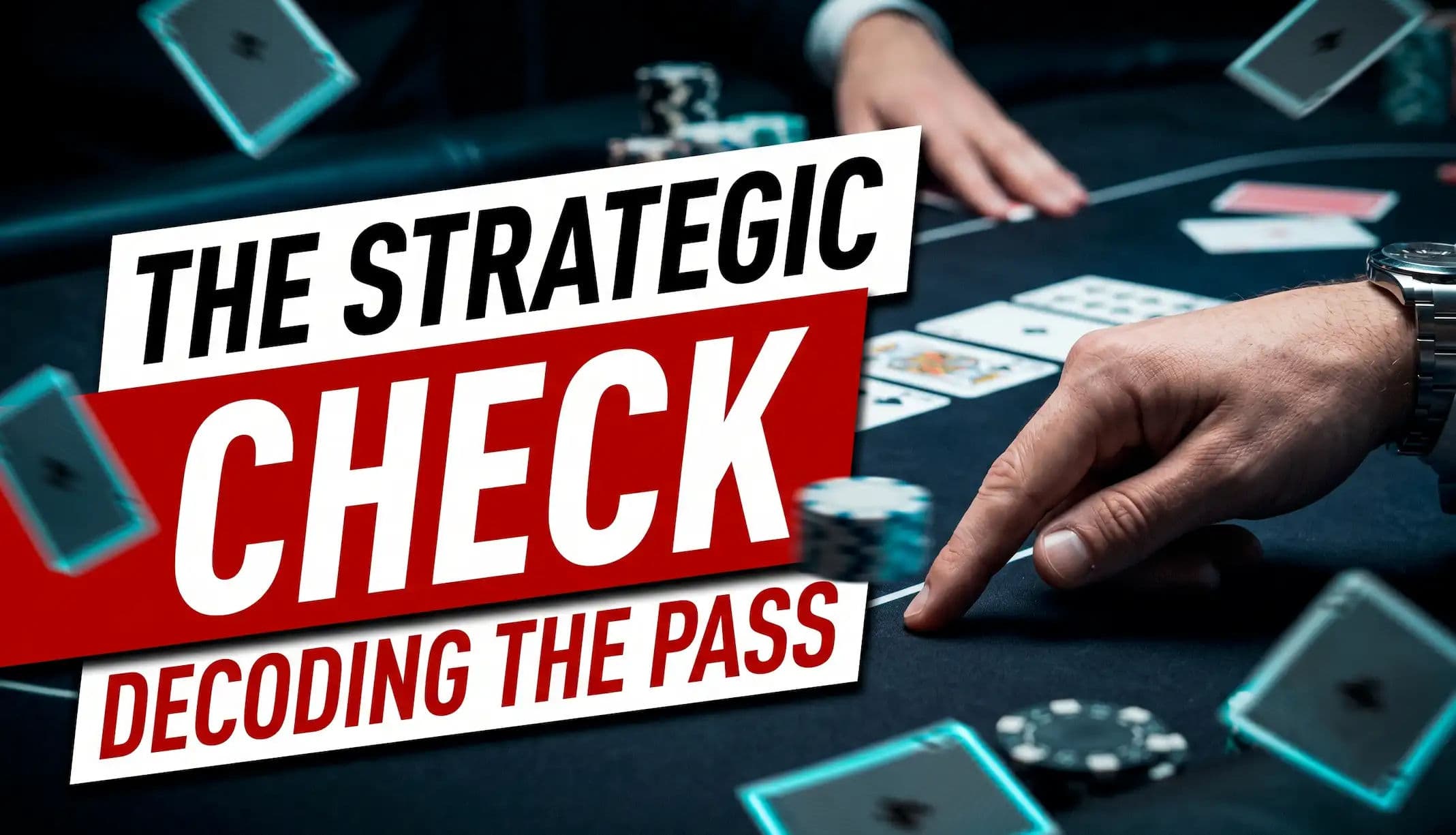
Understanding the Foundational 'Check' in Poker
In the intricate world of poker, every action at the table carries strategic weight. Among these, the 'check' stands as a fundamental yet often misunderstood maneuver. Far from a passive surrender, a well-timed check can be a powerful tool for pot control, information gathering, and even setting elaborate traps. This comprehensive guide will dissect the 'check' from an expert perspective, revealing its core mechanics, regulatory nuances, and the advanced strategic considerations that separate novice players from seasoned professionals. We will explore how this critical action integrates into various poker formats, from high-stakes cash games to competitive tournaments, and empower you to leverage its full potential.
The Fundamental Poker Check Definition and Strategic Guide
At its core, the poker check definition signifies a player's decision to pass the action to the next participant without placing a bet. This option is exclusively available when no wagers have been made during the current betting interval. While historically, the term 'check' occasionally referred to a poker chip, this archaic usage is largely obsolete in contemporary poker discourse. Functionally, understanding how to check in poker is an indispensable component of the game's betting architecture, enabling players to remain actively involved in a hand without monetary commitment. Its utility spans the entire spectrum of poker environments, from dynamic online tables to intense live tournaments and casual cash games.
Strategic Imperatives: When to Check Poker Hands
Developing a solid poker checking strategy means realizing that the decision to check is rarely arbitrary; instead, it's a calculated move influenced by a confluence of factors, each contributing to its strategic efficacy:
Hand Strength: A player with a demonstrably weak or unpromising hand might check to avoid inflating the pot, signaling an intent to fold if faced with aggression. Conversely, a player holding a formidable hand might check to conceal strength, hoping to 'trap' an opponent into betting.
Positional Advantage: A player's position at the table profoundly impacts their strategy. Being in a late position allows a player to observe all prior actions, potentially enabling a 'free card' if all opponents check, or providing crucial insights for a subsequent betting decision.
Opponent Tendencies: Astute players analyze the betting patterns of their adversaries. Checking can be used to exploit an overly aggressive player who is prone to bluffing, or to induce a more cautious opponent to bet if they perceive weakness.
Regulatory Framework: Poker Betting Rules for Checking
Understanding the precise betting rules governing when a check is permissible is paramount for strategic execution:
First to Act or Subsequent Checks: If you are the first player to act in a betting round, or if all preceding players have checked, you are entitled to check. This action is typically communicated by a verbal announcement or a gentle tap on the table surface, and once declared, it is binding.
The Impossibility of Checking After a Bet: Crucially, if any player has initiated a bet before the action reaches you, checking is no longer an option. In such scenarios, your choices are restricted to calling the existing bet, raising it, or folding your hand.
Pre-Flop Specifics: In community card games, checking pre-flop is generally prohibited unless you occupy the big blind position and no player has raised. In all other pre-flop scenarios, players must at least call the big blind, raise, or fold.
Post-Flop Universal Checking: Once the flop, turn, or river cards have been dealt, the first player to act in each respective betting round is always afforded the option to check.
Advanced Poker Strategy: Rationales for Utilizing the Check
Mastering Poker Pot Control
For players holding marginal or speculative hands, checking serves as an excellent mechanism for poker pot control. By avoiding a bet, you prevent the pot from escalating, thereby minimizing potential losses if your hand fails to improve or proves to be inferior. This is particularly valuable when out of position with a hand that has some showdown value but isn't strong enough to justify aggressively building the pot.
The Potent Check-Raise Poker Play
One of the most powerful and deceptive plays is the check-raise poker move. This involves checking a strong hand with the explicit intention of raising if an opponent bets behind you. The check-raise achieves two key objectives: it builds a larger pot and disguises the strength of your hand, often leading opponents to believe you were initially weak or attempting a bluff.
Value of Information and Free Card Opportunities
When in position (acting last), checking can be a strategic play to gain a 'free card'. If all players check around to you, you get to see the next community card without having to invest any additional chips. This is invaluable, especially when holding drawing hands, as it allows you to realize your equity more cheaply.
Post-Check Dynamics: What Happens Next?
It's crucial to reiterate that a check is not synonymous with folding. When you check, you remain actively involved in the hand. You cannot fold immediately after checking; you must await the completion of the betting round. If another player places a bet after you've checked, the action returns to you, at which point you must decide whether to call that bet, raise it, or finally, fold your hand if you deem it unplayable against the new wager.
Put Your Strategy to the Test
Checking is more than just passing your turn; it is a critical tool for trapping opponents and controlling the size of the pot. To truly refine these advanced techniques, you need to practice them in live scenarios. Hit the tables at the best online poker sites, claim your welcome bonus, and start using the check-raise to dominate your opponents today.
| Pros | Cons |
|---|---|
Checking allows players to keep the pot size manageable, minimizing losses when holding a weak or speculative hand and avoiding unnecessary commitment. | Checking a strong hand when opponents are unlikely to bet can result in missing out on potential value that could have been extracted with a bet. |
By checking, especially in late position, players can observe opponents' actions and reactions, gaining valuable insights into their hand strength before making a decision. | Checking out of position can grant opponents a free card, potentially allowing them to improve their hand and beat you without paying. |
A calculated check with a strong hand can induce a bet from opponents, creating an opportunity for a profitable check-raise to build a larger pot. | Frequent checking, particularly when out of position, can sometimes signal weakness to observant opponents, inviting them to bet aggressively against you. |
In position, a check can lead to seeing the next community card without further investment, which is highly advantageous for drawing hands. |
Related Poker Terms
Ante
Bet
Big Blind
Big Blind Ante
Buy-In
Check
Chips
Floor Manager
Flop
Fold
Gambling
Hand Rankings
No Limit
Omaha
Open Game
Open Seat
Out Button
Overlay
Peel
Peg
Pips
Poker network
Poker Room
Poker Rules
Position
Postflop
Pot
Pot-Limit
Protect
Qualifier
Quorum
Rack
Rake
Razz
Rebuy
Redeal
River
Round of Play
Running It Twice
Seat Position
Seating List
Seven-card Stud
Seven-Deuce Game
Seventh Street
Short Buying
Short Handed
Shot Clock
Showdown
Shuffle
Side Bet
Side Pot
Sit Out
Sixth Street
Small Blind
Split
Stack
Structure
Stub
Stud Games
Suit
Table Stakes
Texas Hold'em
Third Street
Tie
Time Bank
Turn
Uncle Doc
Upcard
Verbal Declaration
Visible Cards
Winning Hand
Best Online Poker Bonus Codes


About the Editor

Bence Mitykó is a Somuchpoker poker writer, covering poker news and strategy. He spent four years playing poker professionally, primarily focusing on Heads-Up Sit & Go games, experience that continues to shape his understanding of poker strategy, online poker dynamics, and the wider poker industry.


