

Poker Rules

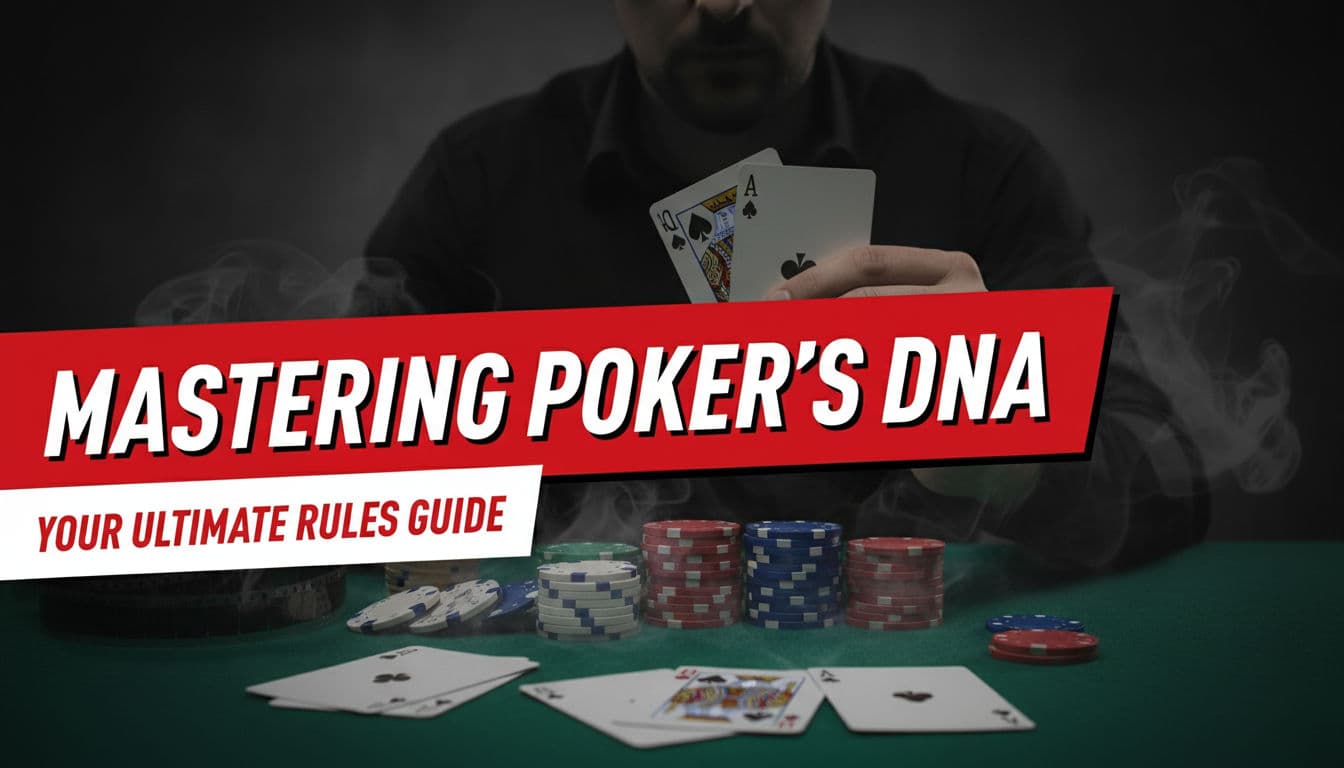
Poker, far more than a mere card game, is a captivating blend of mathematics, psychology, and strategic decision-making. If you are searching for how to play poker for beginners, you have found the definitive resource. While the allure of high stakes and dramatic bluffs often captures public imagination, the true mastery of the game begins with having the poker rules explained clearly. These aren't just arbitrary guidelines; they are the scaffolding upon which complex strategies are built, dictating every move, every bet, and every potential victory. This expert guide delves beyond the surface, dissecting the game of poker fundamentals that underpin virtually all popular variants, empowering you with the knowledge to not just play, but to truly comprehend and strategically engage with the game.
Game of Poker Fundamentals: Core Poker Rules Explained
At its heart, poker encompasses a family of card games united by a core objective: to either form the mathematically strongest five-card hand or to strategically convince opponents that you possess it. Played with a standard 52-card deck, the game's intrinsic appeal lies in its dynamic interplay of hidden information and calculated risks. While numerous variations exist, the bedrock principles of hand rankings and betting structures remain remarkably consistent, offering a universal framework for strategic thought across diverse formats when learning the basic poker rules.
The Immutable Hierarchy: Poker Hand Strengths Explained
When learning how to play poker for beginners, a comprehensive grasp of poker hand strengths is not merely beneficial; it is absolutely indispensable for effective play. Every decision, from betting to folding, is implicitly tied to the relative strength of your potential hand. Hands are ranked from the statistically rarest and most powerful to the most common:
Royal Flush: The pinnacle of poker hands. Comprising the Ace, King, Queen, Jack, and Ten, all of the same suit (e.g., A♠ K♠ Q♠ J♠ T♠). It is unbeatable.
Straight Flush: Five sequential cards, all of the same suit (e.g., 9♥ 8♥ 7♥ 6♥ 5♥). The higher-ranked straight flush wins if multiple occur.
Four of a Kind: Four cards of the identical rank, plus any fifth card (e.g., K♣ K♦ K♥ K♠ 7♣).
Full House: A combination of three cards of one rank and two cards of another rank (e.g., Q♣ Q♦ Q♥ J♠ J♣). Ranked by the three-of-a-kind first, then the pair.
Flush: Five cards, not in sequence, but all sharing the same suit (e.g., A♦ J♦ 8♦ 5♦ 2♦). Ranked by the highest card within the flush.
Straight: Five cards in sequential rank, but not all of the same suit (e.g., 8♠ 7♦ 6♥ 5♣ 4♠). An Ace can be high (A-K-Q-J-T) or low (5-4-3-2-A) for a straight.
Three of a Kind: Three cards of the same rank, with two unrelated side cards (e.g., 7♥ 7♦ 7♠ K♣ 2♦).
Two Pair: Two distinct pairs of cards, plus one unrelated fifth card (e.g., J♣ J♦ T♥ T♠ 9♠). Ranked by the higher pair, then the lower pair, then the kicker.
One Pair: Two cards of the same rank, with three unrelated side cards (e.g., 5♥ 5♦ A♣ K♥ 8♠).
High Card: When no player achieves any of the above combinations, the player with the single highest-ranking card in their hand wins the pot.
The Anatomy of the Deck and Dealing Protocols
Every poker game fundamentally relies on a standard 52-card deck. Crucially, the Ace possesses a unique duality, capable of acting as both the highest card in a straight and the lowest (A-2-3-4-5). To ensure equitable distribution of positional advantages, a physical 'dealer button' is employed, rotating clockwise after each completed hand.
Strategic Catalysts: Blinds and Antes Explained
Most contemporary poker games, particularly those governed by standard texas hold'em rules, utilize 'blinds' - mandatory, pre-deal bets placed by specific players to seed the pot and stimulate early action. Typically, the player immediately to the left of the dealer button posts a 'small blind,' while the player to their left posts a 'big blind', usually double the small blind's value. These forced bets, a fundamental part of basic poker rules, provide an initial incentive for players to compete and set the stage for advanced poker betting strategies. Some variants also incorporate 'antes', which are smaller, compulsory contributions from every player before cards are dealt, further boosting the pot and encouraging engagement across the table.
The Dynamics of Betting Rounds: Navigating the Action
A typical poker hand unfolds across several distinct betting rounds, each presenting fresh strategic opportunities. The action consistently moves clockwise around the table, commencing to the left of the big blind in community card games. Players are presented with a specific set of choices when it's their turn:
Check: If no bets have been placed in the current round, a player can 'check,' electing to pass the action to the next player without contributing chips. This move signals a willingness to continue without committing more funds, potentially setting up a trap or indicating a weaker hand.
Bet: A player can initiate the betting for the current round by placing chips into the pot. This is a display of strength or a strategic bluff that forces opponents to react.
Call: If a bet has already been made, a player can 'call' by matching the amount of the preceding bet. This indicates a desire to remain in the hand and see subsequent cards, or to contest the current pot.
Raise: Following an existing bet, a player can 'raise' by matching that bet and then adding an additional amount. A raise is a powerful strategic move, signaling a strong hand or an aggressive bluff, escalating the pot, and pressuring opponents.
Fold: A player can 'fold' by discarding their hand, thereby forfeiting any chips already contributed to the pot in the current hand. Folding signifies disengagement from the current hand, often due to a weak hand or an unwillingness to call a bet.
Poker etiquette: written & unwritten rules
While written rules ensure the integrity of poker, unwritten poker etiquette is what maintains respect and a good atmosphere at the table.
1. Don't Slowroll
This is one of the ultimate signs of disrespect in poker. When it is your turn to show your cards at the showdown, and you know you hold the winning hand (or the unbeatable nuts), turn your cards over immediately. Deliberately delaying is unsportsmanlike.
2. Don't Tap the Glass
If a weaker player plays poorly but still manages to win a pot against you through sheer luck (a bad beat), keep your opinion to yourself. Do not start berating them, and do not try to teach them how to play poker. The golden rule among pros is to never make inexperienced players (the "fish") feel bad; if they feel uncomfortable, they will simply get up and take their money elsewhere.
3. Keep Quiet When You're Not in the Hand
Once you have folded your cards, you must refrain from reacting to the ongoing hand in any way:
Do not tell anyone what cards you folded.
Do not gasp, sigh, or grimace if the flop brings cards that would have made your hand.
Do not offer advice or comment on the odds or decisions of the active players. Doing so can give an unfair advantage or disadvantage to those still fighting for the pot.
4. Don't Splash the Pot
When you bet or call, push your chips forward across the line in a clean, organized stack. Do not toss or scatter them into the main pile of chips in the middle. If you "splash the pot", the dealer has to stop the action to manually count and verify the exact amount, which unnecessarily slows down the game.
5. Avoid the "Hit and Run" (In Cash Games)
In cash games, you are technically allowed to get up from the table with your chips at any time. However, it is considered very rude to win a massive pot and then immediately leave without a word before the next hand is dealt. It is customary to stay for at least another 15–20 minutes, or to announce your departure in advance (e.g., "I'll play two more orbits") to give others a fair chance to win their money back.
Community Card Mechanics: Texas Hold'em Rules
In widely played community card poker variants, particularly when applying texas hold'em rules, the game progresses through specific stages where communal cards are revealed, dynamically altering hand possibilities and strategic considerations:
Pre-flop: This is the initial betting round, occurring immediately after players receive their private 'hole cards' and the blinds have been posted.
The Flop: Following the pre-flop betting, three community cards are dealt face-up onto the center of the table. A crucial betting round ensues, as players re-evaluate their hands in light of these new shared cards.
The Turn: After the flop betting round concludes, a fourth single community card is dealt face-up. Another significant betting round follows, often representing a critical juncture for strategic decisions.
The River: The fifth and final community card is dealt face-up, completing the board. This is followed by the last betting round, where players make their ultimate strategic moves before a potential showdown.
By mastering these specific stages, you will have the most critical community card poker rules explained in a way that directly translates to better decision-making at the tables.
The Showdown: Revealing Your Strategic Play
According to basic poker rules, if multiple players remain active after the final betting round on the river, the hand progresses to a 'showdown'. At this point, all remaining players reveal their hole cards. The objective is to construct the best possible five-card poker hand using any permissible combination of their private hole cards and the community cards, as dictated by texas hold'em rules. The player holding the strongest hand, according to the established rankings, is declared the winner of the accumulated pot.
Securing the Pot: Two Paths to Victory
As part of the game of poker fundamentals, a player can claim the coveted pot through one of two distinct methods, each demanding a unique strategic approach:
Superior Hand Strength: The most direct path to victory involves holding the statistically strongest five-card hand at the showdown. This requires a solid understanding of hand rankings and the capacity to assess the probability of your hand's strength against potential opponents.
Strategic Aggression (Bluffing): Alternatively, a player can win the pot without ever revealing their cards by making a bet so compelling that all other opponents 'fold', opting to discard their hands rather than call the bet. This psychological warfare, commonly known as bluffing, is a cornerstone of advanced poker strategy, leveraging perceived strength to extract folds.
Exploring the Ecosystem: Understanding Poker Variations
While the core rules provide a consistent foundation, understanding poker variations is key to becoming a well-rounded player. Each format offers unique strategic challenges:
Texas Hold'em: The world's most popular poker game. Each player receives two private 'hole cards' and must construct their best five-card hand using any five cards from their two hole cards and the five community cards.
Omaha: A more complex variant where each player receives four hole cards. Crucially, players must use exactly two of their four hole cards and exactly three of the five community cards to form their best five-card hand.
Seven Card Stud: Predominantly played before the rise of Hold'em, players are dealt a mix of face-down and face-up cards over several betting rounds. They must then make the best five-card hand from their own seven cards. There are no community cards.
Five Card Draw: A classic form where players receive five face-down cards initially. After a betting round, players can discard some cards (typically up to three) and 'draw' new ones to improve their hand, followed by a final betting round.
Upholding Integrity: Essential Poker Etiquette and Regulations
Beyond the mechanics, adherence to established poker etiquette and specific regulations is crucial for maintaining the integrity of the game:
One Player, One Hand: A cardinal rule ensuring fairness. Players are strictly permitted to play only one hand at a time to prevent collusion or unfair advantages.
Action in Turn: Players must always act during their designated turn. Acting out of turn can disrupt the flow of the game, reveal unintended information, and may result in penalties.
Keep Cards Visible and Protected: Private 'hole cards' should be kept visible on the table (not held above the table or hidden) and physically protected (e.g., with a chip) to prevent accidental exposure or confusion.
No String Bets: Bets must be declared clearly or made in a single, fluid motion. Making a bet in multiple movements (e.g., placing chips for a call, then returning to stack more chips for a raise) is forbidden as a 'string bet' because it can be used to gauge opponent reactions.
Understanding Betting Structures: Different games employ varying structures that dictate permissible bet sizes:
No-Limit: Players can bet any amount up to all of their chips (their 'stack') at any time. This structure is known for its high-stakes, strategic depth, and dramatic swings.
Pot-Limit: Players are limited to betting or raising an amount no larger than the current size of the pot. This provides a balance between controlled betting and strategic aggression.
Fixed-Limit: Bets and raises are restricted to predetermined, fixed amounts for each betting round. This structure emphasizes patience and disciplined play, reducing the impact of large bluffs.
Mastering these foundational rules and understanding their strategic implications is not merely about knowing 'how to play'; it's about developing the analytical framework essential for effective decision-making. Having these poker rules explained thoroughly provides you with a gateway to unlocking the profound depth and enduring appeal of poker on an online poker site.
| Pros | Cons |
|---|---|
Learning poker rules cultivates critical thinking, probability assessment, and psychological deduction, skills applicable far beyond the card table. | True mastery of poker's nuances and strategic application of its rules demands extensive practice, often involving prolonged periods of learning and adaptation. |
Poker provides an engaging social environment, promoting interaction, friendly competition, and a unique form of entertainment. | As a game involving real money, there is an inherent risk of financial loss, which requires disciplined bankroll management and emotional control. |
Navigating poker's ups and downs, including 'bad beats' and strategic bluffs, strengthens emotional resilience and fosters disciplined decision-making under pressure. |
Related Poker Terms
Ante
Bet
Big Blind
Big Blind Ante
Buy-In
Check
Chips
Floor Manager
Flop
Fold
Gambling
Hand Rankings
No Limit
Omaha
Open Game
Open Seat
Out Button
Overlay
Peel
Peg
Pips
Poker network
Poker Room
Poker Rules
Position
Postflop
Pot
Pot-Limit
Protect
Qualifier
Quorum
Rack
Rake
Razz
Rebuy
Redeal
River
Round of Play
Running It Twice
Seat Position
Seating List
Seven-card Stud
Seven-Deuce Game
Seventh Street
Short Buying
Short Handed
Shot Clock
Showdown
Shuffle
Side Bet
Side Pot
Sit Out
Sixth Street
Small Blind
Split
Stack
Structure
Stub
Stud Games
Suit
Table Stakes
Texas Hold'em
Third Street
Tie
Time Bank
Turn
Uncle Doc
Upcard
Verbal Declaration
Visible Cards
Winning Hand
Best Online Poker Bonus Codes


About the Editor

Gyöngyi P. Tóth is Somuchpoker's Content Writer and Poker Stories Specialist, writing Side Pot features, WSOP storylines, and the site's Poker in Pop Culture and Legends of Poker series. She was introduced to poker 20 years ago through live tournament play, and what has kept her interest since is the psychology and human behavior behind the game as much as the cards themselves.


