Seven Card Stud Explained: the Old School King of Mixed Games


The history of poker has always been a history of constant evolution. The game we love has come a long way from the smoky saloons of the Wild West to the glamorous high-stakes tables of Las Vegas, and it is still being reinvented all the time.
Poker is also a game of endless variations, and sometimes just a tiny little twist can create a game that demands an entirely new strategic approach. That is exactly the case with the real old-timer of the poker world, which was the favorite game of high-rollers before No-Limit Texas Hold’em stole the limelight: 7 Card Stud, where players receive seven cards in total, and five of them are dealt face-up!
Whether you’re an experienced poker player or a curious newcomer, 7 Card Stud offers a thrilling twist on the classic poker game and strategic battles for everyone.
In our comprehensive guide, we aim to take you through Stud’s history, its rules, similarities, and differences with other lowball variants, common pitfalls, and also provide you with basic and more advanced strategies to help you get started.
A Brief History of 7 Card Stud
The history of Stud-type games dates back to the American Civil War, when it evolved from earlier card games from the Old Continent. While draw poker games revolved around replacing players’ entire hands from the deck, Stud variants took an entirely new direction with a mix of hidden and exposed cards.
By the beginning of the 20th century, Stud absolutely dominated illegal games in saloons. The game’s legal, mainstream breakthrough came when it evolved into Seven Card Stud, which remained the most popular poker variant in the United States until Texas Hold’em gained popularity in the 1970s, driven by the World Series of Poker (WSOP).

Today, Stud is still a staple of mixed-game formats like HORSE poker, which includes Texas Hold’em, Omaha Hi-Lo, Razz, Seven Card Stud, and Eight-or-Better.
Since the rise of online poker, 7 Card Stud has lost some of its appeal, but a couple of online poker platforms still offer tables with Stud variants.
7 Card Stud Rules
As opposed to Texas Hold’em or Pot-Limit Omaha, 7 Card Stud is a ‘closed’ game, in the sense that players only see their own cards. Because there are no shared community cards, bluffing and hand-reading become even more important than in community card games.
Seven Card Stud can be played with 2 to 10 players using a standard 52-card deck. Players have to make the best possible five-card hand from the seven they are dealt.
Before dealing any cards, all players have to post a mandatory small bet, called ‘ante’. The purpose of these blind bets is to ensure there is always some money in the middle to incentivize player action.

When the antes are posted, each player is dealt two cards: two face down and one face up.
Then, the lowest upcard starts the action with a ‘bring-in’, which is a forced bet (half of the small bet), and the first betting round begins. In case of a tie, suits rank alphabetically (clubs, diamonds, hearts, spades).
Players can either:
- throw their cards away or ‘fold’
- put in the same amount of money as the bring-in or ‘call’
- put in more money than the bring-in or ‘raise’
After all players have acted, another card is dealt face up. Then another betting round commences, with the player with the highest visible hand acting first.
After all players have acted, two more face-up and one face-down card will follow, with a betting round after each.
After all players have acted, the remaining players reveal their hands, and the best five-card hand wins.
7 Card Stud Hand Rankings
To evaluate their own and their opponents’ hands, players need to be familiar with the hand ranking hierarchy of the game. 7 Card Stud has similar hand rankings to the hand rankings of Texas Hold’em, so it is easy to memorize.
Here are the rankings for every possible combination, sorted from highest to lowest:
| Hand | Example |
|---|---|
| Royal Flush | A♥ K♥ Q♥ J♥ 10♥ |
| Straight Flush | 9♣ 8♣ 7♣ 6♣ 5♣ |
| Four of a Kind | Q♦ Q♠ Q♥ Q♣ 3♠ |
| Full House | J♠ J♥ J♦ 4♣ 4♥ |
| Flush | A♠ 10♠ 7♠ 5♠ 2♠ |
| Straight | 8♥ 7♦ 6♣ 5♠ 4♥ |
| Three of a Kind | 5♣ 5♦ 5♥ K♠ 2♦ |
| Two Pair | A♣ A♦ 9♠ 9♥ 3♣ |
| One Pair | K♥ K♦ Q♣ 7♠ 2♥ |
| High Card | A♦ J♠ 9♥ 6♣ 3♠ (no made hand) |
Basic Strategies & Tips for 7 Card Stud
Generally speaking, 7 Card Stud rules are more complex than Texas Hold’em. Due to its higher variance and lots of swings, it is crucial for an aspiring 7 Card Stud player to learn how to navigate these dangerous waters.
Here are some essential strategies to help you get started:
Starting Hand Selection
In the long run, some hands perform much better than others. You should take the time to carefully evaluate the strength of your cards before betting.
The best starting hands in 7 Card Stud are hands that can improve to three-of-a-kinds, high pairs, and connected cards. Premium starting hands in Seven Card Stud include three to a flush or straight with high cards, high pairs like Aces or Kings with a live kicker, and rolled-up trips. You should avoid chasing low pairs or weak draws in Stud.
Pay Attention to Door Cards
You should always pay attention to your opponents’ face-up cards, because they often reveal crucial information. For example, if you see that they have folded multiple high cards, your mid-pairs might suddenly become stronger.
Bluff Selectively
Because 7 Card Stud involves face-up cards, you should be more careful with bluffing. That does not mean that you cannot bluff; a well-timed bluff can still work, but try not to overdo it. If an opponent’s board shows strength, you are better off folding your weak draws.
Consider Live and Dead Cards
Always factor in visible cards into your decision-making process before committing. For example, if you are chasing a flush but three of your suits are already out of play, your odds of hitting the flush drop significantly.
Manage Your Bankroll
You guessed it right: the fixed-limit betting structure of the game also means higher variance. In 7 Card Stud, swings can be huge. And we mean huge. Make sure to have a sufficient bankroll that can endure the ups and downs of this game.
Advanced Tips & Tricks for Seven Card Stud
If you know the basics already, you might want to up your game with more advanced strategies. Here are a few aspects to consider:
Stealing the Bring-In
If you always limp with weak hands and do not put pressure on your opponents, more capable players will punish you all the time. If the bring-in is weak, and you are in a late position, consider raising to steal antes. This strategy works pretty well against passive players who fold easily.
Board Reading & Hand Ranging
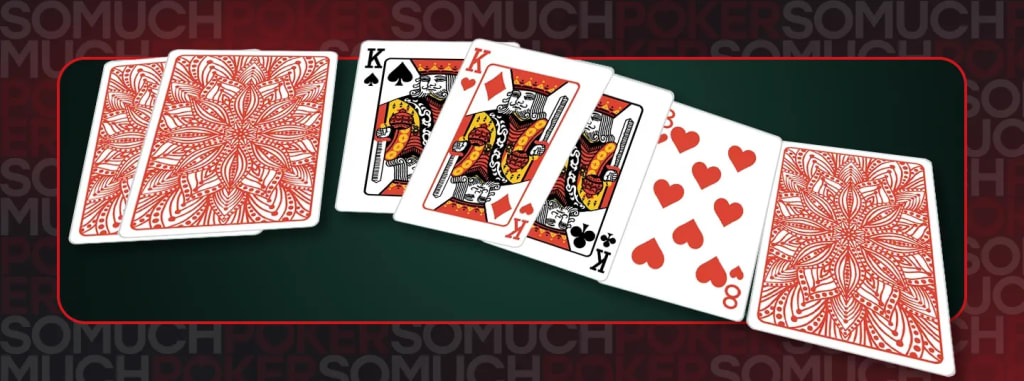
You should always aim to track all exposed cards, because they give vital information you can use to deduce your opponents’ possible hands. For example, if your opponent has two spades face-up and two more spades are out of play, it is unlikely they will hit their flush.
Pot Control on Later Streets
You should avoid bloating the pot with marginal hands on later streets. For example, if your hand does not improve by the fifth street, you should opt for check-calls rather than betting to curb your losses.
On the other hand, if you have a strong hand, for example, a full house, you should bet aggressively in most cases to build a massive pot.
Profile Your Opponents
Pay careful attention to your opponents’ actions and assign them to player categories. You should play tighter against loose players, let them chase you, and punish them later. Against tight players, try stealing more antes and bring-ins with semi-bluffs. You should trap aggressive players with strong draws, then bet them big on later streets.
Common Mistakes to Avoid in 7 Card Stud
There are countless pitfalls in poker. Be easy on yourself if you make a mistake – even experienced players make them from time to time, especially when they transition to Stud.
Identifying potential pitfalls reduces the risk of falling into them. Here are some mistakes you should look out for:
Overplaying Low Pairs
Staying in the game too long with small pairs like 5s when there are live overcards is a huge mistake and will cost you a lot of money in the long run. You should fold your hand unless it improves by the fourth street.
Ignoring Dead Cards
If you chase a straight draw when key cards are already folded, you are practically burning money. Remember to always track cards that are already out of play that round.
Playing Too Many Hands
In the long run, some hands perform much better than others. You should take the time to carefully evaluate the strength of your cards before betting. For example, you should just stick to premium hands like high pairs, three-flushes, or straights.
Tilt After a Bad Beat
Mistake: Letting frustration lead to reckless play.
Fix: Take a break if you’re emotionally compromised.
7 Card Stud vs. Texas Hold’em
Stud type of games – not to even mention mixed games, like HORSE – are more memory-intensive than Texas Hold’em because some of your opponents’ cards are face-up, and tracking cards that are already out of play or folded is crucial.

Here’s how the game stacks up against Texas Hold’em:
| Feature | Seven Card Stud | Texas Hold’em |
|---|---|---|
| Cards Dealt | Each player gets 7 cards (3 down, 4 up) | 2 private cards, 5 community cards |
| Betting Rounds | 5 (Third to Seventh Street) | 4 (Preflop, Flop, Turn, River) |
| Blinds/Ante | Ante + Bring-in | Small blind & big blind |
| Strategy Focus | Memory, hand-reading, adjusting to live cards | Position, pot odds, bluffing |
How to Get Started with 7 Card Stud
Want to start playing Seven Card Stud, but don’t know where to start? Here are some tips to help you get ahead of the competition:
Learn the Basic Rules
Many players aren’t even familiar with the rules of the game, so knowing exactly how the game is played can already give you an edge over them.
Take The Time to Study
Being disciplined about regular study sessions is what separates great players from mediocre ones. There are many free and paid courses on 7 Card Stud online for players of every skill level.
Play Online
Playing online can improve your game fast because hands are played faster than in live poker, and you can also play multiple tables at once. This means that you can gain much more experience playing a day online than you would if you spent a day in a casino!
What is more, many sites offer low-stakes tables where you can play without risking too much money.
Start with Low-Stakes Games
When you feel that you are ready to play with real money, start playing small stakes. When you have built enough confidence there, you can safely move up to the next stake.
Ready to test your skills? Join an online poker platform like ACR to practice and compete against players worldwide. Remember, every pro was once a beginner. Who knows, you might be the next HORSE prodigy!
Beus Zsoldos is SoMuchPoker's Senior Copywriter and Player Stories Editor, covering WSOP color moments, player profiles and poker personalities for the site's Stories section. She has spent more than 20 years around the game, first as a player, then as a live tournament director and localization manager for a major online poker room, before moving into full time poker writing.