

Pocket Pair

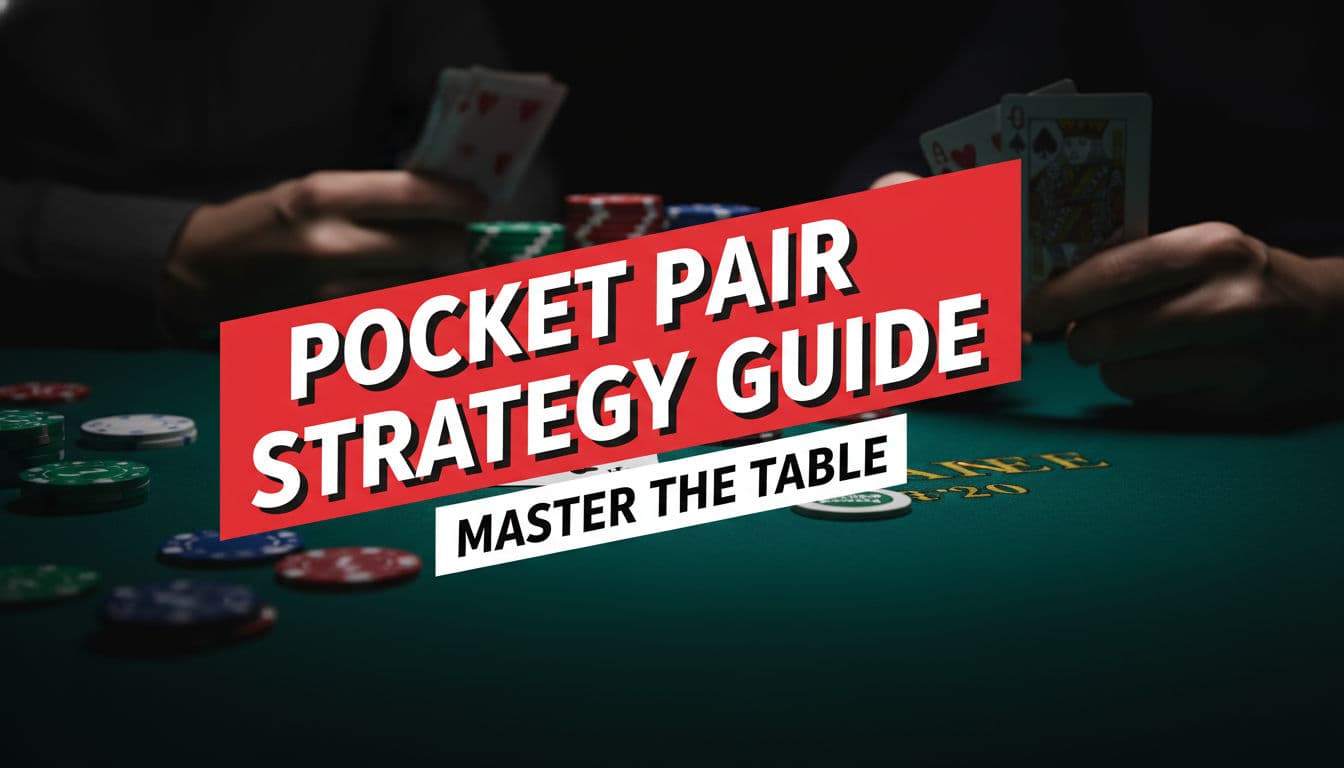
A pocket pair in poker represents one of the most exciting and strategically pivotal starting hands a player can receive. Comprising two cards of identical rank dealt privately to a player, these hands, from the formidable "Pocket Rockets" (Aces) down to humble "Ducks" (Twos), fundamentally shape pre-flop strategy and dictate critical decisions throughout the subsequent streets in games like Texas Hold'em and Omaha. Understanding the dynamic value and optimal play of pocket pairs is paramount for any serious poker player looking to gain an edge at the tables.
What Constitutes a Pocket Pair in Poker? A Poker Expert Guide
In the realm of community card poker games such as Texas Hold'em and Pot-Limit Omaha, developing a solid pocket pair strategy begins with understanding the basics: a "Pocket Pair" refers to the scenario where a player's initial two private cards, often termed "hole cards", share the same numerical or face rank. For instance, being dealt two Queens (Qh, Qs) means a player holds a pocket pair of Queens. This immediate pairing provides a significant structural advantage even before any community cards are revealed, offering a ready-made hand that requires less improvement to become strong compared to unsuited or unconnected cards.
The absence of additional community cards on the flop, turn, or river directly matching the pair means that the hand maintains its inherent value as a pair, but its relative strength will be highly dependent on the board texture and opponents' actions.
The Strategic Spectrum of Pocket Pair Strength
The perceived strength of a pocket pair varies widely and depends on its rank. Unsurprisingly, a pair of Aces is universally recognized as the strongest starting hand in poker due to its dominant position against almost all other hands pre-flop. Mastering playing pocket aces is fundamental to any solid pocket pair strategy. Following Aces are Kings, Queens, and Jacks, forming the elite tier of premium pocket pairs. Medium pairs range from Tens down to Sevens, while smaller pairs (Sixes down to Twos) are often categorized as speculative hands.
The naming conventions for these hands are as colorful as they are descriptive:
AA: Pocket Rockets, American Airlines
KK: Cowboys, King Kong (Knowing exactly how to play pocket kings is critical here).
QQ: Ladies, Dames
JJ: Fishhooks, Jokers
TT: Dimes, Tens
22: Ducks, Deuces
However, raw rank is only one dimension of strength among poker starting hands. A pocket pair's true value is profoundly influenced by the community cards (the "board"), the number of opponents, and the pre-flop action. A pair of Sevens, while decent pre-flop, can quickly diminish in value on a board with an Ace, King, or Queen, as it is now likely to be dominated.
Navigating Potential Hand Development with Pocket Pairs
The potential for a pocket pair to evolve into a powerful five-card hand is a primary reason for its high value.
Three of a Kind (Set): The most sought-after outcome is hitting a third card of the same rank on the flop, turn, or river, forming a "set". This is the core of a successful set mining strategy. A set is significantly stronger than a three-of-a-kind formed with two community cards and one hole card (trips), as it is less obvious to opponents and therefore harder to read.
Full House: Should the board pair a card different from your pocket pair, and you already have a set, you've achieved a full house. For example, holding 8-8 and the board comes 8-A-A, you have a full house (8-8-8-A-A).
Four of a Kind (Quads): The ultimate improvement for a pocket pair is hitting the fourth card of the same rank. This incredibly rare occurrence guarantees a dominant hand, almost certainly winning the pot unless another player has a straight flush or a higher four of a kind (which is impossible in this scenario with only 4 cards of each rank).
Conversely, it's crucial to acknowledge that the community cards might not improve your hand at all. In such cases, your pocket pair remains just that – a pair. Its strength then hinges on whether it's the highest pair on the board, the board texture (e.g., highly coordinated for straights/flushes), and how aggressively opponents are betting. This is where strategic decision-making becomes critical, balancing the desire to improve with the reality of the board state.
Strategic Considerations: Developing Your Pocket Pair Strategy
Playing pocket pairs effectively demands a nuanced understanding of poker strategy, moving beyond simply holding a good starting hand.
Pre-flop Strategy
Premium Pairs (AA, KK, QQ, JJ): These hands are almost always played aggressively pre-flop to build the pot, narrow the field, and extract value. Reraising (3-betting) is common to reduce the number of opponents and avoid multi-way pots where premium pairs can be vulnerable. For example, playing pocket aces correctly often means building the pot early.
Medium Pairs (TT, 99, 88, 77): These hands are often played for "set value," meaning the primary goal is to hit a third card on the flop. If you don't hit a set, these hands can be difficult to play on ace-high or king-high boards. Calling a single raise is typical, especially in position, to see a flop cheaply.
Small Pairs (66, 55, 44, 33, 22): These are almost exclusively "set-mining" hands. You're looking to call a small pre-flop raise in hopes of hitting your set on the flop. Implementing a disciplined set mining strategy is vital here. If you don't hit, it's usually best to fold unless the pot odds are extremely favorable or you have a clear read on your opponents. Avoiding large pre-flop commitments is key.
Post-flop Strategy
Once the flop is dealt, the strategy shifts dramatically.
Hitting a Set: When you flop a set, your hand becomes very strong. The goal is to maximize value without scaring opponents away. Slow-playing can be effective on dry boards, while aggressive betting is often better on wet, coordinated boards to protect against draws.
Overpair (Pair Higher Than Board Cards): If you have a premium pair like Kings and the flop comes T-6-2, you have an overpair. Implementing a disciplined set mining strategy is vital here. This is a strong hand, but vigilance is required for overcards on later streets or possible straight/flush draws by opponents.
Underpair (Pair Lower Than Board Cards): If you have 7-7 and the flop comes K-Q-T, your pair is now an underpair. These hands are much weaker and often require careful checking/folding, unless you have strong reads or feel your opponent is bluffing.
Understanding these dynamics is crucial, as a pocket pair's strength is not static; it evolves with every community card dealt and every action taken at the table. We hope this poker expert guide helps you master texas hold'em pocket pairs and optimize how you play your poker starting hands on an online poker site.
| Pros | Cons |
|---|---|
Pocket pairs are already a 'made' hand before any community cards are dealt, often making them the strongest hand pre-flop and giving you an immediate advantage. | Without improvement, a pocket pair can quickly lose value if higher-ranking cards appear on the board, leaving you with a potentially dominated hand. |
They offer excellent implied odds for hitting a very powerful hand like a set, full house, or even four of a kind, which are often concealed and hard for opponents to put you on. | If you don't hit a set, playing small to medium pocket pairs on the flop can be challenging, often requiring you to fold to aggression unless you have strong reads. |
Premium pocket pairs (Aces, Kings) typically dictate an aggressive pre-flop strategy, simplifying decision-making and allowing you to build the pot early. | Repeatedly calling raises with small pairs in hopes of 'set mining' can become expensive if you consistently miss the flop and are forced to fold. |
Some players play all pocket pairs in a very similar, transparent manner (e.g., always raising), making their hand range easier for observant opponents to decipher. |
Related Poker Terms
Best Online Poker Bonus Codes


About the Editor

Gyöngyi P. Tóth is Somuchpoker's Content Writer and Poker Stories Specialist, writing Side Pot features, WSOP storylines, and the site's Poker in Pop Culture and Legends of Poker series. She was introduced to poker 20 years ago through live tournament play, and what has kept her interest since is the psychology and human behavior behind the game as much as the cards themselves.


