

Marked Cards

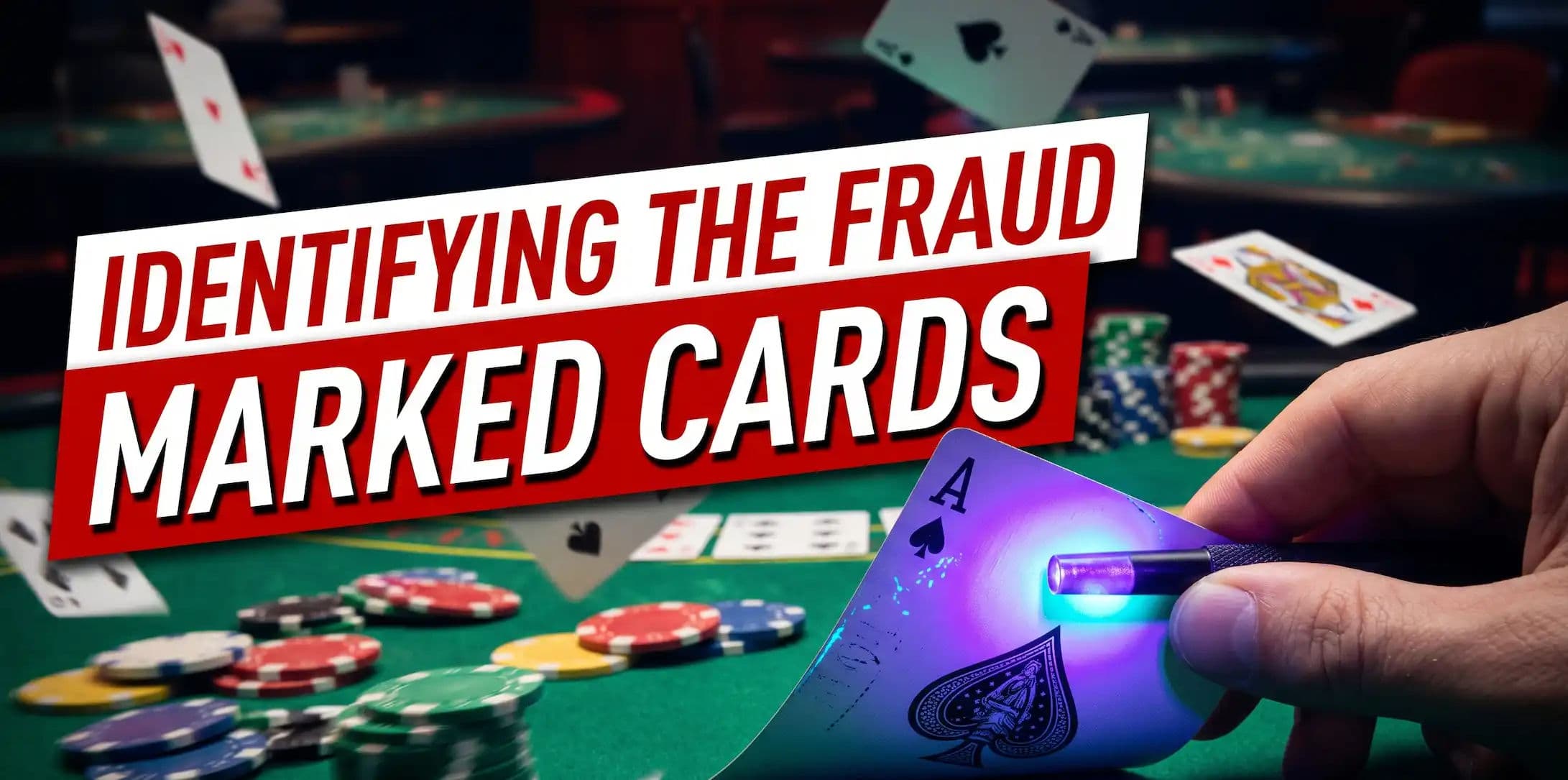
The integrity of poker hinges on fair play, where skill and chance intertwine without illicit interference. Yet, throughout history, certain clandestine methods have threatened this fundamental principle. Among the most infamous forms of deception are "marked cards" – an age-old trick that grants an unfair advantage to those who master its use. This comprehensive guide delves into the shadowy world of marked cards, exploring their various forms, the cunning ways they are employed, and crucial strategies for detection and prevention. Whether you're a seasoned player, a curious newcomer, or a casino professional, understanding the mechanics of marked cards is paramount to safeguarding the fairness and thrill of the game.
The Unseen Advantage: What Are Marked Cards?
Marked cards are, at their core, playing cards that have been subtly altered by cheaters to be identifiable without seeing their faces. These modifications, often invisible to the untrained eye, allow a deceitful player to know the value and suit of an opponent's hole cards or an upcoming community card, fundamentally disrupting the game's probabilities and turning it into a predetermined outcome. This illicit knowledge provides a colossal edge, enabling cheaters to make consistently superior decisions, whether it's knowing when to bet big, when to fold, or how to manipulate the pot based on precise information about the cards.
A Glimpse into History: The Legacy of Card Marking
The practice of marking cards is as old as playing cards themselves, dating back centuries. Early methods were rudimentary, often involving simple bends, creases, or smudges. As card manufacturing evolved, so too did the sophistication of marking techniques. From the dimly lit backrooms of the 19th century to the high-stakes tables of modern casinos, the art of marking cards has adapted, always seeking to stay one step ahead of detection. Historically, marked cards were a staple of card sharps and con artists, used in various card games beyond poker to swindle unsuspecting victims. This enduring legacy highlights the constant cat-and-mouse game between those who cheat and those who uphold the integrity of the game.
Diverse Methods: How Cards Are Marked
The ingenuity behind marked cards is surprisingly varied, employing a range of techniques from the overtly physical to the technologically advanced. Understanding these methods is the first step towards detection.
1. Physical Alterations
Nail Nicks or Scratches: Subtle indentations or scratches made on the back of cards, often near the edges or corners, using a fingernail or a sharp object. These can be felt or seen under specific lighting.
Crimps and Bends: Deliberate creases or bends applied to cards. A slight bend in a specific direction can signify a high card, an ace, or a particular suit, detectable by touch or a trained eye observing the deck's profile.
Rouge Work/Daub: Applying a substance, often a wax or a greasy material (known as "daub"), to the back of cards. This creates minute changes in the reflectivity or texture, visible under certain conditions or with a specific angle of light.
Shading/Tinting: Very subtle changes in the coloration of the card's back design, often done with a light chemical or ink that barely alters the pattern but creates a recognizable mark for the cheater.
2. Chemical and Technological Methods
Juice Deck: One of the most common and sophisticated methods, involving the application of a special, invisible chemical solution to the card backs. When viewed through a specific colored filter or with special glasses (often red or orange-tinted), the marks become visible. There are different types of 'juice' such as 'reader system' or 'block-out' systems.
Luminous/Infrared Ink: Similar to juice decks, these cards are marked with an ink visible only under ultraviolet (UV) or infrared (IR) light. Cheaters often use specialized contact lenses or discreet cameras equipped with IR filters to see these marks.
Cutting/Shaving: The edges of certain cards might be minutely trimmed or shaved, making them slightly narrower or shorter. This allows a skilled operator to identify them by touch, particularly during shuffling or cutting the deck.
The Execution: How Marked Cards Are Utilized in Play
Using marked cards effectively requires more than just possessing them; it demands skill, sleight of hand, and often, an accomplice. The information gained can be used in numerous ways:
Pre-flop Advantage: Knowing opponents' hole cards allows a player to fold weak hands, raise with strong ones, or bluff more effectively, saving chips or maximizing profits.
Post-flop Decisions: Awareness of what cards are coming or are already out can inform betting strategies, pot odds calculations, and even when to push all-in.
Collusion: In team play, one player might signal the marked cards to an accomplice, creating an unbeatable information network at the table.
Stacking the Deck: Before a game, marked cards can be sorted or "stacked" in a particular order by a confederate, ensuring specific players receive winning hands.
Vigilance is Key: Detecting Marked Cards
Detecting marked cards requires acute observation and a systematic approach. Casinos employ strict protocols, but even in home games, players should be aware.
Careful Visual Inspection: Before and during play, closely examine the backs and edges of cards. Look for inconsistencies in the pattern, faint smudges, scratches, or uneven trimming. Hold cards up to different light sources and angles.
Tactile Examination: Gently run your fingers over the card backs. Can you feel any raised areas, indentations, or changes in texture? This is particularly effective for detecting nail nicks or crimps.
Pattern Recognition: If a player consistently seems to know when to fold marginal hands or makes incredibly accurate reads, it might be a red flag. While this could be a skill, it warrants observation of their interaction with the cards.
Light Source Variation: Marks made with daub or certain inks can become more apparent under different light conditions. Changes in room lighting or the use of specific light filters might reveal hidden patterns.
Professional Scrutiny: In regulated environments, pit bosses and security personnel are trained to spot subtle tells and utilize technology like advanced cameras and specialized optical devices to detect sophisticated marking techniques.
Fortifying the Game: Preventing Marked Card Cheating
Preventing marked card use is crucial for maintaining the integrity and enjoyment of poker.
Frequent Deck Changes: The simplest and most effective measure. Regularly changing decks, especially after high-stakes hands or suspicious activity, makes it difficult for cheaters to mark an entire deck unnoticed.
New and Sealed Decks: Always ensure new decks are factory-sealed and opened in full view of all players. Avoid using old, worn, or previously used decks in serious games.
Experienced Dealers and Supervision: Professional dealers are trained to handle cards meticulously and spot irregularities. In casinos, pit supervisors provide an additional layer of oversight.
Security Technology: Modern casinos utilize sophisticated surveillance systems, including overhead cameras with high-resolution imaging and even infrared capabilities, which can detect marks invisible to the naked eye.
Player Education and Awareness: Educating players on the various marking techniques and what to look for empowers the entire table to contribute to game security.
The Enduring Battle for Fairness
The fight against marked cards is an ongoing testament to the perpetual struggle between those who seek to exploit vulnerabilities and those committed to preserving the purity of competition. While the methods of deception become increasingly sophisticated, so too do the countermeasures. By understanding the history, techniques, and detection strategies associated with marked cards, players and operators alike can contribute to a safer, fairer, and more trustworthy poker environment, ensuring that skill and luck remain the true arbiters of success at the felt.
Play in a 100% Secure Environment. Worried about marked cards and live game integrity? In online poker, physical cheating is impossible thanks to automated software and strict Random Number Generators (RNGs). Experience the safest way to play on the best online poker sites . Create your account today, use the exclusive promo code SMPBONUS, and enjoy a perfectly fair game with a boosted bankroll every time you hit the virtual tables!
| Pros | Cons |
|---|---|
Marked cards grant the user an unparalleled advantage by revealing opponent holdings or unseen community cards, leading to consistently optimal decision-making and a dramatic increase in win probability. | Despite their subtlety, marked cards are subject to detection by vigilant players, experienced dealers, and sophisticated casino security, leading to severe repercussions. |
Many modern marking techniques, such as luminous ink or finely shaved edges, are incredibly difficult to detect with the naked eye, allowing the cheater to operate discreetly for extended periods. | Being caught with marked cards can result in immediate expulsion, lifetime bans from establishments, and potentially criminal charges for fraud or theft, alongside significant financial losses. |
Marked cards can be utilized in various poker formats and scenarios, from pre-flop hand selection to precise post-flop betting, making them a flexible tool for illicit gain. | Discovery of using marked cards leads to permanent social ostracization within the poker community, destroying trust and future opportunities to play in reputable games. |
The presence of marked cards fundamentally undermines the fairness and enjoyment of poker, stripping the game of its inherent challenge and turning it into a predetermined scam for unsuspecting players. |
Related Poker Terms
Best Online Poker Bonus Codes


About the Editor

Bence Mitykó is a Somuchpoker poker writer, covering poker news and strategy. He spent four years playing poker professionally, primarily focusing on Heads-Up Sit & Go games, experience that continues to shape his understanding of poker strategy, online poker dynamics, and the wider poker industry.


