

Misdeal

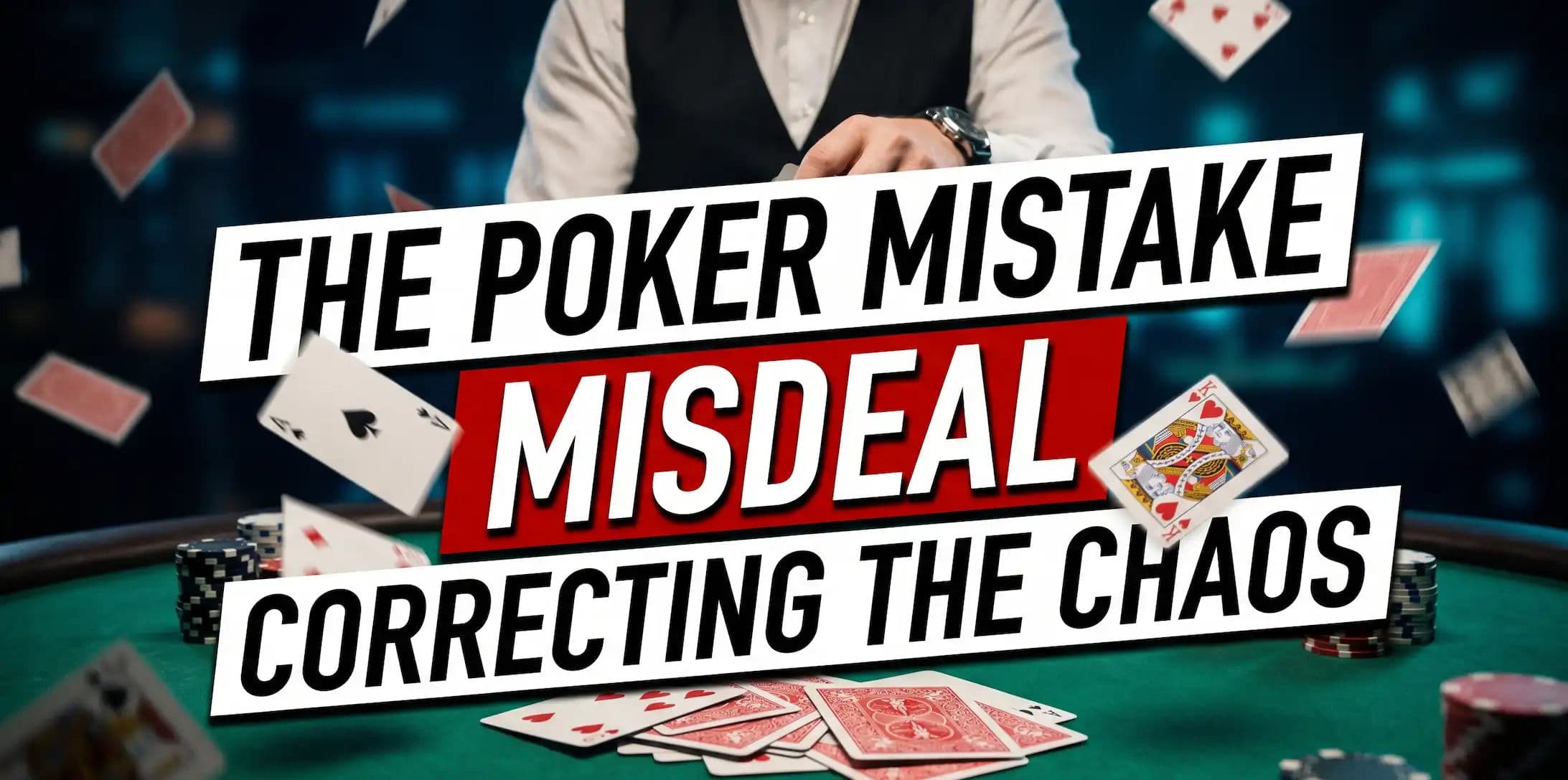
In the high-stakes world of poker, where strategy and skill often determine outcomes, the integrity of the game relies heavily on precise execution and strict adherence to rules. A critical aspect of maintaining this integrity involves understanding and properly adjudicating what is known as a misdeal. A misdeal occurs when a significant error by the dealer compromises the fairness of the hand, necessitating its immediate nullification. When such an incident arises, all distributed cards are returned, the hand is voided without any money changing hands, and blinds or antes remain in play for the subsequent deal. This mechanism is crucial for protecting players from unfair advantages and ensuring that every hand begins on an equitable footing.
The Anatomy of a Misdeal: Understanding Poker Misdeal Rules
If you have ever asked yourself, "What is a misdeal in poker?", it is more than just a minor hiccup; it is a procedural safeguard. It acts as a fundamental mechanism to preserve the intrinsic fairness and overall poker game integrity. Its primary purpose is to ensure that no player gains an unintended or illicit advantage due to a mistake. Rather than proceeding with a compromised situation that could unfairly influence strategy and outcomes, the action is stopped, creating a poker hand void. The hand is then completely reset, guaranteeing an even playing field and promoting fair play poker for all participants.
Common Scenarios Leading to a Misdeal
Understanding the specific circumstances that trigger a misdeal is vital for both players and dealers. Every dealing error poker deals with shares the common thread of potentially introducing an element of unfairness into the game.
Exposing a Hole Card: This is where a common dealer error that poker players see occurs, but there is a strict distinction to be made. In a standard exposed card poker scenario, if the dealer accidentally flashes one of a player's private cards, it is usually not a misdeal (unless it is the very first or second card dealt in the hand). Instead, that card becomes the burn card for the flop, and the player gets a replacement card at the end of the deal. However, if the dealer exposes two or more cards, standard poker misdeal rules dictate that the hand must be immediately declared a misdeal.
Dealing Out of Order or Skipping a Player: The sequence of dealing cards is meticulously defined to ensure equity. If cards are dealt to players in an incorrect order, or if a player is completely skipped during the initial deal, the structural integrity of the hand is compromised, justifying an immediate misdeal.
Incorrect Number of Cards Dealt: Each poker variant specifies the exact number of hole cards a player should receive (e.g., two in Texas Hold'em, four in Omaha). Should any player receive an incorrect count, either too many or too few cards, and it is noticed before substantial action occurs, the hand is a misdeal.
Deck Irregularities: The integrity of the deck itself is paramount. If, at any point before significant action occurs, the deck is found to be incomplete (missing cards), to contain extra cards, or even duplicate cards, a misdeal is the only logical recourse.
Insufficient Shuffle or Flashing the Bottom Card: While less common with modern automatic shufflers, a manual shuffle that is demonstrably inadequate can lead to a misdeal. Similarly, accidentally exposing the bottom card of the deck during the dealing process provides illegitimate information that can be exploited, compromising the fairness of the subsequent deal.
The Point of No Return: "Substantial Action"
A critical factor in applying misdeal regulations is the concept of "substantial action". This is the point of no return; once substantial action has occurred, a misdeal cannot be declared, and the hand must be played out as dealt.
In most standard poker tournament rules, substantial action is strictly defined as either two players putting chips into the pot (such as a bet and a call) or three consecutive players making any action (like three folds, or two folds and a call). If a dealing error, such as a player having an incorrect number of cards, is discovered after this point, the entire hand is not voided. Instead, only the player with the invalid hand will have their cards declared dead, losing any chips they have already invested in the pot.
Adjudication and House Variations
It is important to note that while the core principles are universal, the specific application of these concepts can exhibit slight variations depending on local poker room regulations. The final decision to declare a misdeal always rests with a dedicated floor person or tournament director. These officials are trained to assess the situation impartially, ensuring a fair and consistent outcome for all players and resolving any disputes efficiently.
The Online Poker Exception
Finally, it is worth mentioning that misdeals are exclusively a live poker phenomenon. In online poker , the entire dealing process is governed by automated software and Random Number Generators (RNG). Because a computer program instantly and flawlessly distributes the exact number of digital cards to the correct positions, human errors like flashing a bottom card, skipping a player, or dealing out of order simply cannot happen. When you play online, game integrity regarding the physical deal is mathematically guaranteed on every single hand.
| Pros | Cons |
|---|---|
Misdeal rules are critical for maintaining an equitable playing field by voiding hands compromised by dealer errors, preventing any player from gaining an unfair advantage. | While necessary, a misdeal interrupts the flow of the game, requiring cards to be collected and redealt, which can slightly slow down the pace of play. |
By immediately addressing procedural flaws, misdeal protocols reinforce the trustworthiness and professionalism of the game, fostering player confidence. | Players may experience mild frustration when a hand is voided, especially if they felt they had a strong starting hand, despite the necessity for fairness. |
Standardized misdeal rules offer a clear framework for resolving common errors, ensuring consistency across different hands and preventing subjective judgments. | Slight variations in misdeal rules between different venues can sometimes lead to confusion or debate among players unfamiliar with specific house policies. |
Related Poker Terms
Best Online Poker Bonus Codes


About the Editor

Bence Mitykó is a Somuchpoker poker writer, covering poker news and strategy. He spent four years playing poker professionally, primarily focusing on Heads-Up Sit & Go games, experience that continues to shape his understanding of poker strategy, online poker dynamics, and the wider poker industry.


