Poker Etiquette: Unwritten Rules of the Felt

Poker is about more than knowing when to fold, call, or raise. When you sit down at a live poker table, your behavior matters just as much as your cards. Unlike online poker, where software automatically controls the action, live games require players to manage their own decisions, chips, cards, and interactions with others.
Good poker etiquette helps keep the game fair, organized, and enjoyable for everyone. Some expectations are part of the official rules, while others are unwritten customs that experienced players learn over time. Acting out of turn, revealing information about an active hand, or deliberately delaying the reveal of a winning hand can create unnecessary tension at the table.
Understanding these unwritten rules is especially important for beginners transitioning from online poker to live games. However, even experienced players can benefit from remembering that competitive poker does not have to come at the expense of respect and good sportsmanship.
Essential Poker Table Manners Every Player Should Know
Live poker requires constant attention. Every movement can communicate information, influence another player's decision, or interrupt the flow of the game. Following a few basic habits will help you avoid common mistakes and make a positive impression at the table.
Act in Turn: The Cardinal Rule
One of the most important poker table manners is waiting until the action reaches you before making a decision.
In a typical poker hand, players act in a specific order. Acting too early can give opponents information they should not have when making their own decisions.
For example, imagine that three players are involved in a hand and you are third to act. Before the first player has made a decision, you announce "raise". The first player now knows a raise is coming, which may influence whether they call, fold, or raise.
Even a small physical movement, such as reaching for your cards as if you are about to fold, can influence the players acting before you.
If you accidentally act out of turn, stop immediately, apologize, and let the dealer clarify the situation. The best way to avoid these mistakes is to follow the action around the table and wait until it is officially your turn.
Why Poker Players Use Chips Instead of Cash
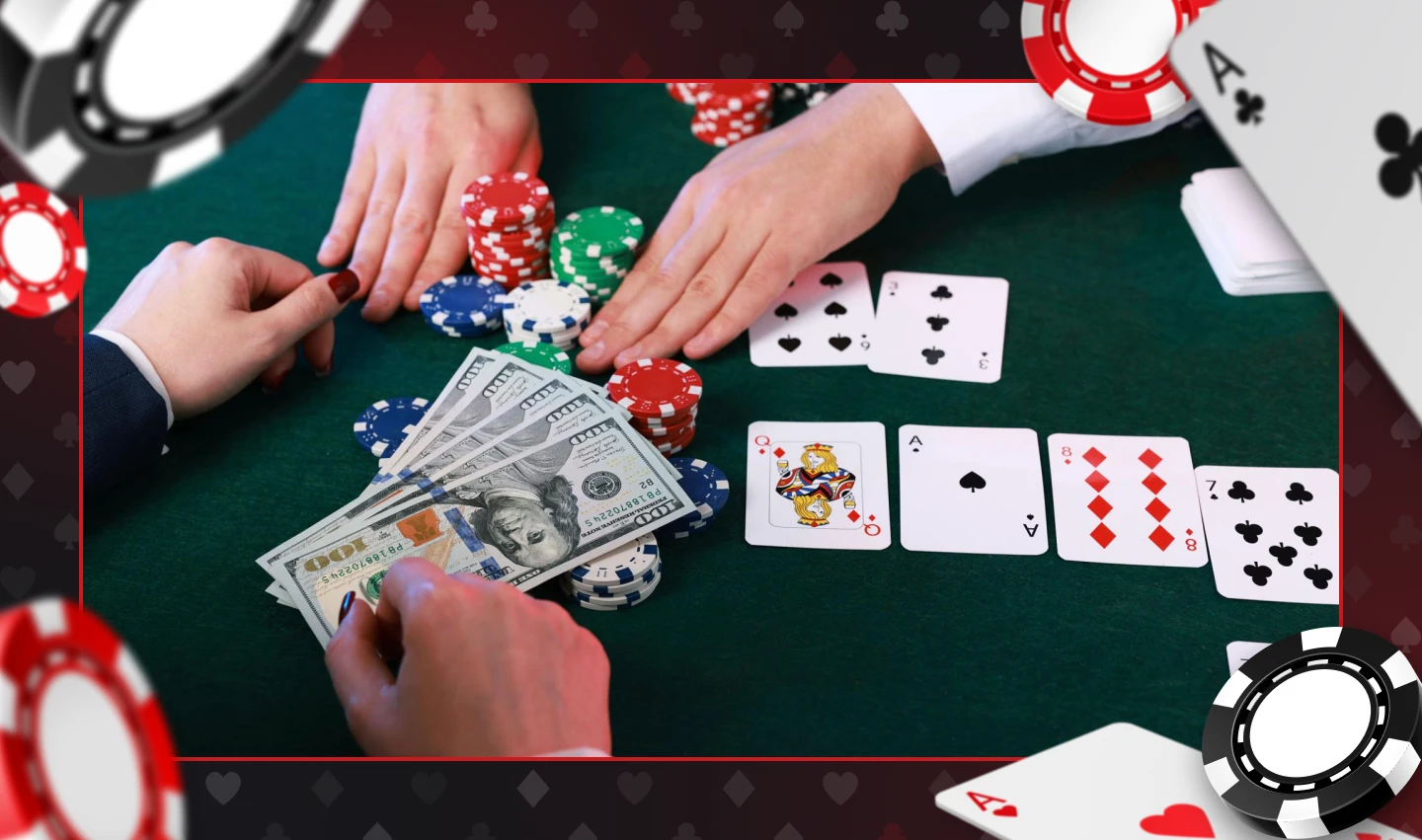
In live poker, players use chips instead of placing cash directly on the table. This makes betting faster and easier to manage, as chips come in standardized denominations that dealers can quickly count and identify.
Chips also help keep the game organized, reduce the need to handle cash during every betting round, and make it easier to calculate bet and pot sizes. Before joining a cash game, players exchange their money for chips, which represent their monetary value at the table. In tournaments, however, chips represent a player's tournament stack rather than directly redeemable cash.
Make Your Betting Actions Clear
Clear communication is essential in live poker. Unlike online games, where the software registers every action automatically, live players must make their intentions understandable to the dealer and other participants.
Calling: Say "call" clearly before placing your chips into the betting area.
Raising: Announce "raise" and state the total amount before moving your chips forward.
Folding: Keep your cards together and slide them toward the dealer without exposing them.
Checking: Make your intention clear with an appropriate verbal declaration or gesture.
Verbal declarations are especially helpful for players new to live poker. When your intentions are clear, there is less room for confusion or disputes about what you meant.
Avoid Splashing the Pot
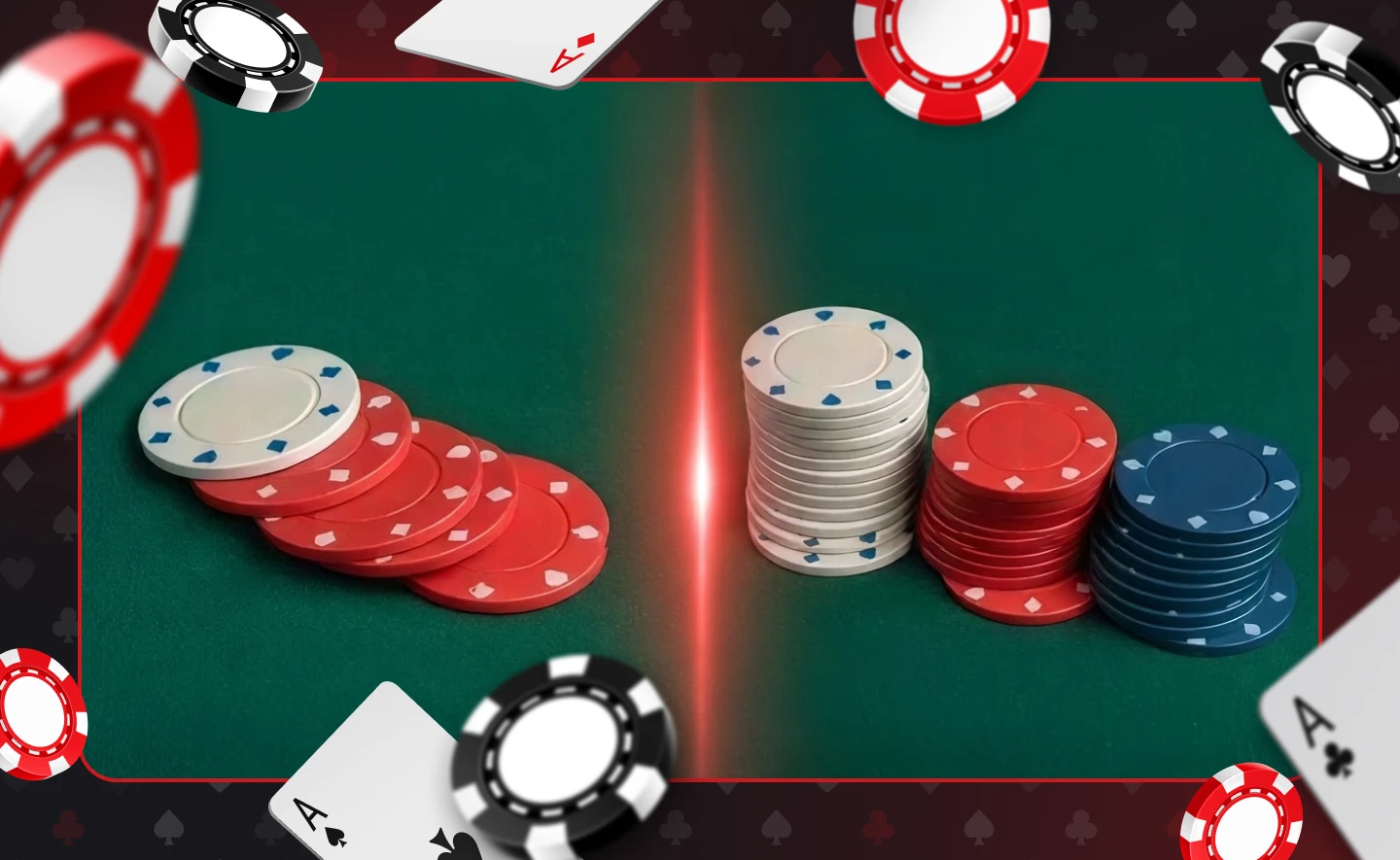
Throwing a handful of chips directly into the middle of the pot may look dramatic in movies, but it is poor practice in a real poker room.
This behavior is known as splashing the pot. When chips are scattered among the existing bets, the dealer may have difficulty determining exactly how much was wagered.
The dealer may need to stop the action, separate the chips, and count them before the hand can continue.
Instead, keep your chips organized and place your bet neatly in front of you. The dealer will collect them when the betting round is complete.
Protect Your Hole Cards
In live poker, you're responsible for protecting your cards. If your hand accidentally gets mixed into the muck, you could lose the opportunity to continue playing it.
Keep your hole cards flat on the table in front of you.
Use your hands to prevent neighboring players from seeing your cards.
Avoid moving your cards too close to the dealer's discard pile.
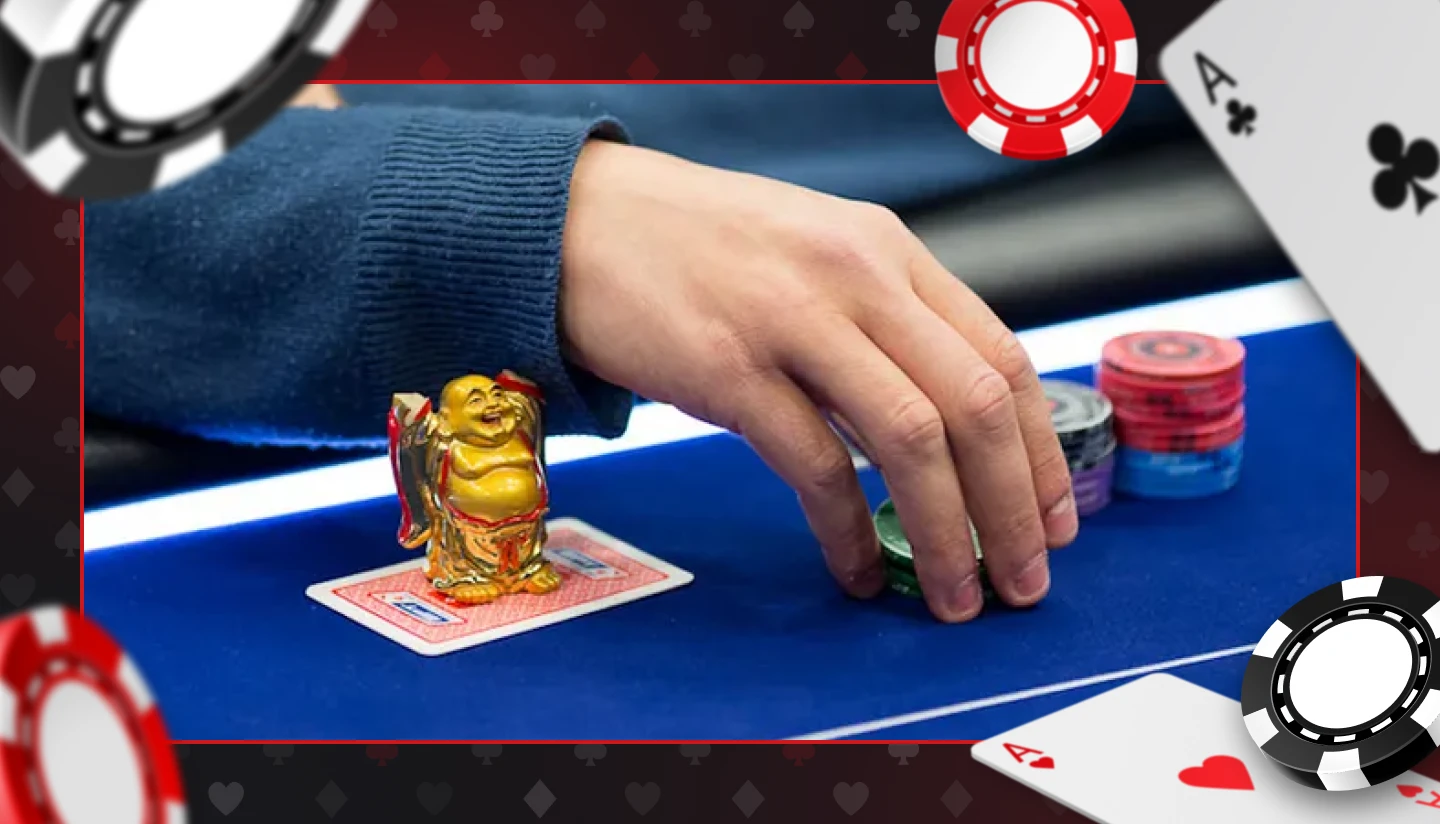
Place a chip, coin, or dedicated card protector on top of your cards.
At showdown, turn your cards face up clearly so the dealer can identify your hand.
A card protector is a particularly useful accessory because it helps prevent the dealer from accidentally collecting your cards during a fast-paced game.
Follow the One Player to a Hand Rule
The one-player-to-a-hand principle is one of the most important unwritten poker rules. Poker is an individual game, and each player must make their own decisions.
If you are still involved in a hand, other players should not tell you whether to call, fold, or raise. You should also avoid asking spectators or friends for advice while the hand is in progress.
The same principle applies to players who have already folded. They should not reveal information about their discarded cards or comment on the action while other players are still competing for the pot.
Imagine that you fold before the flop. When the dealer reveals an Ace of spades, you suddenly remember that you folded that exact card. Announcing this information may seem harmless, but it gives the remaining players knowledge that could influence their decisions.
Even a reaction such as a loud gasp when a third heart appears on the turn can reveal information about a possible draw.
Sometimes, the best contribution you can make to a hand is simply staying quiet.
Don't Coach Other Players
Poker tables are often social environments. Players chat, joke, and discuss previous hands between deals. However, unsolicited strategic advice during or after a hand can quickly become irritating.
"You should have raised pre-flop."
"Why did you call that huge bet with middle pair?"
"He was obviously bluffing. How could you fold?"
"I knew you had pocket kings the whole time."
Even if your analysis is correct, criticizing another player's decisions can make the atmosphere uncomfortable.
There is a well-known poker expression for this behavior: tapping the glass. It refers to scaring fish in an aquarium. In poker, it describes criticizing or "educating" weaker players in a way that makes them uncomfortable and may drive them away from the game.
Recreational players are an important part of the poker ecosystem. Let them make their own decisions without embarrassing them or explaining every mistake.
Bad Poker Etiquette: Behaviors Players Remember
Not every etiquette mistake is equally serious. A beginner who accidentally acts out of turn is not necessarily behaving maliciously. However, some actions go beyond simple mistakes and can damage the atmosphere or even threaten the game's integrity.
Honest mistakes: Accidental actions that can usually be corrected with help from the dealer.
Poor table manners: Disrespectful or annoying behavior that makes the game less enjoyable.
Deliberate misconduct: Actions intended to deceive opponents, gain an unfair advantage, or disrupt the game.
Several well-known poker situations illustrate the difference.
Slow Rolling: The Ultimate Disrespect
Slow rolling poker is widely considered one of the worst examples of bad table etiquette.
A slow roll occurs when a player knows they have the winning hand but deliberately delays revealing it at showdown, allowing their opponent to believe they might still win.
Imagine a tournament hand in which one player moves all-in on the river. Their opponent looks at their cards and realizes they have a royal flush. They know their hand cannot be beaten, but instead of immediately revealing it, they pause, sigh, look around, and pretend to struggle with the decision before eventually calling.
That is a classic slow roll.
It is important to distinguish this behavior from taking time over a genuine decision. If you are facing a large bet with a marginal hand and need time to decide whether to call or fold, you are entitled to think it through.
The problem arises when the decision is already obvious to the player, and they deliberately create unnecessary suspense before revealing the winning hand.
Since the betting is already over, slow rolling offers no strategic advantage. It is simply poor poker sportsmanship that can make an already difficult moment even more frustrating for the losing player.
Angle Shooting: The Gray Area of Cheating
Angle shooting in poker refers to deceptive or deliberately ambiguous actions designed to gain an unfair advantage without openly breaking a clearly defined rule.
Angle shooters often exploit situations where their actions can be interpreted in different ways.
The Hidden Chip: Deliberately hiding a large-denomination chip behind smaller ones so an opponent misjudges the effective stack size.
The Forward Motion (Pump Fake): Moving chips forward as if preparing to bet, then pulling them back to observe an opponent's reaction.
Verbal Ambiguity: Deliberately making an unclear declaration, such as quietly mumbling "raise", then claiming a different intention after seeing the opponent's response.
The Fake Fold: Moving cards forward as if folding to encourage an opponent to act prematurely, then attempting to take the cards back.
An important distinction exists between an honest mistake and an intentional angle shoot. Players can make clumsy movements, especially during long tournament sessions when fatigue sets in. Intent is key to determining whether an unusual action was deliberate deception.
If you believe an opponent is angle shooting, avoid starting an argument. Protect your cards, ask the dealer to stop the action, and explain what happened. The floor manager can then decide how to handle the situation under the applicable rules.
String Betting: Why You Should Announce Your Raise
String betting is another common live poker mistake, often popularized by casino movies.
Suppose an opponent bets 500 chips and you want to raise the total to 1,500. If you first push 500 chips forward, pause to observe your opponent's reaction, and then reach back for another 1,000, the dealer may rule that your initial movement was a call.
In most standard live poker settings, a bet must be made in one continuous motion unless the player clearly announces a raise beforehand.
The rule exists to prevent players from using part of their betting action to gather information before deciding whether to commit additional chips.
The easiest way to avoid a string bet is to announce "raise" and state the total amount before moving your chips.
Hit and Run: The Cash Game Controversy
Hit-and-run poker is a controversial topic that concerns cash-game etiquette rather than automatically representing a formal rule violation.
The term describes a situation in which a player buys into a cash game, wins a large pot shortly afterward, and then immediately leaves with their winnings.
For example, imagine buying into a game for $1,000, winning a $2,000 pot against a regular on your second hand, and immediately collecting your chips and leaving.
Some players consider this extremely poor manners. In regular cash games, there is an unwritten expectation that players who win a big pot will stay for a few more orbits rather than immediately cashing out.
However, players are not generally obligated to remain at the table after winning. They may have a flight to catch, family commitments, or simply choose to stop playing while ahead.
The best approach is to leave respectfully. Announce your departure, say "good game", and avoid arguing with frustrated opponents.
Excessive Tanking and Unnecessary Delays
Taking time to make a difficult decision is part of poker. However, excessive tanking can become a serious annoyance when it happens repeatedly in routine situations.
In tournaments, unnecessary delays can be particularly disruptive. Blind levels and antes continue to increase according to a fixed schedule, and every minute spent waiting reduces the number of hands players can expect to play.
Imagine someone taking several minutes to fold a relatively unimportant hand before the flop. While the decision may not technically break a rule, it unnecessarily slows down the entire table.
Many modern high-roller tournaments and televised events use shot clocks, often giving players 30 seconds to act, along with time-extension chips for more difficult decisions.
Take the time you genuinely need, but avoid turning every routine action into a lengthy performance.
Poker Rules vs. Poker Etiquette: When Does Behavior Become a Violation?
One of the most important distinctions in live poker is the difference between breaking an official rule and simply behaving badly.
Some actions are clearly covered by tournament or casino regulations. Others are primarily etiquette issues, even if they frustrate players.
Repeated procedural violations: Continuing to act incorrectly or disrupt the game after receiving warnings.
Improperly exposing cards: Revealing hole cards while betting action is still pending.
Disruptive conduct: Throwing cards, deliberately interfering with the game, or repeatedly delaying play.
Abusive behavior: Insulting, threatening, or verbally abusing dealers and other players.
Serious misconduct: Collusion, soft-playing, signaling, or other attempts to gain an unfair advantage.
The consequences depend on the venue, the applicable tournament rules, and the seriousness of the incident.
Offense severity | Example | Possible consequence |
|---|---|---|
Minor | Accidentally splashing the pot | Verbal warning or correction |
Repeated disruption | Chronic stalling or ignoring instructions | Missed hands or an orbit penalty |
Serious violation | Improperly exposing cards | Dead hand or tournament penalty |
Severe misconduct | Threats or deliberate cheating | Disqualification or removal from the game |
These examples are not a universal punishment chart. The floor manager evaluates the circumstances and decides on the appropriate action.
A beginner who accidentally acts out of turn may simply receive an explanation from the dealer. A player who repeatedly uses the same action to manipulate opponents can face much more serious consequences.
Which Behaviors Are Against the Rules?
The distinction between official rules and unwritten customs becomes clearer when you compare common situations.
Player behavior | Official rule issue? | Etiquette issue? |
|---|---|---|
Acting out of turn | Depending on the action | Yes |
String betting | Yes | Yes |
Discussing an active hand | Potentially | Yes |
Deliberate slow rolling | Not automatically | Strongly yes |
Hit and run | Usually not punishable | Strongly yes |
Angle shooting | Depends on the action | Strongly yes |
Criticizing recreational players | Usually not | Yes |
Collusion or signaling | Yes | Yes |
A behavior can be deeply unpopular without automatically resulting in a penalty. The written rules, the circumstances, and the floor manager's decision determine whether formal action is appropriate.
Viral Poker Moments and Notorious Behavior
Live-streamed cash games and televised tournaments have made poker etiquette more visible than ever.
A controversial moment at a final table or high-stakes cash game can quickly spread across X, Instagram, YouTube, and Reddit. Within hours, a single hand may spark a much wider debate about sportsmanship, fairness, and acceptable behavior.
However, a short video clip does not always tell the whole story. An action that looks suspicious to viewers may have a different explanation when you consider the full hand and its circumstances.
What actually happened? Consider the exact words, movements, and betting actions.
Why did the community object? Did the behavior affect the hand's integrity, or was it primarily disrespectful?
Was it poor etiquette, a formal rules violation, or both?
Describe what happened before labeling a player a cheat. Take deliberate misconduct seriously, but base accusations on available evidence rather than assumptions about someone's intentions.
How to Be a Good Poker Sport
Being a good sport at the poker table does not mean playing passively or giving opponents an advantage. You can remain highly competitive, make aggressive bluffs, value-bet thinly, and celebrate a major tournament victory without disrespecting anyone.
Good poker sportsmanship is about how you treat people while competing, not about how aggressively you play.
Apply maximum pressure: Bluff and raise aggressively without insulting opponents.
Value-bet confidently: Try to win every available chip while respecting the other players.
Take necessary time: Think through difficult decisions without deliberately stalling.
Celebrate appropriately: Enjoy a big win without mocking the losing player.
Respect different playing styles: Allow recreational players to make their own decisions.
Handle disputes professionally: Ask the floor manager for clarification instead of arguing with the dealer.
Read the Table Dynamics
Not every poker table has the same atmosphere. A high-stakes game involving experienced professionals may be quiet and serious, while a low-stakes Friday night cash game can be much louder and more relaxed.
Reading the room is an important social skill.
If everyone is chatting and enjoying themselves, joining the conversation can make the experience more pleasant. If players are concentrating on a difficult tournament situation, avoid unnecessary comments.
The same consideration applies after a big pot. You can celebrate a victory, but remember that the opponent sitting across from you may have just lost a significant part of their bankroll.
A little empathy goes a long way.
What New Live Poker Players Should Know
Moving from online poker to a live game can feel intimidating. Beginners often worry about making mistakes, misunderstanding procedures, or accidentally breaking one of the many unwritten poker rules.
However, dealers see inexperienced players make small mistakes every day. Acting out of turn, placing chips incorrectly, or forgetting to announce a raise are all situations that can usually be handled with a simple explanation.
The most important thing is to remain calm, listen to the dealer, and learn from the experience.
If you are unsure about something, ask before acting. Not sure where to place your ante? Ask. Unsure whether the action has reached your seat? Ask the dealer.
A simple question is always better than guessing and creating an unnecessary problem for yourself and everyone else at the table.
A Practical Poker Etiquette Checklist
Before sitting down at a live poker table, keep these basic principles in mind:
Wait for your turn: Never act before the action reaches you.
Follow the game: Pay attention to the dealer and the other players.
Make your bets clear: Announce calls and raises before moving chips.
Protect your cards: Keep your hole cards safe and hidden.
Respect active hands: Never discuss cards or strategy while a hand is in progress.
Avoid coaching: Let other players make their own decisions.
Respect the staff: Treat dealers and floor managers professionally.
Play with integrity: Do not angle shoot, deliberately stall, or exploit procedural loopholes.
Accept rulings: Let the floor manager resolve disagreements.
Win and lose with dignity: Celebrate respectfully and avoid bad-beat complaints.
Final Thoughts: Respect Is Part of the Game
Poker etiquette is not about memorizing hundreds of complicated customs or sacrificing your competitive edge. It is about understanding that every player at the table contributes to the overall experience.
Following the rules, communicating clearly, protecting your cards, and respecting your opponents help keep live poker fair and enjoyable. Just as importantly, knowing the difference between an honest mistake, poor table manners, and deliberate misconduct makes it easier to handle difficult situations without unnecessary arguments.
Whether you are playing your first live cash game or competing in a major tournament, the principle remains the same: play hard, respect your opponents, and leave the table with your reputation intact.
About the Editor

Gyöngyi P. Tóth is Somuchpoker's Content Writer and Poker Stories Specialist, writing Side Pot features, WSOP storylines, and the site's Poker in Pop Culture and Legends of Poker series. She was introduced to poker 20 years ago through live tournament play, and what has kept her interest since is the psychology and human behavior behind the game as much as the cards themselves.