

Asia's Poker Revolution - The Rise of Poker in Asia

For decades, the world's poker spotlight belonged almost entirely to Las Vegas. The World Series of Poker (WSOP) represented the absolute pinnacle of the game, while Europe steadily built its own thriving tournament circuit. Asia, by comparison, was often viewed as an emerging market with enormous potential but relatively little global influence.
Today, that perception has changed dramatically. Asian poker is no longer just a niche corner of the broader gambling industry. Across the continent, major live festivals attract thousands of eager players, and prize pools continue to reach record-breaking levels.
Cities that were once considered secondary poker destinations now host some of the richest tournaments anywhere on the globe. Even more importantly, Asia is producing an entirely new generation of exceptional players. They are younger, highly analytical, and more internationally connected than ever before.
Many of these rising stars first learned poker online before transitioning to live tournaments. They bring modern, aggressive strategies to tables around the world, completely changing how the game is played. This transformation did not happen overnight; it is the result of years of steady growth and investment.
Key Takeaways
A Shift in Power: Asia has transformed from an emerging market into a dominant force in global poker.
Cultural Fit: The analytical and strategic nature of Texas Hold'em resonates deeply with Asian gaming traditions.
New Destinations: Countries like Korea, Japan, and Vietnam are now major hubs for international live tournaments.
World-Class Tours: Brands like the Asian Poker Tour (APT) and the Triton Poker Series have elevated the region's profile globally.
How Poker Found Its Place in Asia
Poker has existed in various forms for centuries, but its rise in Asia followed a very different path from its growth in the West. Unlike traditional games such as Mahjong, Go, or Shogi, poker was initially viewed as a purely foreign card game.
Game | Type | How to play | Appeal |
|---|---|---|---|
Mahjong | Tile-based game of incomplete information (usually for 4 players). | Players draw and discard tiles to build specific "melds" or sets (similar to the card game Rummy). | Combines mathematical probability, reading opponents, and the thrill of chance. It is highly social and often played casually with friends or as a gambling game. |
Go | Abstract perfect-information board game (for 2 players). | Players take turns placing black and white stones on a 19x19 grid to surround territory and capture opponent stones. | Simple to learn but boasts almost infinite strategic depth. It is widely considered one of the most intellectually demanding abstract games in the world. |
Shogi (Japanese Chess) | Abstract perfect-information board game (for 2 players). | Played on a 9x9 board with pieces that can promote to stronger units as they advance. The twist is that captured enemy pieces are kept and can be "dropped" back onto the board to fight for you. | Fast, aggressive, and highly complex because captured pieces never truly leave the game, meaning the complexity only increases as it progresses. |
During the 1990s and early 2000s, live poker was still relatively uncommon across much of the continent. Strict legal restrictions, limited casino infrastructure, and cultural differences meant that opportunities to play were incredibly scarce. Everything began to change during the global poker boom of the early 2000s.
Televised tournaments introduced millions of new viewers to the excitement of Texas Hold'em. At the same time, online poker let players learn the game without ever stepping inside a brick-and-mortar casino. Countless new players began studying poker strategy, discussing hands on forums, and competing against international opponents.
Unlike traditional casino games that depend entirely on luck, poker rewards critical thinking, emotional discipline, and mathematical reasoning. Those specific qualities resonated with many players throughout Asia, where educational systems heavily emphasize analytical problem-solving. Very quickly, poker was seen not merely as gambling, but as a highly competitive game of skill.
Why Asian Poker Is Growing So Quickly
Every successful poker market has its own story, but several common factors have fueled the remarkable rise of Asian poker.
1. Massive economic growth has created a larger middle class with higher disposable income for travel and entertainment. Live poker festivals have become highly attractive destinations, perfectly combining competition with tourism and luxury experiences.
2. Tournament organizers have invested heavily in creating world-class events for local players. Modern poker festivals offer professional dealers, livestreamed final tables, and hospitality comparable to major international sporting events.
3. High-quality poker content has become far more accessible to the average fan. Today's enthusiasts can watch livestreams, hand breakdowns, podcasts, and educational YouTube videos from virtually anywhere. Aspiring players no longer need to learn through expensive trial and error at the tables. Social media has also played a massive role in poker's surging popularity. Spectacular bluffs, emotional victories, and dramatic final tables spread quickly across platforms like TikTok and Instagram. The result is a rapidly expanding poker ecosystem where recreational players, professionals, creators, and fans all contribute.
4. The poker revolution does not stop at their borders. Behind the scenes, in countries with strict prohibitions, a massive "grey market" thrives through underground clubs and highly sophisticated mobile poker applications. The true scale of Asia's poker life cannot be understood without looking at these forbidden tables - a topic we will uncover in a dedicated future installment of this series.
The Digital Catalyst: Asia’s Mobile Poker Ecosystem
While live festivals like the Asian Poker Tour continue to break attendance records, Asia's unique online poker ecosystem is the unseen engine driving this massive growth. Unlike the West, where traditional desktop poker sites dominated the early 2000s, Asia's poker boom was fueled largely by mobile-first platforms and club-based applications.
Operators deeply understood the region's massive mobile gaming culture. Platforms like GGPoker (particularly through its Asian-focused skin, Natural8) tailored their software perfectly to the market. They incorporated highly gamified elements, intuitive mobile interfaces, and seamless integration with local digital ecosystems. Furthermore, the rise of private club apps allowed players in regions with limited casino infrastructure to compete within trusted, agent-based social communities.
Crucially, this thriving digital landscape created a direct and powerful pipeline to live events. Today, a significant percentage of the enormous tournament fields in Taiwan, Vietnam, and South Korea are composed of players who won their live seats through online satellites. This unprecedented accessibility means that a university student in Tokyo or a young professional in Ho Chi Minh City can hone their strategic skills against international competition daily. When they finally step onto the floor of a major live series, they often bring the volume and experience of a seasoned professional. This synergy between mobile gaming accessibility and live tournament prestige has supercharged Asia's poker revolution.
A Map of Asia's Poker Scene: The Legal and Emerging Markets
While future articles in this series will dive deeply into the specific laws, top players, and unique ecosystems of individual nations, it is essential to start with the broader picture.
East Asia: The Tournament Powerhouses
Taiwan (TWN): Currently the beating heart of Asian tournament poker. Led by the Chinese Texas Hold'em Poker Association (CTP), Taipei regularly hosts the biggest stops for the Asian Poker Tour (APT). Proving that the local appetite for the game is unmatched, Taiwan recently boasted staggering, record-breaking fields, including a Main Event with over 9,000 entries.
South Korea (KOR): Anchored by foreigner-only integrated resorts in Incheon and Jeju, it is a premium destination for international series like the World Poker Tour (WPT) and the APT.
Japan (JPN): Strict gambling laws and bans on cash prizes historically limited traditional casino poker in Japan, forcing enthusiasts to find alternative ways to play. They first discovered Texas Hold'em through educational communities, international travel, and local "amusement clubs", where the scene currently thrives. Today, players compete in massive domestic events like the Japan Open Poker Tour (JOPT) not for direct cash, but for overseas tournament sponsorships.
Macau (MAC): The historical cradle of the high-stakes Asian poker boom. While it is currently rebuilding its tournament scene, it remains a legendary destination for nosebleed cash games.
Hong Kong (HKG): Operates primarily through private, exclusive clubs and historically via cruise ship tournaments in international waters.
Mongolia (MNG): An emerging, niche market with small-scale casino poker rooms available primarily for tourists in Ulaanbaatar.
Southeast Asia: Cash Game Hubs and Rising Stars
Vietnam (VNM): A wildly fast-growing market restricted strictly to tournament-only poker clubs. It hosts enormous, action-packed festivals for the APT, WPT, and the U Series of Poker (USOP).
Philippines (PHL): The undisputed cash game capital of Southeast Asia. Manila’s massive casino resorts (like Solaire and Okada) offer 24/7 cash games alongside established Asia Pacific Poker Tour (APPT) and APT stops.
Malaysia (MYS): While domestic casino poker is limited to Genting Highlands, Malaysia’s true contribution to the game is the Triton Poker Series. Founded by Malaysian businessmen Paul Phua and Richard Yong, this brand completely revolutionized global high-stakes poker.
Cambodia (KHM): Anchored by the NagaWorld complex in Phnom Penh, it has become a major regional hub, frequently hosting the WPT and APT.
Singapore (SGP): Offers highly regulated, premium cash games in its two massive integrated resorts, though strict entry levies apply to local citizens.
Laos (LAO): Border casinos in the Golden Triangle offer niche, unregulated cash game action.
South Asia: The Floating Casinos and Local Tours
India (IND): Boasts a massive, self-sustaining domestic circuit. The Deltin Poker Tournament (DPT) and India Poker Championship (IPC) thrive on the famous floating casinos situated on the Mandovi River in Goa.
Sri Lanka (LKA): A longstanding, reliable destination for South Asian grinders, offering vibrant cash games and local tournaments in Colombo’s casinos.
Nepal (NPL): Kathmandu's legal casino sector provides a safe haven for poker enthusiasts, primarily drawing large crowds of players traveling from neighboring India.
Central & West Asia: The Eurasian Bridge
Kazakhstan (KAZ): The Eurasian Poker Tour (EAPT) regularly runs well-attended festivals in designated casino zones like Kapchagay and Borovoe.
Armenia (ARM): Offers established legal poker rooms and regularly partners with the Russian Poker Tour (RPT) for regional festivals.
United Arab Emirates (ARE): While currently without poker, the UAE belongs on this list as the future frontier. With the Wynn Al Marjan integrated resort set to open soon, it is widely expected to introduce legalized casino gaming - and poker - to the region.
The Tours That Changed Everything
While talented players have helped put Asia on the map, major tournament series have provided the necessary stage. These professional tours have given local players a chance to compete without traveling halfway across the world.
The Asian Poker Tour: Building the Foundation
Perhaps no organization has contributed more to grassroots growth than the Asian Poker Tour (APT). Established in 2006, the tour has spent nearly two decades building a professional tournament circuit throughout the region. What began as a relatively modest series has beautifully evolved into one of the world's largest live poker brands.
The tour's greatest strength is its incredible accessibility. Unlike exclusive high-stakes events, the Asian Poker Tour (APT) offers tournaments across a wide range of affordable buy-ins. This welcoming structure allows newcomers to experience major festivals without needing enormous, intimidating bankrolls.
In recent years, these festivals have shattered attendance records across multiple countries. The tour generates prize pools that would have seemed completely unimaginable only a decade ago. The Asian Poker Tour (APT) continues to prove that the demand for live poker in Asia has never been stronger.

Triton Poker Series: Asia's Global Showcase
If the grassroots scene is the foundation, the Triton Poker Series is Asia's global showcase. Since its ambitious launch, Triton has completely transformed the worldwide perception of high-stakes poker. With buy-ins often reaching six or even seven figures, the series consistently attracts the world's strongest and wealthiest players.
What truly sets the Triton Poker Series apart, however, is its flawless presentation. Modern broadcasts feature multiple camera angles, elite professional commentary, advanced graphics, and stunning hole-card technology. Millions of viewers now passionately follow these high-roller livestreams worldwide.
Just as importantly, the player fields are remarkably diverse and international. European superstars frequently battle American legends alongside elite professionals from China, Malaysia, Japan, and India. The Triton Poker Series has proven that world-class poker no longer revolves exclusively around Las Vegas or Europe.

A Revolution Still in Its Early Stages
Despite remarkable progress in recent years, many industry observers believe Asia's poker revolution is just beginning. New tournament destinations keep emerging, and player fields keep growing. International travel is becoming easier, making it simpler for Asian players to compete abroad and foreigners to visit.
Technology continues to make learning advanced poker strategy more accessible than ever before. Someone learning the game in Seoul, Tokyo, or Ho Chi Minh City has access to the exact same resources as players in London. That shared global knowledge is helping create an incredibly competitive, unified international player pool.
Asian poker didn't boom because of one single tournament, one specific country, or one famous superstar. It is the brilliant result of expanding circuits, technological innovation, and a new generation eager to compete. The region has successfully diversified the game, bringing fresh playing styles, perspectives, and excitement to the tables.
Asia is no longer just an emerging poker market waiting in the wings. It has undeniably become one of the most powerful forces shaping the game's future. For professional players and casual fans alike, watching this incredible continent evolve is poker's most exciting story today.
About the Editor

Gyöngyi P. Tóth is Somuchpoker's Content Writer and Poker Stories Specialist, writing Side Pot features, WSOP storylines, and the site's Poker in Pop Culture and Legends of Poker series. She was introduced to poker 20 years ago through live tournament play, and what has kept her interest since is the psychology and human behavior behind the game as much as the cards themselves.
Related News
 Live PokerLifestyle
Off the Felt in Sanya: The Best Things to Do Away From the CPG Tables
Discover six outdoor things to do in Sanya away from CPG, from paddleboarding and surfing to rainforest walks and canyon stream trekking.
 LifestyleAsiaStories
Asia's Poker Revolution - Streams on the Felt: The Ultimate Guide to Asian Gambling Series
Discover the ultimate guide to Asian gambling series and shows. From Korean Asian casino dramas to intense Japanese gambling anime, explore high-stakes TV.
 Live PokerLifestyle
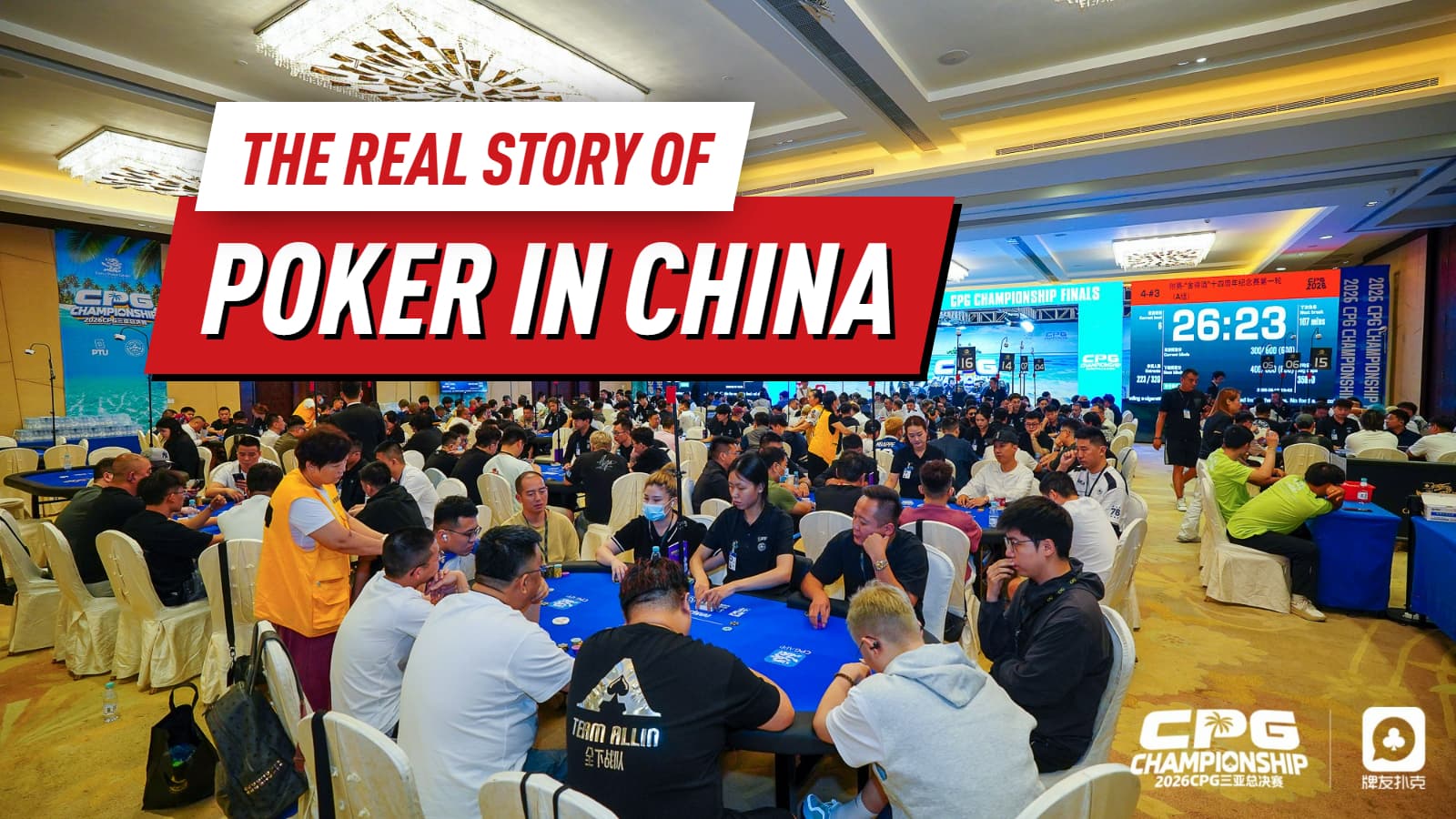
Is There Really Poker in China? Inside the Country’s Growing Tournament Scene
Is there really poker in China? Discover how CPG uses online qualification and organised competition to grow the country’s tournament scene.
 LifestyleAsiaStories
Asia's Poker Revolution - Cinema on the Felt: The Ultimate Guide to Asian Gambling Movies
Discover the ultimate guide to Asian gambling movies. From Hong Kong classics to intense Korean casino thrillers, explore high-stakes cinema on the felt.
 LifestyleStories
Poker in Pop Culture - Kakegurui and Poker: Why the Bet Series Appeals to Poker Fans
Discover why Kakegurui and Netflix's Bet appeal to poker fans through bluffing, psychology, risk-taking, and the strategic mind games that define both worlds.
 LifestyleStories
Poker in Pop Culture - Reality Poker TV Shows
Discover the best poker TV shows, from High Stakes Poker to Poker After Dark. Relive the poker boom and the unforgettable moments that captivated millions.