

Is There Really Poker in China? Inside the Country’s Growing Tournament Scene

Walk into the Howard Johnson Resort Sanya Bay during the 2026 CPG Championship Grand Final and any suggestion that China does not have a poker scene quickly disappears.
Thousands of players are expected to travel to Hainan across ten days of competition, filling a tournament area that operates on a scale rarely seen elsewhere in Asia. The field is overwhelmingly Chinese, with local players qualifying online before making the journey to Sanya.
There are established professionals sitting alongside recreational players, while many are experiencing the Championship Finals for the first time. Some have travelled across the country with groups of friends. Others have spent months trying to secure their place.
For many, this is the biggest poker trip of their year.
Yet outside China, the same question continues to appear: is there really poker in China?
The answer is yes, but it works very differently from the poker festivals international players may know elsewhere.
Poker, but Not as You Know It
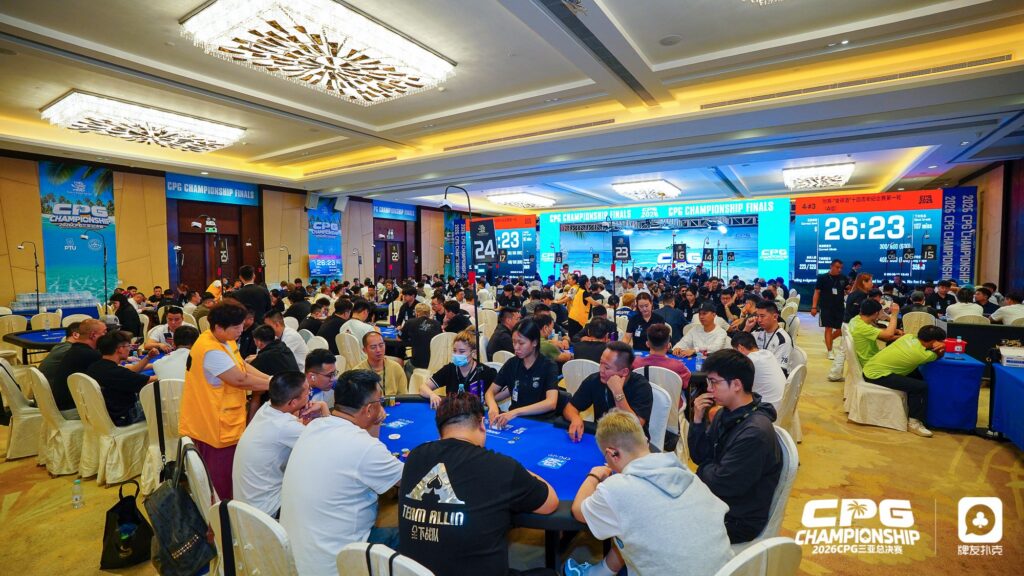
China maintains strict policies against gambling, so there is no conventional gambling-based poker market where players can simply walk into a venue and pay to enter a tournament.
China Poker Games (CPG) has instead built its competitions around poker’s sporting elements, with online qualification and organised tournament play at the centre of its model.
“Running poker in the traditional gambling way is a dead end in Mainland China,” CPG officials told Somuchpoker following discussions about the development of the game in China.
For local players, the journey to Sanya begins through online satellites. Those who qualify can earn access to specific tournaments at the CPG Championship Finals, with registration and tournament information managed through the official CPG App.
International players follow a separate route. Packages offered by official CPG sponsors can include accommodation and entry into selected tournaments. These are provided through the sponsors rather than purchased directly from CPG.
The process can initially feel unusual to someone accustomed to conventional poker festivals. However, it is not an accidental complication. It is the foundation upon which CPG has built its position in China.
According to CPG officials, regulatory compliance has always been the organisation’s first priority. CPG officials believe the long-term future of the brand depends on presenting poker as an organised competitive activity rather than attempting to reproduce the casino model used in other countries.
China’s Poker Scene Is Hiding in Plain Sight
The structure may be unfamiliar, but the scale of the CPG Championship leaves little doubt about poker’s popularity in China.
The Main Event attracted 878 entries in 2013. Five years later, that number had more than doubled to 1,926 before passing 3,000 in 2019. The festival’s development from a domestic tournament into its current form is explored further in the story of the rise of China’s CPG Championship.
Recent editions have operated on another level:
Year | Main Event Entries |
|---|---|
2022 | 4,405 |
2023 | 4,080 |
2024 | 3,787 |
2025 | 4,211 |
More than 95 percent of the 4,211 entries recorded in 2025 came from China. Approximately 30 percent of that field were reportedly playing the Championship for the first time.
Those figures show that CPG is not being supported by the same small circle of established professionals each year. New players are continuing to discover the game and qualify for the annual trip to Hainan.
Survival was the original force behind CPG’s approach. Its organisers understood that the brand could not grow by treating poker as traditional gambling, so they developed a system designed specifically for the Chinese market.
That same model has since helped CPG become the country’s leading poker brand.
The Road to Sanya
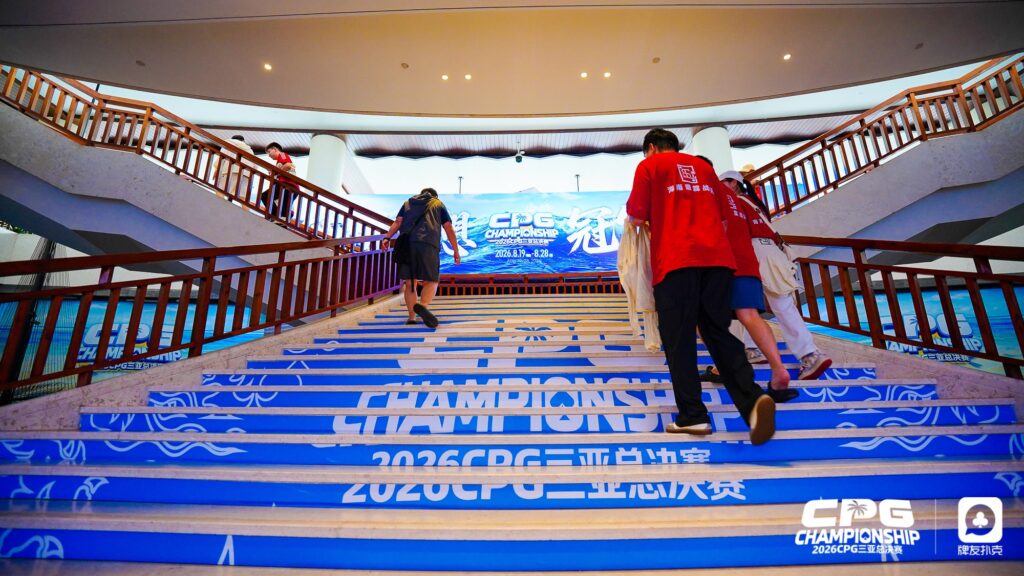
The CPG Championship does not begin when the first cards are dealt in Sanya.
Local players can spend months attempting to qualify through online satellites. CPG also holds qualifying festivals in other parts of China, including the CPG Satellite Hengqin 2026. Securing a place gives players the opportunity to travel to Hainan and compete against one of the largest poker fields in Asia.
That creates a different relationship between the players and the festival. A place in the field is not something secured after arriving at the venue. For many participants, reaching Sanya is the end of a much longer journey.
It also helps explain how the Championship can repeatedly produce fields of around 4,000 entries without using conventional registration. By the time the festival begins, players from across China have already earned their opportunity to compete.
Once inside the tournament room, the differences begin to disappear. The cards, chips and decisions are the same. So is the disappointment of elimination and the pressure that comes with progressing deep into a major event.
What changes is the route each player took to reach the table.
The “WSOP of China”
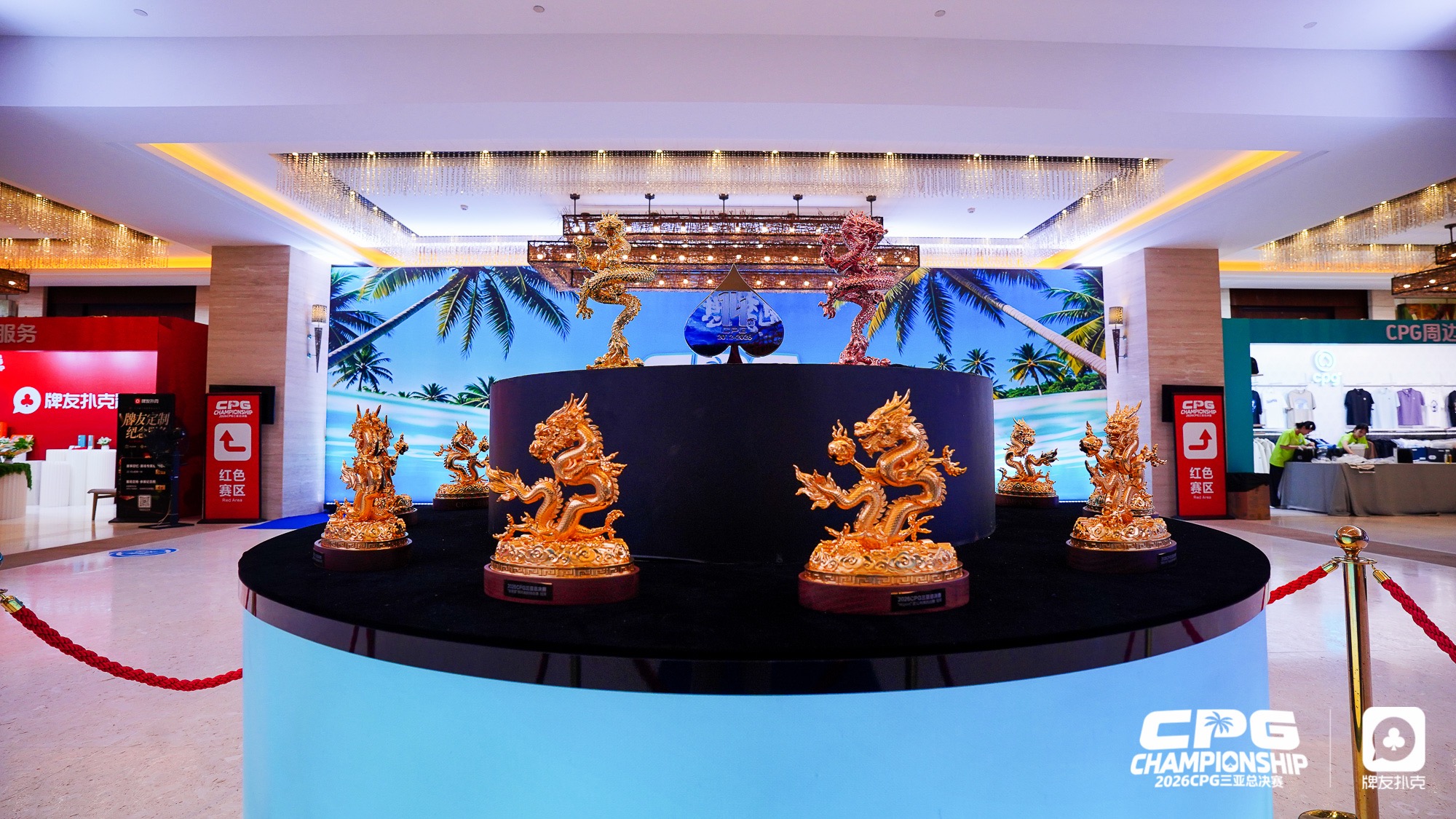
The Championship has become an annual meeting point for many of China’s most successful players.
World Series of Poker bracelet winners including Renji Mao, Xixiang Luo and Lei Yu have all competed in Sanya, giving recreational qualifiers the chance to share tables with some of the country’s biggest poker names.
Yu first recorded a CPG result in 2014 and has returned regularly since. During the 2025 Championship, he described the festival as the “WSOP of China.”
The comparison is understandable.
CPG is not simply one stop on a busy domestic calendar. It is the annual event that players prepare for months in advance, with thousands travelling to the same destination for ten days of competition.
Chinese players are also becoming increasingly visible at major festivals outside the country. China has produced several WSOP bracelet winners, while its players are now regulars at major events across Asia and beyond.
When those players return to CPG, newer qualifiers get the opportunity to test themselves against competitors with experience on the international circuit.
The result is a tournament scene developing its own identity rather than simply copying festivals outside China.
A Different Experience for International Players
For international visitors, CPG offers something increasingly difficult to find on the Asian circuit.
Many major festivals attract a familiar group of professionals who travel from one stop to the next. CPG remains overwhelmingly Chinese, giving overseas players the opportunity to enter a field filled with opponents they are unlikely to encounter anywhere else.
However, attending requires considerably more planning.
International players must secure an appropriate package through an official CPG sponsor before travelling. The packages can include a hotel stay and access to selected tournaments, but players should confirm exactly what is included well in advance.
Someone arriving in Sanya without understanding that process could easily conclude that the tournaments are inaccessible. The reality is that access exists, but it does not follow the system used at most international poker festivals. Somuchpoker’s previous guide for international players attending CPG Sanya explains how different the process can initially appear.
That difference is part of the CPG experience.
More Than Cards and Chips

Sanya has also become an important part of CPG’s identity.
The 14th annual CPG Championship Finals combines the country’s largest annual poker gathering with one of China’s best-known holiday destinations. Players travel to Hainan for the competition, but the location also places them beside Sanya’s beaches and local attractions.
Many remain in the city throughout the festival, while others travel with friends or family. Their visit extends beyond the tournament venue into hotels, restaurants and activities around Hainan.
That connection supports CPG’s wider aim of combining organised poker with sports tourism. Players qualify for a major competition and then travel to a destination that offers considerably more than ten days inside a tournament room.
The poker provides the original reason to visit. Sanya provides the wider experience.
So, Is There Really Poker in China?
There is, although attempting to find a conventional poker room or enter a CPG tournament after arriving would give an international visitor the wrong impression.
China does not have a traditional gambling-based poker market. What it has instead is a large competitive scene built around online qualification, advance registration and organised tournaments.
CPG has survived by recognising that distinction and making compliance with government regulations its priority. Over 14 years, that approach has turned what began as a domestic competition into an annual Championship capable of attracting more than 4,000 entries.
The system was not copied from Las Vegas or anywhere else. It was built for China.
The clearest evidence of its success can be found in Sanya, where thousands of qualified players are once again sitting down for the biggest poker event of their year.
Poker in China may operate differently, but it is certainly not small.
All images courtesy of China Poker Games.
About the Editor

Kai Cocklin is Head of Live Poker at Somuchpoker, overseeing live tournament coverage, reporting teams and festival partnerships across the Asia Pacific region and beyond. Before joining Somuchpoker he worked with PokerNews at major festivals including the World Series of Poker and the European Poker Tour, where he managed live reporting teams and helped develop new writers.
Related News
 Live PokerRecap
Justin Vaysman Wins Poker Masters Event #6 After Stunning Comeback
Justin Vaysman came back from a quarter of a big blind to win Poker Masters Event #6 for $192,000 and his first PGT title.
 Live PokerRecap
Wouter Beltz Wins Championship Event at APPT Championship Manila 2026 For ₱11.9 Million
Wouter Beltz wins the APPT Championship Manila 2026 Main Event for ₱11.902 million after a heads-up ICM deal with Sung Jin Yun at Okada Manila.
 Live PokerRecap
Taik Ki Yeo Wins TMT Championship Target Stack for TWD 683,000
TMT Championship 2026 Day 4 recap: Taik Ki Yeo wins the Target Stack for TWD 683,000, Wei Huang takes the Head Hunter, and the Mini Main gets under way.
 Live PokerRecap
Martin Sedlak Leads King's Main Event Final Table as Punnat Punsri Wins 20K NLH 6-Handed
Martin Sedlak leads the King's Main Event final table chasing USD 533,800, while Punnat Punsri and Mehdi Chaoui win titles in Jeju.
 TeaserLive Poker
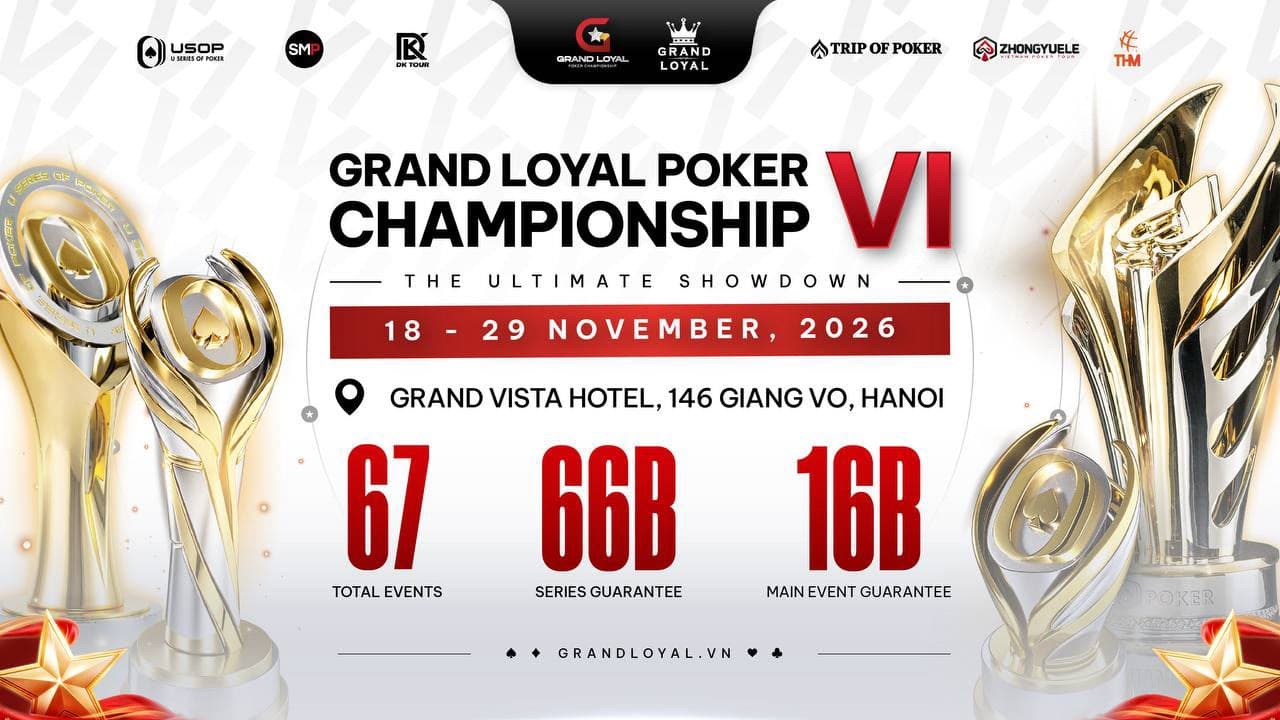
GLPC VI Introduces ARCH ANGEL Trophies for High Roller and Side Event Winners
GLPC VI runs 18 to 29 November in Hanoi with VND 66B guaranteed, 67 events and two new ARCH ANGEL trophies for High Roller and side event winners.
 Live PokerRecap
Dick Son Looi Wins Poker Dream 26 Malaysia Main Event for MYR 685,000, Defeats Bracelet Winner Guoliang Wei
Dick Son Looi defeats WSOP bracelet winner Guoliang Wei heads-up to win the Poker Dream 26 Malaysia Main Event for MYR 685,000, outlasting 1,266 entries across ten starting flights in Genting Highlands.