

Poker in Pop Culture - Kakegurui and Poker: Why the Bet Series Appeals to Poker Fans

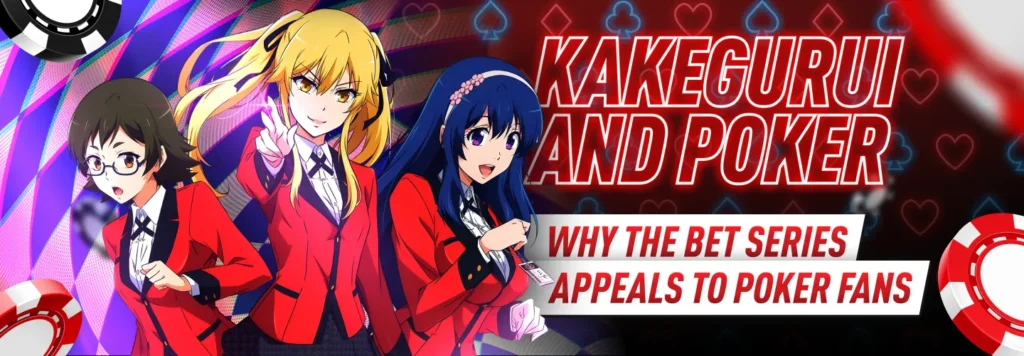
Poker fans know gambling isn't always about having the best cards. Sometimes, the most important part of a game happens inside a player's head. Reading an opponent, recognizing a bluff, controlling emotions, and knowing when to take a calculated risk can completely change the outcome.
That is one reason Kakegurui has attracted attention from poker fans. The Japanese manga and anime franchise centers on high-stakes gambling games in which students compete for money, status, and power. The stakes are often deliberately exaggerated, and the games can become wildly unpredictable, yet many of the ideas will feel familiar to anyone who enjoys poker.
What Is Kakegurui and the Bet Netflix Series?
Kakegurui - Compulsive Gambler began as a Japanese manga set at Hyakkaou Private Academy, an elite school where gambling determines the students' social hierarchy. Winning can bring status and influence, while losing can have serious consequences.
The franchise has been adapted into anime and live-action productions, while Netflix's Bet offers a new take inspired by the original Kakegurui manga. Set at the fictional St. Dominic's Prep, the series blends gambling with a revenge-driven mystery. The series has also been renewed for a second season, with production underway in 2026, continuing Netflix's adaptation of the popular gambling-focused franchise.
| Netflix"]
However, the basic premise remains recognizable: gambling is central to the social environment. For viewers discovering the story through Bet, the extreme gambling situations are part of the appeal, but for poker fans, the more interesting element is what happens between the bets. The characters constantly attempt to work out what their opponents know, what they are hiding, and whether their apparent confidence is genuine.
Yumeko Jabami and the Psychology of the Gamble
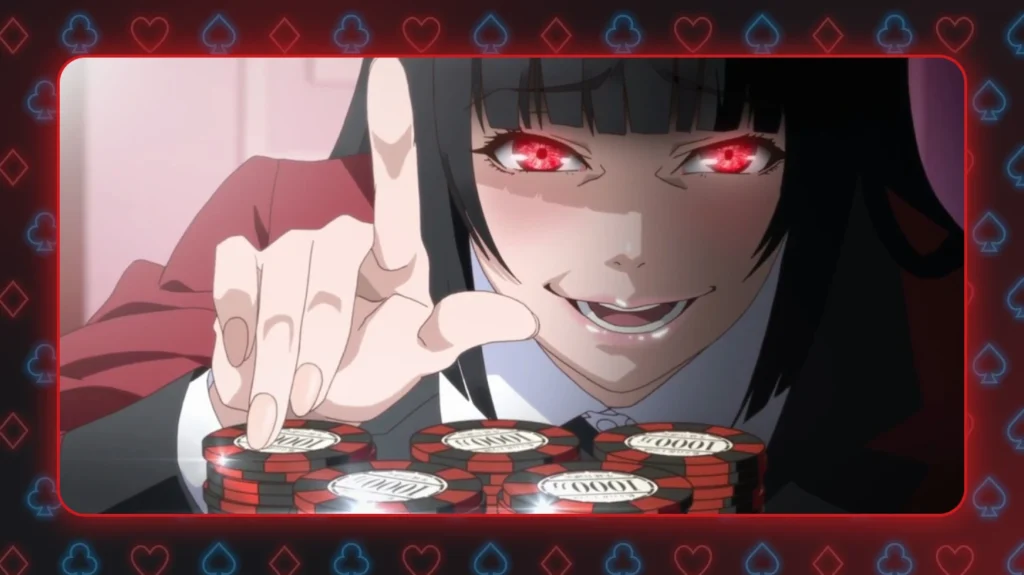
The story originally follows Yumeko Jabami, a protagonist whose attitude toward gambling quickly sets her apart. Rather than being a conventional professional who carefully protects a bankroll, Yumeko is fascinated by risk itself and the uncertainty of gambling. She enjoys the pressure and appears most excited when the outcome is genuinely unclear.
Yumeko Jabami is the clearest example of this. She regularly studies her opponents' personalities and fears to put them under pressure, often taking enormous, seemingly irrational risks. For poker players, she is an unusual but recognizable character. She understands that provoking an opponent's reaction can matter as much as the mathematical odds. While this doesn't make her a realistic poker professional, she perfectly represents the exaggerated, psychological side of gambling.
Is There Poker in Kakegurui?
Kakegurui includes poker, but it is not the same as watching a conventional Texas Hold'em tournament. The franchise features several fictional and real gambling games, some involving cards, others involving memory, probability, deception, or strategic decision-making.
One of the best-known examples is Indian Poker, a variation in which players can see their opponents' cards but not their own. That setup immediately creates a situation familiar to poker players: they must make decisions with incomplete information.
Another brilliant variation featured in the franchise is "Choice Poker". In this game, players not only bet but can also dictate whether the strongest hand (High) or the weakest hand (Low) wins the showdown, elevating bluffing to a whole new level. A massive bet with a terrible hand can either be a pure bluff or a setup for a "Low" win.
One strength of Kakegurui gambling is its variety. The most interesting games usually involve at least one of three fundamental ingredients of poker: incomplete information, deception, and risk. The difference is that Kakegurui turns them up to maximum intensity.
Character Archetypes and Poker Player Profiles
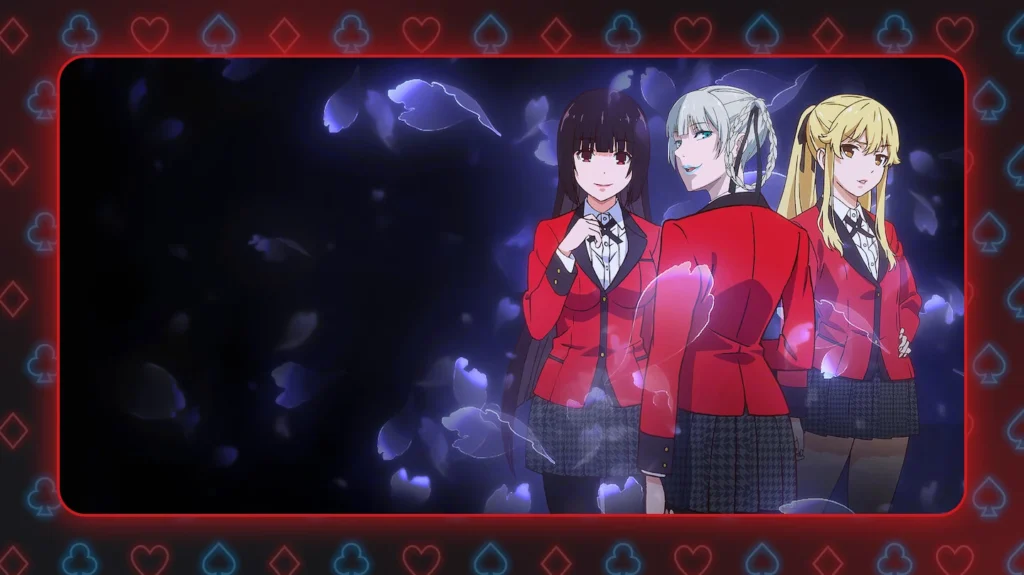
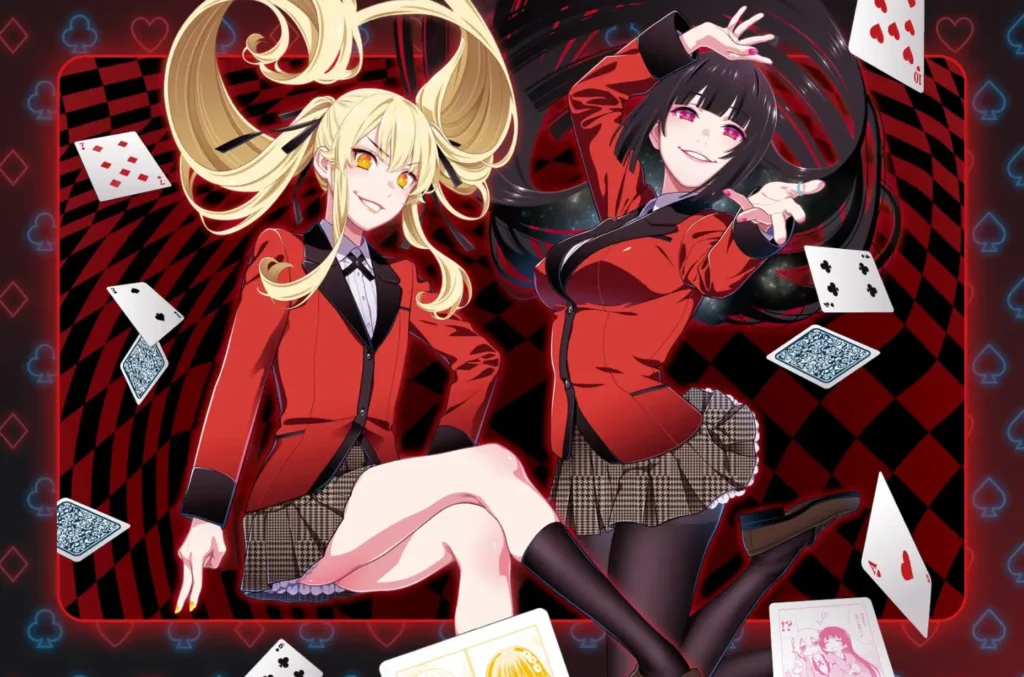
Beyond Yumeko, the franchise is filled with characters that map surprisingly well onto different poker player types. Mary Saotome reads as a kind of “grinder” archetype - a highly skilled, calculating player who wants to win to build her status, making her a relatable figure for serious poker players. She understands the odds, uses logic to trap her opponents, and treats gambling as a means to achieve power rather than a mere thrill.
On the other hand, Kirari Momobami perfectly represents the ultimate “end boss” or “high-roller crusher” at the table. As the Student Council President, she operates with a seemingly infinite bankroll and an unshakeable demeanor, making her immune to "tilt". Much like a top-tier professional who has already won everything, she no longer plays for money or survival. Instead, she gambles purely for her own amusement, setting the rules and manipulating the environment just to observe how others break under pressure.
Watching these different archetypes clash adds immense depth to the overarching narrative. The dynamic between the calculating grinder, the pure risk-taker, and the untouchable end boss perfectly illustrates how different personalities approach the game at the absolute highest levels. It creates a fascinating poker-like ecosystem where logic, chaos, and absolute control constantly collide.
Psychology Over Pure Poker Strategy
Kakegurui is far more interested in psychological pressure than in the mathematical side of gambling. Its characters constantly look for weaknesses in their opponents, manipulate expectations, and use uncertainty to gain an advantage.
This is one of the strongest connections between the series and poker. While the cards and rules matter, successful poker players also need to understand the people sitting across the table. Recognizing emotional reactions, identifying patterns, and knowing when an opponent may be trying to deceive you can all influence a decision.
Kakegurui takes these ideas to an extreme. Characters deliberately create fear and uncertainty, push opponents into uncomfortable decisions, and use large wagers to increase the psychological pressure. The goal is often not simply to win the hand, but to make the opponent lose control.
For poker fans, this is what makes Kakegurui so entertaining. It doesn't offer a realistic guide to poker strategy, but it exaggerates one of the game's most fascinating elements: the psychological battle between two people trying to figure out what the other is thinking.
Bluffing, Reading Opponents, and Psychological Warfare
Unlike modern poker strategy, where concepts such as Game Theory Optimal (GTO) help players make mathematically balanced decisions, Kakegurui focuses more on psychological warfare and dramatic risk-taking.
The strongest connection between the poker elements in Kakegurui and real poker is the psychology. A successful bluff is not simply a lie; it is a story in which the player must convince an opponent that a particular version of reality is true. Kakegurui takes that basic idea and turns it into a much broader form of psychological warfare, in which characters hide their emotions or create false impressions to control what the other player believes.
Poker players often talk about "reading" an opponent, which means collecting clues from their actions to form a better idea of what they might do next. The same principle drives Kakegurui, as characters watch how opponents react under pressure, look for inconsistencies, and try to identify emotional weaknesses they can exploit.
The difference is that Kakegurui makes these reads far more dramatic than they would be in a real poker room. Characters can appear to uncover elaborate strategies from tiny details, turning opponent reading into part of the show's theatrical style.
Every poker decision involves some uncertainty, and professional players weigh risk against potential reward. Kakegurui uses the same basic concept of risk but removes almost all restraint, making the fictional stakes enormous - sometimes involving a character's social standing or entire future. This dramatic exaggeration makes the viewer feel the pressure behind every decision.
The Anatomy of a "Tell" in Animation and Live-Action
In real-world poker, a "tell" is usually incredibly subtle - a micro-expression, a trembling hand, a swallowed breath, or a slight change in posture. Kakegurui takes the poker "tell" and visualizes it as an explosive, theatrical transformation to make the audience feel the character's internal panic.
The original anime uses warped facial expressions, glowing eyes, and frantic body language to show what it feels like when a player realizes their bluff has been called. Instead of a simple nervous twitch, a character's entire reality seems to shatter, turning the subtle art of reading tells into a spectacular visual event.
When Yumeko corners an opponent, their subtle tells explode into full-blown, hysterical panic, whereas characters like Mary exhibit intense, visceral frustration when their perfectly calculated strategies are disrupted.
The live-action adaptations, particularly the Bet Netflix series, face the challenge of translating this to real actors. The series translates these exaggerated anime expressions into intense, psychological live-action performances, maintaining the feeling that a player's mind is violently unraveling under the pressure of a massive bet.
Bankroll Management vs. The Housepet System
One of the most important disciplines for a serious poker player is bankroll management - the practice of playing within limits that allow a player to withstand the natural swings of the game. Kakegurui operates on the exact opposite philosophy, actively punishing players who try to play it safe and glorifying those who wager their entire existence.
The story also features a brutal “House Pet” system in which losing players can fall into a deeply humiliating social position. By forcing characters to bet money they don't have, Kakegurui gambling ensures every hand is a desperate fight for survival rather than a calculated long-term investment.
This creates a terrifying dynamic that real poker players try to avoid at all costs. When a character wagers their own life schedule or freedom, the standard rules of poker psychology warp entirely, as desperation completely takes over logical decision-making.
The Role of the Dealer and the "House"
At a regulated poker table, dealers enforce the rules and keep the game running fairly. However, in the world of Kakegurui, the "House" - often represented by the Student Council - is frequently corrupt, biased, or actively conspiring against the protagonists.
Because cheating and manipulation are recurring elements of the story, players must often think beyond their immediate opponents. Players must not only figure out their opponent's strategy but also actively deduce how the environment, the dealer, or the game itself is being rigged against them.
This intense paranoia resonates with the mindset of a sharp poker player on a deeper level. It reflects the constant vigilance required in real gambling, where players must question the flow of the game, spot collusion, and trust their instincts when something feels mathematically impossible.
Kakegurui vs. Real Poker: Where Fiction Takes Over
Don't confuse Kakegurui with a realistic representation of poker; the series is designed for entertainment. Real poker is much more dependent on mathematics, probability, bankroll management, position, opponent tendencies, and long-term decision-making.
A televised poker tournament seeks to show the drama already present in the game, whereas Kakegurui creates additional drama by designing games specifically for storytelling. To see exactly how these three worlds compare, here is a breakdown of the key differences and similarities:
Bet (Netflix Series) | Kakegurui (Anime & Manga) | Poker | |
|---|---|---|---|
Main Focus | Live-action psychological gambling drama | Gambling anime and manga centered on high-stakes mind games | Strategic card game based on skill, probability, and psychology |
Bluffing | A key tactic used to manipulate opponents | One of the core themes throughout the series | One of the most important strategic weapons in poker |
Psychological Warfare | Central to nearly every challenge | Defines the rivalry between major characters | Essential for reading opponents and disguising intentions |
Risk vs Reward | Characters frequently gamble everything for victory | Extreme risks drive the story's tension | Players balance calculated risk with expected value (EV) |
Reading Opponents | Success often depends on spotting weaknesses | Observation and manipulation are recurring themes | Reading tells, and betting patterns are a fundamental poker skill |
Decision Making Under Pressure | High-pressure situations determine outcomes | Emotional resilience is constantly tested | Tournament poker requires disciplined decision-making under pressure |
Skill vs Luck | Strategy often outweighs luck, despite dramatic twists | Characters often try to overcome chance through strategy, deception, and manipulation | Skill dominates results over the long term despite short-term variance |
Emotional Control | Characters frequently lose control for dramatic effect | Emotional extremes are part of the storytelling | Professional players avoid tilt and maintain emotional discipline |
Realism | Fictional adaptation inspired by the original story | Highly stylized and intentionally exaggerated | Played under standardized rules in regulated casinos and tournaments |
Appeal for Poker Fans | Introduces poker-like psychological concepts to a wider audience | Captures the mental battle behind competitive gambling | Offers real strategic depth through mathematics, psychology, and experience |
The Appeal of Poker Psychology in Pop Culture
A technically strong player can still struggle against an unpredictable opponent, and a confident player can become vulnerable when their emotions take over. Real poker players know that emotional control matters enormously, and tilt can cause a player to make mistakes they would normally avoid. Kakegurui turns those psychological vulnerabilities - fear, greed, pride, curiosity, and confidence - into major plot points.
The story creates confrontations where viewers can try to work out the solution alongside the characters. Just like watching a major poker final table, the viewer becomes part of the psychological battle, trying to figure out who is bluffing and who genuinely has the advantage. You may not know the exact rules of the game being played, but you can still understand the tension of a character making a huge decision with incomplete information.
Kakegurui also fits into a much wider tradition of gambling stories in film and television. Poker is particularly effective in pop culture because audiences understand that players can influence the outcome without complete control, creating natural suspense. Kakegurui takes this even further by making gambling the central language of its fictional world, giving every game a narrative purpose.
The Bottom Line
For poker fans looking for realistic Texas Hold'em strategy, Kakegurui is probably not the right choice. Instead, it offers an exaggerated look at the psychological side of gambling, exploring what happens when players are pushed under extreme pressure in a battle of deception.
The franchise understands that gambling is fascinating because people are fascinating. The cards, chips, and rules create the framework, but the real drama comes from the decisions players make when they do not know what will happen next.
Yumeko Jabami's willingness to embrace uncertainty, bluff constantly, and focus intensely on reading opponents all resonate with real poker. The Bet Netflix series brings those ideas to a wider audience, proving that you do not need a Texas Hold'em table to create a great gambling story; sometimes, the most interesting game is the one being played inside the players' heads.
About the Editor

Adam Biro is Somuchpoker's Content and Creative Quality Lead, writing the site's Legends of Poker series, including From TCG to the Top and Geek Women Legends at the Poker Table, along with strategy content for newer players. He brings a background as a trading card game developer and tester, plus close to twenty years in software testing and quality assurance, to how he analyzes poker strategy and player psychology.
Related News
 Live PokerLifestyle
Off the Felt in Sanya: The Best Things to Do Away From the CPG Tables
Discover six outdoor things to do in Sanya away from CPG, from paddleboarding and surfing to rainforest walks and canyon stream trekking.
 LifestyleAsiaStories
Asia's Poker Revolution - Streams on the Felt: The Ultimate Guide to Asian Gambling Series
Discover the ultimate guide to Asian gambling series and shows. From Korean Asian casino dramas to intense Japanese gambling anime, explore high-stakes TV.
 Live PokerLifestyle
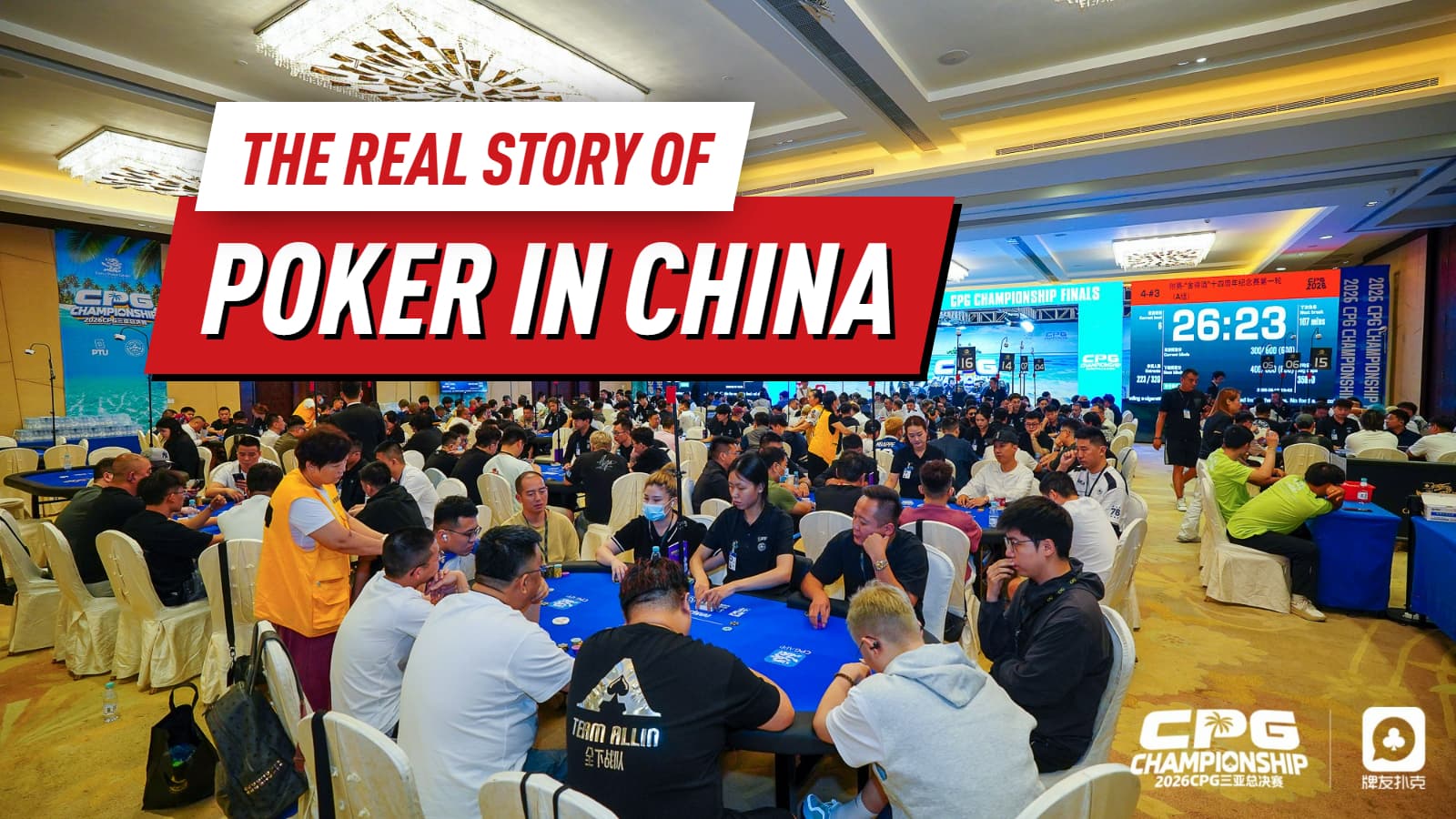
Is There Really Poker in China? Inside the Country’s Growing Tournament Scene
Is there really poker in China? Discover how CPG uses online qualification and organised competition to grow the country’s tournament scene.
 LifestyleAsiaStories
Asia's Poker Revolution - Cinema on the Felt: The Ultimate Guide to Asian Gambling Movies
Discover the ultimate guide to Asian gambling movies. From Hong Kong classics to intense Korean casino thrillers, explore high-stakes cinema on the felt.
 LifestyleStories
Poker in Pop Culture - Reality Poker TV Shows
Discover the best poker TV shows, from High Stakes Poker to Poker After Dark. Relive the poker boom and the unforgettable moments that captivated millions.
 NewsLifestyleiGamingOnline Casino
xQc Net Worth 2026: The Money and Life Story of Félix Lengyel
xQc net worth is ~$50M in 2026. See his high-stakes Stake casino streams - $3K spins, bonus buys and crash - plus his full life story.