

[Poker Basics] Target Stack and Timed Tournaments: The Complete Strategy Guide

Most poker players learn tournaments through the classic format: you start with a stack, blinds increase, players are eliminated, and the event continues until a winner is determined.
But not every poker tournament follows that familiar path. Target stack poker and timed poker tournaments have different objectives, giving players a very different experience from a traditional freezeout or Multi-Table Tournament (MTT).
In target stack poker, the game functions as a satellite structure with no traditional prize pool payouts. Instead of outlasting the field, your sole goal is to reach a predefined chip target; the moment you hit that amount, your play ends immediately, and you win your seat or ticket.
Timed poker tournaments follow a fundamentally different model than standard survival events. Rather than playing down to a single winner, the event runs for a fixed duration, ending the moment the clock expires and distributing the prizes based on remaining stack sizes.
These formats can be particularly interesting for recreational players. If you enjoy tournament poker but don't want to commit to an event that could run for many hours, a fixed objective or time limit can make the experience easier to understand and plan.
However, the strategy isn't simply “play faster”. Both formats require you to understand the rules, your stack size, your opponents, and the tournament objective.
This guide looks at how target stack poker and timed poker tournaments work, what separates the two formats, and how beginners can adjust their strategy.
What Is Target Stack Poker?
Target stack poker is a tournament format built around reaching a predefined number of chips. The tournament organizer sets a target, and players compete to reach that number.
This changes the way you approach the tournament. In a traditional event, you are trying to survive and finish as high as possible. In target stack poker, the target itself becomes the main goal.
The exact rules depend on the event. One current example is GGPoker's Target Stack Satellite format, where reaching the predefined target awards a seat or ticket and ends that player's tournament. The target-stack chips are removed from play, while chips above the target can be redistributed according to the event's rules.
Reaching the target is therefore not the same as simply becoming the chip leader. The target has a specific purpose within the tournament.
For example, a tournament starts players with 10,000 chips and sets a target of 50,000. A player sitting close to the target stack needs a completely different approach than someone whose stack has barely grown past the starting chips.
How Does Target Stack Poker Work?
The basic idea is simple. Players receive their starting stacks and then play poker normally while trying to reach the target.
Tournament rules define the key numbers. These can include the starting stack, target stack, blind levels, number of available prizes or tickets, and what happens when a player reaches the target.
1. Players receive their starting stacks.
2. The tournament announces the target stack.
3. Players compete at the tables and try to build their stacks.
4. A player reaches the target.
5. The player receives the relevant prize or qualification under the event rules.
6. That player's participation ends if the rules specify it.
7. The remaining players continue competing for the other available spots.
Reaching the target does not necessarily end the tournament. If several seats or prizes are available, more players can continue playing until the required number of target stacks has been achieved.
This makes the format quite different from a traditional satellite. Instead of trying to survive until enough opponents are eliminated, players are trying to build their own stacks to the required level.
Why Target Stack Poker Feels Different
In a traditional tournament, survival can become the main concern. This is especially true around a satellite bubble, where elimination can mean losing the chance to qualify.
Target stack poker can reverse that incentive. Players have a concrete chip goal, so building a stack can matter more than waiting for opponents to bust.
The format can also encourage more proactive play. Instead of simply waiting for opponents to bust, players have a clear reason to look for opportunities to build their stacks.
That does not mean you should gamble with every hand. Good poker remains good poker, and weak hands don't magically become profitable just because a target exists.
The key adjustment is to think about how much those additional chips actually help you. If you are far below the target, gaining chips can matter a lot. If you are already very close, taking a huge risk for chips you may not need can make much less sense.
Target Stack Poker Strategy for Beginners
Start with the basics: know the target. Before playing, know how many chips you need and what happens when you reach it.
Next, compare your stack with the target. That tells you how much work remains.
Chip Stack Status | Strategic Focus |
|---|---|
Close to Starting Stack | More Aggressive Play: Take active risks to build your stack dynamically. |
Medium Stack | Calculated Growth: Hunt selective opportunities, control the pot, and progress steadily. |
Close to Target Stack | Risk Aversion: Focus on lower-risk, profitable spots to reach the target while protecting your chips. |
This does not tell you which hands to play, but it gives you useful context for your decisions.
Position still matters in target stack poker. The Button and Cutoff can give you more opportunities to open pots and put pressure on the blinds.
Stack size also matters. A short stack may need to accept more risk to build toward the target, while a player close to the target may have more reason to protect their position.
You do not need to be aggressive every hand. Look for spots where the potential gain justifies the risk.
Example: Getting Close to the Target
Imagine a target stack poker tournament where the target is 100,000 chips. You currently have 92,000 chips, so you need another 8,000 to reach the objective. The right strategic focus is to look for profitable, lower-risk opportunities to reach the target.
Being this close to the target changes how you should approach risk. You don't need to double your stack; you just need a reasonable way to win the remaining chips.
Suppose you are dealt a decent but not premium hand, and another player moves all-in for a large portion of your stack.
In a normal tournament, calling might sometimes be attractive because doubling would give you a huge stack. In this situation, however, you should also consider that you are already very close to the target.
If the event's rules make reaching 100,000 enough to secure your prize, there may be little reason to risk almost your entire stack for a marginal advantage. Instead, you could look for a smaller, lower-risk opportunity to collect the chips you need.
This does not mean you should always fold when you are close. It means you should think carefully about whether the extra chips are worth the risk.
Should You Be Aggressive in Target Stack Poker?
Target stack poker can reward active chip accumulation, but aggression still needs a reason. Don't interpret the format as permission to play every hand aggressively.
Instead, look for situations where you can win chips without taking unnecessary risks. Late-position raises, pressure against cautious opponents, and strong value hands can all create opportunities.
The closer you are to the target, the more carefully you should evaluate large pots. Winning chips helps, but losing a large part of your stack can move you much farther from the finish line.
This is where poker tournament strategy really matters. You need to weigh the value of gaining chips against the risk of losing the stack you have built.

What Are Timed Poker Tournaments?
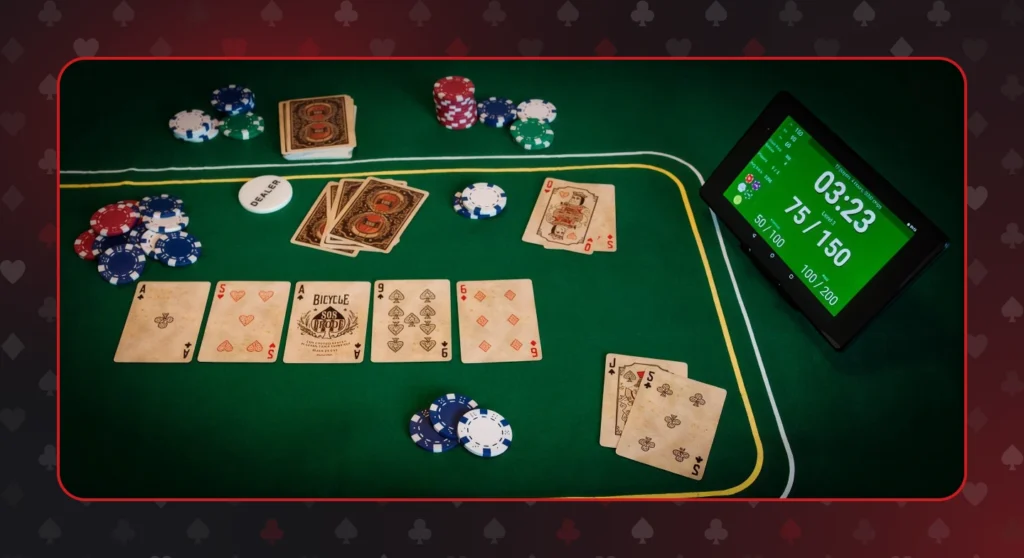
Timed poker tournaments have a predetermined duration. Instead of waiting for the tournament to reach a traditional final stage, players compete until the scheduled playing time expires.
The clock therefore becomes another factor in your decisions. You need to keep track of both your stack and the time remaining.
The exact end-of-tournament rules can vary. For example, PokerStars describes its Time Tournaments as events that run for a set amount of time, after which the remaining players split the prize pool according to their chip counts. The tournament lobby provides the event length, prize structure, and late-registration information.
That's exactly why it's worth reading the tournament lobby before you register, not after. Never assume that every timed tournament uses exactly the same payout or end-of-event procedure.
The basic idea, however, remains simple: you have limited time to build the best possible position under the tournament's rules.
How Timed Poker Tournaments Work
At the beginning, the tournament looks much like a regular poker event. Tournament poker is all about managing your chips, blinds, and pots effectively.
The main difference is the clock. When the scheduled playing period ends, the tournament follows its predetermined procedure for finishing.
That creates a different kind of pressure. In a regular tournament, you might have several hours to recover from a slow start. In a timed event, that opportunity is limited.
Your stack therefore needs to be viewed alongside the clock. A 30-big-blind stack with an hour remaining is a very different situation from a 30-big-blind stack with only five minutes remaining.
As the clock runs down, good opportunities become more valuable. That still does not mean you should turn every hand into a gamble.
Timed Poker Tournament Strategy
In timed poker tournaments, your approach should change as the clock runs down.
Early in the Tournament
Early on, use the time to learn how your opponents play. Watch who is aggressive, who is passive, who folds too often, and who is willing to risk large portions of their stack.
Focus on solid poker, build your stack, and avoid unnecessary high-variance spots.
In the Middle
As the clock moves toward the halfway point, your stack matters more. Start thinking about how much time remains and whether your current chip position is strong enough.
It's also a good time to put more pressure on opponents who keep folding to raises. If another player is consistently folding to raises, late-position aggression may become profitable.
Near the End
With only a few minutes left, the clock matters more. If you need chips, you have fewer opportunities left to find them.
However, desperation is not a strategy. A short stack does not automatically justify pushing any two cards into the middle.
Instead, look for profitable spots. Position, opponent tendencies, stack sizes, and hand strength remain important even when only a few minutes remain.
Example: Three Minutes on the Clock
Imagine a 60-minute timed tournament with only three minutes remaining. You have an average stack, while another player at your table has been playing extremely slowly.
Scenario | Timed Clock Battle |
|---|---|
Time Remaining | 3 Minutes |
Your Stack | 40,000 chips (Average) |
Opponent Action | Playing slowly / Folding frequently |
Strategic Focus | Look for profitable late-position steals. |
With only three minutes left, the clock matters much more. Only a handful of hands may remain, so you need to make the most of the opportunities you get.
You may therefore want to increase your willingness to take profitable pre-flop opportunities. If the table is folding too often, stealing blinds can be valuable.
But you should not blindly attack every pot. A well-timed raise against a player who is clearly over-folding is very different from shoving a weak hand into a player who has shown strength.
Use the clock as another piece of information, not as a reason to panic.
Target Stack Poker vs. Timed Poker Tournaments
Both formats introduce a clear finish line, but it works differently.
Feature | Target Stack Poker | Timed Poker Tournament |
|---|---|---|
Main Objective | Reach a predefined chip target | Build the best result before time expires |
Main Pressure | Distance from the target | Time remaining |
End Condition | Depends on reaching the target under event rules | The scheduled time expires |
Main Strategic Focus | Chip accumulation and risk management | Stack building and clock awareness |
Can Multiple Players Qualify? | Often possible in target-stack satellites | Depends on the payout structure |
Most Important Question | How close am I to the target? | How much time do I have left? |
A simple way to think about the difference is to look at the finish line. Target stack poker gives you a numerical finish line, while a timed tournament gives you a time-based finish line.
Positional Play and Risk Control
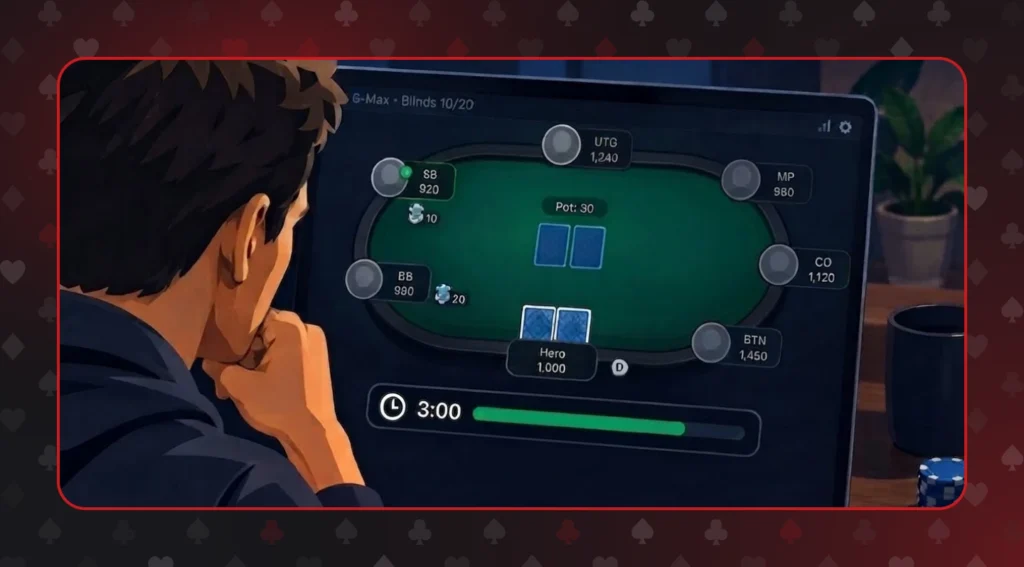
Positional advantage is crucial in both target stack and timed events. Acting late on the Button or Cutoff gives you maximum information, letting you apply low-risk pressure on cautious blinds trying to protect their stacks or survive the clock. However, late-position aggression should always be selective - raising blindly is counterproductive if your opponents refuse to fold or hold strong continuation values.
Post-flop, strict pot control becomes your best defensive tool, especially with deep stacks. In target events, building a massive pot with a medium-strength hand exposes you to unnecessary variance when you only need a few more chips to qualify. Similarly, in timed events, your post-flop risk management should directly reflect the remaining time. Prioritize checking back marginal hands and taking free cards to preserve your stack unless the potential reward fully justifies a high-variance gamble.
What About Stalling?
Stalling means deliberately taking a long time to make decisions, usually to influence a tournament's pace. It can be especially noticeable in formats where time or survival matters.
In a timed poker tournament, slowing down the pace can affect how many hands are played before the clock expires. That makes table pace a potentially important part of the tournament environment.
However, you should not build your entire strategy around stalling. Modern poker rooms can use time banks, shot clocks, floor decisions, or other procedures to control excessive delays.
Focus on making your decisions within the allowed time. Good poker tournament strategy should come from understanding the format, not from deliberately slowing the game.
Common Target Stack Poker Mistakes
Ignoring the target: You cannot adjust your strategy if you do not know how many chips you need.
Taking unnecessary risks near the target: Being close to the finish line can make protecting your stack more valuable.
Playing too passively when far behind: If you need substantial chip growth, waiting forever can leave you with too few opportunities.
Assuming every event has identical rules: Target stack formats can differ in how they handle prizes and excess chips.
Forgetting about position: The format changes the objective, not the basic importance of position.
The biggest mistake is treating every situation the same. Your approach should change depending on how close you are to the target.
Common Timed Poker Tournament Mistakes
Ignoring the clock: You need to know how much time remains.
Playing too tight for too long: A passive approach can leave you without enough time to build your stack.
Panic-shoving late: A shrinking clock does not make a bad hand good.
Ignoring stack sizes: Your position at the table depends partly on how many chips you have compared with your opponents.
Assuming the payout system: Always check the event's specific poker rules before playing.
Do not let the clock dictate your decisions. Use the remaining time as another factor when choosing your spots.
Bankroll and Buy-In Considerations
These formats still come with plenty of variance, so bankroll management remains important. Never assume a shorter or more structured event is automatically low-risk.
A target stack satellite can still produce losing sessions. You can make good decisions and fail to reach the target because short-term variance is part of poker.
Timed poker tournaments also involve variance. Your final chip count can be influenced by the cards you receive, the opponents at your tables, and the opportunities available during the limited playing period.
Choose buy-ins that fit comfortably within your poker bankroll. Don't increase stakes just because a tournament has a shorter duration or a clearly defined objective.
Mental Game: Patience vs. Time Pressure
Both formats present unique psychological challenges. In target stack poker, the main hurdle is staying patient when you are close to the target. Once you reach 90% of the target stack, a single reckless mistake can quickly put your stack in danger. Instead of obsessing over the goal, stay focused on making mathematically sound decisions for the hand in front of you.
In timed tournaments, the visible clock is the primary source of stress. Watching the final minutes tick down can induce panic, tempting you to play weak hands simply because time is running out. True discipline means accepting that you cannot force good cards. Your objective is simply to maximize the profitable spots you actually get - whether that means turning up the aggression or making a disciplined fold and waiting for a better opportunity.
Which Format Is Better for Beginners?
Neither format is necessarily better for beginners. It depends on what you want from the tournament.
Target stack poker can be appealing if you like clear goals. You always know the number you are trying to reach, which can make the tournament easy to understand.
Timed poker tournaments can appeal to players who value predictable schedules. You know the event has a fixed duration, although you still need to understand its specific payout rules.
Both formats can teach useful skills. Target stack poker puts more emphasis on your stack relative to a target; you want to reach the target without taking more risk than necessary. Timed tournaments make you pay closer attention to the clock; that should influence your decisions, but it should never replace sound poker judgment.
Why These Formats Matter in Modern Poker
Poker continues to develop beyond the traditional multi-table tournament model. Players have different schedules, different bankrolls, and different preferences for how long they want to play.
Target stack poker provides a clearly defined chip objective. This can make satellite qualification more direct and can reduce the incentive to simply wait for opponents to bust in some formats.
Timed poker tournaments provide a predictable playing window. For recreational players, knowing that an event has a defined duration can make tournament poker easier to fit into a busy schedule.
These formats can also force experienced players to adjust. The basic poker skills stay the same, but the importance of chips, time, and risk changes depending on the format.
Final Takeaways
Both formats hand you a different kind of finish line - a number to chase in target stack poker, a clock running out in timed tournaments - and that changes what you're actually playing for from hand to hand.
None of that replaces the fundamentals, though. Position, hand strength, stack awareness, and reading your opponents still decide who walks away with the chips. When you are ready to test these strategies, make sure to use an exclusive bonus code when signing up to get the most value out of your play.
About the Editor

Gyöngyi P. Tóth is Somuchpoker's Content Writer and Poker Stories Specialist, writing Side Pot features, WSOP storylines, and the site's Poker in Pop Culture and Legends of Poker series. She was introduced to poker 20 years ago through live tournament play, and what has kept her interest since is the psychology and human behavior behind the game as much as the cards themselves.
Related News
 StrategyOnline PokeriGaming
Mystery Bounty Poker Tournaments Explained: Rules, Strategy & Big Prizes (2026)
Learn how mystery bounty poker tournaments work, why players chase massive jackpot envelopes, and the best strategy adjustments to increase your EV in 2026.
 Strategy
Poker for Beginners: How to Learn Online Poker from Streams
Discover how to turn poker streams into your best study tool! Learn online poker basics like preflop action, pot odds, and bet sizing with this beginner guide.
 StrategyOnline PokeriGaming
Poker Psychology: The Ultimate Guide to Master the Mental Game
Transform your results with this comprehensive guide to poker psychology. Learn to master emotional control, eliminate tilt, build confidence, and more.
 StrategyOnline Poker
The Main Differences Between Poker Rebuy and Re-Entry Tournaments
Discover the main differences between a poker rebuy and a re-entry tournament. Learn how the rules, seat changes, and strategies affect your game.
 Side PotStrategyStories
Why Keeping Your Phone at the Poker Table Could Actually Save You Money
Think hiding your phone at the poker table is smart? Discover how keeping it handy can prevent you from playing trash hands and improve your win rate.
 StrategyOnline PokerLive Poker
The Ultimate Guide to Late Registration in Poker Tournaments: Strategy, Math, and ICM Benefits
Master late registration in poker tournaments. Discover how ICM equity boosts, shallow stack strategy, and max late regging can dramatically increase your ROI.