

Why Keeping Your Phone at the Poker Table Could Actually Save You Money

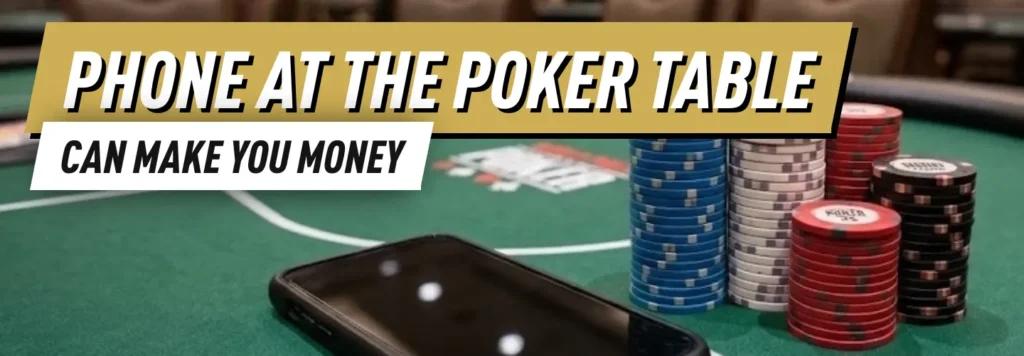
When you first learn how to play, what is the number one rule everyone tells you? Pay attention to the game. No phone at the poker table. Old-school pros insist that if you aren't staring down your opponents, you are giving away money.
However, you cannot ignore generation gaps when discussing this topic. Nowadays, a large portion of the tournament field consists of Gen Z or Millennial players, who were socialized in an environment where smartphones were present in every aspect of their lives. Baby Boomers and Gen X were having a great time socializing at poker events, which created a significant difference. Daniel Negreanu sums it up in 1 minute in this video:
<span data-mce-type="bookmark" style="display: inline-block; width: 0px; overflow: hidden; line-height: 0;" class="mce_SELRES_start"></span>
But what if that classic advice is completely wrong for your specific playstyle? It sounds crazy, but keeping your device handy might actually be the secret weapon missing from your live poker strategy.
Is having a phone at the poker table always a bad distraction?
For years, coaches have preached that putting away your phone at the poker table is an absolute must. They argue that if your eyes are glued to a screen, you will miss physical tells and sizing patterns.
According to a recent article on poker.org, while there is some truth to that, live poker is incredibly slow compared to clicking buttons in online poker games. You might only see 25 to 30 hands per hour on average.
That translates to a massive amount of downtime. If you force yourself to intensely watch every single hand you aren't involved in, mental fatigue sets in quickly, draining your focus for when you actually need it.
How can a screen stop you from playing trash hands?
The biggest leak for most amateur players isn't bad math; it's sheer boredom. When you sit card-dead and fold for an hour straight, the urge to splash around in a pot becomes overwhelming.
This is exactly where having your phone at the poker table becomes a massive asset. When you have a movie, a poker vlog, or a group chat to keep your brain occupied, you are much less likely to force the action.
Instead of playing trash hands just to feel like you are part of the game, you can patiently wait for premium cards. Staying entertained and distracted between hands is a vital yet often overlooked live poker strategy.
Can texting or scrolling help prevent poker tilt?
Bad beats are an unavoidable part of the game, and emotional control is everything. Staring directly at the player who just cracked your pocket aces can make your blood boil.
Diving into your smartphone can act as an instant emotional reset. Taking a few minutes to read a sports article or text a friend takes your mind off the brutal cooler you just took.
By shifting your focus temporarily, you can prevent full-blown poker tilt. You will return to your next hand feeling calm, collected, and ready to make logical decisions rather than emotional ones.
As poker mindset expert Jason Su often emphasizes in his teaching,
"Sometimes the most profitable thing you can do at the poker table is absolutely nothing."
Letting a screen help you do "nothing" after a bad beat can literally save your entire bankroll.
How do different generations use screens in poker?
Interestingly, the way players interact with technology at the casino varies wildly by age. This generational divide deeply impacts how different players experience boredom and manage poker tilt.
Recent 2026 data shows stark contrasts in daily screen time across age groups. Here is a quick breakdown of average daily screen usage by generation and how it translates to the felt:
Generation | Average Daily Screen Time (2026) | Poker Table Habit |
|---|---|---|
Gen Z | ~9 hours | Comfortably multitasks; uses phones to maintain patience and avoid boredom. |
Millennials | ~6 hours 42 minutes | Uses a phone to take player notes, listen to music, and unwind. |
Gen X | ~4 hours 10 minutes | Mixes traditional table talk with occasional texting or checking work emails. |
Baby Boomers | ~4 hours | Prefers table talk; often criticizes heavy phone usage during live games. |
Older players often view smartphones as an anti-social nuisance that ruins the atmosphere of the game. However, for Gen Z and Millennials, screens are a perfectly natural way to regulate their attention span.
Younger players are accustomed to constant digital stimulation. If they don't have their devices to keep them anchored, they run a much higher risk of playing trash hands out of pure, habit-driven restlessness.
How do you strike the perfect balance?
Of course, using your device shouldn't mean completely ignoring the flow of the game. You still need to track major player tendencies and pay strict attention when you are actually involved in a pot.
The real trick is to use your smartphone strategically during your fold time, not during critical decisions. Fold your weak pre-flop cards, pull out your screen, and let the other players make expensive mistakes.
Mastering this balance will keep your mind fresh, protect your chips, and keep your win rate climbing. So the next time you sit down, don't feel guilty about keeping your screen on the rail.
Don't have the patience for live games? Use our bonus code SMPBONUS in any of our reviewed online poker rooms, and you can play multi-table without having a dull moment ever again.
About the Editor

Beus Zsoldos is Somuchpoker's Senior Copywriter and Player Stories Editor, covering WSOP color moments, player profiles and poker personalities for the site's Stories section. She has spent more than 20 years around the game, first as a player, then as a live tournament director and localization manager for a major online poker room, before moving into full time poker writing.
Related News
 Side PotStories
Las Vegas Casino Photography Policy: Myth vs. Reality
Curious if taking photos in a casino is illegal? Discover the truth about the Las Vegas casino photography policy and how to safely snap your next selfie.
 Side PotLive PokerStories
The Ultimate Showdown: A Guide to the $250K WSOP Paradise Pro-Am
Get ready for the exciting $250,000 WSOP Paradise Pro-Am in the Bahamas! Learn the rules, schedule, and format of this 2026 gold bracelet event.
 Side PotStories
The Future of High Stakes: Inside the Deepstack Poker Show
Get ready for the new Deepstack poker show. Learn how advanced AI and poker heart rate monitoring will reveal the tension in high stakes poker.
 Side PotStoriesWSOP
WSOP 2026 - Moment of the Day - 15 June - Can you be quiet?
Martin Kabrhel and Martin Zamani shouting at each other, "Can you be quiet?" might be one of the worst nightmares of tournament personnel.
 WSOPSide PotStories
WSOP 2026 - Moment of the Day - 6 June - Family pot
Family pot of Kristen and Alex Foxen resulted in a sneak peak at the $25,000 event - Moment of the Day for 6 June WSOP 2026.
 Side PotStories
Rumours Confirmed: Caesars Entertainment Is Up for Sale!
The latest casino news shows that the massive $17.6 billion deal, as the Caesars Entertainment acquisition had been finalized, has drawn major attention.