

The Ultimate Guide to Late Registration in Poker Tournaments: Strategy, Math, and ICM Benefits


Late registration in poker tournaments has evolved from a convenient scheduling buffer for tardy players into one of the most hotly debated, highly mathematical strategic edges in modern poker. In today’s competitive landscape across platforms like PokerStars and GGPoker, as well as live events like the World Series of Poker (WSOP), understanding exactly when and why to enter a tournament can dictate your long-term profitability.
Whether you are a casual player looking to minimize the hours spent grinding or a professional focused on maximizing your hourly Expected Value (EV), deciding whether to register on time or "max late reg" is vital. This comprehensive guide, backed by advanced solver data, Independent Chip Model (ICM) mathematics, and real-world professional insights, breaks down everything you need to know about navigating the late registration period.
Quick Answer
What is late registration in poker tournaments?
Late registration is a designated period after a poker tournament begins during which players can still buy in and enter the game. Entering late means starting with a shallower stack relative to the rising blinds, but it mathematically boosts your tournament equity because you enter the field closer to the money bubble.
Key Takeaways
ICM Equity Boost: Buying in late automatically increases your starting stack's equity value, as you benefit from the elimination of other players without having to risk your own chips.
Hourly Win Rate: Max late registration strategy significantly improves your hourly ROI, allowing you to play more volume across multiple tournaments.
Payout Structures Matter: The flatter the tournament payout structure (e.g., satellites), the higher the equity boost you receive from late registering.
PKO vs. Mystery Bounty: Never max late reg a standard Progressive Knockout (PKO) tournament. However, max late regging a Mystery Bounty is profitable because you enter closer to the bounty-yielding Day 2 phase.
Shallow Stack Mechanics: Entering late requires proficiency in 10-20 Big Blind (BB) push/fold strategies, as lower Stack-to-Pot Ratios (SPR) dictate wider ranges.
Variance Increases: While long-term profitability per hour increases, max late regging comes with higher variance and a lower overall cash frequency.
What is Late Registration in Poker Tournaments?
Late registration in poker tournaments is a specific timeframe - ranging from an hour in turbo online games through 10+ levels at re-entry tournaments to several days in massive live events like the WSOP Main Event - where players are permitted to enter the field after the first hand has been dealt.
When you utilize late registration, you pay the standard buy-in and receive the standard starting chip stack. However, because the blind levels have increased since the tournament began, your starting stack will represent a smaller number of Big Blinds (BB). For example, entering at Level 1 might give you 100 to 200 BBs, whereas "max late regging" (entering at the very last second before registration closes) might leave you with a starting stack of just 10 to 20 BBs.
Historically, recreational players assumed that entering with a 15 BB stack was a massive disadvantage. However, modern poker theory and elite professionals have shown that, from a strictly mathematical perspective, late registration is often the most profitable approach in standard tournament conditions.
The ICM Math: Why Max Late Reg Gives You an Edge
To understand why max late registration is an optimal strategy, we must turn to the Independent Chip Model (ICM). ICM is a mathematical formula that converts tournament chips into real money equity based on the payout structure and the remaining field.
Winning Equity Through Inactivity
The golden rule of ICM is that chips lost are always worth more than chips won. In a tournament, if two players go all-in on the first hand and one busts, the surviving player doubles their chips but does not double their monetary equity. The leftover equity doesn't disappear; it is redistributed mathematically to every other player in the tournament who simply folded.
Therefore, you can make money in a poker tournament simply by doing nothing while others bust. Late registration takes this concept to its logical extreme: you are gaining tournament equity without even being seated at the table.
When you enter a standard freezeout tournament at the last possible minute, the field has already been reduced. Because the prize pool includes the buy-ins of players who have already busted, your fresh starting stack is instantly worth more than the buy-in you just paid. For example, in a simulation of a standard Sit & Go or MTT, calculating equity shows that buying in for $100 after 25% of the field has busted can make your starting stack worth $110 in actual equity. You have achieved an immediate $10 ICM equity gain simply by registering late.
Important: ICM equity examples are simplified models. Actual tournament EV depends on field strength, rake, structure, stack distribution, skill edge, and remaining tournament length.
How Payout Structures and Field Sizes Alter Equity
Not all tournaments are created equal when it comes to late registration. The equity boost you receive is heavily dependent on the payout structure.
Top-Heavy Payouts: In tournaments where the vast majority of the money goes to the top 3 finishers, the late reg ICM boost is present but minimal.
Flat Payouts: If a tournament pays relatively flat prizes to 15-20% of the field, the equity boost from entering late skyrockets.
Satellites: In satellite tournaments where the top 10 players all receive identical tickets, max late registration is incredibly powerful. The flatter the structure, the more the math prioritizes survival and min-cashing over accumulating a massive chip lead.

Furthermore, field size plays a major role. Max late-regging into a massive 5,000-player field on big online or live tournaments provides a substantial equity injection because you are bypassing hours of play and moving significantly closer to the money bubble.
How Does Late Registration Affect ROI and Hourly Win Rates?
Does late registration in poker tournaments increase your Return on Investment (ROI)?
Yes and no. Late registration lowers your individual tournament ROI because you will win the tournament less often than if you started deep-stacked at Level 1. However, it drastically increases your hourly EV/win rate, the metric that professional poker players care about most. High-stakes players use max late reg strategy because their most valuable asset is time. If the late registration hourly EV is in their favor, they will use it to their advantage as much as possible.
The Power of Volume Over Individual Edge
When you register on Level 1, you might enjoy a massive skill edge over recreational players when stacks are 150 BBs deep. However, playing from Level 1 to the final table might take 10 hours.
If you max late reg at Level 15 with 15 BBs, your skill edge is reduced because the Stack-to-Pot Ratio (SPR) is so low that the game boils down to pre-flop math rather than post-flop maneuvering. However, you might reach the money in just 1 hour.
Expert insight: Max late registration isn't automatically optimal; the value depends on how strong you are at both deep-stack and short-stack play.
Elite players like BenCB frequently advocate for volume.
I think the whole late reg debate misses some very important factors.
Yes, max late registration is certainly +EV, BUT it really depends on your early-game and short-stack skills.
If you're really good with deeper stacks (50-200bb), especially if you come from a cash game…
— bencb (@bencb789) June 14, 2026
By max late regging, a professional can shave 3 to 4 hours off their daily session. This saved time allows them to play three times as many tournaments per day. Even if their expected ROI per tournament drops from 30% to 15% by late registering, playing triple the volume results in a vastly superior overall profit at the end of the month.
Late Reg Strategy by Tournament Type: PKOs vs. Mystery Bounties
One of the most dangerous mistakes a poker player can make is treating all tournament formats equally. The math that makes late regging a standard tournament profitable works in reverse for certain formats.
Why Late Regging PKOs is a Costly Mistake
Late registration in PKOs creates an opportunity cost because you cannot win bounties that have already been collected before you enter. In practice, this makes late registration substantially less attractive than in standard freezeouts.
In a standard freezeout, the money from busted players stays in the prize pool, pushing up the value of your chips. In a PKO, when a player is eliminated, 50% of their bounty is removed from the prize pool entirely and awarded directly to the executioner.
If you max late reg a PKO, a significant percentage of the total prize pool has already been extracted from the ecosystem before you even draw your first card. In this tournament format, eliminating an opponent awards you half of their bounty in cash, with the other half added to your own bounty.
Advanced solvers and GTO (Game Theory Optimal) tools treat this missing prize pool (the 50% of the bounty paid out is cash) as a lost opportunity to win that money. This creates an economic disadvantage similar in effect to losing part of the prize pool before you enter. If you enter a PKO late, your $100 buy-in might only be worth $75 in real tournament equity. Therefore, for PKOs, early registration is generally preferred.
The Mystery Bounty Exception
The massive rise of Mystery Bounty tournaments across the WSOP, WPT, and EPT has created a unique dynamic. Unlike standard PKOs, bounties in a Mystery Bounty event cannot be won until a specific phase of the tournament (usually Day 2 or when the field reaches the money).
Late registration Mystery Bounty tournaments might be highly profitable because:
The bounty phase usually starts much later in the event;
You can avoid the early bounty losses that happen in standard PKO tournaments;
However, joining late means you might have a smaller chip stack when the bounties actually begin;
Your exact expected value (EV) depends on the tournament structure, bounty distribution, starting stack, and the late-registration cutoff.
In Mystery Bounties, the bounty stage typically kicks off around Day 2. Because of this delay, jumping into the tournament late might be a very attractive strategy if these conditions apply:
The bounty phase kicks off late;
Late registration (late-reg) closes with relatively deep BB stacks;
A substantial bounty pool remains in play;
The payout structure isn't overly top-heavy;
The player possesses solid short-stack skills.
How to Play a Shallow Stack (10-20BB) After Late Registering
How does late registration strategy work in practice?
Entering a tournament with significantly less BB stack than the one at the start of the tournament requires a complete shift in strategy. You are no longer playing deep-stack post-flop poker. You need to adjust your game style to your stack size. A rule of thumb is shown in the table below:
Stack size | Game style focus |
|---|---|
25–30 BB | Standard postflop game, but smaller SPR |
15–25 BB | Reshove / 3-bet jam / steal dynamics |
10–15 BB | Shove/raise-fold decisions dominate |
<10 BB | Push/fold becomes more dominant |
Adjusting Opening Ranges
Many players assume that because they have a short stack, they must play tighter. According to chip EV models, the opposite is true.
Shallower stacks often allow wider profitable opening ranges, particularly when antes make stealing more valuable relative to your stack. However, the exact range depends heavily on position, stack distribution, and ICM.
Leveraging Fold Equity Against Mid-Stacks
When you enter late, the table will be full of players with average or large stacks who have been grinding for hours. As the short stack, you possess immense leverage. Mid-stacked players face massive ICM pressure; they do not want to call your 15 BB shove and risk crippling their own stack near the bubble.
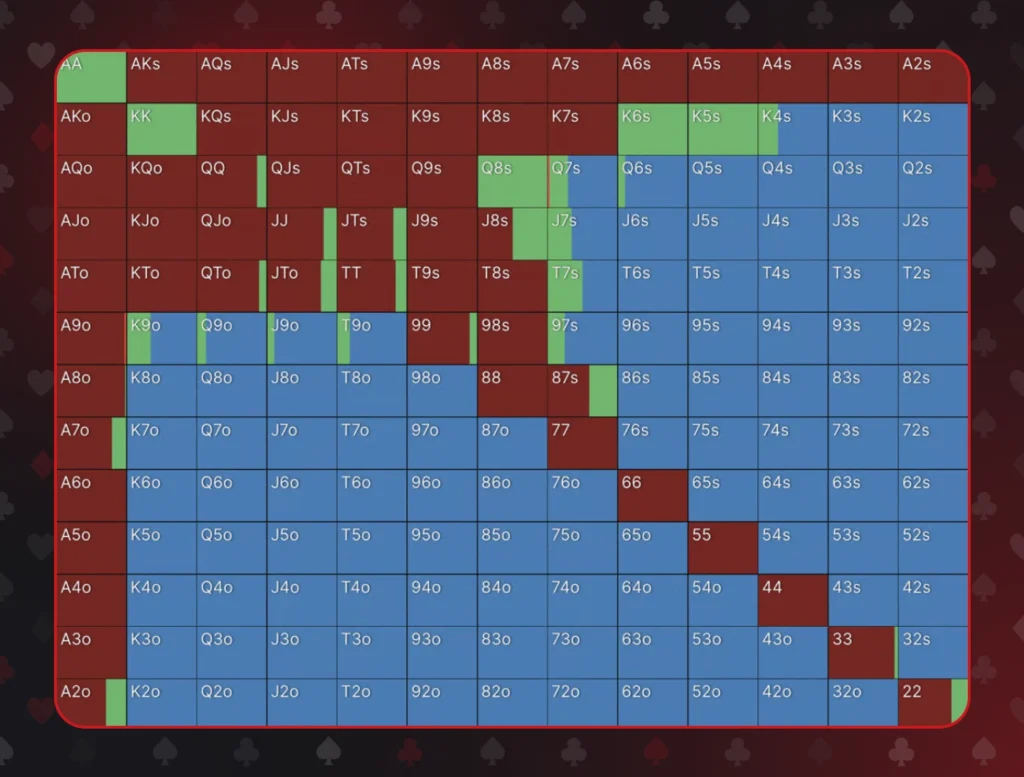
Experienced gambling industry professionals use this dynamic to aggressively target mid-stacks. By understanding push/fold charts and identifying opponents who are playing tight to reach the money, late registrants can rapidly accumulate chips through uncalled all-ins, which in this case can increase late registration cashing probability.
Is Max Late Reg Worth It for Recreational Players?
If you are a recreational player, it might be a more difficult or less straightforward decision whether max late regging is worth it.
Is max late registration profitable?
Often, yes, in standard non-bounty MTTs, because late registrants can receive an ICM equity boost. However, the optimal registration point depends on the payout structure, field size, starting stack, rake, and your skill edge.
Max late regging provides an equity boost that benefits recreational players immensely. However, from an entertainment and variance perspective, it may not be desirable.
Because you are entering with a short stack, you will bust out of the tournament very quickly at a high frequency. For a professional, this variance is acceptable because they are playing 50 tournaments a day. For a recreational player who traveled to a casino to play a single WSOP event, waiting around all day only to bust in 15 minutes is a miserable experience.
If your primary goal is entertainment and to get the most playtime for your buy-in, register on time. If your primary goal is long-term profitability and you have the bankroll to weather wild variance swings, max late reg. Let's sum up the optimal decision about max late reg in different scenarios.
When Should You Max Late Reg?
Max late reg is generally most attractive in standard non-bounty MTTs when the remaining stack is still playable, and the payout structure creates meaningful ICM value. It is less attractive in PKOs because previously collected bounties are unavailable to the late entrant. Your own deep-stack and short-stack edge should also influence the decision.
This table of max late reg in various situations shows you at a glance the benefit of scenarios with late registration vs early registration:
Situation | Value of Late Reg |
|---|---|
Standard freezeout | 🟢 High |
Satellite | 🟢 Very high |
Flat payout | 🟢 Very high |
Large-field MTT | 🟢 High |
Top-heavy MTT | 🟡 Medium |
Deep-stack skill edge | 🟡 Registering earlier might be better |
Standard PKO | 🔴 Usually bad |
Mystery Bounty | 🟢 Usually appealing |
6–8 BB max late reg | 🔴 Significantly higher variance |
Recreational player seeking entertainment | 🟡 Early registration is usually better |
The WSOP "Max Late Reg" Controversy: Industry Context
The strategy of max late registration has become so prevalent among elite pros that it has sparked significant debate within the industry over game integrity and logistics.
During the 2024 World Series of Poker (WSOP), a massive controversy erupted surrounding max late regging in high-roller ($10,000+ buy-in) events. High-stakes professionals like Chris Brewer, Justin Bonomo, and Isaac Haxton voiced concerns on social media about players abusing the registration lines.
The clock has to stop for the max late reg in these high rollers. It’s extremely unfair what is happening @WSOP we are 15 minutes into the level with a line of 12 people and tables still getting opened. People walking in to reg 5-10 minutes past reg and allowed in. @padspoker…
— Chris Brewer (@Chris_D_Brewer) June 7, 2024
WSOP Vice President Jack Effel clarified the official stance of WSOP: as long as a player is registered and physically "in line" at the late registration desk when the clock strikes the deadline, their entry is valid.
A change regarding Late registration for $10,000 and above events.
Players must be registered AND IN LINE at the Late Registration table when late registration closes or your entry will be voided and refunded.
Please allow yourself time to register online or in person to…
— WSOP - World Series of Poker (@WSOP) June 9, 2024
The event highlighted just how valuable the late registration edge has become - elite players are willing to stand in line at the precise final second just to extract a marginal ICM advantage.
Instead of dealing with all the logistical issues, on-site tension, and online debates, WSOP introduced the ultimate solution by moving the possibility of registration to a mobile platform.
As the WSOP LIVE Account is mandatory for all entrants, there is no reason not to use it. Players can now pre-register, pay digitally, and skip the physical cage entirely. It replaces crowded physical lines with a smooth virtual queue, instantly sending seat assignments via push notifications. This eliminates the verification delays that caused the original drama. You can read details about how registration and payments are handled by WSOP from 2026 onwards in our article on the topic.
Conclusion
Mastering late registration in standard poker tournaments is a mandatory requirement for anyone serious about improving their long-term bottom line, but it depends on several other factors you need to consider. It is not a tactic born out of laziness. Late registration ICM equity boost can be provided in many non-bounty MTTs, but whether it maximizes your overall EV depends on tournament structure, remaining stack depth, payout structure, rake, skill edge, and your hourly opportunity cost.
By strategically choosing to enter standard freezeouts and Mystery Bounties at the optimal moment you can define from the factors detailed above, you capitalize on the dead money of eliminated players, artificially boosting the equity of your starting stack. While this strategy forces you into high-variance, shallow-stack scenarios where low BB push/fold charts rule the day, the sacrifice in post-flop playability is heavily outweighed by the massive surge in your hourly win rate.
If you can endure the mental grind of frequent early busts and remain disciplined with your bankroll and volume, then utilizing the late-registration edge can significantly improve your tournament EV. Remember: avoid late registation PKO tournaments, target flat payout structures, and embrace the math (you can learn about the numbers in detail from a GTO perspective on this page). See you on the tables.
Sources and Industry References
GTO Wizard Blog: For advanced ICM calculations and toy-game simulations regarding equity boosts.
PokerNews WSOP Coverage: For real-world regulatory context and player reactions to the 2024 WSOP late reg controversies.
Poker.org Strategy Insights: For professional strategic applications and shallow-stack adjustments.
Industry regulatory bodies such as the UK Gambling Commission and the Malta Gaming Authority ensure that online random number generators (RNGs) remain fair, ensuring that the math behind late registration translates accurately to real-world virtual felts on platforms like PokerStars and GGPoker.
About the Editor

Beus Zsoldos is Somuchpoker's Senior Copywriter and Player Stories Editor, covering WSOP color moments, player profiles and poker personalities for the site's Stories section. She has spent more than 20 years around the game, first as a player, then as a live tournament director and localization manager for a major online poker room, before moving into full time poker writing.
Related News
 StrategyOnline PokeriGaming
Mystery Bounty Poker Tournaments Explained: Rules, Strategy & Big Prizes (2026)
Learn how mystery bounty poker tournaments work, why players chase massive jackpot envelopes, and the best strategy adjustments to increase your EV in 2026.
 Strategy
Poker for Beginners: How to Learn Online Poker from Streams
Discover how to turn poker streams into your best study tool! Learn online poker basics like preflop action, pot odds, and bet sizing with this beginner guide.
 StrategyOnline PokeriGaming
Poker Psychology: The Ultimate Guide to Master the Mental Game
Transform your results with this comprehensive guide to poker psychology. Learn to master emotional control, eliminate tilt, build confidence, and more.
![[Poker Basics] Target Stack and Timed Tournaments: The Complete Strategy Guide](/_next/image?url=https%3A%2F%2Fimages.ctfassets.net%2Fo0c4x84rxbjm%2F6AlscPiq8eFWhuKT0DNpu5%2Fe5e2e24abc7323cb5f48f69fabeec2f9%2Ftarget_timed_featured.webp&w=3840&q=75) Strategy
Strategy[Poker Basics] Target Stack and Timed Tournaments: The Complete Strategy Guide
Learn how target stack poker and timed poker tournaments work, with practical strategy tips for both formats.
 StrategyOnline Poker
The Main Differences Between Poker Rebuy and Re-Entry Tournaments
Discover the main differences between a poker rebuy and a re-entry tournament. Learn how the rules, seat changes, and strategies affect your game.
 Side PotStrategyStories
Why Keeping Your Phone at the Poker Table Could Actually Save You Money
Think hiding your phone at the poker table is smart? Discover how keeping it handy can prevent you from playing trash hands and improve your win rate.