

Poker in Pop Culture - 5 poker movies you must watch

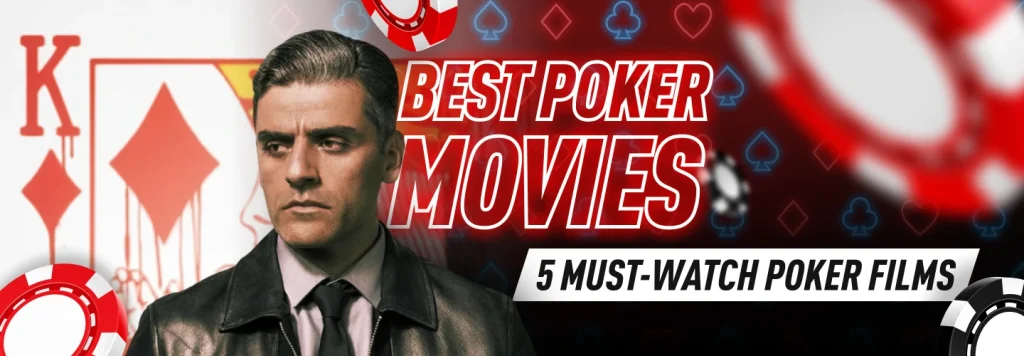
Poker has always been significantly bigger than the 52 cards inside the deck.
At its absolute core, poker is a war of psychology, risk management, math, and surviving under suffocating pressure. That makes it naturally cinematic. A terrifying river card, a stone-cold zero-equity bluff, or a player putting their entire net worth on the line with bottom pair creates the exact same spike of adrenaline as a Hollywood high-speed car chase.
Hollywood has been fascinated by the green felt for decades. Long before online multi-table tournaments turned teenagers into millionaires overnight, directors used poker to strip characters down to their bare souls, exposing their greed, their hubris, or their unmatched capacity for deception.
When the historic "Poker Boom" hit in the mid-2000s, the relationship between the felt and the silver screen went into hyperdrive. Suddenly, everyone knew what a "bad beat" felt like. However, what separates the best poker movies from cheap late-night TV filler is authenticity. The greatest films don’t just show a royal flush being slammed on the table; they capture the quiet, sickening dread of facing a check-raise on the turn when you know you only have ace-high.
In this deep dive, we are putting five absolute must-watch poker movies under the microscope to see why they hold up, how the math checks out, and why they belong on your weekend watchlist.
What Actually Makes a Great Poker Movie?
Ask any seasoned grinder: 90% of Hollywood movies about poker get the game fundamentally, hilariously wrong.
To earn a legitimate spot among the top poker films, a movie has to balance the spectacle for the casual popcorn-eater with the strict geometry of the game for the real players. It requires a specific recipe:
Legitimate table stakes: The chips have to represent real, devastating life consequences, not just arbitrary numbers.
The absence of "The Magic Deck": If every single hand results in Four-of-a-Kind beating an Ace-high Full House, real players check out in five minutes.
Authentic table talk: The jargon needs to sound like it came from the Rio convention center, not a screenwriter's dictionary.
The "Fold" factor: Showing a protagonist making a disciplined, agonizing laydown is infinitely more realistic than showing them win ten showdowns in a row.
Now, let's look at the five cinematic heavyweights that actually pulled it off.
Casino Royale (2006): When James Bond Joined the Texas Hold'em Movies Boom
When modern audiences look for premier Texas Hold'em movies, director Martin Campbell’s gritty reboot of 007 is universally the first card out.
The plot puts James Bond at a high-stakes table at the Casino Royale in Montenegro, tasked with bankrupting Le Chiffre - a desperate private banker funding global terrorism.
The Ultimate Pop-Culture Pivot
It's a piece of poker trivia: in Ian Fleming’s original 1953 novel, Bond and Le Chiffre played Baccarat. However, because the movie went into production right at the absolute summit of the global Chris Moneymaker poker boom, the producers smartly realized that No-Limit Texas Hold’em was the only game on earth that carried enough modern cultural weight to anchor a 150-million-dollar blockbuster.
Why the Grinders Respect It (And Laugh at It)
From a strictly atmospheric standpoint, the movie is a masterpiece. The room's heavy silence, the sound of the clay plaques riffling, and the prospect of spotting a physical "tell" (Le Chiffre's bleeding tear duct) feel incredibly heavy.
Then comes the final hand.
Any real poker player will tell you that the final four-way cooler - where an Ace-high flush runs into a Full House, which runs into a bigger Full House, which gets scooped by Bond’s 4-to-8 Straight Flush - is a statistical absurdity that would trigger a genuine fistfight in a real card room. But as a piece of pure, unadulterated cinematic theater? It is untouchable.
The Verdict for the Railbirds
You do not need to know the difference between a cut-off and the hijack seat to lose your breath during this movie. It takes the cold mechanics of a tournament structure and turns it into a literal gladiatorial death match. For an entire generation of 20-somethings, Casino Royale was the sole reason they bought their first 300-piece set of dice chips.
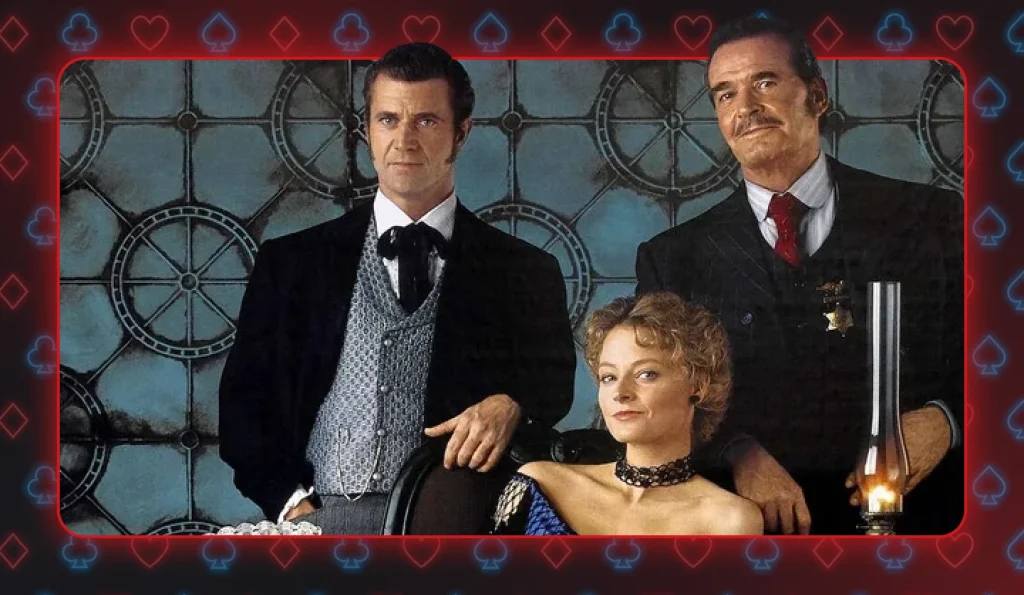
Maverick (1994): The Old-School King of Top Poker Films
Before hole-card tracking cameras, before Twitch streams, and before GTO (Game Theory Optimal) charts existed, poker belonged to the dust, the riverboats, and the Colt .45.
Richard Donner’s Maverick, starring Mel Gibson, Jodie Foster, and the legendary James Garner, is the ultimate love letter to the game's wild, untamed frontier heritage.
Five Cards, Zero Rules
It is crucial to note for modern viewers: Bret Maverick isn’t playing Texas Hold'em; he is playing classic 5-Card Draw.
The film acts as a gorgeous time capsule of the pre-boom era. It reminds us of a time when a "poker pro" wasn't a kid sitting in a hoodie behind three monitors, but a fast-talking, well-dressed hustler drifting from paddle-wheeler to saloon, praying he didn't get shot under the table for slow-rolling a local rancher.
The Hidden High-Level Concepts
While Maverick wraps itself in a warm blanket of 90s action-comedy, it actually preaches some extremely sound, fundamental poker doctrines:
Table Image is everything: Maverick spends the first hour acting like an easily rattled, superstitious amateur specifically to get paid off later.
The "Live Read": Watch how the movie emphasizes looking at a man's throat to see his swallow rate when he looks at his drawer.
Bankroll logistics: Half the movie is literally just the painful, highly relatable reality of trying to scrape together a tournament buy-in.
Yes, Mel Gibson pulling the exact Ace of Spades he needs blindly off the top of the deck to complete a Royal Flush on the final hand is the most egregious violation of probability ever captured on 35mm film. But Gibson’s smug, slow-rolling delivery is so infectious that the poker gods grant it a permanent pass.
The Card Counter (2021): The Darkest of All Movies About Poker
If Maverick is the warm, laughing Friday night home game with your best friends, Paul Schrader’s The Card Counter is the freezing, fluorescent-lit 4:00 AM session at a depressing roadside casino where nobody has spoken a word in three hours.
Starring Oscar Isaac as William Tell - an ex-military interrogator turned nomadic mid-stakes gambler - this is the most aggressively anti-glamour poker film ever constructed.
The Reality of the "Grind"
Where other movies about poker focus entirely on the euphoria of the spike, Schrader focuses on the numbing, repetitive math of the grind.
Tell doesn't play high rollers; he sits in anonymous World Poker Tour side events, grinding out modest 5% Edges, staying in cheap motels, and literally wrapping the hotel furniture in white bedsheets to keep the sensory overload of the world away from his brain.
The Introduction of the "Backing Stable"
The highest mark of authenticity in The Card Counter is its introduction of staking.
When Tell meets La Linda (played brilliantly by Tiffany Haddish), the movie explores the real-world sub-economy of poker: "The Stable". For the first time in mainstream cinema, audiences are introduced to the reality that most guys playing $10,000 buy-in events don't own all of their own action; they are backed by syndicates taking a 50% split of the profit.
Why the Pros Felt Seen
Ask any touring mid-stakes pro about this movie, and they will give you a haunted look. The depiction of the endless casino carpet patterns, the stale smell of the convention center hallways, the bad coffee, and the absolute emotional flatline required to endure a 14-hour session of folding bad cards is captured with terrifying accuracy. It is a masterpiece about using the strict, emotionless rules of card counting to keep personal trauma locked in a mental cage.
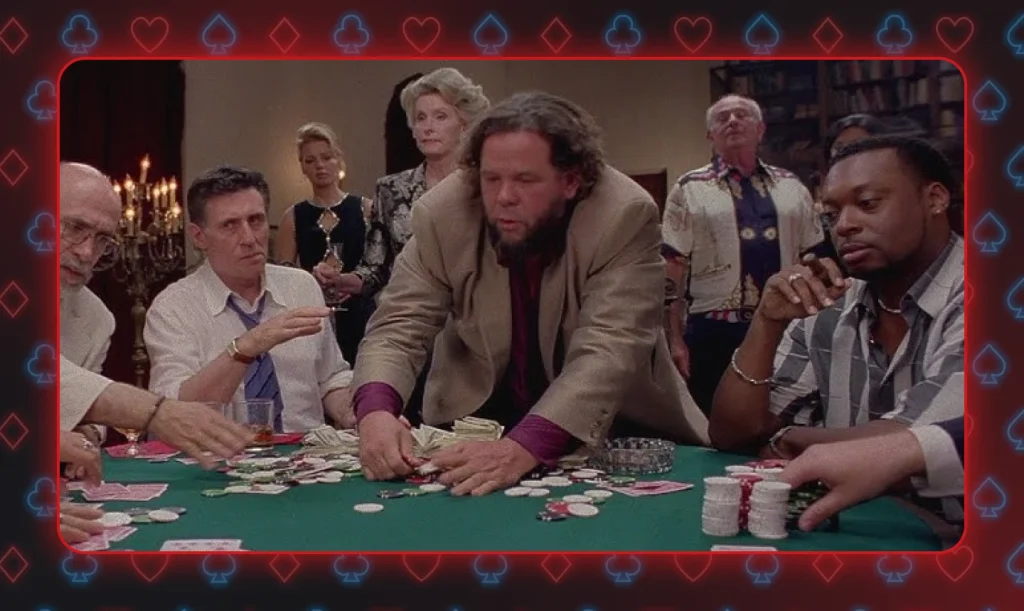
Shade (2003): The Grimy Underbelly of Poker Hustlers
If
Casino Royale
represents the absolute penthouse of global gambling, Damian Nieman’s neo-noir
Shade
is the damp, smoke-stained basement.
Released in 2003 - right as the first tremors of the online poker explosion were being felt - this indie gem follows a crew of Los Angeles grifters trying to set up "The Dean", a legendary underground card player portrayed with chilling, quiet menace by
.
The Art of the "Mechanic"
While most movies about poker focus on the math of the cards,
Shade
focuses entirely on the physical manipulation of the deck.
The movie is an absolute masterclass in the dark art of the "Mechanic" - card sharps who can deal from the bottom of the deck, execute false shuffles, and set up a "Cooler" (a pre-stacked deck swapped into the game to generate two massive hands at once). Starring
,
, and
, the dialogue moves at the speed of a machine gun, dripping with authentic old-school street jargon.
Why the Grinders Love It
For serious players,
Shade
acts as a vivid reminder of why live card rooms have strict, non-negotiable dealing procedures.
When you watch Foxx’s character try to pull off a "Greek Shot" (peeking at the bottom card while dealing), or watch Byrne’s character dissect an angle-shooter's posture, it triggers a very specific type of paranoia. It highlights a fundamental truth about gambling: sometimes you aren't playing the odds; you are playing the integrity of the man holding the shoe.
The Verdict for Casuals
Even if you don’t know what a "shiner" (a reflective surface used to read dealt cards) is, the movie functions as a top-tier heist thriller. It operates on pure misdirection. Just like a well-constructed triple-barrel bluff, the movie forces the audience to constantly guess who is actually holding the nuts, right up until the final card is turned over.
A Big Hand for the Little Lady (1966): The Greatest Long-Con in Cinema
Ask twenty modern Texas Hold'em players if they have seen
A Big Hand for the Little Lady
, and nineteen of them will give you a blank stare.
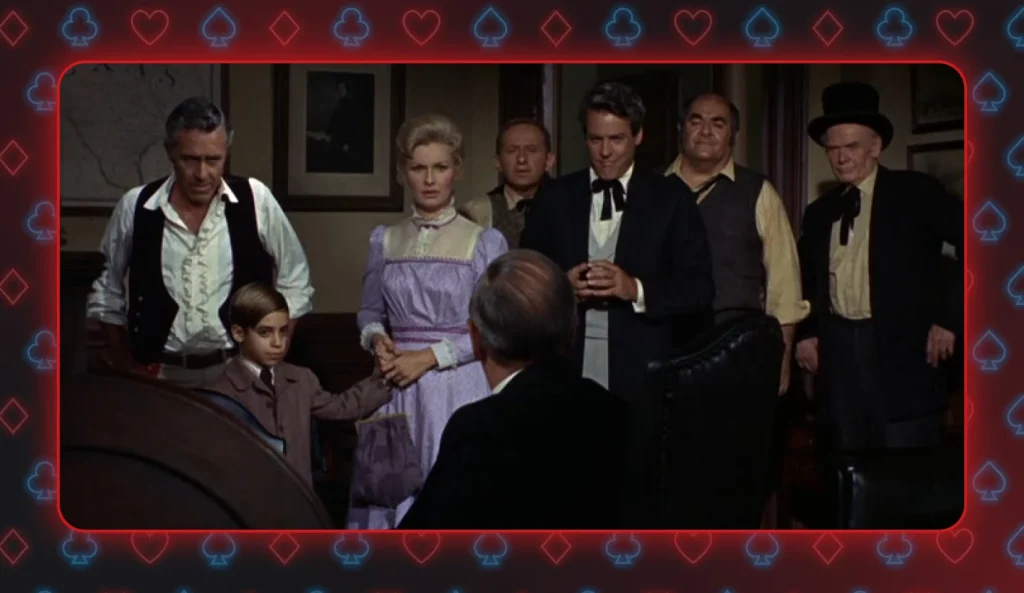
That is a genuine tragedy, because Fielder Cook’s 1966 comedic Western is structurally one of the most brilliant movies about poker ever put on celluloid. Set in a sweltering backroom in Laredo, Texas, during the 1890s, the plot centers on the richest, most cutthroat annual poker game in the territory.
The Ultimate "Perceived Weakness" Play
The setup is legendary: Meredith (
), a recovering gambling addict traveling with his family, gets lured into the game, bets his family's entire life savings on a single hand, and promptly suffers a massive, paralyzing heart attack right as the betting reaches its peak.
His wife, Mary (
) - who doesn’t know the difference between a pair of deuces and a full house - is forced to take his seat to play out the hand.
Why It Preaches Pure Game Theory
While the movie features zero modern GTO concepts, it preaches the absolute golden rule of live poker:
Perception is reality.
Because the table perceives Mary as a helpless, terrified housewife, her actions carry ten times the weight of a standard gambler's. When she runs out of money to call a raise, she takes her five face-down cards across the street to the local bank, walks into the president's office, and asks for a personal loan backed strictly by the strength of her hole cards.
The Under-the-Radar Masterpiece
Without spoiling the final fifteen minutes for first-time viewers, the movie pulls off a narrative slow-roll that rivals
The Sting
. It serves as an immortal reminder to every player who sits at a green felt: if an opponent’s story makes absolutely no logical sense, you are almost certainly being set up for the slaughter. It remains the unfortunately hidden jewel among top poker films.
What Hollywood Gets Right (and Wrong) About Poker
One of the greatest unofficial hobbies of any poker fan is sitting in a movie theater and silently grading the realism of the hands being dealt on screen.
The honest truth is that 90% of Hollywood movies about poker mix authentic game theory with heavy theatrical gasoline. If every on-screen session adhered strictly to standard live-cash math, casual audiences would fall asleep in the second act. Screenwriters deliberately sacrifice Game Theory Optimal (GTO) realism at the altar of unforgettable drama.
What the Top Poker Films Get Right
When Hollywood actually respects the felt, the strongest must-watch poker movies capture the invisible, heavy elements of the game perfectly:
The internal war: The suffocating psychological weight of being put to a decision for your entire stack.
The "Information War": The hyper-fixation on physical posture, breathing rates, and verbal timing.
The emotional pendulum: The sickening, hollow drop in your stomach after a two-outer hits the river.
The aura of confidence: How an aggressive, fearless table presence can force a better hand into the muck.
Whether it is James Bond staring down Le Chiffre's bleeding eye in
Casino Royale
, or the grimy Los Angeles mechanics trying to out-hustle each other in
Shade
, that specific frequency of tension is instantly recognizable to anyone who has ever survived the
of a tournament.
The Great Hollywood Exaggeration
To make the game work for the big screen, directors rely on a handful of beloved, highly predictable cliches that almost never happen in the wild:
The Hollywood Version | The Casino Reality/strong> |
|---|---|
Four monster hands collide in one pot | A standard cooler; Ace-King runs into Pocket Aces.) |
Tournaments end on a glorious all-in call | Tournaments end via 4:00 AM ICM chip-chops.) |
Protagonists win via "Soul-Reads" | Winning players fold 75% of their starting hands. |
Massive bluffs work 100% of the time | Big bluffs get snap-called by curious amateurs regularly. |
One hand decides a player's destiny | Volume, variance, and 10,000 small +EV decisions do. |
Real professional poker is functionally a desk job played in a
. Long-term survival relies on unexciting concepts like strict bankroll management, emotional compartmentalization, and extreme patience. However, watching a guy fold
Jack-Seven offsuit
for six hours straight doesn’t win Oscars.
The Realism Scoreboard: How Our 5 Picks Stack Up
So, if we take those exact Hollywood clichés and hold them up against the top 5 poker films we just analyzed, who takes down the pot for pure authenticity?
Movie Title | Technical Poker Realism | Pure Entertainment Value |
|---|---|---|
Medium-Low (That final hand, James...) | Untouchable / Very High | |
Medium (Blind top-decking aside) | Very High | |
Extremely High | High (Heavy & Gritty) | |
Medium-High | High | |
Medium | High (Great Narrative Twist) |
Notice the supreme irony of that table: the most realistic film on the list (
The Card Counter
) is the darkest, quietest, and least "fun" movie of the group. Conversely, the least statistically realistic scenes - like Bond's straight flush over two full houses - are the exact moments that generate the loudest cheers from the audience.
And that is completely fine. The best poker movies aren't instructional videos; they are empathy machines. They exist to make a non-player feel the exact same spike of cold sweat that a grinder feels when the dealer burns and turns the river.
Tactical Masterclass: What Grinders Can Learn From These 5 Top Poker Films
The strongest top poker films offer far more than two hours of couch escapism; they act as psychological mirrors. If you strip away the moody Hollywood backlighting and the dramatic string quartets, each of our five featured films delivers a concrete, highly profitable lesson for your next live session:
1. From Casino Royale: "Play the Player, Not the Board"
James Bond didn't scoop Le Chiffre because he understood the underlying combinatorics of a 4-to-8 straight flush; he scooped him because he realized his opponent was playing under the literal threat of physical dismemberment.
The Felt Lesson: Always identify whose money is actually sitting on the felt. An opponent playing with "scared money", playing way outside their bankroll, or desperately trying to survive a tournament bubble will make massive, highly exploitable over-folding errors if you apply enough raw, relentless aggression.
2. From Maverick: "Weaponize Your Table Image"
Bret Maverick took down the Laredo championship because he spent the first three hours of the session convincing the local heavyweights that he was a superstitious, easily rattled buffoon.
The Felt Lesson: Never let your ego force you into trying to look like the smartest guy in the card room. If the table perceives you as a loose, reckless, gambling amateur, sit back, tighten your opening ranges, and let them happily pay off your nut-peddling value bets.
3. From The Card Counter: "Embrace the Boredom"
William Tell’s entire survival philosophy relies on the cold realization that winning poker is fundamentally unsexy. It is a game of modest, single-digit statistical edges.
The Felt Lesson: If you are sitting down at a poker table specifically to get an adrenaline rush, you are eventually going to go broke. True professionals treat the green felt like a data entry job - they sit through hours of unplayable, premium garbage with a completely flat heart rate, waiting patiently for the math to tip into their favor.
4. From Shade: "Protect Your Action"
The underground mechanics in
Shade
survived strictly by looking for the invisible angle.
The Felt Lesson: Live poker requires extreme, unbroken situational awareness. Keep your hands over your hole cards, watch the dealer’s pitch angle, make sure your high-denomination chips are clearly visible to the table, and never let a fast-talking, angle-shooting opponent rush you into making a premature verbal declaration.
5. From A Big Hand for the Little Lady: "Respect Perceived Strength"
When a quiet, hyper-passive player who hasn't voluntarily entered a pot since the Clinton administration suddenly four-bet shoves their entire stack into the middle of the table, they do not have King-Jack suited.
The Felt Lesson: Kill the "Curiosity Call". If the narrative of the hand dictates that you are beaten, find the supreme inner discipline to throw top-pair and wait for a significantly more profitable spot.
Final Thoughts: The Final River Card
At the end of the day, Hollywood will continue to churn out movies about
as long as human beings remain captivated by the timeless concept of putting everything you have on the line to get everything you want.
The best poker movies succeed because they recognize that the card table is the ultimate societal equalizer. It doesn’t matter who your father is, what your stock portfolio looks like, or what kind of European sports car you handed to the valet - once the dealer pitches the cards, the only things keeping you alive are your intellect, your emotional fortitude, and your capacity to look a man dead in the eye and tell him a devastating lie.
Whether you are a seasoned multi-table pro logging your 10,000th hour on the digital felt, a Friday-night kitchen-table hero, or just a cinephile looking for a high-octane evening, these five top poker films belong in your permanent rotation.
About the Editor

Gyöngyi P. Tóth is SoMuchPoker's Content Writer and Poker Stories Specialist, writing Side Pot features, WSOP storylines, and the site's Poker in Pop Culture and Legends of Poker series. She was introduced to poker 20 years ago through live tournament play, and what has kept her interest since is the psychology and human behavior behind the game as much as the cards themselves.
Related News
 Live PokerLifestyle
Off the Felt in Sanya: The Best Things to Do Away From the CPG Tables
Discover six outdoor things to do in Sanya away from CPG, from paddleboarding and surfing to rainforest walks and canyon stream trekking.
 LifestyleAsiaStories
Asia's Poker Revolution - Streams on the Felt: The Ultimate Guide to Asian Gambling Series
Discover the ultimate guide to Asian gambling series and shows. From Korean Asian casino dramas to intense Japanese gambling anime, explore high-stakes TV.
 Live PokerLifestyle
Is There Really Poker in China? Inside the Country’s Growing Tournament Scene
Is there really poker in China? Discover how CPG uses online qualification and organised competition to grow the country’s tournament scene.
 LifestyleAsiaStories
Asia's Poker Revolution - Cinema on the Felt: The Ultimate Guide to Asian Gambling Movies
Discover the ultimate guide to Asian gambling movies. From Hong Kong classics to intense Korean casino thrillers, explore high-stakes cinema on the felt.
 LifestyleStories
Poker in Pop Culture - Kakegurui and Poker: Why the Bet Series Appeals to Poker Fans
Discover why Kakegurui and Netflix's Bet appeal to poker fans through bluffing, psychology, risk-taking, and the strategic mind games that define both worlds.
 LifestyleStories
Poker in Pop Culture - Reality Poker TV Shows
Discover the best poker TV shows, from High Stakes Poker to Poker After Dark. Relive the poker boom and the unforgettable moments that captivated millions.