

Cooler

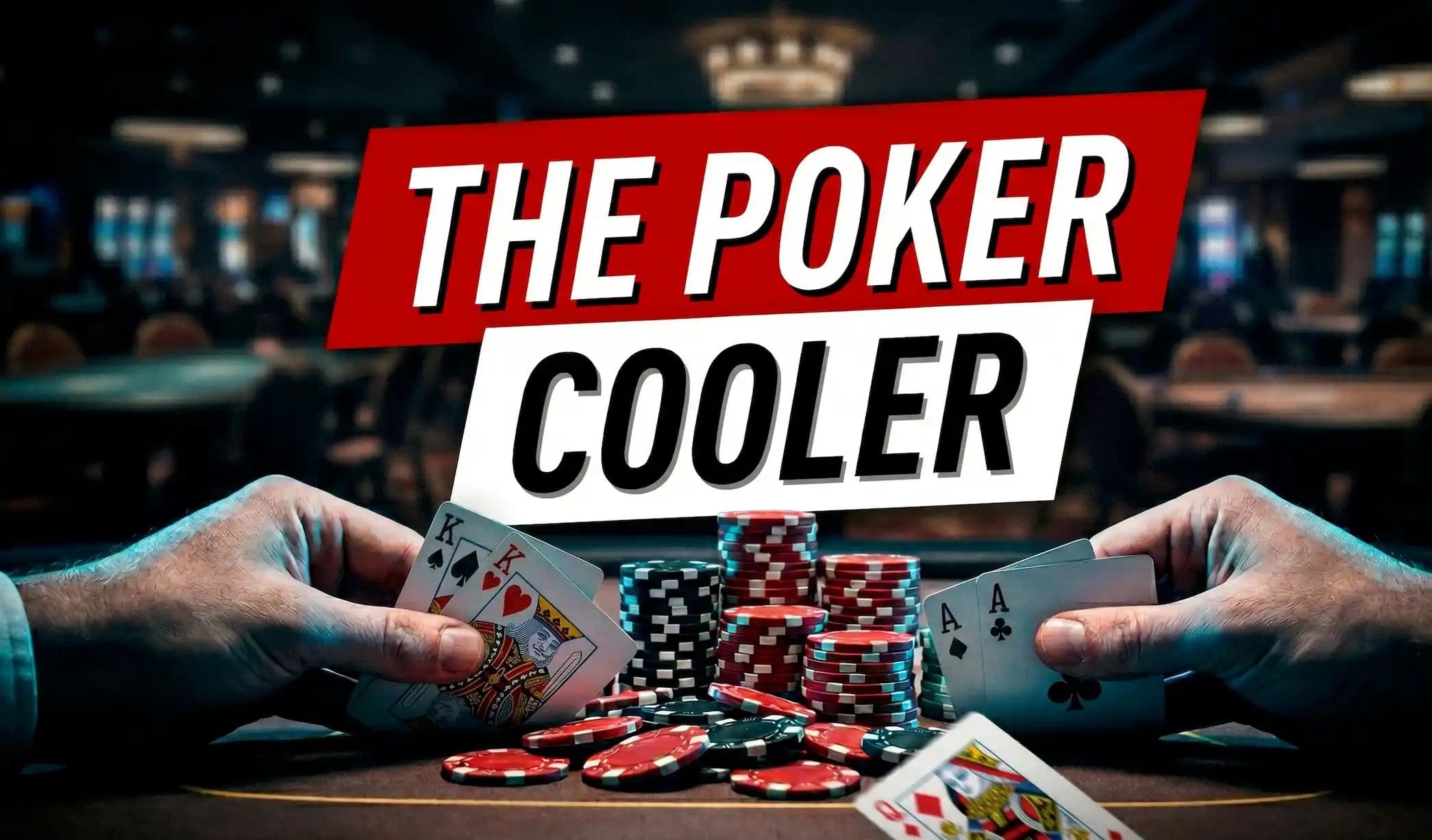
In the complex world of poker, where skill, strategy, and a degree of luck intertwine, certain situations test a player's resolve more than others. Among these, the 'cooler' stands out as a particularly challenging and often misunderstood phenomenon. This article delves into the precise nature of a poker cooler, dissecting its mechanics, contrasting it with the frequently confused 'bad beat,' and offering an expert perspective on how to effectively navigate these unavoidable encounters at the felt.
Defining the Poker Cooler: A Clash of Titans
A poker cooler fundamentally describes a scenario where two or more players are dealt exceptionally strong hands, creating a situation where both are highly incentivized to commit a significant, if not all, of their chips. The crux of a cooler lies in the fact that, despite the losing player holding what would typically be considered an overwhelmingly powerful or unbeatable hand in most contexts, they are unfortunately confronted by an opponent holding an even stronger, often statistically superior, holding.
This leaves the losing player with a profound sense of inevitability, as folding their premium hand would seem illogical given its strength, yet the outcome is predetermined by the opponent's superior cards.
Key Characteristics of a Cooler:
Premium Hand Collision: At least two players possess poker hands that are genuinely strong, often in the top percentile of starting hands or strong post-flop formations.
Inescapable Confrontation: The perceived strength of both hands makes it exceedingly difficult, if not impossible, for either player to fold, leading to a large pot.
Statistical Dominance: The winning hand is not a fluke or a long-shot draw; it is inherently better or has a significant statistical edge from the outset or on a given street.
Psychological Impact: The losing player often feels 'unlucky' or 'cursed', despite having played their hand correctly, leading to frustration but typically not self-reproach for their strategic decisions.
Illustrative Cooler Scenarios in Poker
Understanding coolers is best achieved through concrete examples that highlight the inherent strength of both competing hands and the statistical likelihood of their clash. These situations are part and parcel of the game, emphasizing the role of card distribution in poker.
Classic Cooler Examples:
Pocket Kings vs. Pocket Aces Pre-flop: This is arguably the most iconic cooler. Both hands are among the absolute strongest starting hands in Hold'em. A player with pocket kings will almost always feel confident getting all their chips in before the flop, only to discover they are dominated by pocket aces, which holds an overwhelming statistical advantage (approx. 82% to 18%). It's a pre-flop setup that offers no escape for the player with Kings.
Flopping a Weaker Set Against a Stronger Set: Imagine holding 8-8, and the flop comes K-8-2. You've flopped middle set, a very powerful hand. However, an opponent holding K-K has flopped top set, an even stronger hand. On this board, it's highly improbable for the player with 8-8 to avoid committing chips, especially against an aggressive opponent, only to run into a devastating set over set situation.
King-High Flush Against an Ace-High Flush: The board completes, showing four spades, and you hold Q-J of spades, giving you a King-high flush. This is a formidable hand. However, an opponent reveals A-2 of spades, completing an Ace-high flush. Both players have made incredibly strong hands, but one is unequivocally superior. The action often escalates aggressively on the river, where both players feel confident in their holdings.
Flopping a Straight Against a Higher Straight: You hold 7-8 and the flop comes 5-6-9. You've flopped the nuts at that moment, a seven-high straight. An opponent, however, holds 10-J and has flopped a ten-high straight. While your straight is strong, their straight is undeniably better. This situation, especially on a dry board, guarantees a collision where neither player typically considers folding.
Experiencing inevitable coolers is simply part of the mathematical landscape of the game, and putting in consistent volume is the best way to overcome short-term variance. You can test your resilience and grind through the math at our recommended online poker sites. Claim your exclusive SMPBONUS welcome bonus code today and hit the virtual tables to play more hands and build your bankroll.
Cooler vs. Bad Beat: A Critical Distinction
A common point of confusion for many poker players is distinguishing between a 'cooler' and a 'bad beat'. While both involve losing a significant pot with a strong hand, their underlying mechanics and implications for strategic analysis are fundamentally different.
Understanding the Nuances:
The Cooler: As established, a cooler involves a collision of two strong hands where the winning hand is inherently or statistically superior from the outset or at the critical point of confrontation. The losing player often has no viable strategic option to escape the hand. It's less about improbable luck and more about unfortunate card distribution.
The Bad Beat: A poker bad beat, in contrast, occurs when a statistically favored hand (often significantly so) is defeated by a weaker hand that catches up through highly improbable draws or 'runner-runner' outs. The key here is the extreme unlikeliness of the winning outcome. The favored player was a substantial statistical favorite, only to be overcome by an underdog's improbable catch.
For instance, losing with AA to KK pre-flop is a cooler. Losing with AA to 7-2 offsuit when the 7-2 hits a miraculous two-pair on the river after being a massive underdog is a bad beat. The distinction is vital for a player's poker mental game, as coolers are unavoidable, while bad beats, while also unavoidable in specific instances, highlight the extreme variance of the game.
Navigating the Aftermath: Dealing with Poker Coolers
The inherent nature of coolers means they are an unavoidable aspect of poker. How a player reacts to them, however, is entirely within their control and profoundly impacts their long-term success. Developing a robust mental game is paramount.
Strategies for Handling Coolers:
Embrace Variance: Acknowledge that coolers are a product of poker variance and card distribution, not necessarily poor play. They are an inherent part of poker that balances skill with luck over the long run.
Avoid Tilt: The frustration from a cooler can easily lead to 'tilt', causing players to make suboptimal decisions in subsequent hands. Maintaining emotional composure is crucial. Understand that coolers happen to everyone, even the best players.
Objective Review (Limited): Briefly review the hand to ensure no glaring strategic errors were made. In most cooler situations, you'll find you played your hand correctly. Over-analyzing a perfectly played cooler is counterproductive.
Focus on the Long Term: Remember that poker profitability is measured over thousands, not tens, of hands. Cooler losses are part of the statistical landscape and should not derail your overall strategy or confidence.
Maintain Positive Outlook: Resiliency is a hallmark of successful poker players. Shake off the cooler, reset your focus, and concentrate on making optimal decisions for the next hand.
In conclusion, while poker coolers can be frustrating and costly, they are an integral and unavoidable element of the game. Mastering the art of accepting these situations with equanimity, distinguishing them from genuinely bad beats, and refusing to let them impact your strategic decision-making are crucial steps toward becoming a more resilient and ultimately more profitable poker player.
| Pros | Cons |
|---|---|
Experiencing and handling coolers gracefully strengthens a player's mental game, teaching them to cope with variance and maintain composure under pressure. | Coolers often involve large pots, leading to substantial monetary losses that can be disheartening, especially in high-stakes games. |
Coolers underscore the inherent probabilistic nature of poker, helping players understand that even perfect play doesn't guarantee a win against superior starting distributions. | The frustration and perceived injustice of a cooler can easily lead to 'tilt,' causing players to deviate from optimal strategy and make costly mistakes in subsequent hands. |
Related Poker Terms
Best Online Poker Bonus Codes


About the Editor

Bence Mitykó is a Somuchpoker poker writer, covering poker news and strategy. He spent four years playing poker professionally, primarily focusing on Heads-Up Sit & Go games, experience that continues to shape his understanding of poker strategy, online poker dynamics, and the wider poker industry.


