Stranger

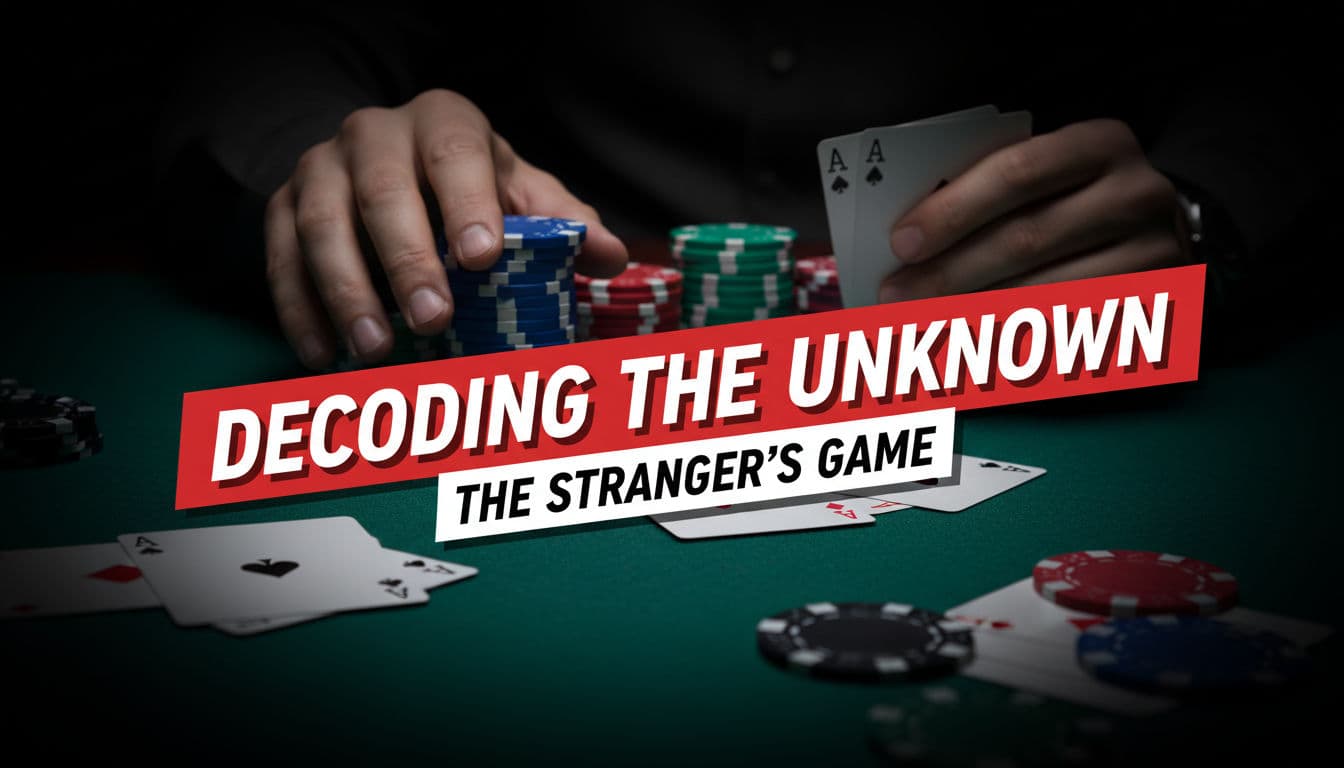
In the dynamic environment of a poker cash game, the arrival of a stranger - a new player joining the table - introduces an immediate shift in equilibrium. Unlike tournament play where the field is fixed, cash games are fluid, with players constantly entering and exiting. This fluidity means regular opponents might suddenly be joined by an entirely unknown entity. For seasoned players, this moment is not just about welcoming a new face; it's a critical juncture demanding heightened awareness and a rapid recalibration of strategy. The initial uncertainty surrounding a stranger's playstyle presents both significant risks and lucrative opportunities, making the ability to quickly assess and adapt an indispensable skill for profitability.
Playing Against Strangers in Poker: The Psychological Impact and Initial Assessment
The term stranger in poker refers to any player whose tendencies, betting patterns, and general approach to the game are entirely unfamiliar to the existing players at the table. Encountering a stranger poker player can inject a psychological element of caution and intrigue into the game. Experienced players understand that assuming a new player will conform to typical poker table dynamics is a costly mistake. Instead, their arrival signals the start of a crucial observation period.
In the f ast-paced world of online poker , players often rely on HUD software to bridge this information gap, allowing them to rapidly gather statistical data and decode a stranger’s tendencies in just a few orbits.
The Art of Observation: What to Watch For
Effectively observing poker opponents is the cornerstone of exploiting an unknown opponent in poker. It's a systematic process that begins the moment they sit down and continues throughout their initial hands. Key areas of focus include:
Pre-flop Tendencies: Pay close attention to their Voluntary Put Money In Pot (VPIP) and Pre-flop Raise (PFR) percentages, even if only estimated. Do they limp often? Do they open-raise a wide range? Are they 3-betting light or only with premium hands? These early indicators are vital for categorizing their fundamental aggression and looseness.
Post-flop Play: Once they enter a pot, observe their Continuation Bet (C-bet) frequency. Are they c-betting every flop regardless of board texture, or only when they connect? How do they react to raises? Do they check-raise frequently or just call down? Watch for their showdowns to see what hands they play and how they play them.
Bet Sizing: Inconsistent or telling bet sizing can reveal much about a stranger's hand strength or thought process. Small bets might indicate weakness or value, while large bets could be for protection or bluffing. Consistency in sizing can also hint at their overall approach.
Table Talk and Physical Tells (Live Poker): While less critical in online poker, in live games, their demeanor, posture, eye movements, and even how they stack their chips can provide valuable insights into their comfort level and potential tells.
Profiling the Unfamiliar: Categorizing Player Types
Once initial observations accumulate, the next step in poker player profiling is to begin profiling the stranger into a recognized player type. While not always perfectly accurate, these categorizations help formulate an initial strategic response:
Loose-Aggressive (LAG): High VPIP, high PFR, often 3-betting and barreling. These players can be dangerous but also exploitable by playing tight and picking spots, or by trapping them.
Tight-Aggressive (TAG): Selective with starting hands but plays them strongly. They raise frequently and bet for value. Exploiting TAGs often involves recognizing their folding points and occasionally running bluffs when they show weakness.
Loose-Passive (Calling Station): High VPIP, low PFR. They call too often pre-flop and on multiple streets post-flop, rarely raising. The strategy here is straightforward: value bet relentlessly with strong hands and avoid bluffing.
Tight-Passive (Rock): Low VPIP, low PFR. They only play premium hands and rarely bluff. They are easy to read; get out of the way when they show strength, and steal their blinds and small pots.
Strategic Adjustments and Leveraging the Unknown
The beauty of encountering a stranger is the opportunity to exploit their unestablished image and unknown tendencies through cash game adjustments before they can adapt to yours. Initially, they are less likely to put you on specific hand ranges because they lack data on your play. Adapting poker strategy is key here, as their arrival allows for plays that might be less effective against regulars who have a history with you.
Exploiting Caution: Many new players, especially inexperienced ones, enter a new game with a degree of caution. This can be exploited by applying pressure in blinds or making strategic C-bets on dry boards.
Unpredictability: For a brief period, your actions against a stranger carry more weight because they haven't seen you do it before. This allows for plays that might be less effective against regulars who have a history with you.
Image Manipulation: Be mindful that while you are profiling them, they are also observing you. Consider how your initial plays might shape their perception of your style, potentially setting up future bluffs or value bets.
Ultimately, playing against strangers in poker is a test of your observational skills, analytical abilities, and adaptability. It's a continuous process of gathering information, forming hypotheses, testing them, and adjusting your strategy to maximize your edge. Embrace the unknown, and you'll uncover new avenues for profitability at the tables.
| Pros | Cons |
|---|---|
New players haven't established an image, making them predictable targets if their initial tendencies are quickly identified. You can exploit their default style before they adjust. | An unknown opponent might be an experienced player intentionally varying their initial play to mislead. Drawing premature conclusions can lead to costly errors. |
A stranger's arrival can break stagnation, introduce new action, or shift the balance of aggression, which can be beneficial if the previous dynamics were unfavorable. | Without established reads, playing against a stranger inherently carries higher variance. Your initial strategic adjustments are based on limited data, increasing the risk of incorrect decisions. |