

Running Bad

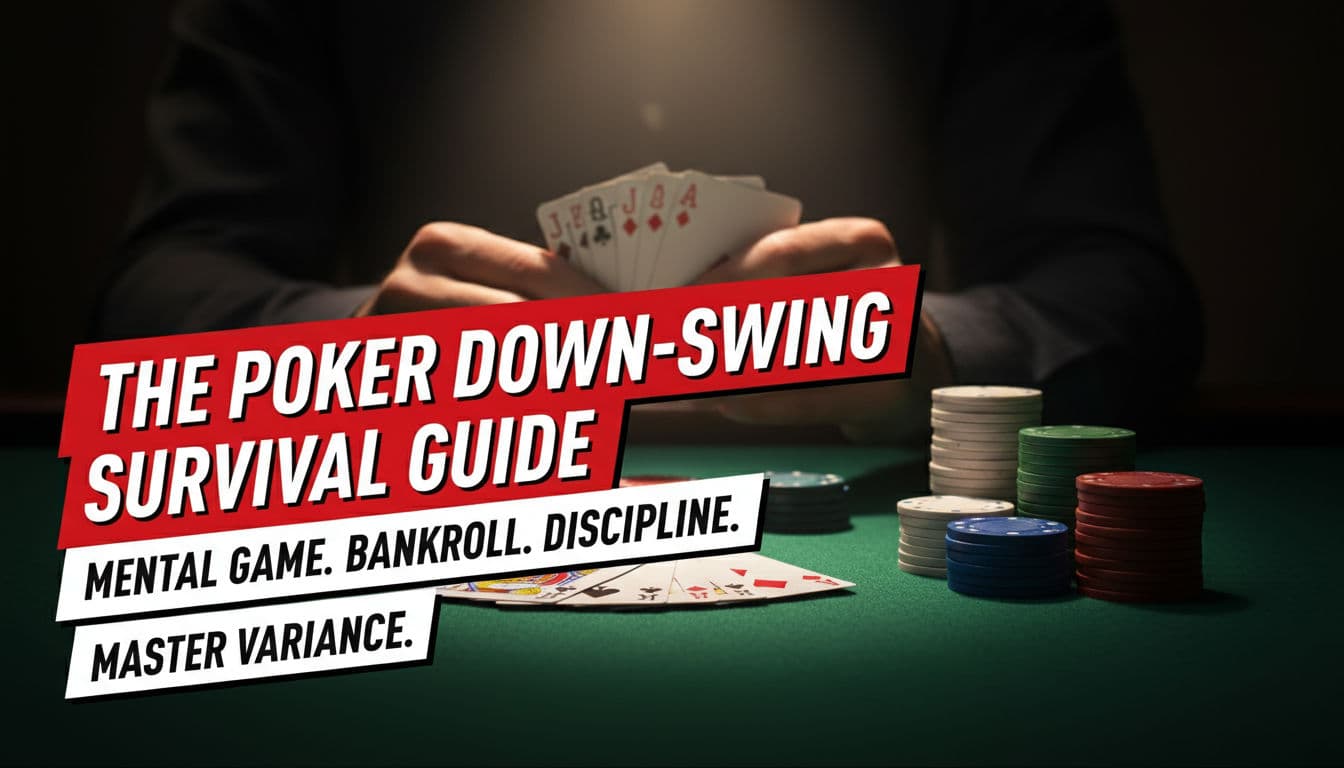
For any dedicated poker player, encountering prolonged periods of consistently unfavorable outcomes despite executing sound strategy is an inevitable, often vexing, reality. This phenomenon, universally recognized as 'running bad' or a 'downswing,' transcends mere bad luck in a single hand; it signifies a sustained series of negative variance where strong plays are repeatedly overcome by improbable circumstances. Distinguishing this phase from genuine strategic errors and developing robust coping mechanisms are not merely beneficial but absolutely critical for maintaining profitability and psychological well-being in the high-stakes world of poker, whether you're grinding online or reading opponents live.
Understanding the Inevitability of Poker Running Bad
The harsh reality of poker running bad is that it is an inevitable part of the game's ecosystem, driven by the fundamental force of online poker variance. While skill dictates long-term profitability, short-term results are heavily influenced by the unpredictable nature of card distribution. "Running bad" encapsulates a period where this variance swings decisively against a player, manifesting as a series of unfavorable outcomes that defy statistical probability over a significant sample size of hands. This isn't about one unlucky hand; it's about a persistent negative trend that tests the very core of a player's strategic discipline and emotional resilience.
Defining the Downswing: When Luck Evaporates
A downswing is more than just losing a few hands; it's a sustained period where Expected Value (EV) consistently falls below actual outcomes. Common manifestations include:
Repeated Coolers: Holding premium hands like pocket aces or kings only to run into even stronger, less probable hands or see opponents hit miraculous two-outers on the river.
Draws Failing: Consistently missing flush or straight draws, even when holding significant equity, while opponents hit their less likely outs.
Unlucky Flips: Losing crucial coinflip situations (e.g., A-K vs. pocket queens pre-flop) at an abnormally high rate over many occurrences.
Bad Beats Galore: Experiencing a high frequency of opponents making improbable calls and getting rewarded, or hitting long-shot draws against your made hands.
These scenarios, when occurring repeatedly over extended sessions or days, define the frustrating reality of running cold.
The Critical Distinction: Bad Luck Versus Bad Play
One of the most profound challenges for any poker player is accurately differentiating between a genuine downswing and a decline in one's own playing ability. Mistaking one for the other can lead to catastrophic results, either by erroneously blaming luck for poor decisions or by questioning sound strategy during a period of bad fortune.
Objective Self-Assessment and Analysis
The key to this distinction lies in meticulous, objective analysis:
Hand History Review: Systematically reviewing played hands, especially losing ones, is paramount. Focus on decision-making at each street: Was your pre-flop range correct? Did you bet, call, or fold optimally given the information available? Advanced players utilize tracking software to analyze their play against statistical norms.
Expected Value (EV) Analysis: Understanding EV is crucial. If your decisions consistently have positive EV, then losing is simply variance at play. If your decisions are consistently negative EV, then strategic leaks are the issue. Software tools can provide insights into your 'all-in EV' to highlight discrepancies between expected and actual winnings.
Seeking External Feedback: Share your hand histories with trusted, skilled peers or a poker coach. An unbiased third party can often identify flaws in reasoning or strategy that you might overlook due to emotional involvement or confirmation bias.
If your decision-making consistently aligns with optimal strategy, yet results are poor, you are likely experiencing a period of running bad. Conversely, if your analysis reveals recurring strategic errors, it's time to refine your game.
Navigating the Psychological Terrain: Mental Fortitude Amidst Variance
The emotional toll of a poker downswing can be immense. Frustration, anger, self-doubt, and tilt are common psychological responses that can further exacerbate losses if left unchecked. Maintaining composure and discipline becomes a player's most valuable asset.
Strategic Imperatives During a Poker Downswing
To mitigate the damage and shorten the duration of a slump:
Adhere to Fundamentals: Resist the urge to deviate from your proven, winning strategy. Tightening up slightly or simplifying decisions can help, but avoid radical changes based on recent outcomes.
Manage Bankroll Prudence: Downswings inherently threaten bankrolls. Consider dropping down in stakes temporarily to reduce financial pressure and rebuild confidence. Strict bankroll management is non-negotiable.
Avoid Chasing Losses: The most common and destructive mistake is to play more aggressively, take higher variance lines, or increase stake levels in an attempt to quickly recover losses. This 'tilt' behavior almost always leads to deeper deficits.
Take Breaks: Step away from the tables. Engaging in other activities, exercising, or simply resting can clear your mind and reset your emotional state, preventing impulsive decisions.
Online Versus Live: Variance in Different Arenas
While the principles of running bad apply universally, its manifestation and management can differ between online and live poker environments.
Online Poker Dynamics:
Online play features higher hand volumes and faster action, which means variance can hit harder and faster. A downswing can feel more intense due to the sheer number of losing outcomes compressed into a shorter timeframe. However, the abundance of hand history data and analytical tools (trackers, HUDs) offers unparalleled resources for objective self-assessment.
Live Poker Strategy Nuances:
Live games have a slower pace and lower hand volume, potentially extending the perception of a downswing as fewer hands are played per hour. While physical tells and table dynamics offer different strategic opportunities, the lack of extensive hand history data makes objective post-game analysis more challenging. Emotional control is still paramount, as a single ill-timed blow-up can be costly.
Cultivating Resilience for Long-Term Success
Ultimately, successfully navigating periods of running bad is a testament to a player's mental game. It reinforces the understanding that poker is a marathon, not a sprint. By accepting variance as an intrinsic part of the game, focusing on decision quality over immediate results, and continuously refining both strategic and psychological approaches, players can not only weather the storm of a downswing but emerge from it as stronger, more resilient competitors, ultimately achieving sustained success at the tables.
| Pros | Cons |
|---|---|
Periods of 'running bad' compel players to meticulously review their decisions and strategies, leading to a deeper understanding of game theory and personal leaks, which ultimately enhances overall play. | The emotional frustration of sustained losses can easily lead to 'tilt,' causing players to abandon optimal strategy, chase losses, and make impulsive, destructive decisions. |
Successfully navigating downswings builds resilience and emotional control, vital traits for long-term poker success that extend beyond mere technical skill. | Repeated negative outcomes, even when playing correctly, can severely damage a player's confidence in their abilities, potentially leading to self-doubt and hesitation in future sessions. |
Experiencing 'running bad' often highlights the critical importance of strict bankroll management, prompting players to adopt more conservative and sustainable financial practices. | Prolonged downswings naturally result in financial losses, which can put significant pressure on a player's bankroll and overall financial stability, especially for professional players. |
Related Poker Terms
Best Online Poker Bonus Codes


About the Editor

Bence Mitykó is a Somuchpoker poker writer, covering poker news and strategy. He spent four years playing poker professionally, primarily focusing on Heads-Up Sit & Go games, experience that continues to shape his understanding of poker strategy, online poker dynamics, and the wider poker industry.


