

Poker Psychology Part 7 - Poker Bankroll: How Your Money Mindset Shapes Your A-Game

Ask any poker player where the real battle is in poker, and they'll tell you something about strategy, waiting for good cards, or mastering the art of reads. True. But if you spend enough time at any table, you'll eventually become aware of something much more subtle that impacts the outcome: the emotional connection that players have with money. And that emphasizes the significance of poker psychology in bankroll management.
Your relationship with your bankroll isn’t a background detail, it’s the lens you’re looking through every time you decide whether to call, fold, raise, or sit out the next hand. A distracted or stressed mind compresses your options. A relaxed and prepared mind expands them. And funny enough, players often misjudge which one they’re operating with.
This article of our poker psychology series aims to take you through the psychological side of bankroll management. Soon, you will understand why money mindset poker decisions shape your A-game more than any solver ever could.
We’ll look through research, real-world examples, and some hard-earned truths from players who’ve lived through nasty downswings. By the time you're done reading, you’ll not only understand bankroll psychology, but you’ll also feel your relationship with money shifting under your feet.
What’s Really Going On in Your Head According to Poker Psychology?
Let's begin with the overarching idea. At first, poker bankroll psychology sounds like some obscure psychological phenomenon, but it's really just the psychology of how you feel about money and what it means for your poker experience. It's what you think about every buy-in. It's the narrative you create when you lose or win. It's the stress of being underbankrolled… and the idiocy that sometimes follows being overbankrolled.
Many players think they're making decisions based purely on EV or logical reasoning. However, I want you to understand that your decisions are based on more than just the numbers. They're influenced by emotions such as fear, joy, overconfidence, and anger. The numbers matter, yet more important is the mind that perceives them.
This is all supported by research. For example, a 2020 study notes that emotional regulation is one of the most important factors separating experienced pros from amateur players, and the longer one plays at their A-game, the longer they can avoid going on tilt.
This is precisely why bankroll management is such an important factor in poker psychology. When money is perceived to be limited, more pressure is applied. When money is perceived to be “house-money-ish,” discipline is more likely to falter. The mind treats poker decisions differently depending on the stability of the bankroll supporting them.
The Money Mindset: How You Think About Money Changes Everything
Let's discuss mindset, the unseen force that operates in harmony (or disharmony) with your bankroll. Players generally fit into one of two mindsets, however, we usually fluctuate between the two based on the situation at hand.
Result-Oriented Thinking
This one’s a killer. You fixate on the short-term results: a lost session, a bizarre suckout, a cooler you couldn’t escape. When the result becomes the entire story, you start chasing emotional correction rather than making good decisions. Result-oriented mindsets lead to:
Excessive folding (you're afraid to lose more)
Impulsive shot-taking (you're chasing redemption)
Playing tired, upset, or unfocused
Overreacting to poker variance
It's an effective prison. It makes sense, though, because results are important. The irony is, the more you focus on them, the worse your play becomes without you noticing.
Process-Oriented Thinking
This is where strong players live. They focus on the quality of their decisions, not the immediate outcome. They know variance will do whatever variance wants, and they don’t negotiate with it. Instead, they invest their mental energy in improving thought processes.
Taking Variance Personally
Poker is a game built on long-term edges, but played in short-term swings. Variance doesn’t care about your plans. And even though every player knows this in theory, downswings can feel profoundly personal. Variance has psychological teeth that bite at your confidence. It whispers, “Maybe you’re not as good as you think.” It uses every bias in the book to make logically irrelevant events feel deeply meaningful.
It's one thing to understand that poker variance exists. It's another to embrace it. It's one thing to be told storms happen. It's another to get caught in one without freaking out. When players internalize variance mentally, they learn to prepare for it emotionally.
Risk of Ruin: Bankroll as a Mental Safety Net
Risk of ruin is not just a formula, it's a psychological reality. When your bankroll isn't big enough for the games you play:
every hand carries extra stress
you make mistakes out of scaredness
you play to avoid losing instead of trying to win
But when you're properly bankrolled:
you have less brain fog
you play with less fear
you play more disciplined
To minimize risk of ruin, players should follow these rough guidelines regarding buy-ins for the stakes they play:
Cash Games: ~20-30 buy-ins
MTTs: 100+ buy-ins
SnGs/Hyperturbos: even more
A proper bankroll isn't merely a store of buy-ins, it is also a mental refuge. And like any successful refuge, it needs to be structured.
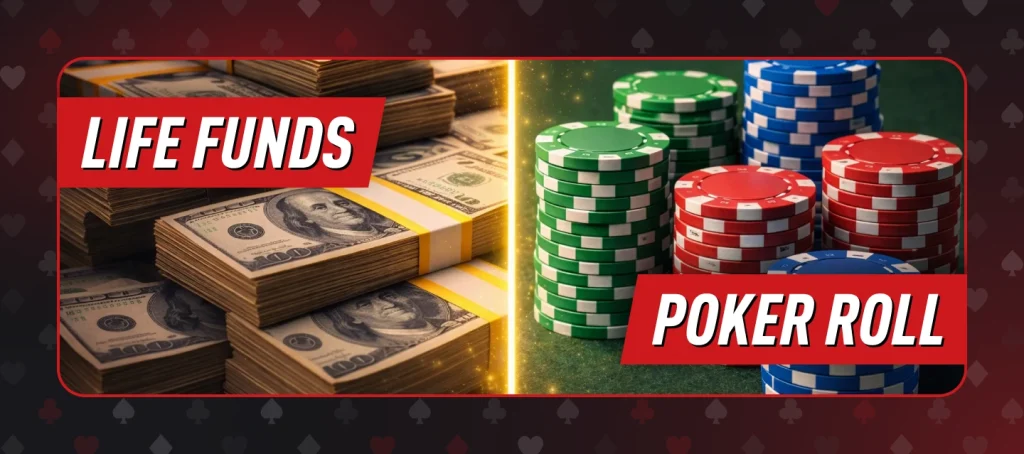
Separate Your Poker Money From Your Real-Life Money
It sounds simple, it feels simple, but it’s shocking how many players skip this. When you mix poker funds with rent money, food money, or savings, you create an emotional tornado. By keeping them separate, you are more likely to play within your means, reducing fear, improving your mental clarity at the table, and, most importantly, stopping life pressure from affecting your poker decisions.
Stakes Should Fit Your Mind as Much as Your Bankroll
When a stake feels “too big,” your mind constricts. You feel every pot more intensely. Heart rate jumps. You hesitate. You overthink. It’s not a weakness, it’s biology. Your body interprets financial stress as a threat. The right stake should feel:
challenging
comfortable enough to allow calm decision-making
familiar enough to relax into
still meaningful
If you constantly feel tight-chested at your stakes, your mind is signaling you’re playing too high.
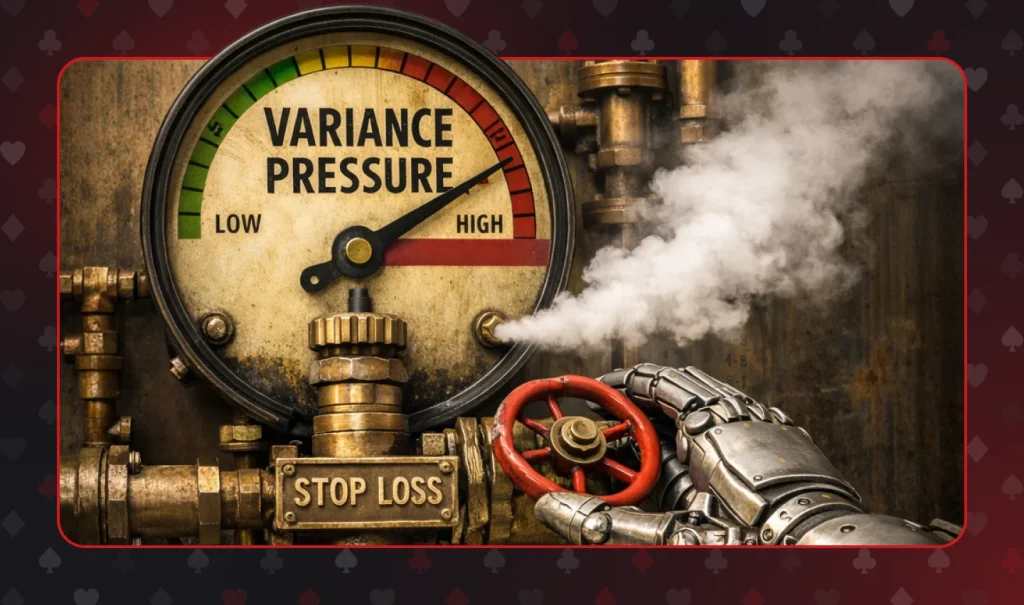
Stop-Loss & Stop-Win Rules
Players often debate stop-loss rules. Beyond the strategic aspect of the debate, the psychological component is huge.
A very simple version goes like this:
Stop when you've lost 3-5 buy-ins.
Stop when you notice you're on tilt.
Stop when you're not thinking, but reacting.
These things aren't meant to punish the player, they're meant to be a release valve.
In addition, stop-wins. Winning causes players to go: "I can't lose no matter what!" The ego comes in, and the next thing you know, the player is spewing the session's profits because discipline has been replaced by recklessness.
Both stop-loss and stop-win rules allow for regulation where emotion would otherwise run rampant.
Mindset Patterns That Destroy Bankrolls
Poker is all about the right set of skills. And psychological leaks? They're like a hole in the bottom of your ship. Let's look at the most common mental shortcomings that set your bankroll for disaster.
Tilt
Tilt isn't anger. Tilt is an emotional distortion. Tilt is the thought that you have to win this back in this hand. Tilt is the idea that poker variance is doing something "to" you.
Tilt can appear as:
frustration tilt
entitlement tilt
revenge tilt
boredom tilt
winner's tilt (it's a real thing)
One second of tilt can erase four hours of good play.
FOMO & Shot-Taking Without Logic
Call it greed. Call it curiosity. Call it ego. The desire to jump up stakes before the bankroll can handle it is incredibly common. You hit a heater, and suddenly mid-stakes looks appealing because “you’re running hot.” This mindset almost always leads to:
huge downswings
emotional shock
bankroll collapse
loss of confidence
There’s a difference between taking a calculated shot and taking an ego shot.
Scared Money Syndrome
This is a very quiet leak. It doesn’t show up as reckless behavior, it shows up as fear. Fear of losing. Fear of making a big call. Fear of following through on a bluff. Scared money is dangerous because:
it narrows your strategy
it weakens your competitive edge
it makes you predictable
This is why under-bankrolled play is so psychologically damaging: it forces fear into every decision.
Bankroll Psychology & A-, B- and C-Games
You might be familiar with the concept of A-, B-, and C-games. Everyone has all three, and they vary player by player. For example, an outstanding player's C-game might very well be better than a recreational player's A-game.
It’s a useful model for understanding how your quality of play shifts throughout a session, and it is also affected by your bankroll.
A-Game: The Good Zone
You're at the top of your game. You're mentally sharp and chilled. You're focused and inquisitive. Nothing is out of your grasp because you trust your experience. A healthy bankroll supports this state, both financially and emotionally.
B-Game: The Okay Zone
You're okay. You're good enough, but mostly just good enough. You question your decisions marginally more than you would like, you tilt barely more than you would want to, and you exude a hint of annoyance, a passive-aggressive level of frustration, and impatience. This is, quite frankly, where the average player plays most of the time.
C-Game: Emotional Chaos
This is where bankrolls go to die. This is where people dig holes trying to get back lost buy-ins from bad ego-punts, tragic bluffs, calling down with any junk hand because "they just can't fold again." This is where poker meets emotion. If you can't control your bankroll, then you'll quickly be plunged into C-game territory.
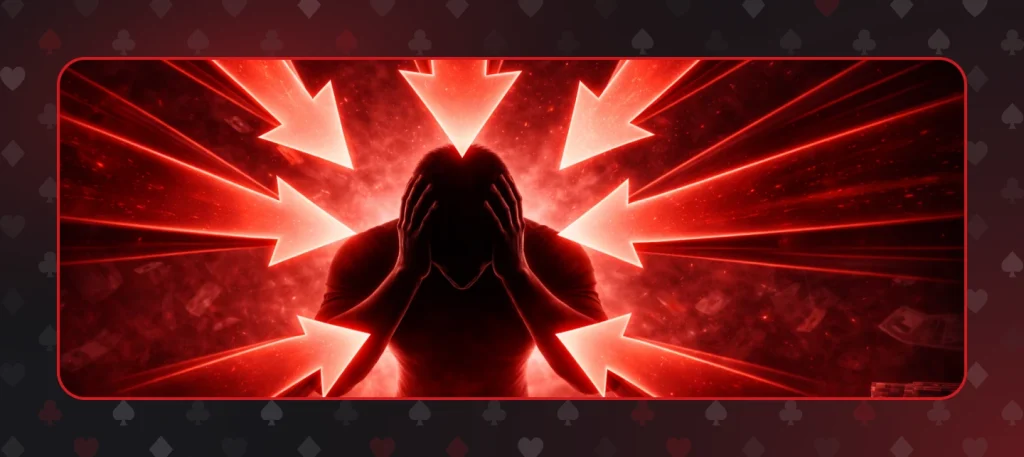
How Money Mindset Saves (or Destroys) Your Game
Let's consider a few common scenarios that will be familiar to many of you.
The Serial Shot-Taker
They're always one hand away from greatness. They win a little at their usual levels and instantly move up three times higher than normal. Then they lose. Then tilt. Then it all goes downhill. The underlying issue? They think that stakes are the same as ability. A bankroll treated as a shortcut instead of a foundation.
The Scared Money
This player has a very limited bankroll and is scared to death of losing it. They fold too frequently. They skip over marginal situations. They never bluff. Their technical game is decent, but bankroll psychology is their downfall. The question of "what if I lose?" plagues their ears louder than "what's the optimal play?"
The Healthy Professional
This player keeps bankroll records, has separate funds, knows how to handle their emotions, and never pushes themselves to a stake where they're in over their heads. Their mindset may not be optimal, but it's stable, predictable, and sustainable. They tolerate poker variance without a fuss. Money is not a reflection of pride to them, but instead an instrument. Their A-game shows up more often, not because they're smarter, but because they're more at peace. And that is why bankroll management is crucial for the professional poker player mindset.
Your Bankroll Is A Mirror
Poker psychology and bankroll management aren't about turning you into a soulless robot, but instead about being realistic with yourself. It's about learning how not to fear money but to respect it. It's about respecting poker variance while doing your best to stay level. Because the bottom line is this: If you can control the psychology of your relation to money, your A-game will have more than enough room to show up, time and time again.
Your bankroll management reflects your decisions, your discipline, your relationship with risk, and the emotional stability you bring to the game. If that sounds dramatic, that’s because poker is dramatic. And that is one of the reasons we love this game.
Use our bonus code SMPBONUS, and register at any of the poker sites we have reviewed for you, so you can find the one that suits you the best. Remember, bankroll management is a core skill for success. Good luck at the tables!
About the Editor

Beus Zsoldos is Somuchpoker's Senior Copywriter and Player Stories Editor, covering WSOP color moments, player profiles and poker personalities for the site's Stories section. She has spent more than 20 years around the game, first as a player, then as a live tournament director and localization manager for a major online poker room, before moving into full time poker writing.
Related News
 Online PokerPromotion
ACR Poker Halloween Mystery PKOs: $650K GTD
ACR Poker's $650K Halloween Mystery PKOs have drawn 5,413 entries. Explore the new 50/50 bounty format, buy-ins from $5.50 and November 1 Day 2.
 PromotionOnline Poker
WPT Prime Taiwan 2027 Satellites: Win a $1,100 Seat From Just $0.55
WPT Prime Taiwan 2027 satellites are live on WPT Global. Qualify from $0.55 for a $1,100 Main Event seat and unlock exclusive Black Card rewards.
 Online PokerRecap
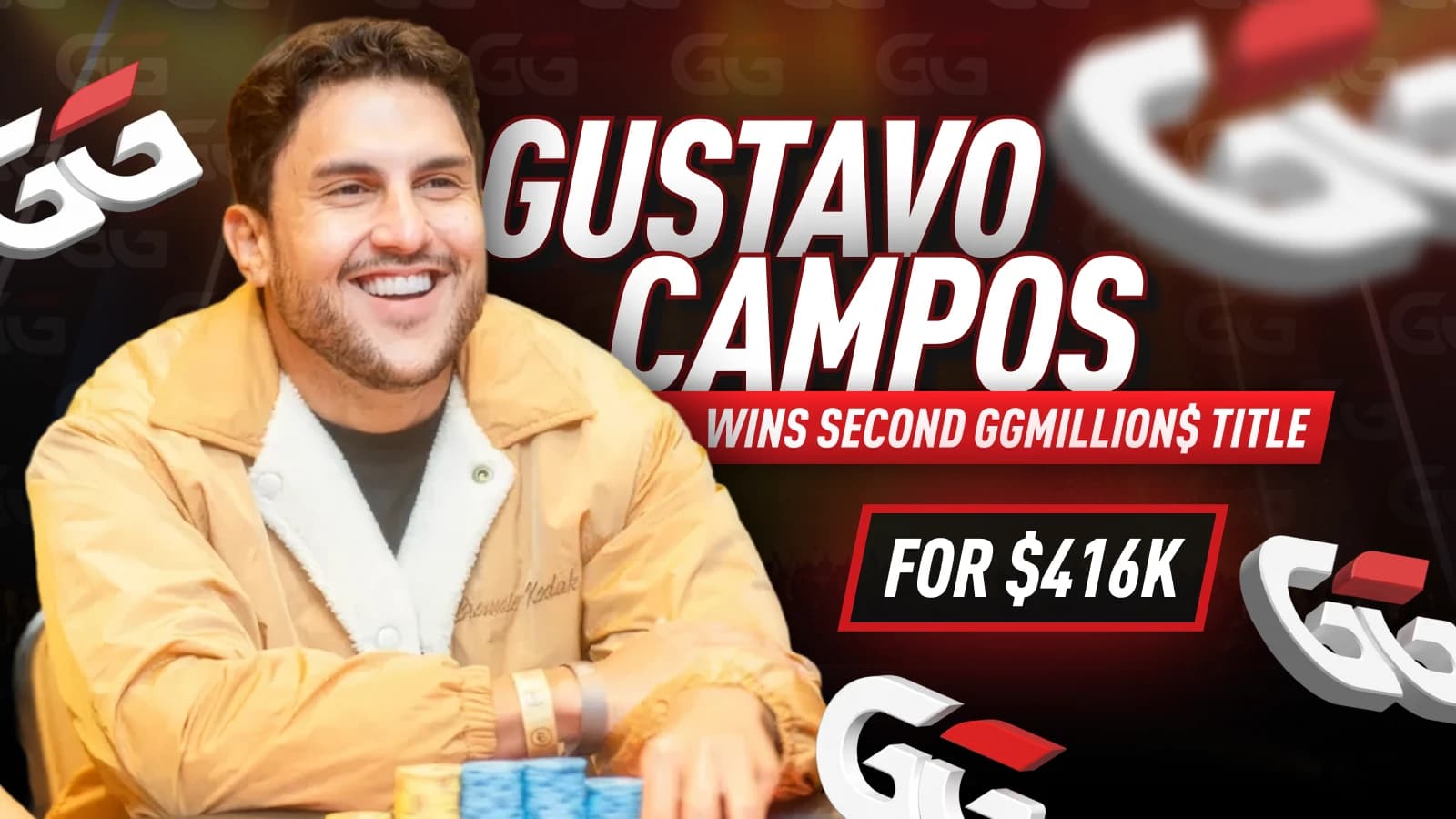
Gustavo Campos Wins Second GGMillion$ Title for $416K
Gustavo “Gusscamposs” Campos won his second GGMillion$ title, earning $405,959 and a $10,000 live event ticket after defeating Aleks Ponakovs heads-up.
 Online PokeriGamingStories
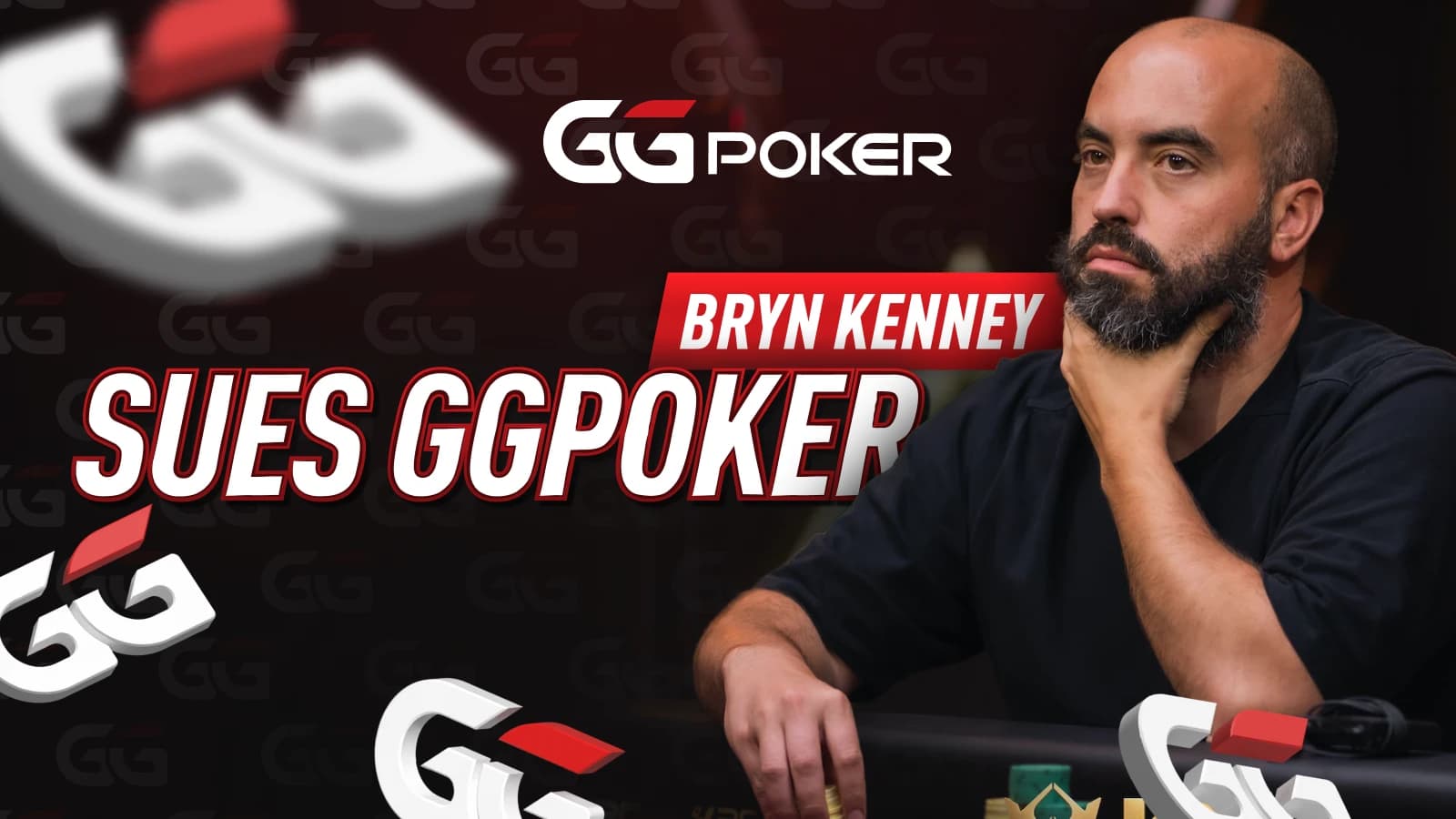
Bryn Kenney Sues GGPoker Parent Over 5% Stake and Millions in Commissions
Bryn Kenney sues GGPoker's parent over a 5% stake and unpaid commissions. A new filing also raises allegations involving player payments and security.
 iGamingOnline PokerPromotion
Natural8 Free $15 APT Online Ticket - Claim Yours
New to Natural8? Sign up with code SMPBONUS, verify before 1 November and get a free $15 APT Online ticket for the $40M GTD series.
 iGamingOnline Poker
GGPoker Security Update Bans Third-Party Poker Tools
The GGPoker security update bans third-party poker tools, adds new client security features, and introduces detection for suspicious win rates.