

Poker Psychology Part 4 - Emotional Stability: Practical Systems to Stay Cool at the Table

We've all been in that scenario, haven't we? The river comes; it slides the pot back to the wrong person, and it ignites something in your heart: you get angry and astonished, and you need to get it all back. It starts as a kindling flame, but it quickly ignites. One hand later, you're calling a raise you should have folded, and by the time the next orbit comes around, you're questioning how you've gone from well structured, calm, and rational to an absolute disaster. It's not even personal, and yet it feels so.
Of course, we talk about our bankrolls, ranges, HUD stats, solver outputs, but rarely do we candidly discuss the invisible force at work steering our decisions: our emotional life. But one of the strongest indicators of long-term poker success is emotional stability at the table. It's not sexy, there's no Instagram post to boast about how great you've managed not to tilt today, but believe me, it will show on your win rate.
In Part 4 of our article series on Poker Psychology, we will introduce you to practical systems grounded in cognitive research to help you establish emotional stability at the table.
What Emotional Control Means in Poker
Most people believe emotional control means boxing feelings and pretending they don't exist. That's not control. That's suppression. And suppression usually backfires, but understanding poker psychology could help you get out of that pitfall.
The next time you're on a downswing, try not to get angry and rage fold every hand and get even madder because of it? Yeah. That's no fun. Emotional control is about regulation: recognizing when you're feeling something, redirecting it if you can, or minimizing its influence on clear-eyed decision-making.
Several studies have shown how anger decreases decision-making accuracy in a poker-like task. Interestingly, when individuals believed they were being observed, the decrease in accuracy was even more pronounced.

Many players become extra emotional when they feel challenged, or worse, confronted. When emotions rise, the brain favors System 1, that is, fast, intuitive thinking, as opposed to the deliberate analytical functioning of System 2. But poker is a System 2 game, and chaos ensues when System 1 runs the show. Thus, understanding this dynamic is not about turning into a robot; it's about accepting how emotions shift the lens through which we see the world. If it's blurry, our decisions become blurry, too.
Tilt: The Silent Killer of Bankrolls
Tilt is one of those words we use every day in poker but can seldom define. Tilt denotes emotional disequilibrium that disrupts your ideal frequencies, meaning an imbalance in decision-making that strays from what's habitual. Yet it's ironic, because even though it appears random and chaotic, it's not! Tilt usually follows the same trajectory, and since emotional control comes more easily when we name what's happening within us.
Different Types of Tilt
Poker coach Jared Tendler covers various types of tilt and what emotional fingerprint each represents:
Injustice Tilt: when you get a bad beat or say, "How could they call that?"
Entitlement Tilt: when you feel like you're supposed to win because you're "that good"
Resentment Tilt: when you're overly focused on beating one opponent instead of making appropriate decisions
Desperation Tilt: when you're emotionally engaged like a gambler looking to recoup their final bet
Winner's Tilt: when you've won extra hands early, so you loosen your ranges and become overly aggressive because you think "I can't lose today"
The Subtle Signs
Tilt rarely happens with a bang; instead, it knocks on the door first. Here are unsuspecting signs that many players fail to recognize:
Increased heart rate
Shallow breathing
Tightening shoulders
Increased clicking speed for online players
Acting faster than normal, especially pre-flop
Fixation on one opponent
Picturing one unlucky hand over and over again
Telling yourself, "I'll show them."
The Three-Step Emotion Control System
Instead of pretending feelings don't exist, let's structure an approach where they stay in line, but don't run the show.
Step 1: Pre-Session
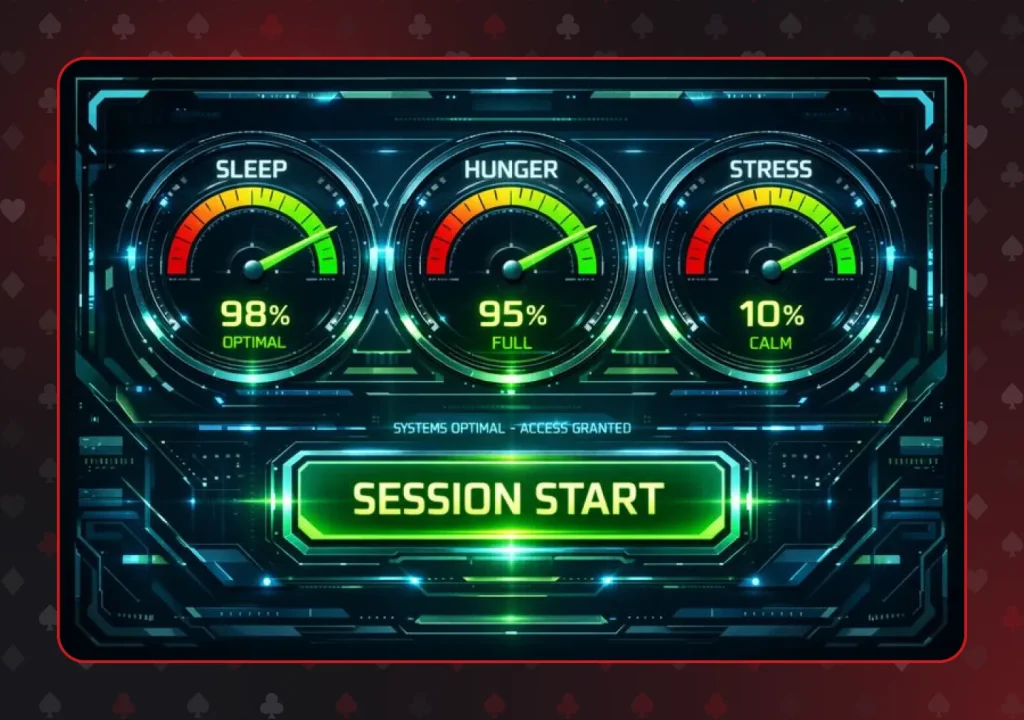
Most of the time, when you explode emotionally at the table during a losing session, tilt had already come hours before you got to the table. It can be poor sleep, external stressors, past session, and so on. Because of this, your routine should start even before you sit down at the table.
Assess Your Baseline
Rate yourself on a scale from 1 to 10 on the following:
Emotional stability
Physical energy
Focus
Tilt sensitivity
If any of these scores dip below 5, your footing might be shaky. That doesn't mean you need to forfeit your session, but it definitely means that you need to be extra cautious.
Set Process-Oriented Goals
Where outcome goals of "I have to win $300" or "I have to cash this tournament" would be frustrating, process goals are more favorable for long-term emotional stability: "I'll play my A-game", "I'll take my scheduled breaks", "I'll implement my reset routine", or something similar. Process goals keep you in check when variance doesn't play along.
Quick Mental Priming
You need to remind yourself of two basic things before every session:
You will lose hands that you think you'd never lose
You can still make good decisions
Reminding yourself of these simple notions goes a long way.
Step 2: Mid-Session
Once the cards start flying, your emotions evolve in real-time. These little checkpoints help prevent massive blowups:
Micro Check-In
Every 15-20 minutes, check in with yourself: Am I breathing? Am I frustrated? Rushed? Hasty? Am I taking too long? Am I clicking faster?
All it takes is five seconds, and this five seconds' worth of data could save your buy-in and keep your session intact.
Five-Breath Reset
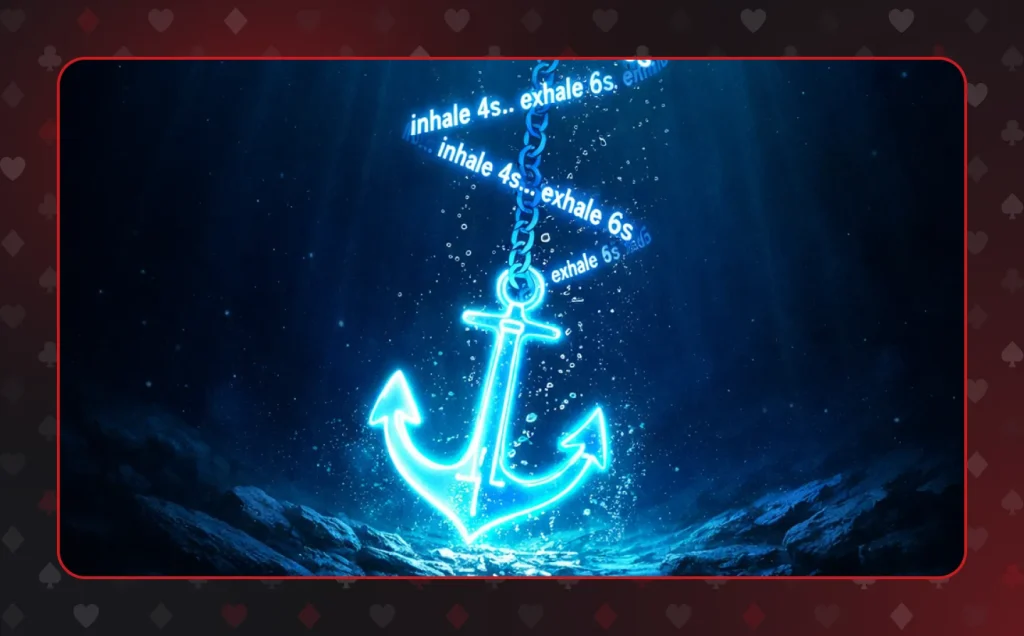
Use the body's sympathetic nervous system to transition from a sympathetic response (getting angry) to a parasympathetic response (calm). Inhale for four seconds, exhale for six. Repeat five times. Sounds ridiculously basic, but it transforms your brain once it learns to associate exhalation with safety.
Cognitive Reappraisal
Studies on emotion regulation show how reframing is always better than suppressing how you're feeling in the moment. It is not different in poker psychology either. So instead of saying "this is unfair", we shift our thoughts to "this is variance doing what it should." A little grounding is often all we need.
Hard Stop Rules
Every serious player needs a hard stop-loss limit, which is the maximum number of buy-ins they are willing to lose in any given session. It not only limits the damage tilt can inflict on your bankroll, but also safeguards you from tilt in your upcoming sessions. The exact stop-loss level should be based on your bankroll size and emotional tolerance.
Step 3: Post-Session
Your session ends after you rack up your chips or close your laptop, but your emotional development does not end there. To achieve long-term stability, you should also take care of yourself when you have left the table.
Journal Your Emotions
Keep it simple: What triggered emotions? What happened as they shaped decisions? How did you use techniques? What will you do differently next time? This is not therapy, it's more like collecting data, mapping your own emotional profile like you'd map your leaks.
Separate Emotional Performance from Poker Performance
You can have an atrocious day at the casino, but play emotionally well. You can even win, but be emotionally messy. To avoid confusing the two, create and grade two metrics: one for technical performance and one for emotional performance.
Reinforce Wins
If you've handled something well, for example, a bad beat, make sure to note it and give yourself credit because your brain appreciates patterns you rewarded.
What Pros Do Differently
There's something you'll notice when watching high-level players: they're almost boring, their emotional reactions seem muted. That does not mean they don't have feelings; they're just professionals who lean on systems rather than emotions.
Decision Trees
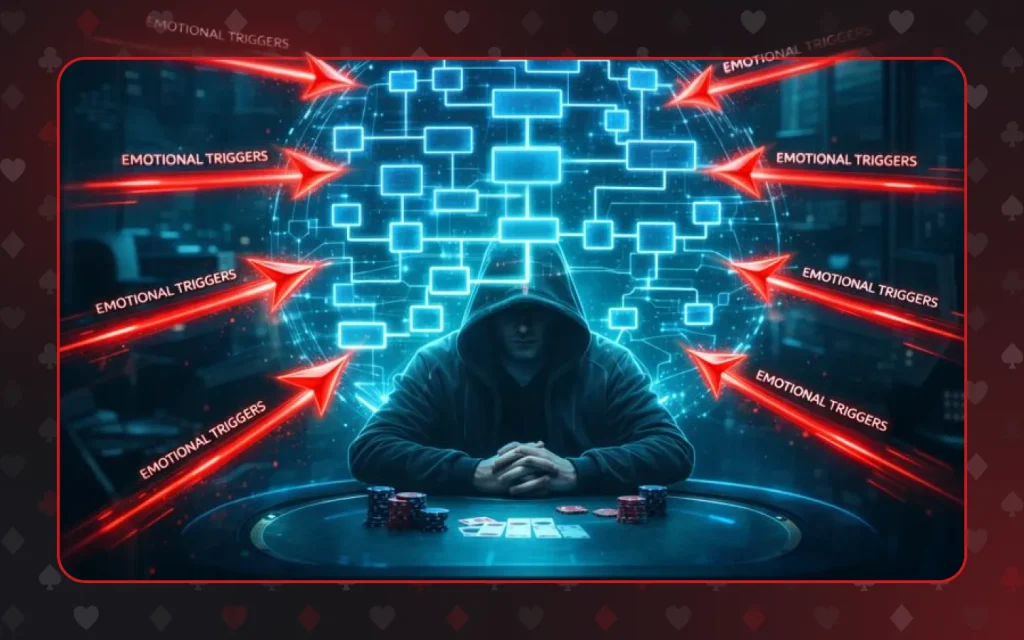
Many pros know their decisions before the hand even begins. They know their blind defense ranges and their 3-bet frequencies that propel their lines through post-flop play. When hard decisions come into play, it's not about emotion for them; they rely on structure.
Bankroll Segmentation
Pros don't mix their bankrolls for different game formats. The more insulated their bankroll, the less painful losses feel, which also means less emotional stress.
Routine-Based Awareness
Calm warm-ups, hydration habits, and cooling-down notes all help. The more consistent the routines, the more stable the player.
Environmental Optimisation
Music, lights, comfort, they all matter! When you feel good, your chances of playing well are higher. When things are stable around you, and they support focus, emotional spikes are minimized.
Common Mistakes Players Make When Attempting to Control Their Emotions
Players know not to go on tilt at a poker table, but unfortunately, they resort to misguided maneuvers that ultimately deconstruct their game. The number one most popular fail is suppression. They think that if they can contest and resist their feelings at the felt, then all will be well. Not only is this not true, but it's also how players become masters of their demise. They suppress their rage; they do not eliminate it. It manifests as failed hero calls for thousands of chips or incorrect folds out of fear.
Fail number two is relying solely on willpower. They think all they have to do is “just remain calm”. However, this is not a button one can activate deliberately. This is something learned over time, and even the best of players become unglued under heavy pressure if they lack the correct tools to fight.
Fail number three is mislabeling tilt. They assess their state of being simply as "on tilt", when in fact they should assess themselves thoroughly to find the actual root cause of that tilt.

In addition to not being able to control their minds, many players cannot control their bodies. They come into games hungry, exhausted, or overwhelmed, and instead of recognizing the emotional impact these physical factors have on them, they just blame their mindset. But in truth, sometimes their mindset is 100% capable of playing great poker, but their outside circumstances are in the way.
It is important to emphasize that none of these mistakes makes you weak. They only make you human. But unfortunately, poker can brutally punish human faults.
Quick Tools and Reset Skills in Poker Psychology
To keep things convenient, here's a summary of the tools we mentioned in the article:
Emotional State Checklist: proper sleep, hydration, hunger, stress
Reset exercises: five-breath reset, short walk, quick stretch
Scripts: "Variance isn’t against me”, “the pot from yesterday doesn’t matter for my long-term game”, “slow down”, etc.
Remember: simple doesn't mean weak; simple means repeatable, and repeatability builds emotional strength over time.
Emotional Stability Is A Skill, Not A Trait
Poker rewards stability, not perfection. You'll have days when it's beyond realistic to channel frustration without repercussions, but establishing routines before sessions, monitoring emotions throughout, and reflecting post-session give you a mental rhythm that's grounded even when variance is about to take the best of you.
And better yet? Emotional stability becomes contagious. When you learn to stay cool during tough times, the next adversity feels less harsh, and the next one even less bad. That is when you are on your way to be the player that other players look at and think, “Wow! Nothing rattles this guy!”
But inside, you should always know that's not true. You're just very well trained and equipped with systems that fight tilt.
If you feel ready for emotional control to help you play your "A-game", read our detailed poker site reviews, and don't forget to use our referral code or bonus code SMPBONUS when registering at any of the recommended sites.
About the Editor

Beus Zsoldos is Somuchpoker's Senior Copywriter and Player Stories Editor, covering WSOP color moments, player profiles and poker personalities for the site's Stories section. She has spent more than 20 years around the game, first as a player, then as a live tournament director and localization manager for a major online poker room, before moving into full time poker writing.
Related News
 Online PokeriGamingStories
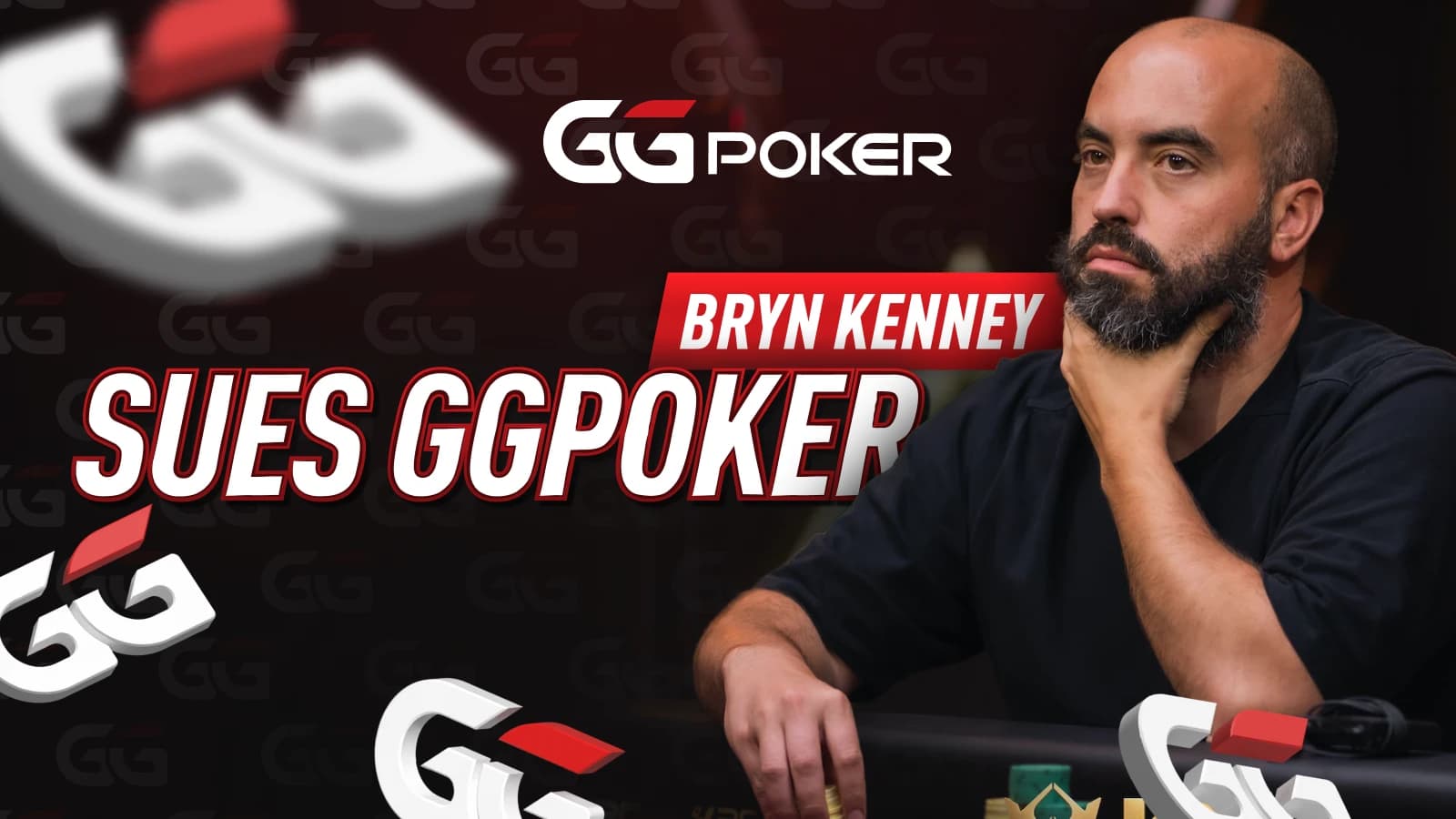
Bryn Kenney Sues GGPoker Parent Over 5% Stake and Millions in Commissions
Bryn Kenney sues GGPoker's parent over a 5% stake and unpaid commissions. A new filing also raises allegations involving player payments and security.
 iGamingOnline Poker
Natural8 Free $15 APT Online Ticket - Claim Yours
New to Natural8? Sign up with code SMPBONUS, verify before 1 November and get a free $15 APT Online ticket for the $40M GTD series.
 iGamingOnline Poker
GGPoker Security Update Bans Third-Party Poker Tools
The GGPoker security update bans third-party poker tools, adds new client security features, and introduces detection for suspicious win rates.
 iGamingOnline Poker
Phenom Poker Launches Bellagio Mix Inspired by Bobby’s Room
Explore Phenom Poker’s Bellagio Mix, a 13-game rotation inspired by Bobby’s Room, featuring classic mixed games and two new capped pot-limit variants.
 Online PokeriGaming
Natural8 Streamer Mode: 100% Cashback, Privacy & How to Apply
Learn how Natural8 Streamer Mode works, how to apply, who can qualify, and how streamers can earn 100% cashback on streamed poker games.
 Online PokeriGaming
18,730 Players, One Millionaire: The One on CoinPoker
The One on CoinPoker drew 18,730 players and paid $1M to the winner - the biggest payout in CoinPoker history. Full final table results and stories.