

Poker Psychology Part 6 - Fear in Poker: Why We Avoid Thin Value and Big Bluffs

If you’ve ever sat at a poker table and found yourself checking the river even though you suspected you were ahead, you’re not alone. And if you’ve ever felt your pulse jump the moment you considered firing a big bluff, well... join the club. In the 6th part of our article series on poker psychology, we show how you can overcome one of the biggest weaknesses: fear.
Players discuss ranges, bet sizing, solvers, and balancing, but what they don't often discuss is the elephant in the room that controls their strategy more than anything else: fear. Not fear of losing money, although that's involved too, but rather, fear of being wrong. Fear of getting called. Fear of looking dumb. Fear of letting a pot go. Fear of judgment from the guy two seats down, who's never lost a hand all night.
Fear is everywhere in poker, but most people pretend like it's not. But this article takes that poker fear, puts it on the table, and says: let's talk about it. Let's talk about how fear factors into your game where it shouldn't, where the thin value poker betting and the big bluffing opportunities all lie hidden in the places you'd least expect, and let's walk through, step by step, how you can develop a calmer, more confident, more lucrative approach.
What Is Fear in Poker in Terms of Poker Psychology?
Players love to talk about tilt, anger, frustration, and steam... but fear is quieter and far more common. It sneaks into your fingertips and tightens them ever so slightly before you click “bet.” And most of the time, we don’t even know it’s happening.
Poker fear is an emotional reaction to uncertainty. That uncertainty can take many forms: you’re not sure your hand is good, you’re not sure your story makes sense, you’re not sure your opponent will fold, you’re not sure how big the pot should get, you’re not sure you can handle the consequences if it goes wrong.
Humans are wired to avoid discomfort. Studies in behavioral psychology consistently show that our inclination to fear losses more than we value gains shapes decisions, even in simple betting games. Poker magnifies that.
In fact, researchers who studied simplified poker scenarios found that human players make disproportionate “safety moves,” often checking hands that should be bet, folding hands that should continue, and avoiding aggressive lines even when profitable. They weren’t making logical mistakes, they were making emotional ones. Poker punishes emotional decision-making. But that doesn’t mean you’re broken. It means you’re human. And nothing exposes this humanity more than two specific actions: thin value poker bets and big bluffs.
Why Thin Value Bets Feel So Scary
Let’s start with thin value, those bets where you probably have the best hand, but not by much. Maybe your pair is better than their pair. Maybe your kicker is slightly better. Maybe they’ll call with worse, but you’re not sure how often. In theory, thin value poker bets are essential. They’re the difference between a winning player and a break-even one. In practice, most players skip them. Why?
Fear of getting raised. There’s something about facing a raise that feels like an accusation: How dare you bet that hand? So instead of risking a raise, players check.
Fear of being wrong. You know the feeling. Your brain starts imagining all the hands that beat you, even if they’re unlikely.
Fear of embarrassment. Live poker, especially, can feel social. Checking feels safe. Betting feels like sticking your neck out.
Misunderstanding your opponent’s range. Fear makes us imagine opponents as stronger than they are. We mentally “upgrade” their hands.
Discomfort with small edges. Thin value means finding the joy in having a small edge. Fear does not like anything small.
But here's the truth: Every time you check instead of value betting the river with a hand that can beat half of your opponent's calling range, you're bleeding chips. Gradually. Silently. Consistently.
For instance, let's say you have {Qh}{Th} on a {Tc}{8h}{7s}{4s}{3h} board, and it checks to you on the river. Players who think “maybe a straight is out there” check behind. But a majority of the field calls here with worse tens, eights, or even stubborn ace highs. This is where fear lies to you. This is where your expectation drops.
And the worst part? Thin value and massive poker bluffs are more correlated than players give them credit for.
Why Big Bluffs Terrify Most Players
If thin value is like stepping into a puddle, big bluffs are wading into a river. Cold, swift, and merciless. A big bluff isn't just a bet; it's a statement: I believe you can get away from this. It's also a challenge to your narrative, your emotional state, your opponent's emotions, and your ability to maintain control of the pot. So why does fear creep in?
The “what if they call?” spiral - Most of our fear-based thinking comes from spiraling thoughts, not logic.
The live poker embarrassment factor - Being caught bluffing in front of actual people feels different than folding quietly online.
Loss aversion after losing a hand - Research finds that when someone loses out, even a tiny bit, they become more cautious in their next plays.
Miscalculating fold equity - The reward is deflated and the risk is inflated by fear.
Avoiding aggression - Big bluffs bring tension to the table. Some people naturally don't like tension or confrontation.
But here’s the subtle truth: bluffing isn’t about courage. It’s about clarity. You’re not bluffing because you feel brave. You’re bluffing because it’s profitable, because your range demands it, or because your opponent’s range can’t defend. Most players know how to bluff. They just don’t do it when it counts. And that brings us to the big connection.
The Hidden Link Between Thin Value and Big Bluffs
On the surface, thin value and big bluffs seem like polar opposites. One is betting a hand ahead of your opponent’s range. The other is betting a hand behind it. But they share the same emotional roots. If you avoid thin value poker bets, you likely under-bluff too, and vice versa. Why?
Because both require stepping out of your comfort zone. Your comfort zone (which fear fiercely protects) relies on checking, calling, and controlling pot size. Both thin value and big bluffs push the pot in directions fear dislikes.
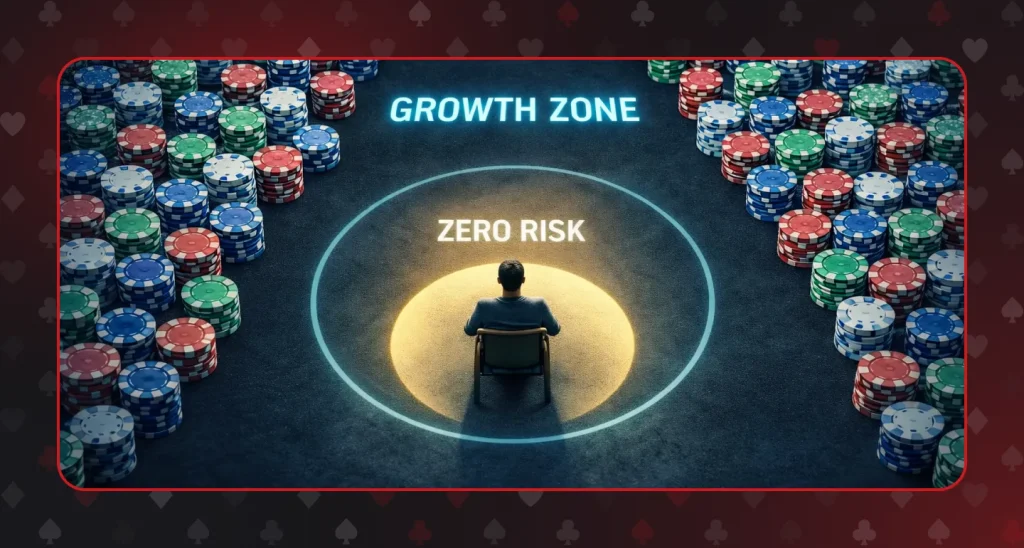
Take away these plays from your game plan, and it makes your entire betting range very easy to predict. You bet when you have a strong hand, you check when your hand isn't so great, and you never or rarely bluff. It's like driving with one foot on the break. You think you're safe, but everyone behind you knows what's going on.
Strong players sense this like sharks sense blood in the water. They exploit your passivity, ignore your bets, and bully you. Fear doesn’t just cost you EV. It makes you readable.
The Fear-Based Leak Checklist
To assess how fear influences your game, ask yourself if the following statements hold true to you or not. Make sure to answer honestly!
You check medium-strength hands on the river “just in case”.
You don't triple-barrel bluff even when ranges suggest you should.
You call instead of betting because betting feels so tense.
You fold far too often on dynamic boards.
You use tiny bet sizing because you're scared you'll get punished for a bigger one.
You over-value extremely unlikely hands in your opponent's range.
You breathe a sigh of relief when you check back instead of betting.
Chances are you connect with at least three of these. Some connect with all. But it's fine, it's never about being perfect. It's about being aware. Awareness is always the first door to success. The second door is the one you open by taking action.
How to Overcome Fear in Poker: A Simple Framework
It would be very easy to just say "be fearless". But of course, it takes more than that. It takes countless hours studying different spots to master thin value poker bets and big bluffs.
Here, we will provide you with a realistic roadmap and simple guidelines to accompany you on your poker study journey.
Think in Ranges, Not Feelings
As you probably already know, fear hijacks logical thinking. It makes you decide based on discomfort rather than relying on the data. If you think in ranges during every single hand, it disrupts the hijack pattern. Instead of "What if he has the flush?", think "What percentage of his range is a flush, and how many worse hands are in his calling range?" The first question is pure fear, while the second one is structure.
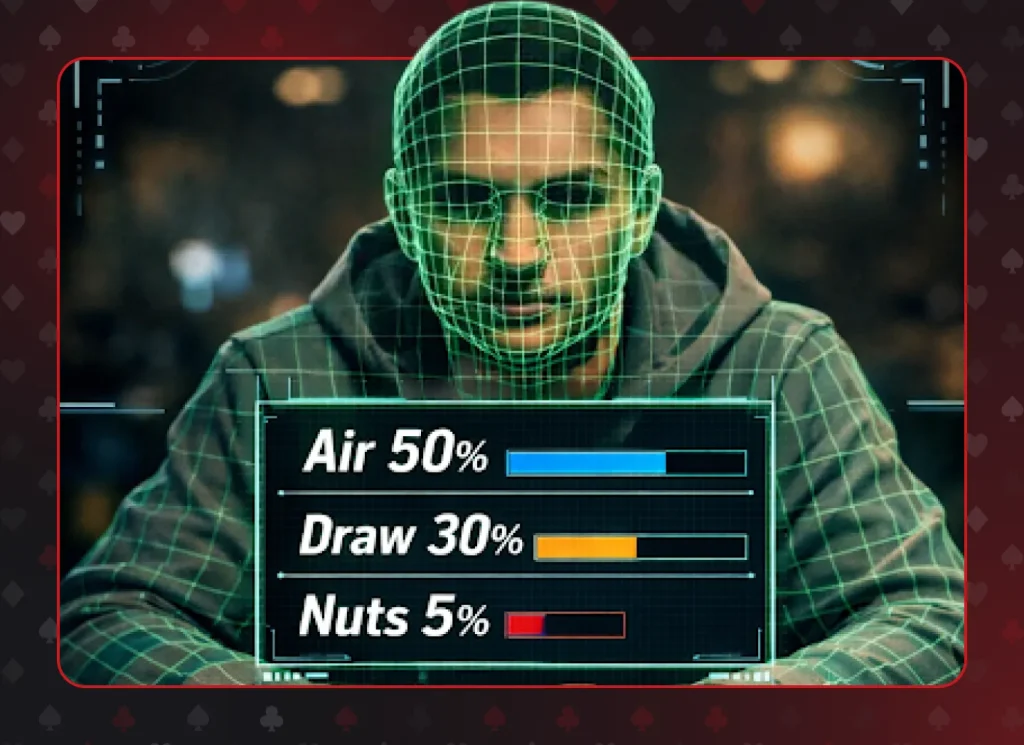
You can even train yourself on the felt with questions like: Can he have worse? Will he call with worse? Is he capped? When you frame the decision dilemma in terms of ranges, the emotional clutter is significantly diminished.
A Simple Thin Value Method That Works
Thin value isn't difficult. It's just distressing. Use this three-step method:
Recognize what worse hands can call.
Go with a smaller, but confident sizing. Fear wants you to either overbet or underbet. Instead, go for something like 33-55% pot.
Bet and exhale. You don't need perfect certainty.
Think about thin value poker bets like the gym. Those first few reps are hard, but eventually, your body gets used to it. Over time, your poker mind will, too.
The Big Bluff Checklist
Big bluffs shouldn't be based on courage. They should be based on fundamentals. Here's a quick checklist:
Does your villain fold often? Some do. You know who they are.
Do you possess good blockers? Blocking top pair or the nut draw is helpful.
Does your narrative make sense? Don't represent a hand you never play that way.
Is the board in your favor? Missed draw boards and scary cards help.
Can you calm yourself enough to pull it off? A rushed poker bluff is a bad bluff.
If more answers say "yes" than not, it's probably a good bluff.
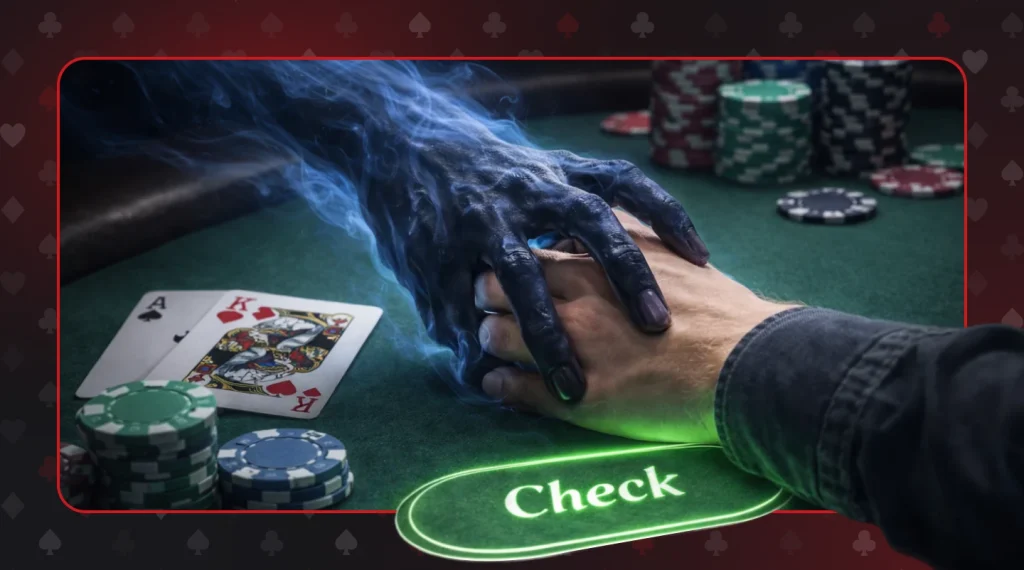
Work With Emotion, Not Against It
You don’t beat fear by ignoring it. You beat it by understanding it. Try this after each session: Write down the spots where you
Wanted to bet but didn’t
Wanted to bluff but couldn’t
Checked even though betting made sense
Folded too quickly on the river
Ask yourself: “What emotion was I trying to avoid?” Often it’s something simple: awkwardness, embarrassment, tension, or something of the like. Naming the emotion weakens it. This is straight out of the mental game frameworks used by athletes and top performers in high-pressure environments.
How Strong Players Exploit Fear
Here's the unfortunate reality. The reason the pros crush you isn't that they're math wizards. The reason the pros crush you is that they know you're scared. When they know you're scared, they:
They barrel more
They value bet thinner
They bluff bigger
They attack capped ranges
They apply pressure on uncomfortable rivers
To sum it up, they use your fear against you, but if you can identify these tendencies within yourself, you can change your game.
Turning Fear Into an Edge
Fear shouldn't hold you back. Fear is only proof that you care. Fear lets you know that spot means something. Fear lets you know that you're out of your comfort zone, and it is precisely the place where we learn to get better.
Of course, the game is more enjoyable when poker fear doesn't hold the reins. You'll be more likely to bet, you'll get a better read on opponents, and you'll finally realize that thin value poker betting and the big bluff aren't that advanced concepts to master. They're merely tools in the hands of a well-rounded, decent poker player, who can prove himself in any online poker game - and that is what you can work towards with the help of poker psychology.
About the Editor

Beus Zsoldos is Somuchpoker's Senior Copywriter and Player Stories Editor, covering WSOP color moments, player profiles and poker personalities for the site's Stories section. She has spent more than 20 years around the game, first as a player, then as a live tournament director and localization manager for a major online poker room, before moving into full time poker writing.
Related News
 NewsLive Poker
Scheduled Maintenance: Live and Player Profiles Temporarily Offline
Somuchpoker is moving to a new server. Live and Player Profiles will be offline for a few days. Here is what to expect and when we are back.
 NewsOnline PokeriGaming
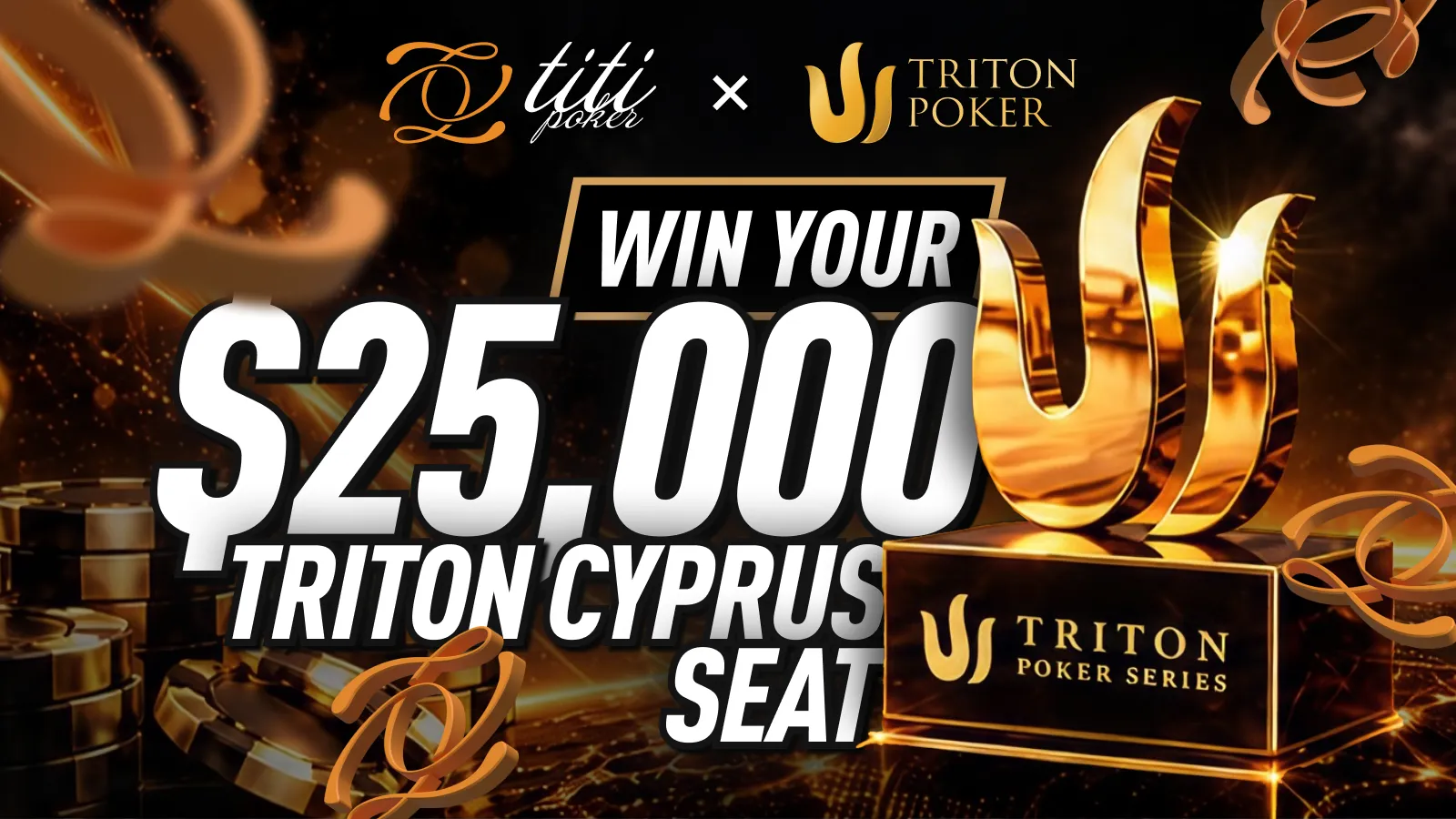
Road to Triton Cyprus: Win a $25,000 Seat at Titi Poker
Join the Road to Triton Cyprus at Titi Poker. Start free on Oct 6, climb the satellite ladder and win one of 3 guaranteed $25,000 tickets.
 NewsOnline PokeriGamingPromotion
GGPoker and Natural8 $18M October Giveaway
Win your share of $18M in the GGPoker and Natural8 giveaway this October. Cash drops, Halloween Party, leaderboards - plus a welcome bonus.
 NewsOnline PokeriGaming
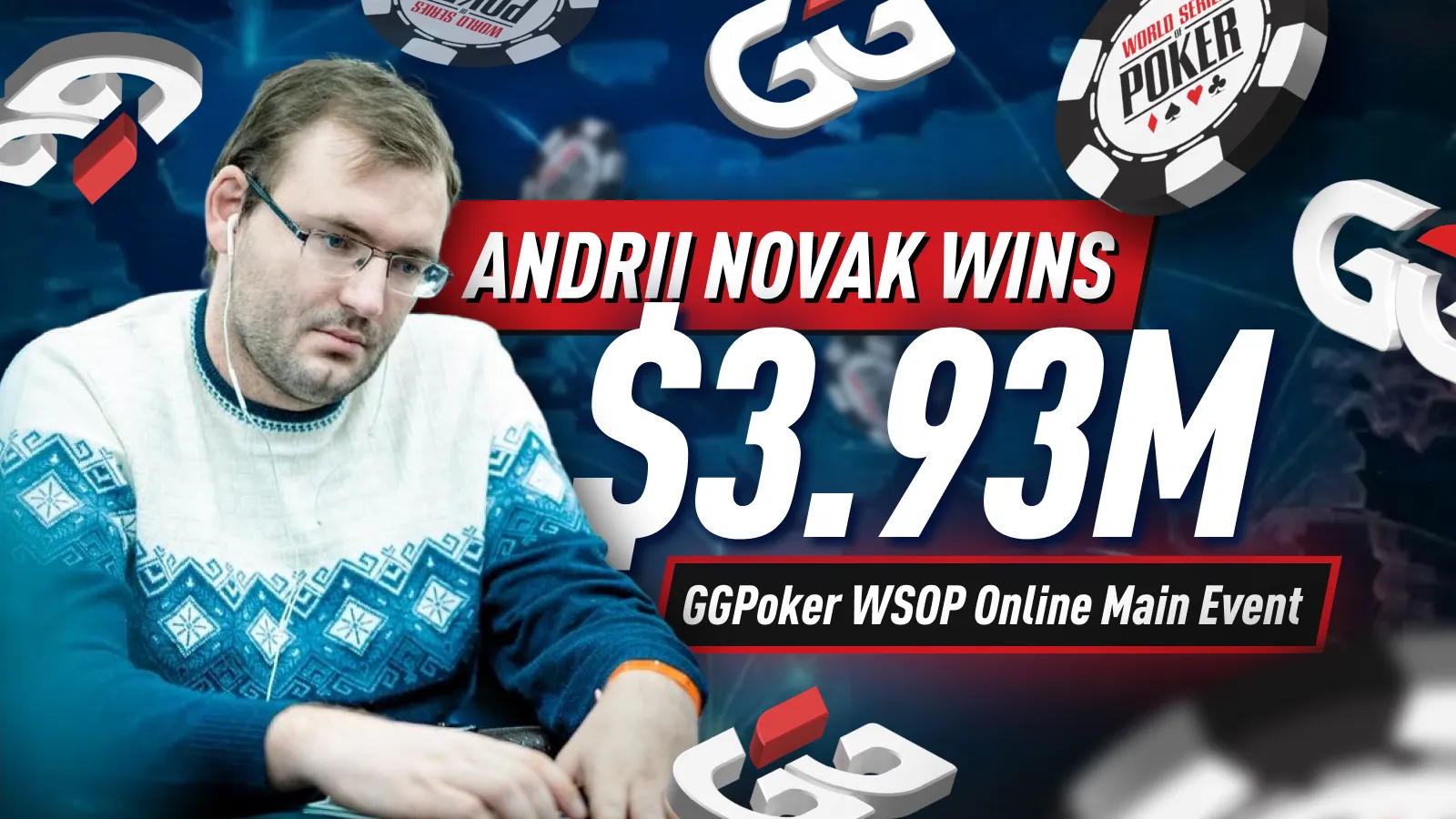
Andrii Novak Wins the GGPoker WSOP Online Main Event for $3.93M
Andrii Novak beats Simon Beckmann to win the 2026 GGPoker WSOP Online Main Event for $3.93M. Full final table results, payouts and stats.
 iGamingNews
PokerStars B2B Network Opens Its Doors: A Game-Changer for Online Poker
The PokerStars B2B network is officially open. Discover how this new white-label platform and shared liquidity will change the online poker industry.
 NewsOnline PokerLive PokeriGaming
QQPK Freeroll: Win a Poker Dream Malaysia Seat + $800
Win a MYR 3,200 Poker Dream Malaysia Main Event seat + $800 in the free Somuchpoker freeroll on QQPK. Sept 27 - sign up with code SMPBONUS.