

Poker Psychology Part 8 - Volume, Variance & Mental Health in Poker: Staying Sane in a Game of Uncertainty


In this part of our poker psychology article series, you'll learn how to navigate the chaos of variance, manage your playing volume, and protect your mental health from tilt. Poker has always been a strange kind of mirror. It reflects your best qualities: patience, discipline, and creativity. It also reflects your worst impulses: fear, ego, emotional overreactions, at the exact moment you least want to see them.
And somewhere between the joy of backdooring a flush and the despair of losing to 9-5 suited on a river when you have kings, eventually every player meets the same unknown adversary: poker variance. That's what all this boils down to. How often do you play? How much variance goes in your favor? How much against you? And how much your mind plays games with you when the cards aren't going your way?
Poker’s long-term “skill game” identity gets tangled with its short-term chaos, and if you’re not careful, that tension starts poking holes in your confidence, mood, and even your sense of identity.
But there’s a way to make peace with the chaos: by understanding how poker volume, variance, and mental health interact beneath the surface.
This article intends to take you on a journey through research results, player observations, vulnerable honesty, and even a few tangential discoveries along the way. By the end, you'll have an understanding that values more than just mathematical probability, but instead, a greater appreciation for life expressed through the lens of the game of poker.
What Is Volume?
Volume might be the most overused word in modern poker conversations. Grind more. Play more hands. “Volume cures poker variance”. You see it everywhere, especially in online circles. But before we go along with the chorus, we should slow down and talk about what poker volume actually means in practice.
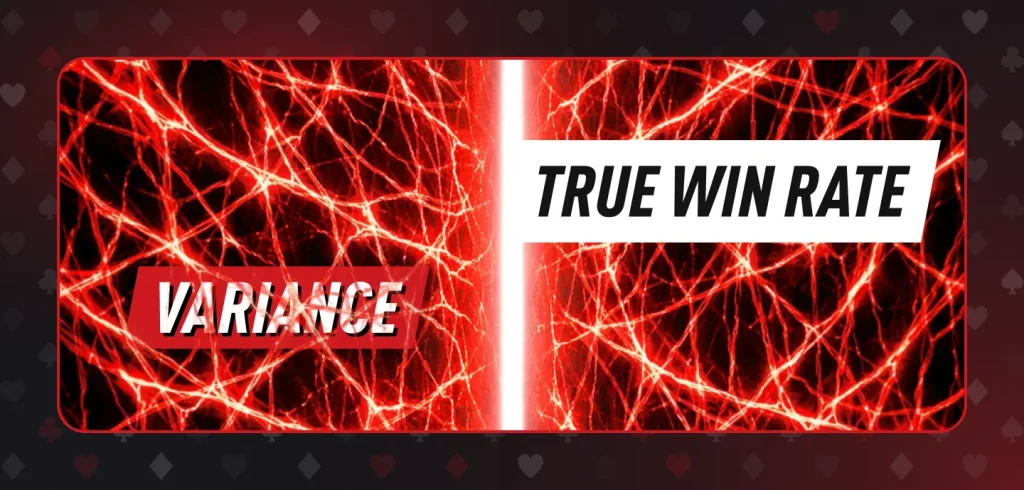
Volume is simply how much poker you play: hands, sessions, or hours. Online, that can mean hundreds of thousands of hands in a year; live, it might be a couple thousand. But the purpose is the same: the more hands you play, the closer your results drift toward your “true” win rate.
If only it were that clean. You know what? The reality is far messier. Playing more hands doesn’t guarantee anything in the short or even medium term. Plenty of players have put in a hundred thousand hands and felt like the universe was somehow shorting them a few big pots. But statistically speaking, volume reduces noise. Emotionally speaking, volume introduces other problems, which we’ll get to soon.
Why Everyone Talks About Volume Like It’s Medicine
The reason people swear by high poker volume is simple: the math supports it.
Poker outcomes oscillate around a center line (your expected value or EV), and the more volume you get, the closer your actual results become to that center line. More hands equal less deviation from your EV, at least in theory. But what people fail to realize is that poker variance never goes away. It just becomes smaller compared to the number of hands you have played.
And if your decision quality drops because you’re exhausted or tilted, the added volume actually increases poker variance. So the math says that more volume helps, but the human brain sometimes says otherwise. Let’s move to the creature causing the chaos: variance.
The Big, Bad Wolf Hiding Under Every Poker Table
Variance is not a villain, though it certainly plays the part. It’s not a moral judgment, it’s not karma, and it’s not the universe sending a message. Variance is simply the natural statistical wiggle in all probability-driven games.
Most players think they understand poker variance until variance becomes more than a word, until it starts costing them buy-ins and sleep. Variance is the difference between your expected long-term outcome and your short-term reality. With each decision you make, the deck throws a little randomness into the mix. Over a small sample, randomness has nearly unlimited power. Over a massive sample, its influence shrinks but never truly disappears.
A simple example: AA vs KK wins around 82% of the time. If you run that matchup 10 times, you might win 6. If you run it 100 times, you might win 78. If you run it 10,000 times, you’ll end up near the statistical truth. But poker doesn’t give you neat repetition. It gives you bundles of unrelated chaos.
Downswings Aren’t Personal, They’re Statistical
There’s a cruel trick in poker: even the best players experience enormous losing streaks. If you struggle with this concept, you’re not alone. Humans are pattern-seeking beings: if we go on a bad run, we believe we're doing something wrong. But for high-variance game structures, like tournaments or PLO, even the best players can be down 300 buy-ins from their peak. And while that's mathematically fine, it's psychologically devastating. MTT grinders discuss 300 to 800 tournament slumps like seasons. PLO cash players believe they're cursed for weeks at a time. Poker variance doesn't care at all about how skilled you are at the game.
The Psychological Impact of a Downswing
Here’s the part rarely described well: variance doesn’t hurt you financially first, it hurts emotionally. Players then slide into: tilt ("Why is this happening all over again?"), uncertainty ("Am I even a good enough player to win?"), conspiracy theories ("Maybe the site is rigged...."), tightening or loosening, withdrawing from the tables, or obsessing about outcomes instead of choices.
In the end, everyone succumbs to this cycle. Good runs make us feel like geniuses. Bad runs make us feel like we should leave the game. Neither serves as a trustworthy narrative. But variance becomes even more dangerous when paired with high poker volume, which is where mental health enters the spotlight.
High Volume Isn’t Always Good for You
This is the part many strategy articles skip, but it’s the heart of poker sustainability.
Playing more hands sounds great when you’re thinking about long-term win rates. But your brain isn’t built for endless decision-making. Taking countless actions per minute for six hours a day has a clear mental strain. Studies with online poker players as participants have shown that emotional exhaustion over high volume leads to more frequent tilt, sleep disruption, and vulnerability to anxiety.
It’s logical: fatigue often means a decline in the quality of one’s game, and a decline in decision-making means variance will expose those bad decisions even more. It’s a vicious feedback loop.
Variance’s Emotional Toll According to Poker Psychology
Variance itself is emotionally significant because it disrupts your sense of control. Whenever your brain believes it’s out of control, it turns on stress responses that would otherwise be geared toward a life-or-death situation.
This is why a 5-buy-in downswing feels like the end of the world. Your brain believes ambiguity is death. This interpretation creates elevated cortisol, rumination, intrusive thoughts, fear-based decision-making, and sometimes even depressive symptoms.
What's more, players who have experienced long, extended periods of downswings often report physical symptoms as well, such as racing thoughts, chest tightness, or headaches. These aren’t exaggerations, they’re normal human responses to sustained uncertainty.
The Missing Link
Another thing poker theory books don’t talk about enough: poker variance and volume matter, but decision quality is the real driver of long-term EV.
When you're mentally fatigued, your decision-making deteriorates slowly over time. It can manifest itself in several different forms, like folding too much, calling too much, bluffing too much, trying to get back what you lost, or playing too late into the night.
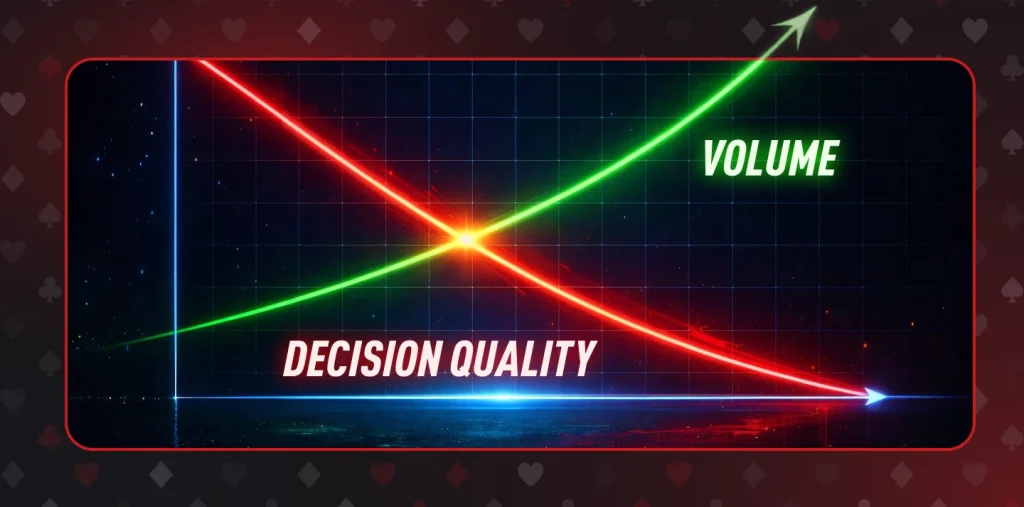
Deterioration in decision-making quality worsens real poker variance, not just the mathematical kind. Sure, of course, you need to play enough hands, you need to have volume, and there is something called variance, but your mind ultimately determines just how much these concepts hurt you in reality.
Staying Sane Amidst Poker’s Chaos
With the foundation built, let's discuss solutions. Mental health isn't a taboo in poker; it's an edge. The strongest players aren't those who don't tilt, but rather, those who get back to baseline fastest.
Build a Volume Strategy
Use volume as a means, not an end. For example, have a maximum of hands or hours for a given day. Quit when you're emotionally above a level 6 score out of 10. Take scheduled days off as breaks, even when you're feeling the need to grind the stakes. Maintain a record or journal for energy levels and quality of decision-making. This provides a flow instead of an endless grind.
Techniques To Truly Reboot Your Brain
With great volume comes great sensory stimulation, and of course, the risk of overstimulation and craving more. Perhaps the biggest favor you can do to your brain, and this indirectly to your poker game, is to reset by stripping it of all the stimuli on a regular basis.
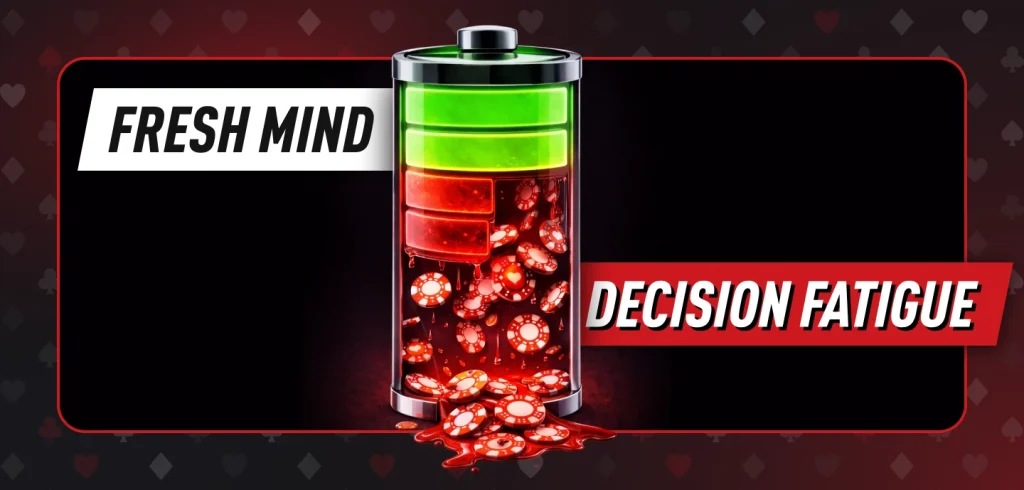
It's not magic, just real-world practical tools the experts use, like breathing resets between hands, tiny breaks before major decisions (too many online gamblers miss this one), or mindfulness meditations. You can also use a smartphone app to guide you through meditation, which can be especially helpful if you are new to meditating. Calm and Headspace are probably the most popular, but there are many free and paid tools beyond these two.
Bankroll Management Isn’t Just Math
If you have read the previous article in this series, you already know that your bankroll protects your emotions as much as your EV. If you’re under-rolled, nearly every poker downswing feels like a threat, while a healthy bankroll reduces anxiety, stabilizes confidence, widens your mental tolerance for poker variance, and prevents panic. If you’ve ever caught yourself checking your cashier balance mid-session, that’s a sign your bankroll might not match your emotional comfort level, and that can't be cured by sheer poker volume.
What Gets Measured Improves
Think of creating a small personal tracking system, only a couple of jot notes a day, such as length of session, emotional intensity, quality of decisions, energy before and after playing. You don't have to work with it much; just assess and rate it on a scale of 1 to 10. Believe me, it’s way better than mindlessly clicking refresh on your chart.
If you find it helpful, you can expand it by creating a weekly one too. Your dashboard might include weekly win/loss, weekly hours played, sleep patterns, tilt triggers, stress levels, and even notes about major pots played.
This turns your mental game into something you review and adjust instead of something you suffer through.
Putting It All Together
If poker has a hidden superpower, it's the teaching of how to live amid uncertainty. Every session is an exercise in emotional stability, even when you don’t realize you’re practicing it.
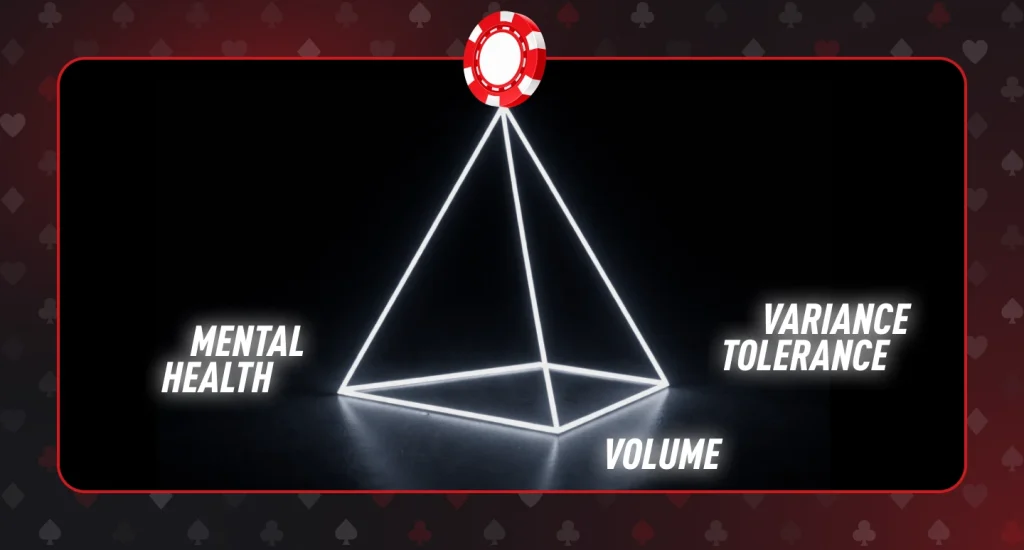
But staying sane in poker isn’t about pretending variance doesn’t hurt or forcing high volume no matter how you feel. It’s about balancing the three forces that shape your experience: the volume you play, the variance you encounter, and the mental health that carries you through it.
If you do it right, somewhere along the way the game stops feeling like a battleground and starts feeling like a long-term project, one where your mind, not the deck, is your most powerful tool.
Practice your newly learned skills in any of the online poker rooms we tested, and make sure to enter the SMPBONUS code once prompted to do so to get all the extra benefits you can.
About the Editor

Beus Zsoldos is Somuchpoker's Senior Copywriter and Player Stories Editor, covering WSOP color moments, player profiles and poker personalities for the site's Stories section. She has spent more than 20 years around the game, first as a player, then as a live tournament director and localization manager for a major online poker room, before moving into full time poker writing.
Related News
 Online PokeriGamingStories
Bryn Kenney Sues GGPoker Parent Over 5% Stake and Millions in Commissions
Bryn Kenney sues GGPoker's parent over a 5% stake and unpaid commissions. A new filing also raises allegations involving player payments and security.
 iGamingOnline Poker
Natural8 Free $15 APT Online Ticket - Claim Yours
New to Natural8? Sign up with code SMPBONUS, verify before 1 November and get a free $15 APT Online ticket for the $40M GTD series.
 iGamingOnline Poker
GGPoker Security Update Bans Third-Party Poker Tools
The GGPoker security update bans third-party poker tools, adds new client security features, and introduces detection for suspicious win rates.
 iGamingOnline Poker
Phenom Poker Launches Bellagio Mix Inspired by Bobby’s Room
Explore Phenom Poker’s Bellagio Mix, a 13-game rotation inspired by Bobby’s Room, featuring classic mixed games and two new capped pot-limit variants.
 Online PokeriGaming
Natural8 Streamer Mode: 100% Cashback, Privacy & How to Apply
Learn how Natural8 Streamer Mode works, how to apply, who can qualify, and how streamers can earn 100% cashback on streamed poker games.
 Online PokeriGaming
18,730 Players, One Millionaire: The One on CoinPoker
The One on CoinPoker drew 18,730 players and paid $1M to the winner - the biggest payout in CoinPoker history. Full final table results and stories.