

Variance

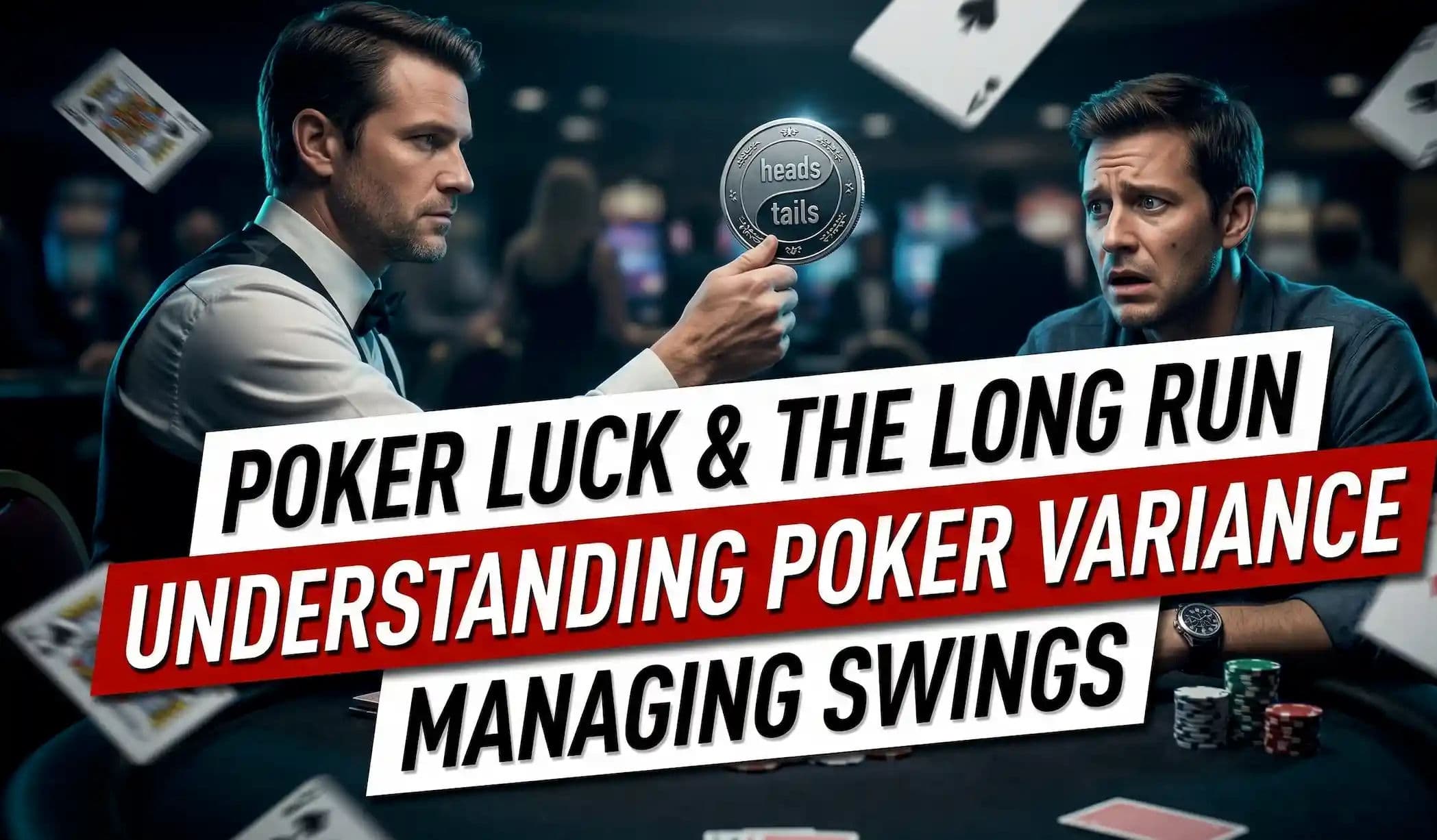
In poker, variance is the term used to describe the statistical swings you'll experience. It’s the difference between your expected, long-term results and your actual, short-term outcomes. Understanding and managing poker variance is a fundamental skill that separates disciplined winners from frustrated players who go broke.
What is Poker Variance in Simple Terms?
At its core, poker variance is the luck element of the game. Imagine flipping a coin. You expect it to land on heads 50% of the time. However, in a small sample of 10 flips, it could easily land on heads 8 times. That deviation from the expected outcome is variance. In poker, you might get your money in as an 80% favorite to win the pot, but you will still lose that hand 20% of the time. Over a single session or even a week, you could lose that hand more often than you win it. That's a poker downswing, and it’s a direct result of variance.
It's crucial to understand that variance works both ways. A period where you seem to win every coin flip and hit every draw is called an upswing. Both upswings and downswings are natural and happen to every single player, regardless of their skill level.
"The long run in poker is a lot longer than most people think. You have to be prepared, both financially and mentally, to handle the brutal swings the game throws at you."
Upswings and Downswings: The Two Faces of Variance
Variance manifests as periods of good or bad luck. Recognizing and managing your mental state during these swings is a key poker skill.
Surviving the Poker Downswing
A downswing is an extended period where you lose more than you statistically should. Aces get cracked, draws miss, and opponents seem to hit everything. This is the most challenging part of poker. A downswing can test your confidence, induce tilt, and destroy your bankroll if you're not prepared. The key is to trust your strategy, continue making profitable decisions, and not let the short-term results affect your play.
Embracing the Poker Upswing
An upswing, or heater, is when you run better than expectation. You win crucial pots, your bluffs get through, and you seem to make no mistakes. While enjoyable, upswings can be dangerous. They can lead to overconfidence, causing you to play in tougher games or take risks you shouldn't. It's important to stay grounded and stick to your solid strategy, even when it feels like you can't lose.
How to Manage and Reduce Poker Variance
While you can never eliminate variance, you can take steps to lessen its impact on your results and your bankroll. Successfully managing poker variance is a hallmark of a professional player.
1. Strict Bankroll Management
Your bankroll is your primary defense against variance. Having enough funds to absorb the losses during a downswing without going broke is essential. A common rule is to have a certain number of buy-ins for the stake you are playing. This ensures that a string of bad luck won't force you out of the game.
Game Type | Recommended Buy-ins | Risk Level |
|---|---|---|
No-Limit Hold'em Cash Games | 40-100 buy-ins | Low to Medium |
Pot-Limit Omaha Cash Games | 100-200 buy-ins | Medium to High |
Multi-Table Tournaments (MTTs) | 200-500 buy-ins | Very High |
2. Lower-Variance Play Styles
Some playing styles invite more variance than others. A loose-aggressive (LAG) style that involves a lot of bluffing and playing large pots will naturally have bigger swings than a tight-aggressive (TAG) style. Adopting a more straightforward, value-bet-heavy approach can help smooth out your results, though it may cap your potential win rate in some games.
The most effective way to reduce the sting of variance is to play in games where your skill advantage is at its peak. When you outclass your opponents, the downswings are shorter, and the upswings are more frequent. Check out our top online poker recommendations to find the softest tables on trusted, independently audited poker rooms where you can maximize your edge and protect your bankroll.
3. Improving Your Skill Edge
The bigger your skill advantage over your opponents, the higher your long-term win rate (EV). A higher win rate means that variance will have a smaller relative impact on your bankroll over time. Continuously studying and improving your game is one of the best ways to combat the effects of a poker downswing.
4. Mental Game and Tilt Control
Variance is a primary trigger for tilt. Losing pot after pot when you're a favorite is frustrating. This frustration can lead to poor decisions, which compound your losses. Recognizing when you're affected by results and having the discipline to step away from the table is a critical skill for managing poker variance and protecting your bankroll.
| Pros | Cons |
|---|---|
Variance is what allows weaker players to have winning sessions. This element of luck keeps the game from being solved and ensures a steady flow of recreational players. | An extended poker downswing can be psychologically brutal. It can cause immense frustration, self-doubt, and burnout, even for experienced, winning players. |
Successfully navigating a downswing forces players to develop discipline, emotional control, and a strong mental game, which are valuable skills both on and off the felt. | Because of variance, you can't just play with any amount of money. It necessitates a disciplined financial approach, requiring a large bankroll that can be restrictive for many players. |
Related Poker Terms
Best Online Poker Bonus Codes


About the Editor

Bence Mitykó is a Somuchpoker poker writer, covering poker news and strategy. He spent four years playing poker professionally, primarily focusing on Heads-Up Sit & Go games, experience that continues to shape his understanding of poker strategy, online poker dynamics, and the wider poker industry.


