

Master the Art of Poker Tells: How to Read Minds at the Table

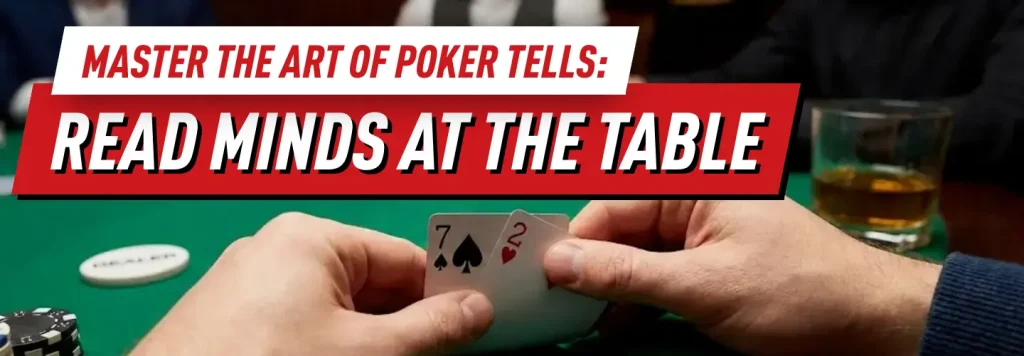
In today's poker world, everyone talks about math, computer solvers, and complicated charts. While those are important, they are a bit boring, right? We often forget the most exciting part of the game: poker tells.
Live reads aren't just old-school tricks; they are a superpower. They allow you to look into your opponent's soul and figure out if they are holding the nuts or absolutely nothing.
Let’s dive into the entertaining world of body language in poker. We will look at advice from the world’s best players to help you become a mind-reading wizard at your next game.
What Are Live Reads?
Think of a live read as your poker "Spidey-sense." It is information you get from watching how your opponent moves, acts, or speaks. You can't do this when
behind a screen!
Spotting these clues helps you decide if a player is strong (betting for value) or weak (bluffing). When you make a huge call just because someone scratched their nose the wrong way, it’s called a "Soul Read." It is one of the best feelings in poker.
A Quick History Lesson
Back in the old days of Texas road gamblers and the Las Vegas boom, reading people was the only strategy. The legendary Mike Caro wrote the "Bible" on this topic in 2003, teaching millions of players that actions speak louder than cards.
Even though math is popular now, knowing how to read people in poker gives you a massive edge.
Daniel Negreanu’s Top Poker Tells
When it comes to reading minds,
(aka "Kid Poker") is the king. He is famous for calling out exactly what his opponents are holding before they even show their cards.
Here are four classic tells Negreanu says you should watch out for:
The Quick Glance
: If the flop lands and your opponent instantly looks at their chips, watch out! It usually indicates they like their hand and plan to bet.
The Chip Reach
: Before you even act, look at the players behind you. If someone is already reaching for their chips, they are likely ready to raise or call.
Aggressive Splashing
: If a player throws their chips into the pot forcefully or "splashes" them, they might be weak. They are trying to look scary so you will fold.
The Weird Answer
: Try asking a random question like, "How is the weather?" If they give you a confused or nonsensical answer, their brain might be busy trying to hide a bluff!
Pro Tip
: Daniel Negreanu says you don’t need to stare people down to win. Being friendly and charming can actually make people share more information.
Neegreanu will explain his point of view in this
in 1 minute:
Chance Kornuth: The Modern Mind Reader
has won over $20 million playing live poker, so he knows a thing or two about staring people down. As a top poker coach, he teaches students how to exploit bad habits.
Here are three subtle signs Kornuth looks for:
Peeking Too Early
: New players often look at their cards before it is their turn. If they look and immediately lose interest, they probably have a bad hand. This is free information for you!
Chip Selection
: Pay attention to which chips they use. Some players use big chips when they want you to call (strong hand) and messy piles of small chips when they want you to fold (bluffing).
The Lean
: Body language says a lot. If a player sees the flop and leans back in their chair, they are likely uninterested. If they suddenly lean forward, they probably hit a big hand.
Doug Polk and The "Upswing" Approach
is an internet legend known for his math skills, but his training site, Upswing Poker, also knows the value of live reads. Expert Zachary Elwood shares these "defensive" tells to look out for:
The Defensive Reach
: If you start to bet and your opponent immediately grabs their chips, they are probably defensive. It is a sign they don't have a monster hand.
The Double-Check
: Did a player look at their cards, see the flop, and then look at their cards again? They usually check whether the suits match. This means they probably have a weak hand or a draw.
The "Weak" Talker
: If a player is betting while saying things like, "I'm just on a draw," run away! Players who admit they are weak are usually super strong.
The Goading
: If someone says, "I know you're going to fold," they usually want you to call. Bluffs tend to stay quiet because they don't want to make you angry.
Final Thoughts: Don't Go Overboard!
Reading poker tells is fun, but it is not an exact science. Intelligent opponents might even use "reverse tells" to trick you.
Use these tips to have more fun and gain an edge, but don't forget to play smart. If a tight player goes "All-In," they probably have Aces, no matter how much they are blinking.
About the Editor

Beus Zsoldos is Somuchpoker's Senior Copywriter and Player Stories Editor, covering WSOP color moments, player profiles and poker personalities for the site's Stories section. She has spent more than 20 years around the game, first as a player, then as a live tournament director and localization manager for a major online poker room, before moving into full time poker writing.
Related News
 Side PotStories
Las Vegas Casino Photography Policy: Myth vs. Reality
Curious if taking photos in a casino is illegal? Discover the truth about the Las Vegas casino photography policy and how to safely snap your next selfie.
 Side PotLive PokerStories
The Ultimate Showdown: A Guide to the $250K WSOP Paradise Pro-Am
Get ready for the exciting $250,000 WSOP Paradise Pro-Am in the Bahamas! Learn the rules, schedule, and format of this 2026 gold bracelet event.
 Side PotStories
The Future of High Stakes: Inside the Deepstack Poker Show
Get ready for the new Deepstack poker show. Learn how advanced AI and poker heart rate monitoring will reveal the tension in high stakes poker.
 Side PotStoriesWSOP
WSOP 2026 - Moment of the Day - 15 June - Can you be quiet?
Martin Kabrhel and Martin Zamani shouting at each other, "Can you be quiet?" might be one of the worst nightmares of tournament personnel.
 WSOPSide PotStories
WSOP 2026 - Moment of the Day - 6 June - Family pot
Family pot of Kristen and Alex Foxen resulted in a sneak peak at the $25,000 event - Moment of the Day for 6 June WSOP 2026.
 Side PotStories
Rumours Confirmed: Caesars Entertainment Is Up for Sale!
The latest casino news shows that the massive $17.6 billion deal, as the Caesars Entertainment acquisition had been finalized, has drawn major attention.