

Poker Psychology Part 10 - The Professional Poker Identity: Habits, Discipline & Long-Term Mastery


This is the last item in our article series on poker psychology. You've already learnt about the foundations, tilt, confidence, emotional control, decision quality, fear, bankroll, volume, and peak poker performance. Now it is time to dive deep into the glue of the pro poker mindset: identity.
Every serious player must eventually confront the same hushed question: What truly distinguishes those who succeed from the rest of the hopeful bunch? You wanna know what it isn't? The flashy things. It's not the absolute soul-read or the crazy hero call someone uploads to Reddit at 3 A.M.
Most long-term winners don’t build their careers on fireworks, they build them on something far more stable. A professional poker identity grounded in poker habits, discipline, and long-term mastery.
That identity, strangely enough, doesn’t appear the moment you crush your first tournament or snag your first five-figure pot. You become that person long before that, in how you learn, how you respond to a bad session, in the smallest of choices made behind closed doors. Poker is an art form. A slowly, stubbornly, artisanal art form.
In the previous article in our Poker Psychology series, we discussed the elements of peak poker performance. Of course, some of them overlap with the poker identity itself, but identity is so much more than training to perform.
In this article, we’ll walk through the structure of that identity in a way that is honest and practical, not preachy. We'll discuss the lifestyle essentials that keep people professionally minded, the moderation that keeps them humble, and the sustained mastery that guides them through decades of discrepancies, shifting metas and the perhaps unavoidable imposter syndrome.
And we’re also going to acknowledge something obvious but rarely said aloud: you don’t have to be a genius to build this identity. You just have to behave like one often enough until those behaviours become who you are.
Why Habits Beat Talent (Especially in Poker)
Poker enjoys luring new players into believing it's a game of genius. And while it can be genius, it's, unfortunately, mostly a tedious game of structure. Genius fades quickly without structure. Genius ignites the match, but habit brings the wood.
The top professionals in the game year after year do not bank on probabilities and fickle luck. They build small routines that slowly add up to a serious edge.
Professional players rely on self-discipline that becomes automatic; their consistency is what really makes them dangerous. Excellence isn’t an event; it’s a habit practised on repeat.
Think of it like watching a great guitarist play. You might focus on the solo, but the real magic lives in the thousands of hours of scales they ran when no one cared. Poker works the same way.
Daily Systems of Poker Psychology Pros Actually Follow
If you question a dozen top-level grinders, you'll get a dozen systems, but they all rhyme. Their daily actions revolve around the same priorities: studying, reviewing, recovering, and gearing up.
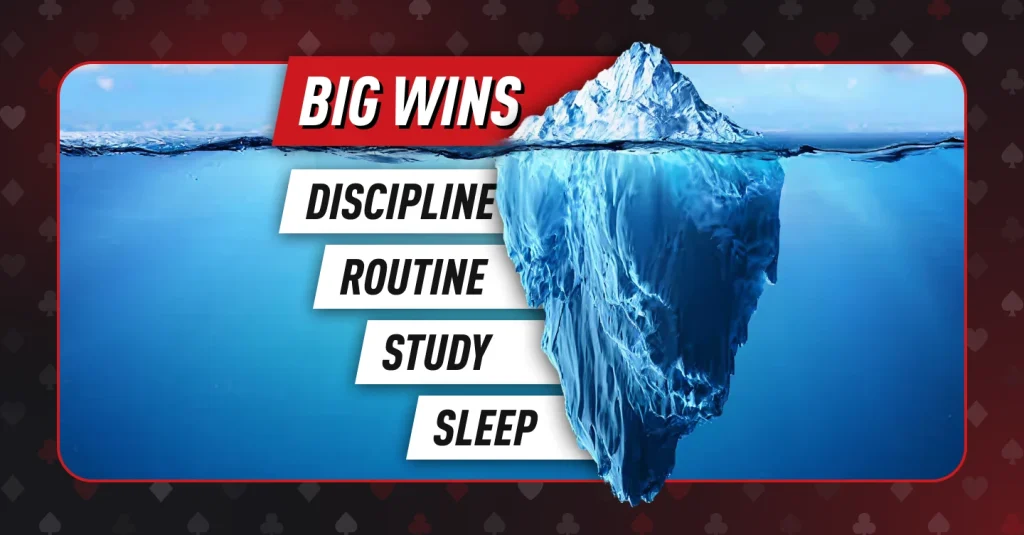
Studying For Purpose (Not Just Consuming Content)
Pros never accidentally find themselves on YouTube clicking hand histories to feel better about their plays. They each have systems of study, often in a combination of:
Solver work (GTO+ or PioSolver)
Database analysis (Holdem Manager, Poker Tracker, Hand2Note)
Leak-finding sessions
Notes taken on population tendencies
Discussing tricky spots with peers or coaches
They don't just study hands; they study the game.
Health: The Hidden Edge
Poker is more cognitively demanding than many people think. Sleep, diet, and hydration are not just mere aspects of life, they are what the job demands. If you're a poker player who is running on low battery, you're throwing money away at the table. Every professional knows this, and they have it all together and preserve their energy. It's nothing fancy, but it gets the job done.
Mental Warm-Ups
Before a session, pros settle in. Some meditate. Some do quick breathing exercises. Others review three strategic reminders that anchor their session. It’s a simple ritual, but simplicity scales beautifully when done daily.
Post-Session Cooldown
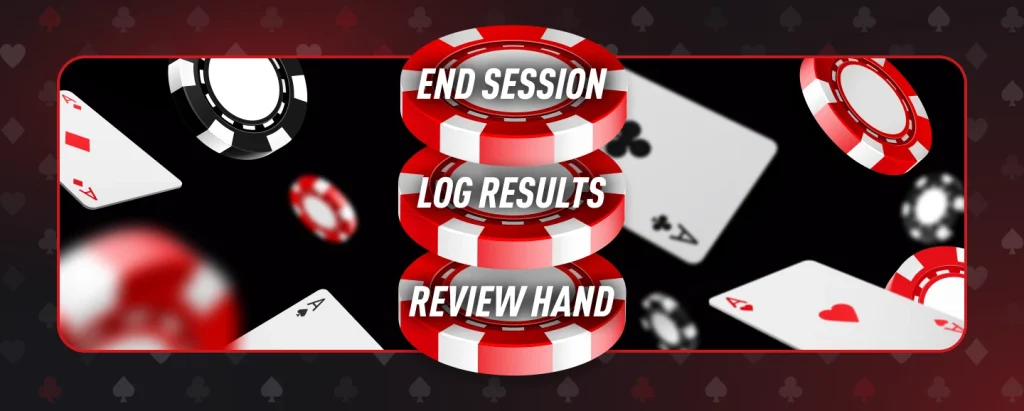
This one often surprises amateurs. Pros don’t usually end their session and immediately jump to emotional conclusions about their worth as human beings. Instead, they log their results, review their mid-session notes on emotion control, write down tricky hands and spots to examine more closely. For them, a poker session isn’t complete until the review is done.
Pros Build Habits, Amateurs Rely on Motivation
Here’s a subtle but important split: amateurs wait until they “feel like it”. Professionals do it because it’s Tuesday. Habits protect you from mood swings. They build resilience into your schedule. They become the scaffolding that holds up your long-term improvement, even when variance punches you square in the stomach. And yes, variance will do that, and do that often.
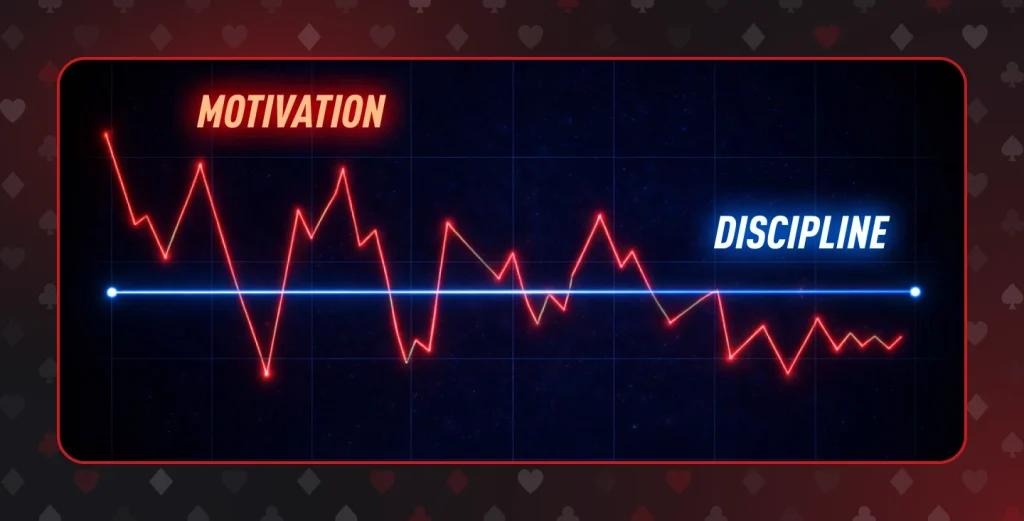
One useful trick pros lean on is habit stacking. Pair a new routine with something automatic. For example: every time you finish your session, you immediately review your biggest pot of the day. No exceptions. After a month, that action feels as natural as closing the poker client. That’s the magic of habits: they quietly turn you into someone dangerous without you noticing.
Discipline Isn’t Sexy, But It’s Everything
It’s easy to glamorise discipline until you actually have to use it. Discipline in poker isn’t a motivational speech or a warrior mindset Instagram quote. It’s behavioural. It’s boring. And it’s absolutely essential. There’s a great qualitative study in which professional and recreational players were interviewed about their approaches to poker. The professionals consistently described their actions like work: tracking, reviewing, budgeting, selecting games rationally. Recreational players used language grounded in impulse, emotion, or hope. That gap, that small but undeniable behavioural divide, is discipline.
Emotional Discipline
Poker psychology has unarguable evidence that tilt doesn't just come from anger. More often than not, it starts as a tiny bit of annoyance, impatience, or a silent urge to fix your graph ASAP. Emotional discipline is about recognising these changes in tempo and controlling them with logic rather than distress.
The first way to ensure your professional poker identity doesn't go up in flames is to be aware. Pro poker mindset matters more than you think, and without mental discipline, one cannot maintain composure in the long term. What are the emotional triggers that pros would recognise? They include decision fatigue, chasing losses, ego tilt, winner's tilt, and spewing chips out of boredom, among others. Professionals can recenter themselves to make good decisions when they sense any of these by returning to their preconstructed routine. It can be a thirty-second timeout, a timed break, or a session limit. These are not tremendous efforts to regain balance but rather small bumpers to keep everything in check.
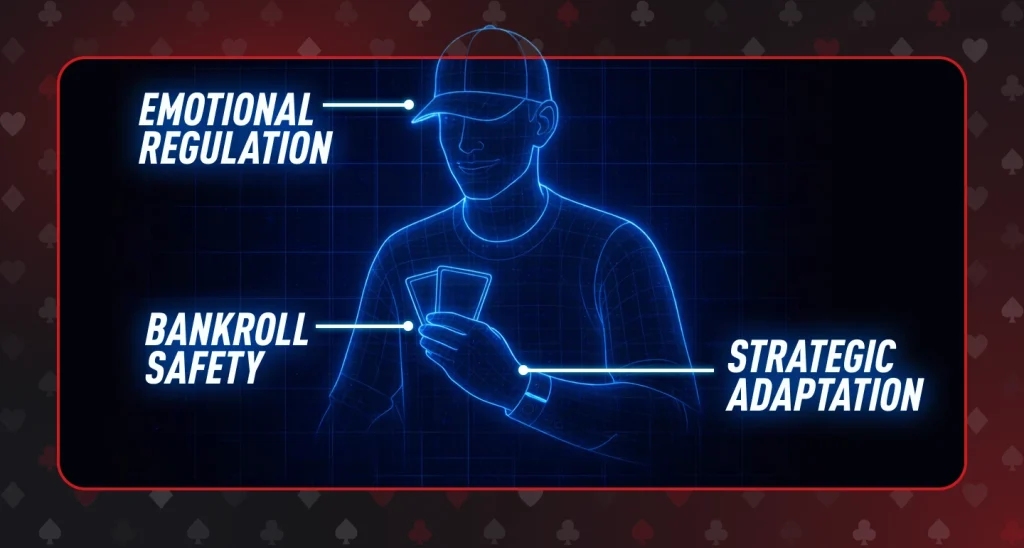
Financial Discipline
The truth is, financial discipline separates the career professionals from those who treat poker like a weekend excursion. Bankroll management is not a preference, it's protective gear. Professionals operate under a similar set of guidelines:
30-50 buy-ins for cash games
Stop-losses
Avoid high variance formats when on tilt
Play softer games when pride wants otherwise
There are some surprisingly sentimental aspects to this, but humility is required when selecting games. The requirement to play the game with the best EV instead of one that's going to grace one's social media page. Many consider bankroll discipline to be the "real skill of poker", and while such a dramatic statement seems hard to believe at first, it becomes kind of apparent when considering how many great poker players go broke because they refused to respect it.
Lifestyle Discipline
Isn't it funny that the way poker professionals operate seems like they have a lot of freedom? They're up all night, sleeping in the morning, going to work when they want. They travel to games, many of them spend their days in casinos and on vacation, not at the office. However, they're not quite that free, at least not in the way you might think. They're disciplined, and with that poker discipline comes the air of freedom. Poker professionals keep regular session hours, save some time off, and recognise that outside factors of life cannot interfere with focus when playing.
There's a silent irony about poker, as poker professionals maintain a stress-free lifestyle, but the activities of that lifestyle are incredibly stressful.
Long-Term Mastery
Short-term results are deceptive. They overstate strengths and understate weaknesses. Professionals understand this from the perspective of poker psychology. They think in timelines: months, years, even decades. Mastery is putting more stock in the overall quality of decisions over time rather than fixating on a bad beat at a certain moment. That's what long-term mastery is all about: understanding that you do not earn your money from playing well today, but playing well enough, often enough, over thousands of sessions.
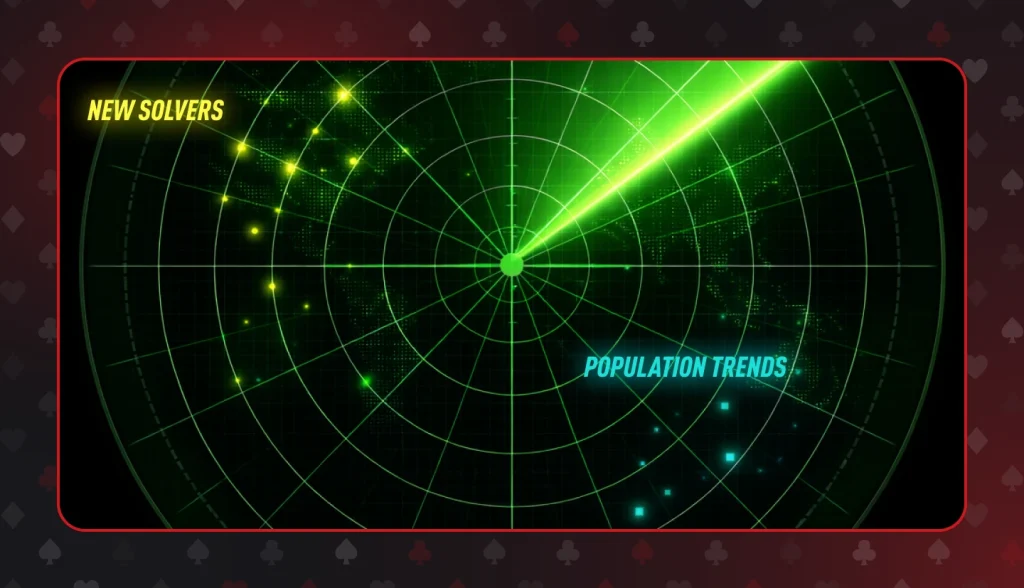
Continuous Learning & Staying Ahead of the Meta
Poker evolves. People study more. Solvers widen. Standard lines change. And pros adapt, sometimes with great difficulty. Continuing education includes studying new solver outputs, studying population trends, reviewing frequency data in databases, discussing strategy with peers, and reviewing personal errors. More often than not, even the top-tier professionals don't do it alone. They work together, push each other, and share blind spots the same way fighters exchange sparring rounds. It's not enough to study harder, it's about what one's social circle brings to the table that makes studying more effective.
Building a Framework for Mastery
Everything gets easier with a structure in place over time. Create monthly, quarterly, and yearly to-do lists that you do every single time. Your checklists should look something like this:
Monthly
Review the biggest leaks
Scan your database
Study three new branches from solver
Quarterly
Reassess strategy
Evaluate emotional stability
Check bankroll health
Yearly
State long-term vision
Shift priorities
Update study routines
It seems too simple on paper, but this gradually changes your thinking about who you are. You're no longer someone who "plays poker". You're someone who gets better at poker.
Crafting the Professional Poker Identity
Professionals don't need results to act professionally. They act like one so that the results eventually come. Professionals aren't professionals because that's what their identity says. They're professionals based on what they do. You essentially recondition yourself to feel as if this is your job, and eventually you will become that person. If you fool yourself into acting like a professional long enough, you'll become one, even if your graph hasn't caught up yet.
A Blueprint for Building Your Poker Identity
Here’s a simple structure, not as a rigid rulebook but as a guide:
Create a weekly poker schedule that you treat like actual work hours.
Build a study system with structured modules — not random browsing.
Use routines (pre-session prep, mid-session checks).
Follow bankroll rules religiously.
Do post-session reviews without judgement.
Join a peer group or find a study partner.
Track long-term progression metrics, not just session outcomes.
The Journey From Casual To Professional
Every poker player starts out with a somewhat similar approach: a little curious, a little hopeful, a little inexperienced. But professionals take the road less travelled. They create their identity through a series of intentional habits and quiet poker discipline, with an eye toward long-term mastery, rather than a lucky week or unlucky month.
You don't have to change your entire life to get there, not yet anyway. You only need one sturdy habit, one disciplined action, and one long-term investment to create your identity, according to principles of poker psychology. If you want to get started today, you don't have to do much. Take one nugget from above and repeat it tomorrow. Your future self, the one who made it through the swings and created something legitimate, will thank you.
Hone your skills in one of our recommended online poker sites, such as WPTGlobal or CoinPoker, and with building a self-confident poker identity, results will follow as you reach your peak poker performance.
About the Editor

Beus Zsoldos is SoMuchPoker's Senior Copywriter and Player Stories Editor, covering WSOP color moments, player profiles and poker personalities for the site's Stories section. She has spent more than 20 years around the game, first as a player, then as a live tournament director and localization manager for a major online poker room, before moving into full time poker writing.
Related News
 NewsOnline PokeriGaming
Road to Triton Cyprus: Win a $25,000 Seat at Titi Poker
Join the Road to Triton Cyprus at Titi Poker. Start free on Oct 6, climb the satellite ladder and win one of 3 guaranteed $25,000 tickets.
 NewsOnline PokeriGamingPromotion
GGPoker and Natural8 $18M October Giveaway
Win your share of $18M in the GGPoker and Natural8 giveaway this October. Cash drops, Halloween Party, leaderboards - plus a welcome bonus.
 NewsOnline PokeriGaming
Andrii Novak Wins the GGPoker WSOP Online Main Event for $3.93M
Andrii Novak beats Simon Beckmann to win the 2026 GGPoker WSOP Online Main Event for $3.93M. Full final table results, payouts and stats.
 NewsOnline PokerLive PokeriGaming
QQPK Freeroll: Win a Poker Dream Malaysia Seat + $800
Win a MYR 3,200 Poker Dream Malaysia Main Event seat + $800 in the free Somuchpoker freeroll on QQPK. Sept 27 - sign up with code SMPBONUS.
 NewsOnline PokerLive PokeriGaming
WPT Global Satellites: Turn $1.10 Into a $12,400 WPT World Championship Package
Turn $1.10 into a $12,400 WPT World Championship package on WPT Global. See feeder routes, the $100K Golden Ticket, key dates and rules.
 NewsOnline PokeriGaming
ACR Poker Sunday With $5 Million in OSS XL Main Event Guaranteed
Three ACR Poker OSS XL Main Events with $5M guaranteed on Sunday, plus a $750K High Roller and Second Mortgage Week. See the full schedule.