

Backdoor Draw

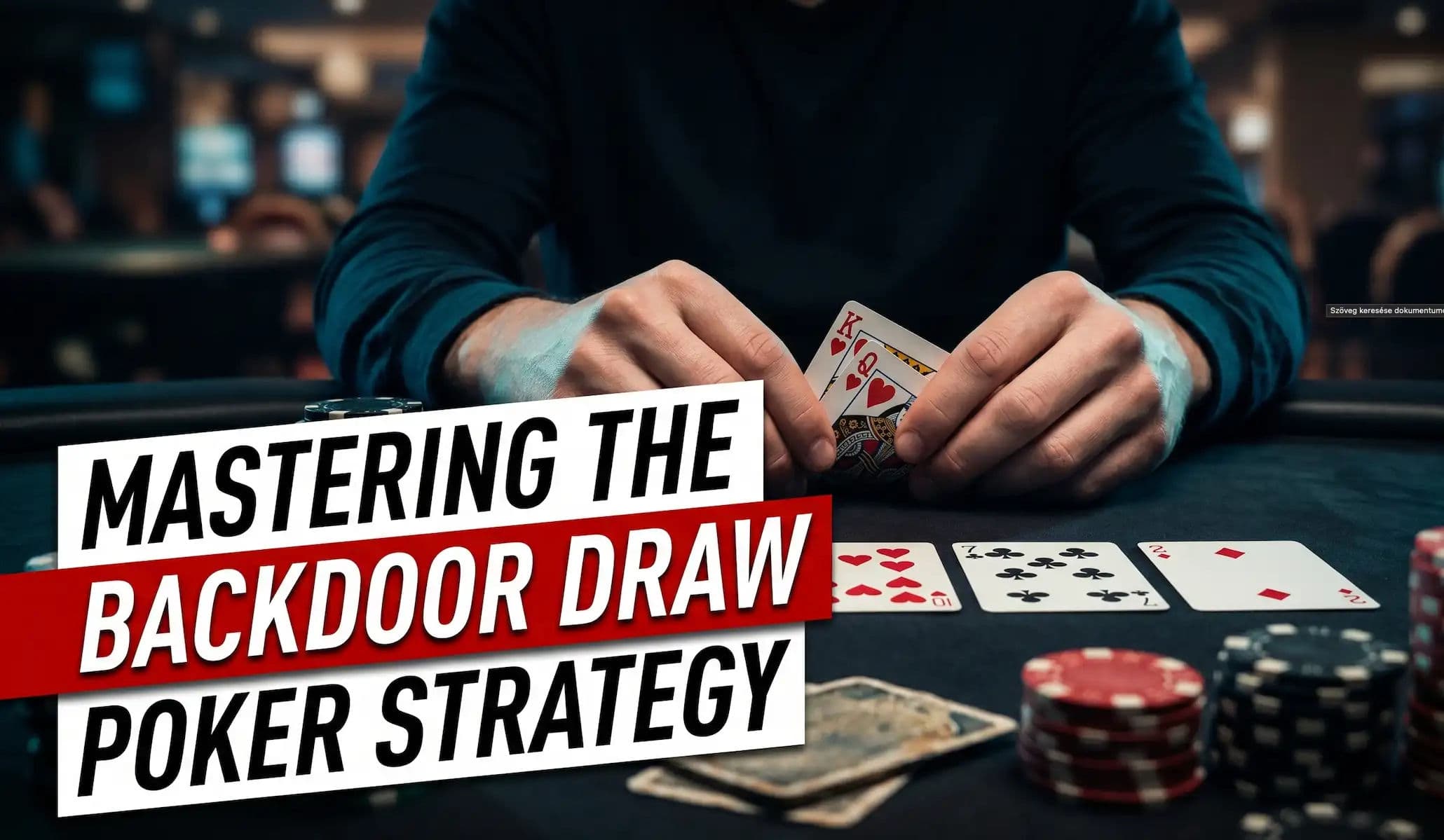
In the intricate landscape of poker strategy, a comprehensive understanding of various hand equities is paramount. Among the more subtle yet strategically significant elements is the backdoor draw, often referred to as a "runner-runner" draw. Unlike conventional draws that require just one card to complete a powerful hand, a backdoor draw demands two specific, consecutive cards – one on the turn and another on the river – to transform a seemingly modest holding into a formidable flush or straight. This concept is a cornerstone of advanced post-flop play, offering layers of deceptive value and unexpected avenues for profitability for those who master its nuances.
This expert analysis delves into the mechanics, probabilities, and strategic applications of backdoor draws, equipping you with the knowledge to identify these opportunities and leverage them to your advantage. We will explore how these seemingly long-shot draws can significantly alter hand equity, influence betting patterns, and even open doors for sophisticated bluffing maneuvers, particularly in multi-way pots where hidden value can be immensely powerful.
What Exactly is a Backdoor Draw?
A backdoor draw fundamentally describes a situation where a player needs two specific cards to fall on subsequent streets (turn and river) to complete a strong hand like a straight or a flush. It contrasts sharply with a direct draw, where only one card is missing for completion.
For instance, if you hold two suited cards, say A♠K♠, and the flop comes J♠ 7♦ 2♥, you have one spade on the board. To complete a backdoor flush, you would need another spade on the turn and a third spade on the river. Similarly, for a backdoor straight, if you have 8♠9♦ and the flop is A♥5♣10♠, you would need specific running cards, such as a 6 and 7, a 7 and J, or a J and Q on the turn and river to complete a five-card sequence.
Distinguishing Backdoor from Direct Draws
The key differentiator lies in the number of cards required. A direct flush draw (e.g., four cards of the same suit on the flop) needs only one more card of that suit. A direct open-ended straight draw needs one card from two ranks. Backdoor draws inherently carry lower immediate equity due to the double-hit requirement, but their strategic importance should not be underestimated.
Understanding the Odds and Probabilities
The probability of hitting a backdoor draw is considerably lower than that of a direct draw, which is why they are often considered secondary equity. From the flop to the river:
Backdoor Flush Draw: The approximate odds of completing a backdoor flush from the flop to the river are around 4.2%. This is calculated by needing one of the 10 remaining suited cards on the turn (10/47) and then one of the 9 remaining suited cards on the river (9/46).
Backdoor Straight Draw: The odds for a backdoor straight can vary slightly depending on the specific cards, but they are generally in a similar range, often slightly higher than a backdoor flush, depending on the connectivity. For example, if you flop two cards to a straight and need two more consecutive cards, the odds are around 4-5%.
While these percentages seem low, they are far from negligible, especially when combined with other forms of equity or favorable pot conditions.
Strategic Integration: Leveraging Backdoor Equity
Expert poker players recognize that backdoor draws, though less frequent, significantly contribute to the overall equity of a hand. Their value extends beyond mere chances of hitting, impacting decision-making in several critical ways:
Adding Deceptive Value and Equity
A hand with a backdoor draw holds more equity than a pure bluff or a hand with no potential for improvement. This added value means you're not solely relying on your current hand strength; you have additional "outs" that can manifest later. Opponents might not immediately recognize this latent potential, allowing for more deceptive play.
Semi-Bluffing Opportunities
Perhaps the most potent application of backdoor draws is in creating advantageous semi-bluffing scenarios. If the turn card falls and completes your backdoor draw into a direct draw (e.g., you hit a second suited card, now giving you a regular flush draw), your hand's equity jumps considerably. This transition provides an excellent opportunity to semi-bluff, applying pressure to opponents who might have marginal holdings. Even if you don't hit the river, you often have folds as an alternative win condition.
Informing Continuation Play
When considering a continuation bet (C-bet) on the flop, a hand with a backdoor draw (especially when combined with overcards or an overpair) becomes a stronger candidate for betting. It offers two ways to win: by folding out opponents immediately or by improving to a strong hand on later streets. In multi-way pots, where direct draws might be overplayed, a backdoor draw can represent a disciplined way to stay in a hand with an improved outlook if the turn brings help.
Considering Pot and Implied Odds
Backdoor draws become more viable when you're getting favorable pot odds or, more importantly, strong implied odds. If the pot is large, or you anticipate winning a significant amount if you hit your draw, the lower probability becomes more palatable. Expert players are adept at weighing the cost of seeing the next card against the potential reward, making disciplined decisions even on long-shot draws.
Context and Caution: When to Play (and Not Play)
While strategically valuable, it's crucial not to overvalue backdoor draws. Relying on them as a primary strategy can lead to consistent losses due to their inherent uncertainty. They are best utilized as supplementary equity to a hand that already possesses some showdown value, or as a component in a well-timed semi-bluff. Backdoor draws are most commonly found and strategically significant in community card games like Texas Hold'em and Omaha, where multiple community cards are dealt, and the potential for multi-street improvement exists.
Ultimately, a deep understanding of backdoor draws elevates a player's strategic game from basic hand evaluation to a nuanced appreciation of latent equity and future potential, allowing for more sophisticated and profitable play.
Turn Hidden Equity into Real Profit. Understanding how to leverage a backdoor draw is what separates average players from the pros. Ready to put your new semi-bluffing skills and runner-runner math to the test? Check out our top online poker sites to find the perfect cash games and tournaments for your strategy. When you create your new account, make sure to use the promo code SMPBONUS to claim your welcome package and give your bankroll a solid boost.
| Pros | Cons |
|---|---|
Backdoor draws add a hidden layer of potential to a hand, increasing its overall equity beyond immediate strength and providing more ways to win. | With odds around 4-5% from the flop to the river, backdoor draws are statistically less likely to complete compared to direct draws, making them unreliable as a primary strategy. |
Hitting a key card on the turn that transforms a backdoor draw into a direct draw can create excellent spots for aggressive semi-bluffs, applying pressure on opponents. | Overvaluing backdoor draws can lead to players investing too much into a hand with low immediate equity, resulting in unnecessary chip losses. |
Opponents often overlook the subtle potential of backdoor draws, allowing a player to accumulate equity discreetly and play hands deceptively. | Their strategic value is often contingent on factors like good pot odds, implied odds, or the ability to semi-bluff effectively, making them less universally applicable. |
Understanding backdoor equity refines post-flop strategies, influencing decisions on continuation bets, checks, and calls based on future potential and pot odds. |
Related Poker Terms
Best Online Poker Bonus Codes


About the Editor

Bence Mitykó is a Somuchpoker poker writer, covering poker news and strategy. He spent four years playing poker professionally, primarily focusing on Heads-Up Sit & Go games, experience that continues to shape his understanding of poker strategy, online poker dynamics, and the wider poker industry.


