

One-Gapper

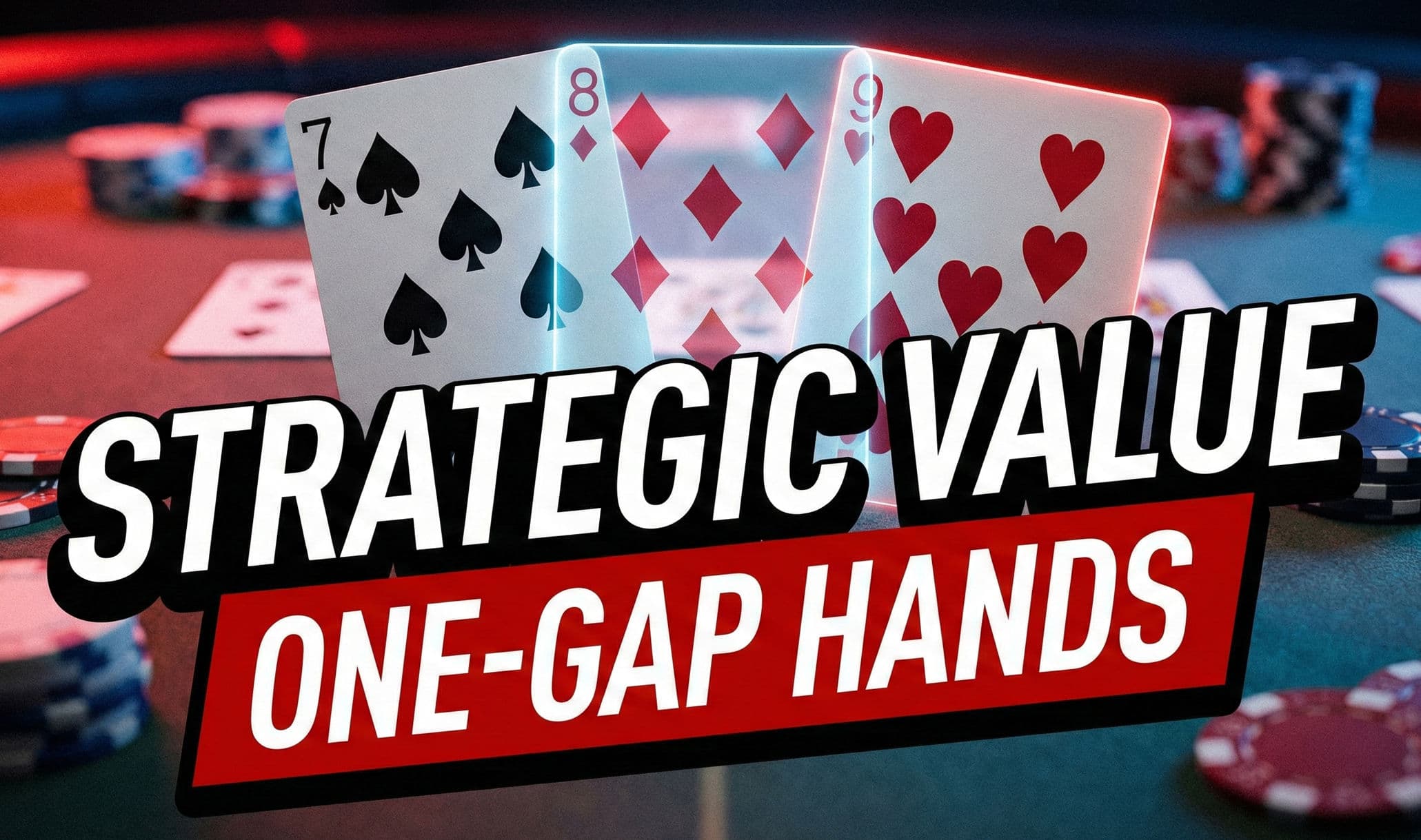
In the intricate world of poker, understanding hand classifications beyond premium pairs and suited aces is crucial for developing a sophisticated strategy. Among these, the "one-gap" hand represents a fascinating category that, while often speculative, holds significant potential for generating powerful, often disguised, straights. This article delves into the analytical framework of one-gap connectors, exploring their definition, strategic value, and the nuanced considerations required to play them profitably in popular variants like Texas Hold'em and Omaha.
Understanding One-Gap Poker Hands & Connectors
The term "one-gap" refers to two cards in a player's starting hand that are separated by a single rank. For instance, holding a 7 and a 9 constitutes a one-gap hand because an 8 would bridge the gap, forming a straight. Similarly, a Jack and a King (J-K) is a one-gap combination, as a Queen (Q) is needed to complete the straight. This concept extends across the rank spectrum, encompassing hands like Ace-3, 4-6, 9-J, and Ten-Queen (T-Q).
These hands are distinct from connected cards or zero-gap hands, where the cards are consecutive (e.g., 7-8, J-T), and "two-gap" hands, which have two ranks separating them (e.g., 7-T, J-A). While pure connectors offer more direct straight-making opportunities, one-gap connectors introduce an element of speculation, relying more heavily on favorable board runouts and implied odds.
In contemporary online poker , these hands - especially when suited - are essential for balancing a player's range, as data-driven solver analysis has proven their effectiveness in flopping deceptive "gutshot" draws that often lead to massive pots by catching opponents off guard.
The Strategic Value of One-Gap Hands
The true worth of one-gap hands isn't immediately obvious; it's often unlocked through careful poker strategy, particularly in games where multiple players are involved and pot odds are appealing.
Straight Potential
The primary appeal of one-gap hands lies in their ability to form straights. When the missing card appears on the board, it creates a "gutshot" or "inside" straight draw. For example, with 7-9, hitting an 8 on the flop gives you an inside straight draw. While open-ended straight draws offer eight outs, a gutshot typically provides four outs. The strength often comes from the fact that a straight made this way can be less obvious to opponents, leading to bigger payouts.
Implied Odds Magnification
Playing one-gap hands successfully is intrinsically linked to understanding and leveraging implied odds in poker. It refers to the additional money you expect to win if you hit your draw, beyond the current size of the pot. Because one-gap hands often require hitting a specific card to make a strong hand (a straight), they are generally speculative pre-flop. However, when you do hit that key card, your hand is often very strong and well-disguised. If you can entice opponents to pay you off with weaker hands, the initial investment becomes highly profitable.
Suited vs. Unsuited One-Gappers
The presence of a suit dramatically increases the playability and profitability of one-gap hands. A suited one-gapper not only has straight potential but also the added equity of a flush draw. This combination provides more outs and greater flexibility, making them significantly stronger than their unsuited counterparts. Unsuited one-gappers are far weaker and should be played very cautiously, often only in specific positional or pot-size situations within a broader Texas Hold'em strategy.
The Critical Role of Position
Position is paramount when playing speculative hands like one-gappers. Playing them in late position (Cutoff, Button) allows you to observe how other players act before you commit chips. This information is invaluable for determining if the pot is worth chasing, if opponents are likely to pay off your draw, or if you should simply fold. Playing one-gappers out of position often leads to costly mistakes, as you're forced to act first without full information, making it harder to control the pot size and realize your equity.
Hand Strength Hierarchy
While one-gap hands can be powerful, it's essential to understand their place in the pre-flop poker hand ranges. They are generally considered speculative hands, weaker than premium pairs (AA, KK, QQ, JJ), strong broadway hands (AK, AQ), and even suited connectors. They often fall into the category of "fit-or-fold" hands post-flop: if you don't hit a strong draw or a pair, they are usually easy to fold. Overestimating their pre-flop strength is a common pitfall for less experienced players.
Common Mistakes When Playing One-Gap Hands
Despite their potential, one-gap hands are traps for many players due to common misjudgments:
Overvaluing Unsuited Variations: Unsuited one-gappers have considerably less equity than suited ones due to the absence of flush potential.
Chasing Draws with Poor Odds: Blindly pursuing a gutshot draw when the pot odds are insufficient is a common leak, often reflecting a poor straight draw strategy.
Playing Out of Position: As mentioned, playing one-gappers from early or middle position without strong reads or exceptional pot circumstances often puts you at a disadvantage.
Ignoring Stack Sizes and Opponent Tendencies: The profitability of one-gap hands heavily depends on implied odds. If opponents have short stacks, there's less to win even if you hit your draw.
Advanced Considerations for One-Gap Strategy
For expert players, one-gap strategy extends beyond basic principles:
Adapting to Game Types: In cash games with deeper stacks, the implied odds of one-gappers are more pronounced, making them more playable. In tournaments, their speculative nature makes them riskier pre-flop calls.
Blocker Effects: Holding a one-gap hand can sometimes have "blocker" value. For example, if you hold 9-J and the board is K-Q-T, you block some of the straights your opponent could have, slightly improving your hand's relative strength.
Exploiting Opponents: Against loose-passive players who call frequently, one-gappers with good implied odds can be profitable. This holds true for both Hold'em and Omaha poker variants where board connectivity is a key driver of action.
Conclusion
In conclusion, one-gap hands in poker are far from mere filler. They represent a class of speculative hands that, when understood and played with discipline and positional awareness, can become a significant source of profit. Mastering their nuances requires a keen understanding of straight potential, implied odds, and an appreciation for the strategic advantages of position, ultimately contributing to a more robust and adaptable poker game.
| Pros | Cons |
|---|---|
When a one-gap hand hits its straight, it's often well-disguised, allowing players to win large pots from unsuspecting opponents, especially in deep-stacked games. | Pre-flop, one-gap hands generally have low raw equity compared to premium hands, requiring a favorable flop to become strong, leading to many folds. |
Making a straight with a one-gap connector often results in a hand that is not obvious to opponents, leading to bigger payoffs compared to straights made with obvious board connections. | Players can easily overcommit chips chasing gutshot draws or marginal hands with insufficient pot odds, leading to significant losses if the draw misses. |
Suited one-gappers add the significant benefit of a flush draw, increasing the number of outs and the overall equity of the hand, providing more ways to win. | Without the benefit of seeing opponents' actions, playing one-gap hands from early position makes it challenging to control pot size, gather information, and realize equity effectively. |
Even if you hit a pair, it's often a medium pair that can be dominated, and missing your draw entirely leaves you with just two high cards, making it hard to continue against aggression. |
Related Poker Terms
Best Online Poker Bonus Codes


About the Editor

Bence Mitykó is a Somuchpoker poker writer, covering poker news and strategy. He spent four years playing poker professionally, primarily focusing on Heads-Up Sit & Go games, experience that continues to shape his understanding of poker strategy, online poker dynamics, and the wider poker industry.


