

Middle Position

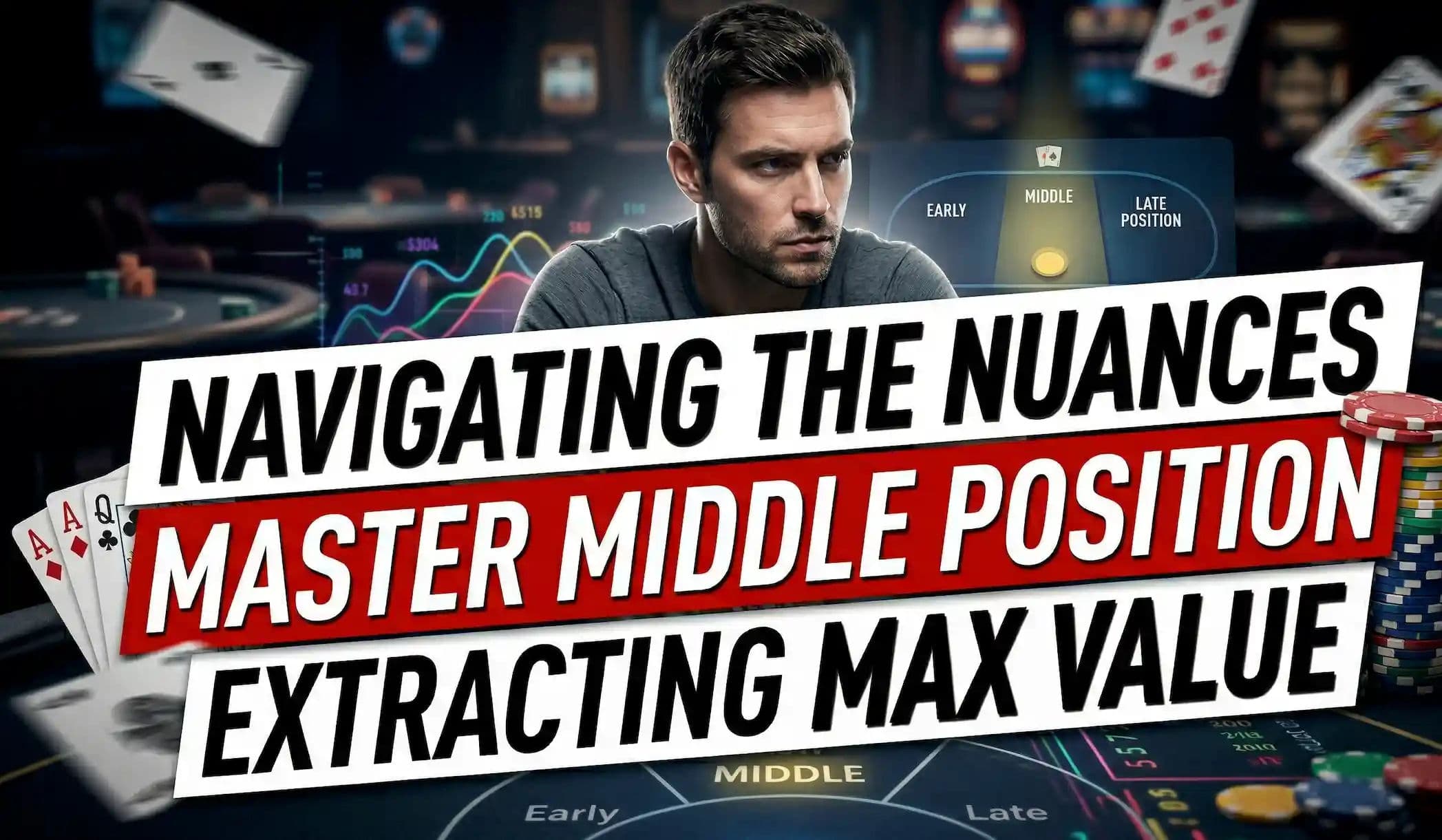
In the intricate dance of a poker hand, your seating position is arguably one of the most critical factors influencing your decision-making. Far more than mere table etiquette, position dictates your access to information, the strength of your viable hand range, and your overall strategic flexibility. Among the various spots at a poker table, Middle Position (MP) occupies a unique and often underestimated role. It’s a zone of balanced opportunity, offering more insight than early positions but demanding more caution than late positions.
This comprehensive guide is designed to transform your understanding and execution from middle position. We’ll dissect the strategic advantages and inherent challenges, arming you with the knowledge to refine your hand selection, pre-flop actions, and post-flop maneuvers. By mastering the art of playing from MP, you can significantly enhance your profitability and exploit opportunities that less astute players often miss.
Middle Position Poker: The Ultimate Texas Hold'em Strategy Guide
Mastering middle position poker is an essential step in elevating your overall win rate at the tables. In a standard nine-handed game, Texas Hold'em middle position typically refers to the seats immediately following the Under the Gun (UTG) players but preceding the Cutoff and Button. While the exact designation can vary slightly based on table size (e.g., six-max vs. full ring), it generally encompasses the seats often labeled UTG+1, UTG+2, and sometimes the Lojack. These positions are characterized by having several players still to act after you, yet also having the benefit of seeing the actions of a few players who have already committed to the pot.
The Strategic Significance of Middle Position
The essence of a winning poker position strategy lies in information. Early position players act in the dark, late position players act with maximum information, and middle position players operate in a nuanced grey area. From MP, you gain the advantage of observing the initial actions of the early position players (folds, limps, raises) before making your move. This initial data, while limited, is invaluable for narrowing down potential hand strengths and intentions.
However, the challenge stems from the fact that several players in late position still have the opportunity to act after you. This means that a raise from MP can easily be re-raised (3-bet) or called by a stronger range from LP, putting you in a difficult spot out of position post-flop. Consequently, playing middle position optimally requires a delicate balance of aggression, hand strength, and awareness of the remaining players.
Comparing Middle Position to Other Positions
Vs. Early Position (EP): MP has a significant advantage over EP because you've seen one or two players act. This allows you to open a slightly wider range of hands than you would from EP, as you have a better read on the table's initial willingness to engage.
Vs. Late Position (LP): While better than EP, MP still lacks the full informational advantage of LP. Late position players get to see almost the entire table's action before acting, giving them unparalleled control over the pot. This dynamic highlights the critical need for deep positional awareness poker; from MP, you must always be mindful of the strong hands and potential re-raises that can come from the players yet to act.
Optimal Hand Selection for Middle Position
Given the balanced nature of this seat, constructing proper poker hand ranges requires a careful compromise between the tight range of early position and the loose-aggressive range of late position. It's a spot where you can profitably open a variety of hands, including:
Premium Hands: AA, KK, QQ, JJ, AKs, AQs, KQs, TT (always strong contenders).
Strong Suited Connectors: 98s, T9s, JTs, QJs, KJs (play well post-flop, especially when deep-stacked).
Small and Medium Pairs: 77, 88, 99 (good for set mining, but be wary of overpairs).
Broadway Hands: AQo, AJo, KQo, ATs (can be strong, especially when unraised).
The key is to select hands that perform well both pre-flop (resisting 3-bets) and post-flop (having good equity and playability). Avoid speculative hands that require too much luck or multiple opponents to be profitable.
Strategic Considerations from Middle Position
Opening & Raising
When opening from MP, consistency in your raise sizing is crucial. A standard 2.5-3x big blind raise signals strength and builds the pot. Your goal is to narrow the field or, ideally, steal the blinds and antes. Be prepared to face calls from late position and occasional 3-bets.
Calling & Flatting
Calling an open from an early position player from MP should be done with caution. You're still inviting late position players to act, potentially creating a multi-way pot or inviting a squeeze play. Generally, calling is reserved for hands that play well multi-way or when you have a strong desire to see a flop cheaply against a specific opponent.
3-Betting
3-betting from middle position is a powerful weapon. It demonstrates strength and can often pick up the pot immediately if the original raiser folds. Consider doing so with both premium value hands and a select range of strong semi-bluffs (e.g., A5s, KJo). This balanced approach makes you harder to read.
Post-Flop Play
Your post-flop strategy when playing middle position is heavily influenced by whether you were the pre-flop aggressor and how many opponents are in the pot. If you raised pre-flop and got one caller, a continuation bet (c-bet) is often standard, especially on dry boards. If you're out of position to your opponent(s), play cautiously, focusing on pot control with marginal hands.
Common Mistakes to Avoid
Playing Too Many Hands: The biggest trap is getting too loose because you've seen EP fold, forgetting LP still has to act.
Over-Calling: Flatting too many marginal hands, leading to difficult post-flop decisions out of position.
Ignoring Table Dynamics: Not adjusting your range based on who's in late position (e.g., a tight player vs. a maniac).
One of the most valuable poker tips middle position players can internalize is to consciously avoid these pitfalls. By applying the strategic principles outlined above, you can transform this challenging spot into a source of consistent profitability.
Once you feel confident in your positional strategy, finding the right games is your next step. Be sure to check out our curated list of the best online poker sites to discover platforms with the most action and generous welcome offers to test your new skills!
| Pros | Cons |
|---|---|
Players in middle position have the benefit of seeing actions from early position players, providing crucial initial reads and helping to narrow down potential hand strengths at the table. | The primary disadvantage is that several aggressive players in late position (Cutoff, Button) are yet to act and can easily re-raise (squeeze) over a middle position open, putting you in a difficult spot. |
Compared to early position, middle position allows for a slightly broader opening range, incorporating more speculative yet profitable hands like suited connectors or smaller pairs due to improved information. | Unlike late position, middle position players have less control over the final size of the pot pre-flop, as subsequent action can escalate the betting or allow many players to see the flop cheaply. |
If there are callers or initial raises, middle position can sometimes offer better pot odds to call with drawing hands, especially if a squeeze from late position seems unlikely. | If you open or call from middle position and face a late position opponent, you will often be out of position on all subsequent streets, making post-flop play significantly harder and more costly. |
Related Poker Terms
Best Online Poker Bonus Codes


About the Editor

Bence Mitykó is a Somuchpoker poker writer, covering poker news and strategy. He spent four years playing poker professionally, primarily focusing on Heads-Up Sit & Go games, experience that continues to shape his understanding of poker strategy, online poker dynamics, and the wider poker industry.


