Miss

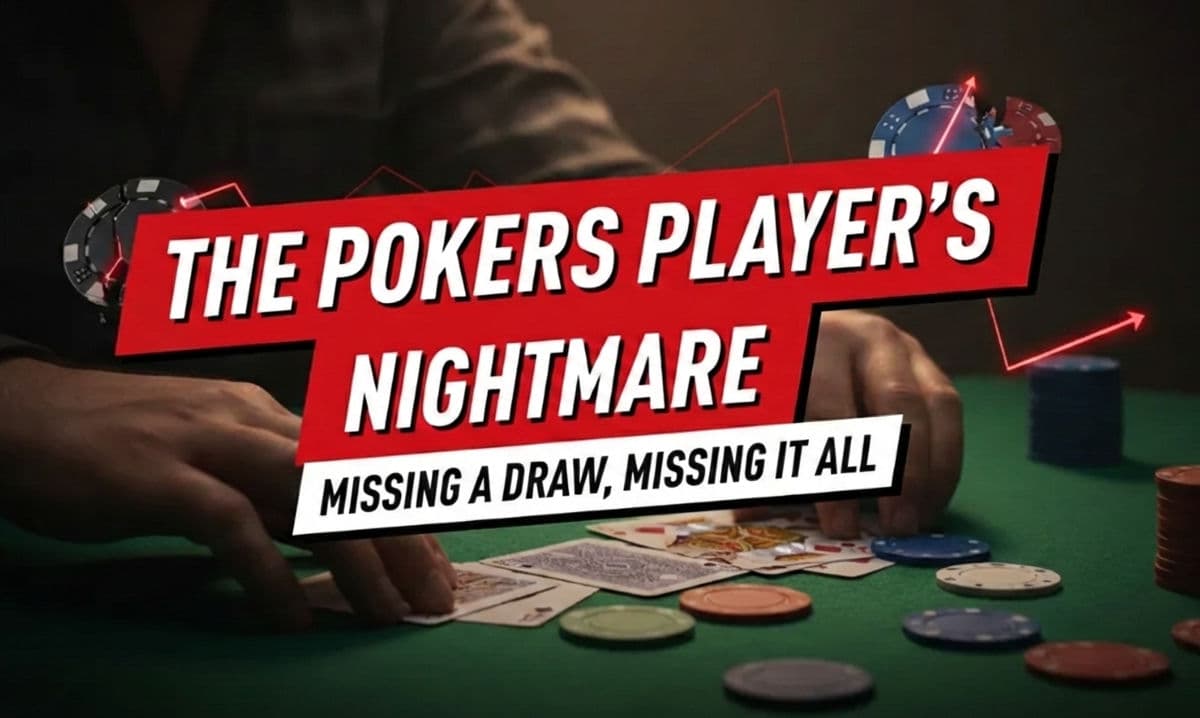
In the world of poker, understanding terminology is crucial for strategic mastery. Among the many terms, miss stands out as a fundamental concept that encapsulates moments of unfulfilled potential, strategic missteps, and the inherent variance of the game. Far more than just a simple failure, a miss can dramatically alter hand dynamics, influence betting patterns, and test a player's mental resilience. This deep dive explores the various facets of "missing" in poker, from failing to complete a promising draw to overlooking critical betting opportunities, providing an expert perspective on how these occurrences shape a winning strategy and the psychological fortitude required to navigate them.
What Exactly Constitutes a Miss in Poker?
The term miss in poker is a ubiquitous descriptor for scenarios where a player's desired outcome, be it completing a hand or capitalizing on a strategic advantage, fails to materialize. It's a concept deeply intertwined with probability, decision-making, and the unpredictable nature of the game. Dissecting its various forms is essential for any player seeking to elevate their understanding and refine their approach to the felt.
In the competitive landscape of online poker , the impact of a miss is often quantified by tracking software, helping players distinguish between a simple lack of luck and a recurring strategic error in their betting patterns.
Missing a Draw: The Odds Against You
Perhaps the most common interpretation of "missing" occurs when a player is actively on a draw - a situation where they hold an incomplete hand with the potential to become very strong with the right community cards. This typically involves a missing draw in poker, such as flush draws (needing one more card of the same suit) or straight draws (needing a specific rank to complete a sequence). When the subsequent community cards, revealed on the turn or river, do not provide the necessary "outs" the player is left with an unfulfilled draw.
Consider a player holding A♠ K♠ on a flop of 7♠ 8♠ 2♥. They have a strong flush draw, needing any spade to complete a formidable hand. If the turn card comes as the J♦ and the river as the 3♣, both cards are irrelevant to their flush draw, meaning they have definitively "missed". Understanding the probability of hitting these draws is paramount. A flush draw on the flop typically has around 35% chance of hitting by the river, while an open-ended straight draw boasts about 31%. These aren't guarantees, and facing repeated misses despite favorable odds is a core part of poker variance, often leading to a poker bad beat when a superior hand ultimately loses.
Missing the Board: When Your Hand Doesn't Connect
Another significant context for miss pertains to the interaction between a player's hole cards and the community cards dealt. Missing the board implies that the cards laid out on the flop, turn, or river do not meaningfully connect with a player's private cards. This is distinct from a drawing situation, as the player might not have been on a clear path to begin with.
For instance, if a player starts with pocket queens (Q Q) and the board unfolds as 2♦ 7♣ T♠ K♥ 3♦, their high pair has been "missed" by the board in the sense that no additional queens appeared, and crucially, an overcard (King) has appeared. Conversely, if a player holds 8♦ 9♦ and the board comes 2♠ 7♣ Q♥, they have "missed the board" entirely, as their cards have no direct connection to form any significant pair or draw.
Missing an Opportunity: Strategic Blind Spots
Less frequently discussed but equally critical, a poker strategy miss can also extend to strategic oversights - failing to capitalize on poker opportunities. This can manifest in several ways:
Missing a Value Bet: A player might have the best hand but checks instead of betting, forfeiting potential chips.
Missing a Bluff Opportunity: A player might have a weak hand in a spot where a well-timed bluff would have won the pot, but they chose to fold.
Missing a Fold: Not recognizing when to fold a hand that is likely beaten, leading to unnecessary losses.
Missing a Read: Failing to correctly interpret an opponent's tells or betting patterns.
These types of misses often stem from a lack of experience or an inability to adapt to game flow. Recognizing and minimizing these strategic "misses" is a hallmark of advanced play.
The Psychological Impact of Consecutive Misses
The inherent poker variance means that "missing" is unavoidable. However, a string of consecutive misses can have a profound impact on the poker mental game:
Frustration and Tilt: Repeated failures can erode patience, leading to impulsive decisions.
Loss of Confidence: Players might start second-guessing their strategy, even when their decisions were statistically sound.
Negative Outlook: A series of misses can create a pessimistic view, making it harder to learn from sessions.
Elite players understand that "missing" is a statistical reality. They practice emotional regulation and focus on long-term equity rather than short-term results.
Adapting Your Strategy When You Constantly Miss
While luck plays a role, a consistent pattern of "missing" often calls for a poker hand analysis and reassessment:
Tightening Up Your Starting Range: Playing a tighter, stronger range pre-flop can reduce the frequency of needing to hit a draw post-flop.
Re-evaluating Implied Odds: Consider the stack sizes and the likelihood of getting paid off if you do hit.
Board Texture Awareness: Pay closer attention to how the board interacts with your potential range and your opponents' likely ranges.
Controlling Pot Size: Try to keep the pot smaller on earlier streets to minimize losses if you miss.
Embracing Variance: Recognize that poker is a game of variance. Focus on making correct decisions, irrespective of immediate outcomes.
Distinguishing Between a Miss and a Bad Play
It's vital to differentiate between a genuine miss (where an unlikely outcome occurred despite correct play) and a bad play. A player who goes all-in pre-flop with 7-2 offsuit and "misses" the board is not experiencing a poker bad beat; they made a bad play. The key is to analyze the decision-making process. Did you have the right odds? Was your hand strong enough to proceed? Answering these questions honestly helps improve your game, rather than blaming bad luck for every miss.
| Pros | Cons |
|---|---|
Understanding what constitutes a "miss" helps players better interpret board textures and opponent actions, allowing for more accurate hand reading and range assessment. | Frequent or critical misses can lead to significant frustration and tilt, potentially causing players to make impulsive and suboptimal decisions that negatively impact their game. |
Knowing the probabilities of hitting draws and how board cards affect hand strength informs better folding, betting, and calling decisions, optimizing long-term equity. | Less experienced players might mistake a statistical "miss" for a lack of skill or bad play, leading to unnecessary self-doubt or incorrect strategic adjustments. |
Recognizing that "missing" is a statistical inevitability helps players manage tilt and maintain emotional composure during downswings, fostering a healthier mental game. | An overly cautious approach due to fear of missing might lead players to fold too often, missing out on profitable opportunities with drawing hands that have positive expected value. |