Casino Term Tank: Understanding Poker's Deep Thinking

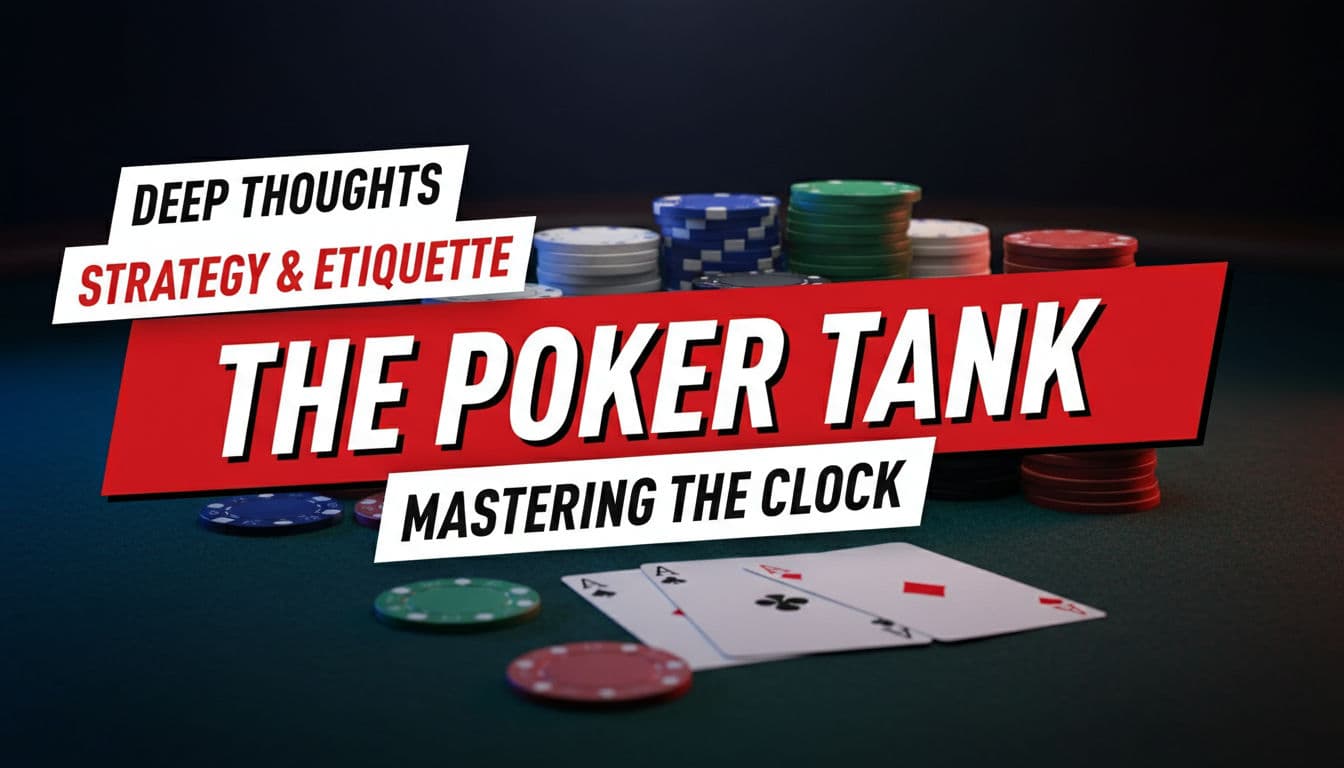
In the high-stakes world of casino games, especially poker, the term 'tank' describes the deliberate act of taking a significant amount of time to make a decision. Far from mere indecisiveness, going 'into the tank' is a complex part of poker strategy, used to analyze difficult hands, balance decision-making time, and even exert psychological pressure on opponents. Understanding when and why a player tanks is crucial to mastering the mental game at the table.
Decoding the Casino Term Tank
When you hear someone mention the casino term tank, they are almost always talking about poker. It describes the moment when a player pauses for an extended period, deep in thought, before making a crucial move such as calling, raising, or folding. This isn't about forgetting whose turn it is; it's a conscious, often strategic, mental process. A player who is tanking is weighing probabilities, considering their opponent's potential hands, and calculating the risks and rewards of their next action.
In the fast-paced world of online poker , this deliberate pause is often accompanied by a clicking "time bank" indicator, signaling to the rest of the virtual table that a game-changing decision is hanging in the balance.
The Psychology Behind Poker Tanking
Why do players go into the tank? The primary reason is legitimate and strategic: the decision is genuinely difficult. With a large pot on the line, a player needs to process a lot of information: the betting history of the hand, their opponent's tendencies, their own hand strength, and the pot odds. Rushing such a decision can be a costly mistake.
However, there are other psychological dimensions to poker tanking:
Balancing Decision Times: Skilled players often vary their decision times. If a player only tanks on tough decisions and acts quickly on easy ones, they give away information. By occasionally tanking with a very strong or very weak hand, they can disguise the true strength of their holding.
Inducing Tilt: Deliberately slowing down the game can frustrate opponents. An irritated player is more likely to make poor decisions, a state known as being 'on tilt'. While often frowned upon, some players use tanking as a tool to gain a psychological edge.
Projecting an Image: Tanking can be a form of acting. A player might tank before making a big bluff to make it seem like a tough, reluctant decision. Conversely, they might tank with an unbeatable hand (the 'nuts') to feign weakness and induce a call from an opponent.
Strategic Implications and Table Etiquette
Using the tank effectively is a skill, but overusing it is a breach of table etiquette. The flow of the game is important, and consistently taking several minutes per decision will annoy everyone, from the recreational players to the dealer. This is where the concept of the 'clock' comes in.
In most tournament and cash game settings, if a player is tanking for too long, another player can 'call the clock' on them. This initiates a countdown, usually 30 to 60 seconds, at the end of which the player's hand is declared dead if they haven't acted.
Understanding what does tank mean in poker is also about knowing how to react to it. When an opponent tanks, use that time to your advantage. Re-evaluate the hand from their perspective. What could they be holding? What story has the betting told so far? Their lengthy pause is giving you free time to analyze the situation more deeply, which can help you in your own poker decision making process.
Tanking vs. Slow Playing
It's important not to confuse tanking with slow playing. While they can overlap, they are distinct concepts.
Tanking refers to the time taken to make a decision.
Slow Playing refers to playing a very strong hand passively (by checking or calling) to deceive opponents and keep them in the pot.
A player could slow play their hand by making a quick call, or they could tank for a minute before deciding to slow play. The two are related parts of poker strategy but address different aspects of the game.
Conclusion: The Tank as a Tool
The casino term tank is a fundamental concept in modern poker. It represents the deep, analytical side of the game, where a single decision can swing a player's fortune. While it's a legitimate tool for complex situations and psychological maneuvering, it must be used judiciously. Respect for the game and for other players' time is paramount. Mastering when to think and when to act is a hallmark of a truly skilled poker player.
| Pros | Cons |
|---|---|
Taking extra time allows for a more thorough analysis of complex situations, leading to fewer mistakes and better long-term results. | Excessive tanking significantly slows the game, reducing the number of hands played per hour and annoying other players. |
Strategic tanking can be used to disguise hand strength, balance decision times, or even frustrate opponents into making errors. | Consistently taking a long time can label you as a slow or inconsiderate player, which can hurt the game's social dynamic. |
While you're thinking, you can observe opponents for tells or reactions, potentially gaining valuable information before you act. | In a tournament or formal cash game, an opponent can 'call the clock,' forcing you to make a rushed decision under a time limit. |
Related Casino Terms
Best Online Casinos

Vave
4.6Welcome Bonus150% up to 1.5 BTCCashback BonusVariable- Welcome Bonus
- 150% up to 1.5 BTC
- FTD Bonus
- 150% up to 1.5 BTC
- Cashback Bonus
- Variable
- Extra Bonus
- Free Spins
- Platforms


- Browser Support
- Yes
- Mobile Support
- No
- Crypto Support
- Yes
- License
- Republic of Costa Rica
Game types
 No Blackjack
 Baccarat
 No Bingo
 No Craps & dice
 Crash games
 eSports betting
 Jackpot games
 No Keno
 Live games
 Roulette
 No Scratch cards
 Slots
Slots Sports betting
 No Video poker
Payment methods


LTC Casino
4.4Welcome Bonus250% First Deposit Bonus up to $750Cashback BonusNo Cashback- Welcome Bonus
- 250% First Deposit Bonus up to $750
- FTD Bonus
- 250% up to $750
- Cashback Bonus
- No Cashback
- Platforms
- Browser Support
- Yes
- Mobile Support
- No
- Crypto Support
- Yes
- License
- No License
Game types
BlackjackBaccaratNo BingoNo Craps & diceCrash gamesNo eSports bettingJackpot gamesNo KenoLive gamesRouletteNo Scratch cardsSlotsNo Sports bettingNo Video pokerPayment methods


Jack
4.6Welcome Bonus100 Free Spins + Risk-Free Sports BetCashback BonusUp to 30%- Welcome Bonus
- 100 Free Spins + Risk-Free Sports Bet
- Cashback Bonus
- Up to 30%
- Extra Bonus
- 100 Free Spins
- Platforms
- Browser Support
- Yes
- Mobile Support
- No
- Crypto Support
- Yes
- License
- Curaçao Gaming Control Board
Game types
BlackjackBaccaratNo BingoNo Craps & diceCrash gameseSports bettingJackpot gamesNo KenoLive gamesRouletteScratch cardsSlotsSports bettingNo Video pokerPayment methods


Duel
4.2Welcome Bonus50% Instant RakebackCashback BonusFix 50%- Welcome Bonus
- 50% Instant Rakeback
- Cashback Bonus
- Fix 50%
- Extra Bonus
- 100% RTP Games
- Platforms
- Browser Support
- Yes
- Mobile Support
- No
- Crypto Support
- Yes
- License
- License No. ALSI-202411026-FI1.
Game types
No BlackjackBaccaratBingoCraps & diceCrash gameseSports bettingJackpot gamesNo KenoLive gamesRouletteNo Scratch cardsSlotsSports bettingVideo pokerPayment methods

Stake US
4.6Welcome BonusFree 25 SC + 250K Gold Coins- Welcome Bonus
- Free 25 SC + 250K Gold Coins
- Extra Bonus
- 1 Stake Cash + 10,000 Gold Coins Free - Every Day
- Platforms
- Browser Support
- Yes
- Mobile Support
- No
- Crypto Support
- Yes
- License
- Sweepstakes (US Federal Law)
Game types
BlackjackBaccaratNo BingoCraps & diceCrash gamesNo eSports bettingNo Jackpot gamesNo KenoLive gamesRouletteScratch cardsSlotsNo Sports bettingNo Video pokerPayment methods

Shuffle US
4.7Welcome BonusFree 1 Shuffle Coin + 25,000 GC- Welcome Bonus
- Free 1 Shuffle Coin + 25,000 GC
- Extra Bonus
- Daily Log in Bonus
- Platforms
- Browser Support
- Yes
- Mobile Support
- No
- Crypto Support
- Yes
- License
- Sweepstakes Model — Munyon Canyon Ltd (BVI)
Game types
BlackjackBaccaratNo BingoNo Craps & diceCrash gamesNo eSports bettingNo Jackpot gamesNo KenoLive gamesRouletteNo Scratch cardsSlotsNo Sports bettingNo Video pokerPayment methods