Chasing Losses in Gambling: Why You Should Stop Now

What is Chasing Losses?
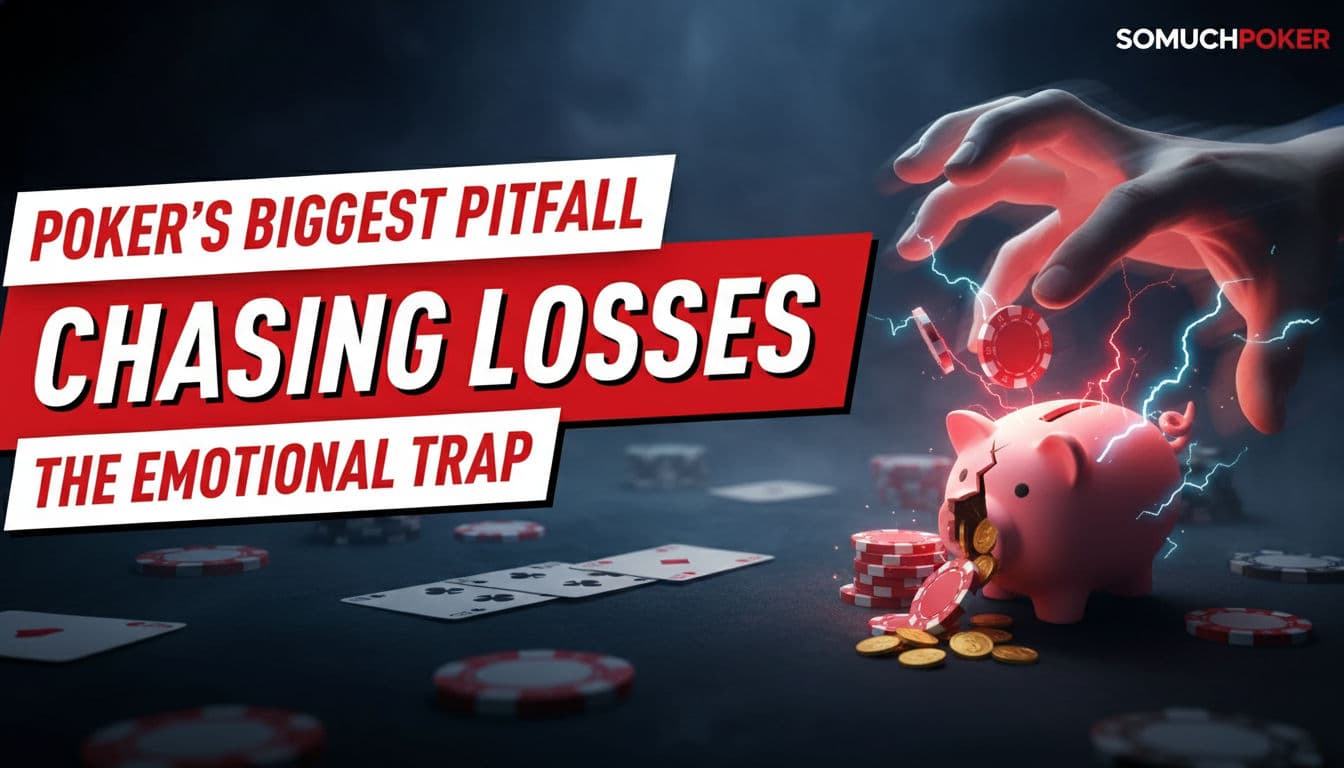
In the world of gambling, chasing losses is the common but perilous practice of trying to win back money you've already lost by making increasingly large or riskier bets. It's an emotional reaction that abandons strategy in favor of desperation, often leading to even more significant financial damage. Understanding the psychology behind this behavior is the first step toward implementing disciplined bankroll management and practicing responsible gambling.
Understanding the Concept of Chasing Losses
The term chasing losses describes a specific behavior in which a player, after losing a significant amount of money, deviates from their original strategy. Instead of accepting the loss and walking away, they continue to gamble, often increasing their stakes, in a frantic attempt at recouping their losses. This behavior transforms gambling from a form of entertainment into a desperate mission to break even. For example, a player who loses their $200 budget might then withdraw another $400, believing a few large bets can fix the situation. This is a classic loss chase and a primary pitfall for inexperienced and emotional players.
To prevent this downward spiral, any responsible online casino now offers sophisticated player protection tools that allow you to set pre-defined deposit and loss limits before you even start your session. By locking in these boundaries in advance, the software effectively acts as a rational partner, automatically stepping in to stop the action if your losses reach a certain threshold, thereby preventing you from chasing losses in the heat of the moment.
The Psychology Behind the Chase
Why do players fall into this trap? The drive behind chasing losses is rooted in powerful cognitive biases and emotional responses that override logical thinking.
Loss Aversion
Psychologically, the pain of losing is felt roughly twice as intensely as the pleasure of winning an equivalent amount. This principle, known as loss aversion, creates a powerful urge to eliminate a loss to return to a neutral state. Players aren't necessarily trying to win big; they are often just trying to undo the negative feeling of being down. This desperation makes recouping losses feel like a necessity rather than a possibility.
The Gambler's Fallacy
This is the mistaken belief that past events influence future independent outcomes. A player might believe that after a string of losses, a win is 'due'. They might think, 'I've lost five hands in a row, so the next one has to be a winner'. In reality, each spin of the roulette wheel or hand of blackjack is a statistically independent event. The game has no memory, and your odds of winning remain the same regardless of previous results. Believing a win is imminent fuels the decision to keep betting.
Why Chasing Your Losses Almost Never Works
Despite the intense urge to continue, the math and structure of casino games make chasing losses an ineffective strategy. Continuing to play while in an emotional state almost guarantees further financial detriment.
"The casino's mathematical edge is constant. It doesn't care if you're winning or losing. Chasing is betting with your heart, not your head, and the house always preys on emotional gambling."
The Unchanging House Edge
Every casino game has a built-in house edge, a small percentage advantage that ensures the casino is profitable over the long term. When you're chasing losses, you are simply exposing more of your money to this house edge for a longer period. The more you bet, the more the mathematical advantage of the casino works against you, making it statistically more likely that you will lose more, not less.
Escalating Risk and Poor Decisions
Chasing often involves abandoning sound bankroll management. A player might double or triple their usual bet size, hoping one large win will solve everything. This high-risk approach drastically increases volatility. While a lucky win can happen, it's far more probable that these oversized bets will deplete the player's remaining funds at an alarming rate. This cycle of emotional gambling is a core reason why learning to stop chasing losses gambling is critical for long-term success.
Practical Strategies to Avoid the Chase
The key to avoiding this dangerous cycle is discipline and preparation. By setting clear rules for yourself before you even place a bet, you can protect yourself from making emotional decisions in the heat of the moment.
1. Strict Bankroll Management
This is your number one defense. Before you play, decide on a fixed amount of money you are prepared to lose (a 'stop-loss'). If you lose that amount, your session is over. No exceptions. This prevents a small loss from turning into a catastrophic one.
2. Set Win Goals and Time Limits
Just as you have a limit for losses, have a realistic goal for wins. If you hit it, consider cashing out. Additionally, set a time limit for your gambling session. Playing for too long leads to mental fatigue, which in turn leads to poor judgment.
3. Recognize Your Emotional Triggers
Pay attention to how you feel. If you start feeling frustrated, angry, or desperate, it is a clear sign to step away from the table immediately. Take a walk, get some fresh air, and do not return until you have a clear head.
Disciplined vs. Chase Gambler Comparison
Aspect | Disciplined Gambler | Chase Gambler |
|---|---|---|
Mindset | Entertainment, calculated risk | Desperation, must win back money |
Strategy | Follows a set strategy and bet size | Abandons strategy for high-risk bets |
Bankroll | Sticks to a strict stop-loss limit | Ignores limits, withdraws more money |
Outcome | Accepts losses as part of the game | Often results in much larger losses |
Ultimately, embracing responsible gambling practices is the only way to ensure a safe and enjoyable experience. Acknowledging that losses are a part of the game and having a plan to manage them is what separates successful players from those who fall into the destructive cycle of the casino chase.
| Pros | Cons |
|---|---|
Chasing losses almost always leads to losing more money, often at a much faster rate, as players make larger and riskier bets. | |
It replaces logical strategy with decisions based on panic, frustration, and desperation, which are never conducive to successful gambling. | |
This behavior turns what should be an enjoyable activity into a stressful, high-pressure situation that can negatively impact mental health. | |
Consistently chasing losses is a significant red flag and a common behavior pattern in the development of a gambling addiction. |
Related Casino Terms
Best Online Casinos

Vave
4.6Welcome Bonus150% up to 1.5 BTCCashback BonusVariable- Welcome Bonus
- 150% up to 1.5 BTC
- FTD Bonus
- 150% up to 1.5 BTC
- Cashback Bonus
- Variable
- Extra Bonus
- Free Spins
- Platforms


- Browser Support
- Yes
- Mobile Support
- No
- Crypto Support
- Yes
- License
- Republic of Costa Rica
Game types
 No Blackjack
 Baccarat
 No Bingo
 No Craps & dice
 Crash games
 eSports betting
 Jackpot games
 No Keno
 Live games
 Roulette
 No Scratch cards
 Slots
Slots Sports betting
 No Video poker
Payment methods


LTC Casino
4.4Welcome Bonus250% First Deposit Bonus up to $750Cashback BonusNo Cashback- Welcome Bonus
- 250% First Deposit Bonus up to $750
- FTD Bonus
- 250% up to $750
- Cashback Bonus
- No Cashback
- Platforms
- Browser Support
- Yes
- Mobile Support
- No
- Crypto Support
- Yes
- License
- No License
Game types
BlackjackBaccaratNo BingoNo Craps & diceCrash gamesNo eSports bettingJackpot gamesNo KenoLive gamesRouletteNo Scratch cardsSlotsNo Sports bettingNo Video pokerPayment methods


Jack
4.6Welcome Bonus100 Free Spins + Risk-Free Sports BetCashback BonusUp to 30%- Welcome Bonus
- 100 Free Spins + Risk-Free Sports Bet
- Cashback Bonus
- Up to 30%
- Extra Bonus
- 100 Free Spins
- Platforms
- Browser Support
- Yes
- Mobile Support
- No
- Crypto Support
- Yes
- License
- Curaçao Gaming Control Board
Game types
BlackjackBaccaratNo BingoNo Craps & diceCrash gameseSports bettingJackpot gamesNo KenoLive gamesRouletteScratch cardsSlotsSports bettingNo Video pokerPayment methods


Duel
4.2Welcome Bonus50% Instant RakebackCashback BonusFix 50%- Welcome Bonus
- 50% Instant Rakeback
- Cashback Bonus
- Fix 50%
- Extra Bonus
- 100% RTP Games
- Platforms
- Browser Support
- Yes
- Mobile Support
- No
- Crypto Support
- Yes
- License
- License No. ALSI-202411026-FI1.
Game types
No BlackjackBaccaratBingoCraps & diceCrash gameseSports bettingJackpot gamesNo KenoLive gamesRouletteNo Scratch cardsSlotsSports bettingVideo pokerPayment methods

Stake US
4.6Welcome BonusFree 25 SC + 250K Gold Coins- Welcome Bonus
- Free 25 SC + 250K Gold Coins
- Extra Bonus
- 1 Stake Cash + 10,000 Gold Coins Free - Every Day
- Platforms
- Browser Support
- Yes
- Mobile Support
- No
- Crypto Support
- Yes
- License
- Sweepstakes (US Federal Law)
Game types
BlackjackBaccaratNo BingoCraps & diceCrash gamesNo eSports bettingNo Jackpot gamesNo KenoLive gamesRouletteScratch cardsSlotsNo Sports bettingNo Video pokerPayment methods

Shuffle US
4.7Welcome BonusFree 1 Shuffle Coin + 25,000 GC- Welcome Bonus
- Free 1 Shuffle Coin + 25,000 GC
- Extra Bonus
- Daily Log in Bonus
- Platforms
- Browser Support
- Yes
- Mobile Support
- No
- Crypto Support
- Yes
- License
- Sweepstakes Model — Munyon Canyon Ltd (BVI)
Game types
BlackjackBaccaratNo BingoNo Craps & diceCrash gamesNo eSports bettingNo Jackpot gamesNo KenoLive gamesRouletteNo Scratch cardsSlotsNo Sports bettingNo Video pokerPayment methods