Blackjack Surrender Rule Explained | Know When to Fold

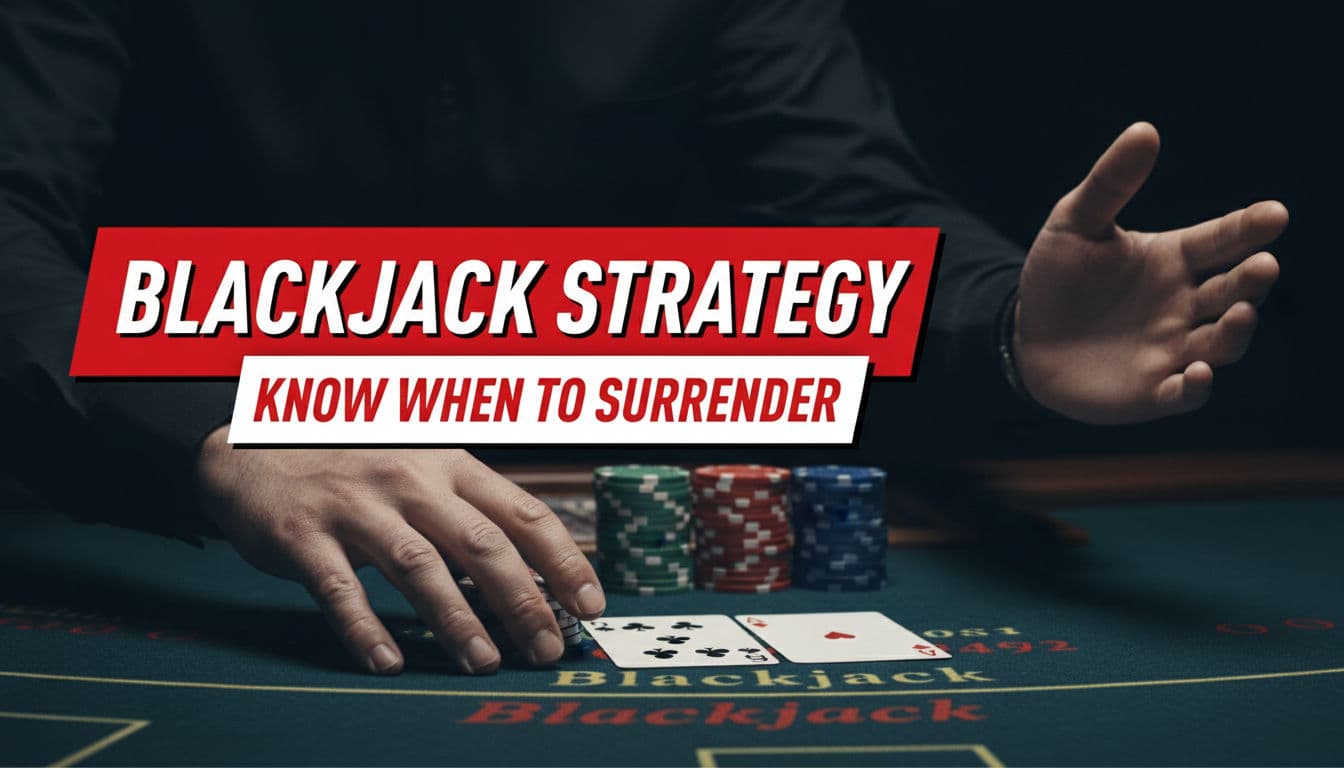
In the world of blackjack, knowing when to hit, stand, or double down is crucial. However, there's another powerful, often overlooked move: the blackjack surrender rule. This option lets you fold your hand after the initial deal and get half of your stake back, providing a strategic escape from a likely loss.
What is the Blackjack Surrender Rule?
The blackjack surrender rule is a player-friendly option available in some variations of the game. It gives you the chance to give up your hand immediately after the initial two cards are dealt, but before you take any other actions like hitting or standing. When you surrender, you forfeit the round but instantly receive 50% of your original bet back. This move is designed to cut your losses when you're dealt a particularly poor hand against a strong dealer upcard.
To fully grasp the strategic depth of the game, players often ask, what is surrender in blackjack in order to identify the specific scenarios where folding early is mathematically superior to playing the hand out. Think of it as a tactical retreat. Instead of playing out a hand with a very low probability of winning and losing your entire wager, you choose to save half of it. For example, if you bet $20 and are dealt a hard 16 against a dealer's 10, the odds are heavily stacked against you. By using the surrender option, you lose $10 instead of the likely full $20.
Early Surrender vs. Late Surrender
It's vital to understand that not all surrender options are the same. The rule comes in two distinct forms, with one being far more beneficial to the player.
Early Surrender
Early surrender allows a player to forfeit their hand before the dealer checks their hole card for a blackjack. This is an incredibly powerful rule because it lets you escape even if the dealer ends up having a natural 21. If you have a bad hand (like a 15 or 16) and the dealer is showing an Ace, you can surrender and save half your bet, regardless of the dealer's second card. Because it reduces the house edge by approximately 0.63%, early surrender is extremely rare and almost never found in modern casinos.
Late Surrender
Late surrender is the more common version of the rule. With this option, you can only surrender your hand after the dealer has checked for blackjack and confirmed they do not have one. If the dealer has a blackjack, the surrender option is no longer available, and you lose your entire bet automatically. While not as powerful as early surrender, the late surrender rule still benefits the player, reducing the house edge by about 0.07% when used correctly.
When Should You Surrender in Blackjack?
Knowing when to surrender in blackjack is a key part of basic strategy. It's not a move to be used randomly or based on a gut feeling; it is a calculated decision based on mathematical probabilities. Surrendering incorrectly can be more costly than playing out a bad hand. The core idea is to surrender only when your chance of winning is less than 25%.
Here is a simple guide for when to use the late surrender option in a multi-deck game:
Your Hand | Dealer's Upcard | Action |
|---|---|---|
Hard 16 | 9, 10, or Ace | Surrender |
Hard 15 | 10 | Surrender |
Important Note: This surrender blackjack strategy applies to a hard 16, which is a hand like 10-6 or 9-7. It does not apply to a pair of 8s, which you should always split.
Using the surrender rule correctly is the mark of a disciplined player. It’s not about giving up; it's about making the smart financial decision to minimize variance and protect your bankroll over the long run.
Why Isn't Surrender Always an Option?
Casinos are in the business of maintaining a mathematical advantage, known as the house edge. The blackjack surrender rule, even the more common late version, slightly chips away at that edge. By giving players a tool to mitigate losses in the worst-case scenarios, the casino's overall profit margin is reduced. Understanding when to use this move is a key component of blackjack basic strategy, as it allows players to mathematically minimize the house advantage over the long run.
For this reason, many casinos choose not to offer it. You'll often find it at tables with higher minimums or in more competitive casino markets where establishments need to offer better rules to attract knowledgeable players. Always check the felt or ask the dealer if surrender is allowed before you start playing.
| Pros | Cons |
|---|---|
The primary benefit of the surrender rule is that it allows you to save half of your bet on hands that have a very high probability of losing. | Many casinos do not offer the surrender option, so you cannot rely on it being part of every blackjack game you play. |
When used correctly as part of a basic strategy, the surrender option slightly reduces the house edge, improving your long-term odds. | Players who don't understand the correct strategy might surrender hands they could have won, needlessly forfeiting part of their bet. |
For tough hands like a hard 16, the surrender rule provides a clear, mathematically optimal play, removing guesswork. |
Related Casino Terms
Best Online Casinos

Vave
4.6Welcome Bonus150% up to 1.5 BTCCashback BonusVariable- Welcome Bonus
- 150% up to 1.5 BTC
- FTD Bonus
- 150% up to 1.5 BTC
- Cashback Bonus
- Variable
- Extra Bonus
- Free Spins
- Platforms


- Browser Support
- Yes
- Mobile Support
- No
- Crypto Support
- Yes
- License
- Republic of Costa Rica
Game types
 No Blackjack
 Baccarat
 No Bingo
 No Craps & dice
 Crash games
 eSports betting
 Jackpot games
 No Keno
 Live games
 Roulette
 No Scratch cards
 Slots
Slots Sports betting
 No Video poker
Payment methods


LTC Casino
4.4Welcome Bonus250% First Deposit Bonus up to $750Cashback BonusNo Cashback- Welcome Bonus
- 250% First Deposit Bonus up to $750
- FTD Bonus
- 250% up to $750
- Cashback Bonus
- No Cashback
- Platforms
- Browser Support
- Yes
- Mobile Support
- No
- Crypto Support
- Yes
- License
- No License
Game types
BlackjackBaccaratNo BingoNo Craps & diceCrash gamesNo eSports bettingJackpot gamesNo KenoLive gamesRouletteNo Scratch cardsSlotsNo Sports bettingNo Video pokerPayment methods


Jack
4.6Welcome Bonus100 Free Spins + Risk-Free Sports BetCashback BonusUp to 30%- Welcome Bonus
- 100 Free Spins + Risk-Free Sports Bet
- Cashback Bonus
- Up to 30%
- Extra Bonus
- 100 Free Spins
- Platforms
- Browser Support
- Yes
- Mobile Support
- No
- Crypto Support
- Yes
- License
- Curaçao Gaming Control Board
Game types
BlackjackBaccaratNo BingoNo Craps & diceCrash gameseSports bettingJackpot gamesNo KenoLive gamesRouletteScratch cardsSlotsSports bettingNo Video pokerPayment methods


Duel
4.2Welcome Bonus50% Instant RakebackCashback BonusFix 50%- Welcome Bonus
- 50% Instant Rakeback
- Cashback Bonus
- Fix 50%
- Extra Bonus
- 100% RTP Games
- Platforms
- Browser Support
- Yes
- Mobile Support
- No
- Crypto Support
- Yes
- License
- License No. ALSI-202411026-FI1.
Game types
No BlackjackBaccaratBingoCraps & diceCrash gameseSports bettingJackpot gamesNo KenoLive gamesRouletteNo Scratch cardsSlotsSports bettingVideo pokerPayment methods

Stake US
4.6Welcome BonusFree 25 SC + 250K Gold Coins- Welcome Bonus
- Free 25 SC + 250K Gold Coins
- Extra Bonus
- 1 Stake Cash + 10,000 Gold Coins Free - Every Day
- Platforms
- Browser Support
- Yes
- Mobile Support
- No
- Crypto Support
- Yes
- License
- Sweepstakes (US Federal Law)
Game types
BlackjackBaccaratNo BingoCraps & diceCrash gamesNo eSports bettingNo Jackpot gamesNo KenoLive gamesRouletteScratch cardsSlotsNo Sports bettingNo Video pokerPayment methods

Shuffle US
4.7Welcome BonusFree 1 Shuffle Coin + 25,000 GC- Welcome Bonus
- Free 1 Shuffle Coin + 25,000 GC
- Extra Bonus
- Daily Log in Bonus
- Platforms
- Browser Support
- Yes
- Mobile Support
- No
- Crypto Support
- Yes
- License
- Sweepstakes Model — Munyon Canyon Ltd (BVI)
Game types
BlackjackBaccaratNo BingoNo Craps & diceCrash gamesNo eSports bettingNo Jackpot gamesNo KenoLive gamesRouletteNo Scratch cardsSlotsNo Sports bettingNo Video pokerPayment methods