Double Down Blackjack: Rules, Odds, and When to Do It

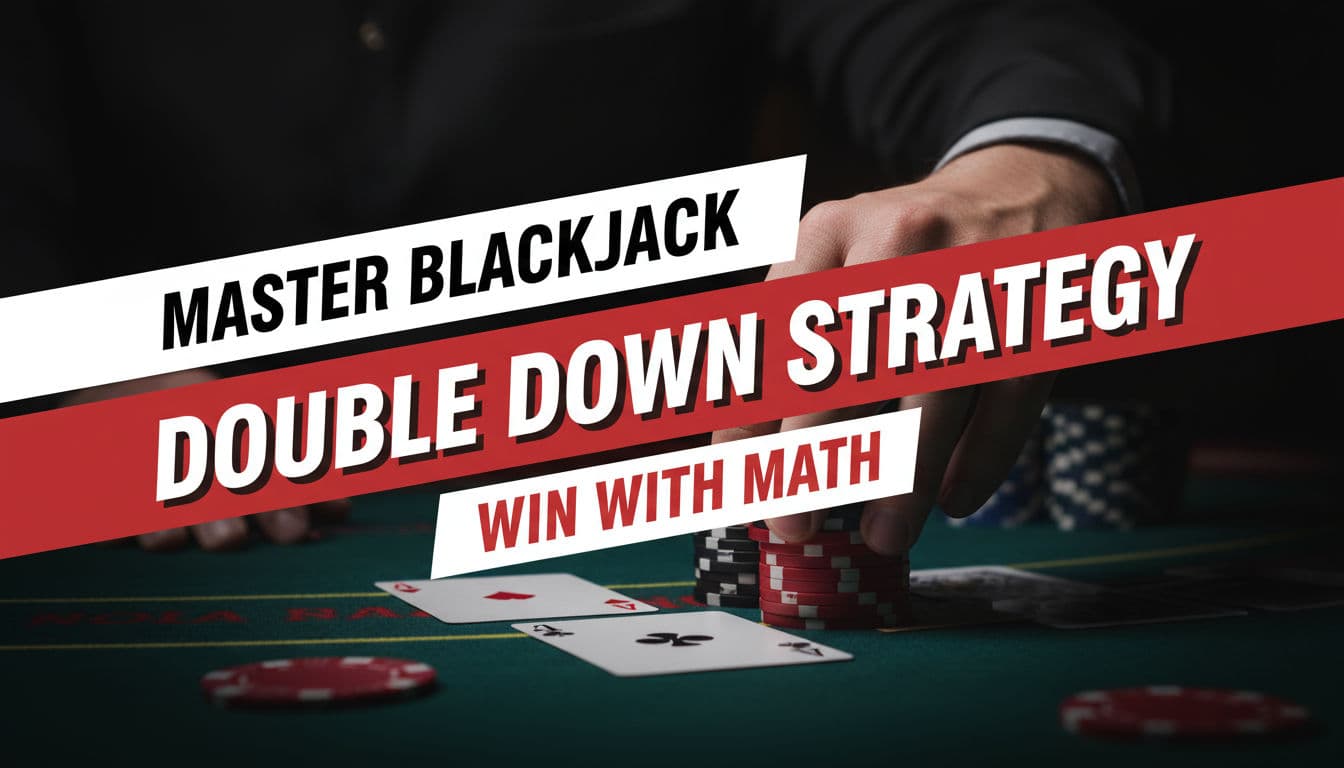
The double down is a high-risk, high-reward move in blackjack where you double your initial wager in exchange for receiving exactly one more card. Executed at the right moment, this strategic play can significantly boost your winnings by capitalizing on a strong starting hand against a weak dealer position. Understanding when and how to do it is fundamental to solid blackjack strategy.
What is the Double Down Blackjack Term?
The double down blackjack strategy is one of the most exciting and potentially profitable moves available to a player. In simple terms, it's an option to double your initial bet after you've received your first two cards. The catch is that once you double down, you are committed to receiving only one additional card, and then you must stand, regardless of your new total.
This move is a calculated risk. You are wagering more money because you believe your hand has a strong probability of beating the dealer's hand with just one more card. Correctly using double down is a cornerstone of basic blackjack strategy and can significantly reduce the house edge.
How the Double Down Blackjack Strategy Works at the Table
Making the move is straightforward, whether you're playing online or in a physical casino.
Place Your Initial Bet: Start the hand as you normally would.
Receive Your Cards: The dealer gives you your first two cards face up.
Assess Your Hand: Evaluate your two-card total against the dealer's visible upcard.
Signal Your Intent: To double down, place a second wager equal to your first bet next to your original chips. In many land-based casinos, you can also signal by holding up one finger. The dealer will understand your intention.
Receive Your Final Card: The dealer will give you one more card, usually dealt sideways to indicate you cannot hit again. Your turn is then over.
The Optimal Strategy: When to Double Down
Knowing when to double down separates novice players from strategic ones. The decision is based purely on mathematical probability. You should only double down when you are in a statistically advantageous position. Here are the universally accepted scenarios based on basic strategy.
Hard Totals (Hands without an Ace)
A 'hard' hand is one that does not contain an Ace, or if it does, the Ace must count as 1. These are the prime opportunities for a double down.
When you have a hard 11: You should always double down on 11, unless the dealer is showing an Ace. Your chances of getting a 10-value card are high, giving you a 21.
When you have a hard 10: Double down if the dealer's upcard is anything from 2 through 9. If the dealer shows a 10 or an Ace, just hit instead.
When you have a hard 9: Double down only when the dealer's upcard is weak, specifically a 3, 4, 5, or 6.
Soft Totals (Hands with an Ace)
A 'soft' hand contains an Ace that can be counted as 11 without busting. These situations also present doubling opportunities, as you can't bust with one more card.
"Doubling on soft hands is a more advanced play, but it's crucial for minimizing the house edge. You're taking advantage of the dealer's weakest positions." - Casino Game Analyst
Your Hand | Dealer's Upcard | Action |
|---|---|---|
Ace & 2, Ace & 3 (Soft 13/14) | 5 or 6 | Double Down |
Ace & 4, Ace & 5 (Soft 15/16) | 4, 5, or 6 | Double Down |
Ace & 6, Ace & 7 (Soft 17/18) | 3, 4, 5, or 6 | Double Down |
When You Should Never Double Down
Just as important as knowing when to make the move is knowing when to avoid it. Never double down if your total is 12 or higher. The risk of receiving a high card and busting is far too great. Additionally, never double down when the dealer is showing an Ace. Their odds of getting blackjack or a strong hand are too high to justify the increased risk.
Important Rule Variations
While the strategy above is standard, casino rules can differ. Some tables may only allow you to double down on specific totals, like 10 and 11. Another common variation is whether you are allowed to 'Double After Split' (DAS). If a casino allows DAS, it means that after splitting a pair, you can double down on one or both of your new hands. This is a player-friendly rule that you should take advantage of when the situation is right.
| Pros | Cons |
|---|---|
The most significant advantage is the ability to double your profit from a single hand when you have a statistical edge over the dealer. | You are putting double the money at risk. If you receive a low card and the dealer makes a strong hand, you lose twice your original bet. |
Properly using the double down is a key part of basic strategy that reduces the casino's house edge over the long term. | You forfeit the ability to hit again. If you double on 11 and receive a 2, you are stuck with a weak total of 13. |
Related Casino Terms
Best Online Casinos

Vave
4.6Welcome Bonus150% up to 1.5 BTCCashback BonusVariable- Welcome Bonus
- 150% up to 1.5 BTC
- FTD Bonus
- 150% up to 1.5 BTC
- Cashback Bonus
- Variable
- Extra Bonus
- Free Spins
- Platforms


- Browser Support
- Yes
- Mobile Support
- No
- Crypto Support
- Yes
- License
- Republic of Costa Rica
Game types
 No Blackjack
 Baccarat
 No Bingo
 No Craps & dice
 Crash games
 eSports betting
 Jackpot games
 No Keno
 Live games
 Roulette
 No Scratch cards
 Slots
Slots Sports betting
 No Video poker
Payment methods


LTC Casino
4.4Welcome Bonus250% First Deposit Bonus up to $750Cashback BonusNo Cashback- Welcome Bonus
- 250% First Deposit Bonus up to $750
- FTD Bonus
- 250% up to $750
- Cashback Bonus
- No Cashback
- Platforms
- Browser Support
- Yes
- Mobile Support
- No
- Crypto Support
- Yes
- License
- No License
Game types
BlackjackBaccaratNo BingoNo Craps & diceCrash gamesNo eSports bettingJackpot gamesNo KenoLive gamesRouletteNo Scratch cardsSlotsNo Sports bettingNo Video pokerPayment methods


Jack
4.6Welcome Bonus100 Free Spins + Risk-Free Sports BetCashback BonusUp to 30%- Welcome Bonus
- 100 Free Spins + Risk-Free Sports Bet
- Cashback Bonus
- Up to 30%
- Extra Bonus
- 100 Free Spins
- Platforms
- Browser Support
- Yes
- Mobile Support
- No
- Crypto Support
- Yes
- License
- Curaçao Gaming Control Board
Game types
BlackjackBaccaratNo BingoNo Craps & diceCrash gameseSports bettingJackpot gamesNo KenoLive gamesRouletteScratch cardsSlotsSports bettingNo Video pokerPayment methods


Duel
4.2Welcome Bonus50% Instant RakebackCashback BonusFix 50%- Welcome Bonus
- 50% Instant Rakeback
- Cashback Bonus
- Fix 50%
- Extra Bonus
- 100% RTP Games
- Platforms
- Browser Support
- Yes
- Mobile Support
- No
- Crypto Support
- Yes
- License
- License No. ALSI-202411026-FI1.
Game types
No BlackjackBaccaratBingoCraps & diceCrash gameseSports bettingJackpot gamesNo KenoLive gamesRouletteNo Scratch cardsSlotsSports bettingVideo pokerPayment methods

Stake US
4.6Welcome BonusFree 25 SC + 250K Gold Coins- Welcome Bonus
- Free 25 SC + 250K Gold Coins
- Extra Bonus
- 1 Stake Cash + 10,000 Gold Coins Free - Every Day
- Platforms
- Browser Support
- Yes
- Mobile Support
- No
- Crypto Support
- Yes
- License
- Sweepstakes (US Federal Law)
Game types
BlackjackBaccaratNo BingoCraps & diceCrash gamesNo eSports bettingNo Jackpot gamesNo KenoLive gamesRouletteScratch cardsSlotsNo Sports bettingNo Video pokerPayment methods

Shuffle US
4.7Welcome BonusFree 1 Shuffle Coin + 25,000 GC- Welcome Bonus
- Free 1 Shuffle Coin + 25,000 GC
- Extra Bonus
- Daily Log in Bonus
- Platforms
- Browser Support
- Yes
- Mobile Support
- No
- Crypto Support
- Yes
- License
- Sweepstakes Model — Munyon Canyon Ltd (BVI)
Game types
BlackjackBaccaratNo BingoNo Craps & diceCrash gamesNo eSports bettingNo Jackpot gamesNo KenoLive gamesRouletteNo Scratch cardsSlotsNo Sports bettingNo Video pokerPayment methods