Soft Hand in Blackjack: Strategy & Meaning Explained

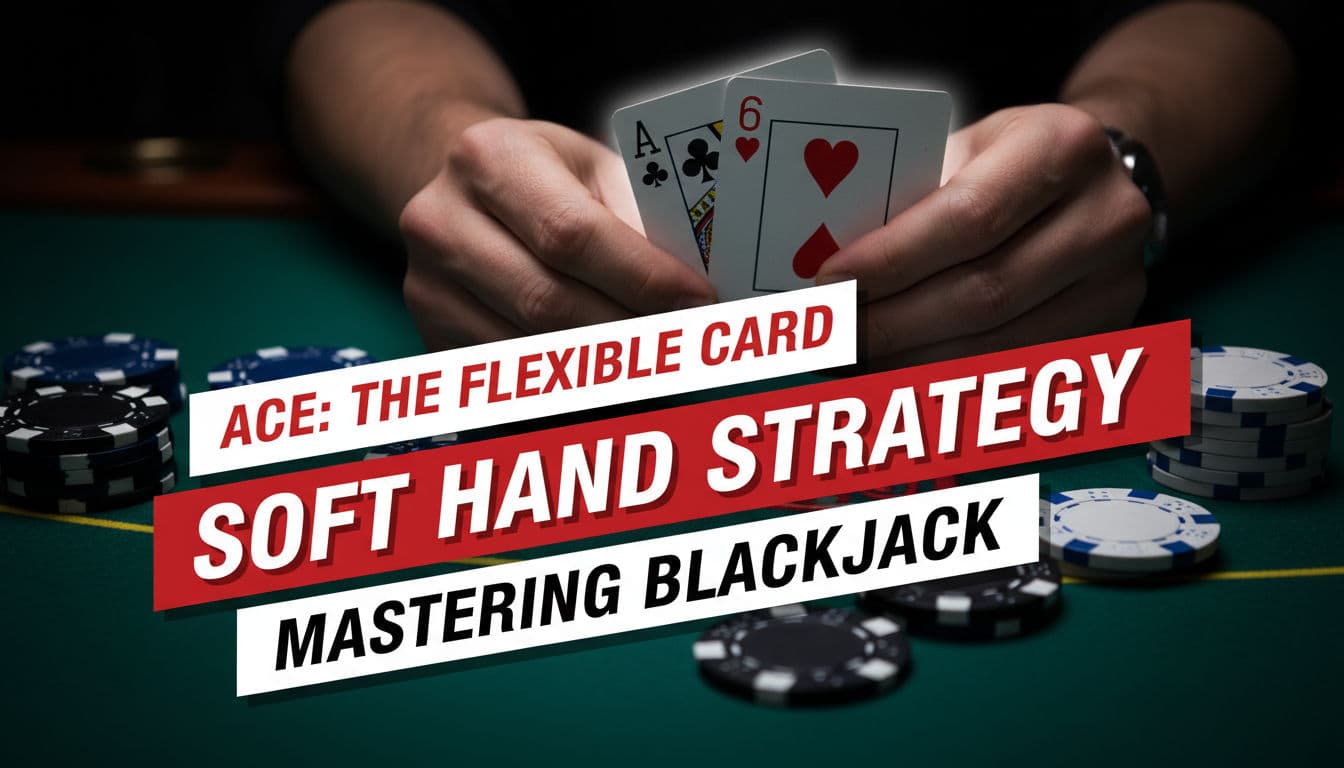
In blackjack, a soft hand is any hand containing an Ace that is counted as 11. This provides a major strategic advantage, as you can draw another card with zero risk of going over 21. Understanding how to play a soft hand is a fundamental part of effective blackjack strategy, separating novice players from seasoned pros.
Understanding the Core Concept: What is a Soft Hand?
If you're looking to improve your blackjack game, understanding the term soft hand is your first crucial step. This combination is defined by the presence of an Ace being used as its higher value, 11, without causing the total to exceed 21. For example, an Ace and a 6 is a 'soft 17'. The key to this combination is its flexibility. If you hit on such a total and receive a 5, the Ace's value automatically converts from 11 to 1, making your new score 12 ($1 + 6 + 5$). This built-in safety net means you can never bust by taking just one card on any such starting holding.
The Ace: Blackjack's Most Powerful Card
The Ace is the cornerstone of every soft hand in blackjack. Its dual nature, counting as either 1 or 11, is what gives players these unique strategic openings. Without an Ace, or with an Ace that must be counted as 1 to avoid busting, the hand is known as a 'hard hand'. Grasping this distinction is fundamental to making correct decisions at the table. A soft combination gives you options, while a hard hand presents more rigid, and often riskier, scenarios.
Blackjack Strategy: How to Play a Soft Hand
Playing a soft hand correctly involves a more aggressive approach than playing a hard hand. Since you cannot bust on the next card, you have opportunities to hit or double down to maximize your potential winnings. Basic blackjack strategy charts provide clear guidance on this.
Soft 13 to Soft 17: With these hands, the general advice is to hit. Your goal is to improve your total without risking a bust.
Soft 18: This is a more complex hand. You should stand if the dealer shows a 2, 7, or 8. You should hit against a dealer's 9, 10, or Ace. You should double down if the dealer shows a 3, 4, 5, or 6.
Soft 19 or Higher: With a total of 19 or more, you are in a strong position. The correct play is almost always to stand, as the risk of taking a card that lowers your hand's value (by forcing the Ace to become a 1) is too high.
Hard vs. Soft: A Key Distinction
The strategic difference between a hard hand and a soft hand is significant. A hard hand has a fixed value and carries the risk of busting with any hit. This contrast is vital for any aspiring blackjack player.
"The ability to differentiate between a hard and soft hand and adjust your play accordingly is a hallmark of a skilled blackjack player. It is a permission slip to be aggressive." - Casino Strategy Expert
Feature | Soft | Hard |
|---|---|---|
Contains an Ace | Yes (counted as 11) | No, or Ace is counted as 1 |
Bust Risk on Hit | None (on the first hit) | Yes (on most totals above 11) |
Flexibility | High | Low |
Strategic Approach | Aggressive (Hit/Double Down) | Cautious (Stand/Hit carefully) |
The Soft 17 Rule and Its Impact on the Game
Many casinos have a specific rule known as the 'Soft 17 Rule'. This rule dictates the dealer's actions when the dealer has a hand totaling 17 that includes an Ace counted as 11. In most games, the dealer must hit on a soft 17. This rule slightly increases the house edge because it gives the dealer a chance to improve their hand without risking a bust on that turn. When you see 'Dealer Hits on Soft 17' or 'H17' printed on the felt, you know this rule is in play, and it requires minor adjustments to your own basic strategy.
Whether you are playing at a brick-and-mortar establishment or navigating an online casino, the H17 rule remains a crucial variable in calculating your long-term odds. Interestingly, while this rule makes the game more challenging for the average player, a professional card counting expert will often find that these specific conditions alter the deck's penetration requirements and the betting correlations needed to maintain a consistent mathematical advantage.
| Pros | Cons |
|---|---|
A soft hand can never bust on a single hit. The Ace's value can revert from 11 to 1, providing a safety net to improve your hand. | New players often treat soft hands too cautiously, like hard hands. For instance, standing on a soft 17 is a common mistake that decreases winning chances. |
This flexibility allows for more aggressive strategic moves, such as doubling down, which can significantly increase your potential winnings. | Hitting a soft hand can result in a less desirable hard total. For example, hitting a soft 17 (A+6) with a 7 results in a hard 14 (A becomes 1 + 6 + 7). |
Related Casino Terms
Best Online Casinos

Vave
4.6Welcome Bonus150% up to 1.5 BTCCashback BonusVariable- Welcome Bonus
- 150% up to 1.5 BTC
- FTD Bonus
- 150% up to 1.5 BTC
- Cashback Bonus
- Variable
- Extra Bonus
- Free Spins
- Platforms


- Browser Support
- Yes
- Mobile Support
- No
- Crypto Support
- Yes
- License
- Republic of Costa Rica
Game types
 No Blackjack
 Baccarat
 No Bingo
 No Craps & dice
 Crash games
 eSports betting
 Jackpot games
 No Keno
 Live games
 Roulette
 No Scratch cards
 Slots
Slots Sports betting
 No Video poker
Payment methods


LTC Casino
4.4Welcome Bonus250% First Deposit Bonus up to $750Cashback BonusNo Cashback- Welcome Bonus
- 250% First Deposit Bonus up to $750
- FTD Bonus
- 250% up to $750
- Cashback Bonus
- No Cashback
- Platforms
- Browser Support
- Yes
- Mobile Support
- No
- Crypto Support
- Yes
- License
- No License
Game types
BlackjackBaccaratNo BingoNo Craps & diceCrash gamesNo eSports bettingJackpot gamesNo KenoLive gamesRouletteNo Scratch cardsSlotsNo Sports bettingNo Video pokerPayment methods


Jack
4.6Welcome Bonus100 Free Spins + Risk-Free Sports BetCashback BonusUp to 30%- Welcome Bonus
- 100 Free Spins + Risk-Free Sports Bet
- Cashback Bonus
- Up to 30%
- Extra Bonus
- 100 Free Spins
- Platforms
- Browser Support
- Yes
- Mobile Support
- No
- Crypto Support
- Yes
- License
- Curaçao Gaming Control Board
Game types
BlackjackBaccaratNo BingoNo Craps & diceCrash gameseSports bettingJackpot gamesNo KenoLive gamesRouletteScratch cardsSlotsSports bettingNo Video pokerPayment methods


Duel
4.2Welcome Bonus50% Instant RakebackCashback BonusFix 50%- Welcome Bonus
- 50% Instant Rakeback
- Cashback Bonus
- Fix 50%
- Extra Bonus
- 100% RTP Games
- Platforms
- Browser Support
- Yes
- Mobile Support
- No
- Crypto Support
- Yes
- License
- License No. ALSI-202411026-FI1.
Game types
No BlackjackBaccaratBingoCraps & diceCrash gameseSports bettingJackpot gamesNo KenoLive gamesRouletteNo Scratch cardsSlotsSports bettingVideo pokerPayment methods

Stake US
4.6Welcome BonusFree 25 SC + 250K Gold Coins- Welcome Bonus
- Free 25 SC + 250K Gold Coins
- Extra Bonus
- 1 Stake Cash + 10,000 Gold Coins Free - Every Day
- Platforms
- Browser Support
- Yes
- Mobile Support
- No
- Crypto Support
- Yes
- License
- Sweepstakes (US Federal Law)
Game types
BlackjackBaccaratNo BingoCraps & diceCrash gamesNo eSports bettingNo Jackpot gamesNo KenoLive gamesRouletteScratch cardsSlotsNo Sports bettingNo Video pokerPayment methods

Shuffle US
4.7Welcome BonusFree 1 Shuffle Coin + 25,000 GC- Welcome Bonus
- Free 1 Shuffle Coin + 25,000 GC
- Extra Bonus
- Daily Log in Bonus
- Platforms
- Browser Support
- Yes
- Mobile Support
- No
- Crypto Support
- Yes
- License
- Sweepstakes Model — Munyon Canyon Ltd (BVI)
Game types
BlackjackBaccaratNo BingoNo Craps & diceCrash gamesNo eSports bettingNo Jackpot gamesNo KenoLive gamesRouletteNo Scratch cardsSlotsNo Sports bettingNo Video pokerPayment methods