Bust in Blackjack: Casino Term Explained

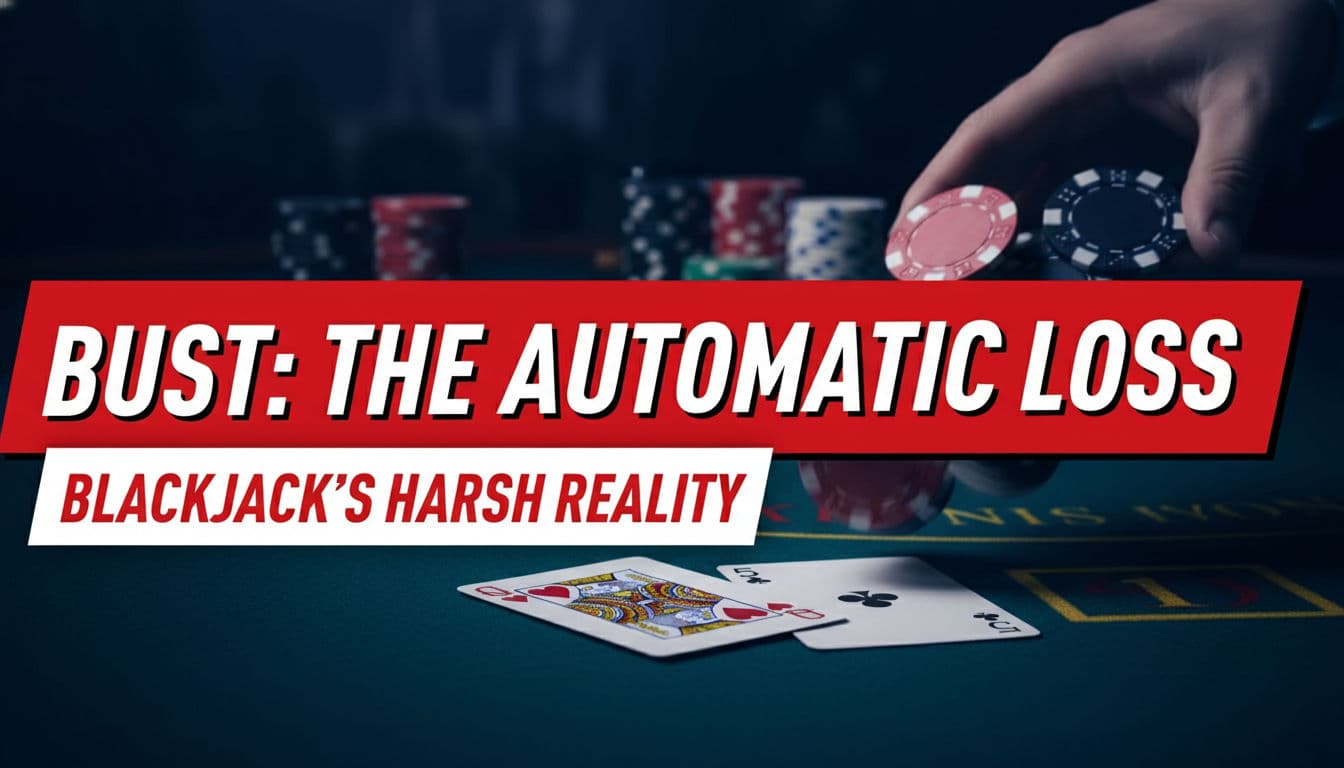
In the world of casino card games, especially blackjack, a bust is a player's worst enemy. It signifies an automatic loss that occurs the moment your hand's total value exceeds 21. Understanding this simple but crucial rule is the first step to developing any winning strategy at the tables.
Understanding the Core Concept of a Bust in Blackjack
In the high-stakes environment of a casino, certain terms are fundamental to gameplay. One of the most critical concepts, particularly in blackjack, is the bust. To put it simply, to bust in blackjack means your hand total has exceeded 21. When this happens, it's an automatic loss, and your bet is immediately forfeited. This rule is a cornerstone of blackjack and heavily influences player strategy on every single hand.
Imagine you're holding two cards totaling 15. You decide to 'hit,' and the dealer gives you a 7. Your new total is 22. At that precise moment, you have gone bust. The dealer announces it, collects your chips, and your participation in that round is over. It doesn't matter what the dealer's hand is or what it might become; your hand is a losing one.
When playing at a modern online casino, the interface often helps you visualize this risk by calculating the probability of a bust in real-time. Understanding the mathematical Expected Value (EV) of hitting versus standing is what separates a professional from an amateur; for instance, hitting on a hard 16 when the dealer shows a 6 has a significantly lower expected value than standing, as the high probability of a bust makes it a statistically losing move in the long run. By mastering these odds, you can navigate the digital blackjack tables with more precision, ensuring that you only take the risk of a bust when the math truly supports it.
Why the Bust Rule Gives the House an Edge
The concept of an automatic loss is a significant reason for the casino's built-in advantage, or 'house edge'. The player must act on their hand before the dealer does. If the player goes bust in blackjack, they lose right away. Even if the dealer proceeds to draw cards and also busts with a total of, say, 25, the player has already lost. This sequence of play ensures the casino wins in any scenario where the player busts.
"The player busting before the dealer acts is a primary component of the house advantage in blackjack. It's a harsh but unchangeable reality of the game." - Casino Game Analyst
Strategic Decisions and the Risk of Busting
Every decision to 'hit' in blackjack carries a risk of busting. The higher your current hand total, the greater the risk. A hand total between 12 and 16 is often called a 'stiff hand' because it presents the most difficult decision for a player. Hitting is risky because many cards (like a 10, Jack, Queen, or King) will cause you to exceed 21. However, standing on a low total like 13 or 14 is often not enough to beat the dealer.
This is where basic blackjack strategy comes into play. These strategies, often presented in charts, provide the mathematically optimal decision for any given hand against any dealer upcard. The goal is not just to get close to 21 but to make the decision that maximizes your chances of winning and minimizes your chances of going bust unnecessarily.
Key Scenarios to Avoid a Bust in Blackjack
Stiff Hands (12-16): If the dealer is showing a weak upcard (2 through 6), the best strategy is often to stand. The dealer has a higher probability of busting in this situation, so you don't need to risk improving your own hand.
Soft Hands: A hand with an Ace counted as 11 is 'soft' because you cannot bust on the next hit. For example, if you have an Ace and a 6 (a soft 17), hitting is safe. If you draw a 5, your hand becomes 12 (Ace counts as 1), not 22.
Never Hit on Hard 17 or Higher: A 'hard' hand is one without an Ace or with an Ace that must count as 1. If your hard total is 17 or more, basic strategy dictates you should always stand. The risk of busting is far too high to justify taking another card.
The Psychology of the Bust
Fear of busting can lead players to make poor decisions. Many amateur players are too conservative, standing on low totals like 12 or 13 because they don't want to go bust. While this avoids the immediate automatic loss, it often results in losing to a better dealer hand. A successful player understands that sometimes you must take a calculated risk and hit, even if it might lead to a bust. It's about playing the odds over the long term, not just avoiding a single loss.
Ultimately, the term bust defines the central conflict of blackjack: the push to get as close to 21 as possible without going over. Mastering your understanding of when to be aggressive and when to be cautious is the key to navigating this challenge and becoming a more formidable player. While you can't control the cards you're dealt, you can control your decisions to minimize your bust rate and maximize your winning potential.
Related Casino Terms
Best Online Casinos

Vave
4.6Welcome Bonus150% up to 1.5 BTCCashback BonusVariable- Welcome Bonus
- 150% up to 1.5 BTC
- FTD Bonus
- 150% up to 1.5 BTC
- Cashback Bonus
- Variable
- Extra Bonus
- Free Spins
- Platforms


- Browser Support
- Yes
- Mobile Support
- No
- Crypto Support
- Yes
- License
- Republic of Costa Rica
Game types
 No Blackjack
 Baccarat
 No Bingo
 No Craps & dice
 Crash games
 eSports betting
 Jackpot games
 No Keno
 Live games
 Roulette
 No Scratch cards
 Slots
Slots Sports betting
 No Video poker
Payment methods


LTC Casino
4.4Welcome Bonus250% First Deposit Bonus up to $750Cashback BonusNo Cashback- Welcome Bonus
- 250% First Deposit Bonus up to $750
- FTD Bonus
- 250% up to $750
- Cashback Bonus
- No Cashback
- Platforms
- Browser Support
- Yes
- Mobile Support
- No
- Crypto Support
- Yes
- License
- No License
Game types
BlackjackBaccaratNo BingoNo Craps & diceCrash gamesNo eSports bettingJackpot gamesNo KenoLive gamesRouletteNo Scratch cardsSlotsNo Sports bettingNo Video pokerPayment methods


Jack
4.6Welcome Bonus100 Free Spins + Risk-Free Sports BetCashback BonusUp to 30%- Welcome Bonus
- 100 Free Spins + Risk-Free Sports Bet
- Cashback Bonus
- Up to 30%
- Extra Bonus
- 100 Free Spins
- Platforms
- Browser Support
- Yes
- Mobile Support
- No
- Crypto Support
- Yes
- License
- Curaçao Gaming Control Board
Game types
BlackjackBaccaratNo BingoNo Craps & diceCrash gameseSports bettingJackpot gamesNo KenoLive gamesRouletteScratch cardsSlotsSports bettingNo Video pokerPayment methods


Duel
4.2Welcome Bonus50% Instant RakebackCashback BonusFix 50%- Welcome Bonus
- 50% Instant Rakeback
- Cashback Bonus
- Fix 50%
- Extra Bonus
- 100% RTP Games
- Platforms
- Browser Support
- Yes
- Mobile Support
- No
- Crypto Support
- Yes
- License
- License No. ALSI-202411026-FI1.
Game types
No BlackjackBaccaratBingoCraps & diceCrash gameseSports bettingJackpot gamesNo KenoLive gamesRouletteNo Scratch cardsSlotsSports bettingVideo pokerPayment methods

Stake US
4.6Welcome BonusFree 25 SC + 250K Gold Coins- Welcome Bonus
- Free 25 SC + 250K Gold Coins
- Extra Bonus
- 1 Stake Cash + 10,000 Gold Coins Free - Every Day
- Platforms
- Browser Support
- Yes
- Mobile Support
- No
- Crypto Support
- Yes
- License
- Sweepstakes (US Federal Law)
Game types
BlackjackBaccaratNo BingoCraps & diceCrash gamesNo eSports bettingNo Jackpot gamesNo KenoLive gamesRouletteScratch cardsSlotsNo Sports bettingNo Video pokerPayment methods

Shuffle US
4.7Welcome BonusFree 1 Shuffle Coin + 25,000 GC- Welcome Bonus
- Free 1 Shuffle Coin + 25,000 GC
- Extra Bonus
- Daily Log in Bonus
- Platforms
- Browser Support
- Yes
- Mobile Support
- No
- Crypto Support
- Yes
- License
- Sweepstakes Model — Munyon Canyon Ltd (BVI)
Game types
BlackjackBaccaratNo BingoNo Craps & diceCrash gamesNo eSports bettingNo Jackpot gamesNo KenoLive gamesRouletteNo Scratch cardsSlotsNo Sports bettingNo Video pokerPayment methods