

PokerStars B2B Network Opens Its Doors: A Game-Changer for Online Poker

Key takeaways
PokerStars has launched its first-ever B2B (business-to-business) offering, allowing third-party operators to join its network.
Operators can partner via a franchise model or launch a custom white-label poker platform, so the PokerStars B2B network offers different options.
The primary goal is to boost online poker shared liquidity, reducing wait times and creating bigger tournament prize pools.
Flutter Entertainment's internal brands, such as Sisal and Betfair, have already migrated to the network and are seeing huge revenue increases.
Why is the new PokerStars B2B network such a big deal?
For the first time in its impressive 25-year history, PokerStars is opening its legendary platform to outside operators. Previously, PokerStars operated almost entirely as a standalone, direct-to-consumer brand. Now, the new PokerStars B2B network fundamentally changes how the company does business.
It allows third-party gaming companies to plug directly into the world's most famous poker room. You might be wondering why this matters to the average player. It's about creating a massive ecosystem where players from entirely different brands can compete at the same tables.
This strategic shift matches the successful growth strategies used by competitors like the Winning Poker Network (home to ACR) and GGPoker. By inviting new partners to share the software, PokerStars aims to reclaim its spot as the absolute king of online poker traffic.
What partnership models are available?
Companies looking to join the network have two distinct options. This flexibility makes B2B poker solutions much more accessible for both established brands and regional newcomers.
Partnership Model | How It Works | Best For |
|---|---|---|
Franchise Model | Partners operate directly under the trusted PokerStars brand name in their specific local market. | Operators looking for immediate brand recognition and player trust. |
White-Label Arrangement | Partners use their own brand name but run on PokerStars' underlying software and player pools. | Brands wanting to keep their own identity while offering a top-tier poker product. |
Both options grant operators full access to PokerStars' legendary game integrity, scheduling, and live events. This means a white-label poker platform partner can offer their players the exact same high-quality experience as the main site.
How will online poker shared liquidity improve the player experience?
One of the biggest challenges in modern poker is fragmented markets. When countries create their own ring-fenced regulations, player pools naturally shrink. This leads to smaller tournaments and painfully long waits for cash games to start.
The new network directly fights this frustrating issue. By pulling players from multiple partner sites into one massive pool, the network creates incredible online poker shared liquidity.
For players, scale truly matters. A larger player pool means more games running 24/7, much bigger tournament guarantees, and fast action at every stake level. Flutter Entertainment has already proven this concept works internally by moving brands like Sisal onto the shared network.
Will this impact different global markets differently?
Yes, the network will adapt to local laws while maximizing player pools wherever legally possible. The sheer flexibility of this system is what makes it so appealing to potential partners.
Here is how the traffic will be shared across different regions:
Global Dot-Com Pool: The largest liquidity pool, accessible in over 130 countries for massive international action.
European Shared Liquidity: Bringing together players from strictly regulated markets like France, Spain, and Portugal.
North American Shared Liquidity: Connecting players across legalized states and provinces where multi-jurisdictional compacts allow it.
Ring-Fenced Markets: Providing premium software and localized player pools for strict single markets, like Italy or Ontario.
What is Flutter Entertainment saying about the launch?
Flutter Entertainment, PokerStars' parent company, is clearly excited about this strategic pivot. They recognize that sharing their world-class software is a win-win for both the business and the global poker community.
According to the official PokerStars Network website, the benefits for new partners are massive. They state, "Partners gain immediate access to the world's most recognizable, favored and trusted brand in poker, driving visibility, strengthening credibility and accelerating go-to-market success."
This major shift isn't just an untested theory. When Flutter Entertainment moved its Italian brand Sisal onto the network back in 2024, Sisal’s poker revenue jumped by over 50%. Recently, Betfair became the first UK brand to migrate, and Sky Poker will follow later this year.
Are B2B poker solutions the future of the industry?
Looking at the current landscape, the answer is a resounding yes. Building independent poker software from scratch is incredibly expensive, complex, and difficult to maintain securely.
By joining an established network, operators save millions in development costs while instantly delivering a flawless player experience. The PokerStars B2B network offers a proven, highly secure engine that handles millions of active players effortlessly.
Ultimately, this is fantastic news for casual and professional players alike. More partners mean a wider variety of players, which directly leads to better games and life-changing prize pools. The next era of online poker is here, built entirely on collaboration.
About the Editor

Beus Zsoldos is Somuchpoker's Senior Copywriter and Player Stories Editor, covering WSOP color moments, player profiles and poker personalities for the site's Stories section. She has spent more than 20 years around the game, first as a player, then as a live tournament director and localization manager for a major online poker room, before moving into full time poker writing.
Related News
 Online PokeriGaming
18,730 Players, One Millionaire: The One on CoinPoker
The One on CoinPoker drew 18,730 players and paid $1M to the winner - the biggest payout in CoinPoker history. Full final table results and stories.
 iGamingOnline CasinoStories
Jack Doherty Signs With Shuffle - and Gets Banned From Posting Online
Jack Doherty signed with Shuffle Casino and is now banned from posting online. Noah Dummett confirms the 6-month deal. Full story here.
 NewsOnline PokeriGaming
Road to Triton Cyprus: Win a $25,000 Seat at Titi Poker
Join the Road to Triton Cyprus at Titi Poker. Start free on Oct 6, climb the satellite ladder and win one of 3 guaranteed $25,000 tickets.
 NewsOnline PokeriGamingPromotion
GGPoker and Natural8 $18M October Giveaway
Win your share of $18M in the GGPoker and Natural8 giveaway this October. Cash drops, Halloween Party, leaderboards - plus a welcome bonus.
 NewsOnline PokeriGaming
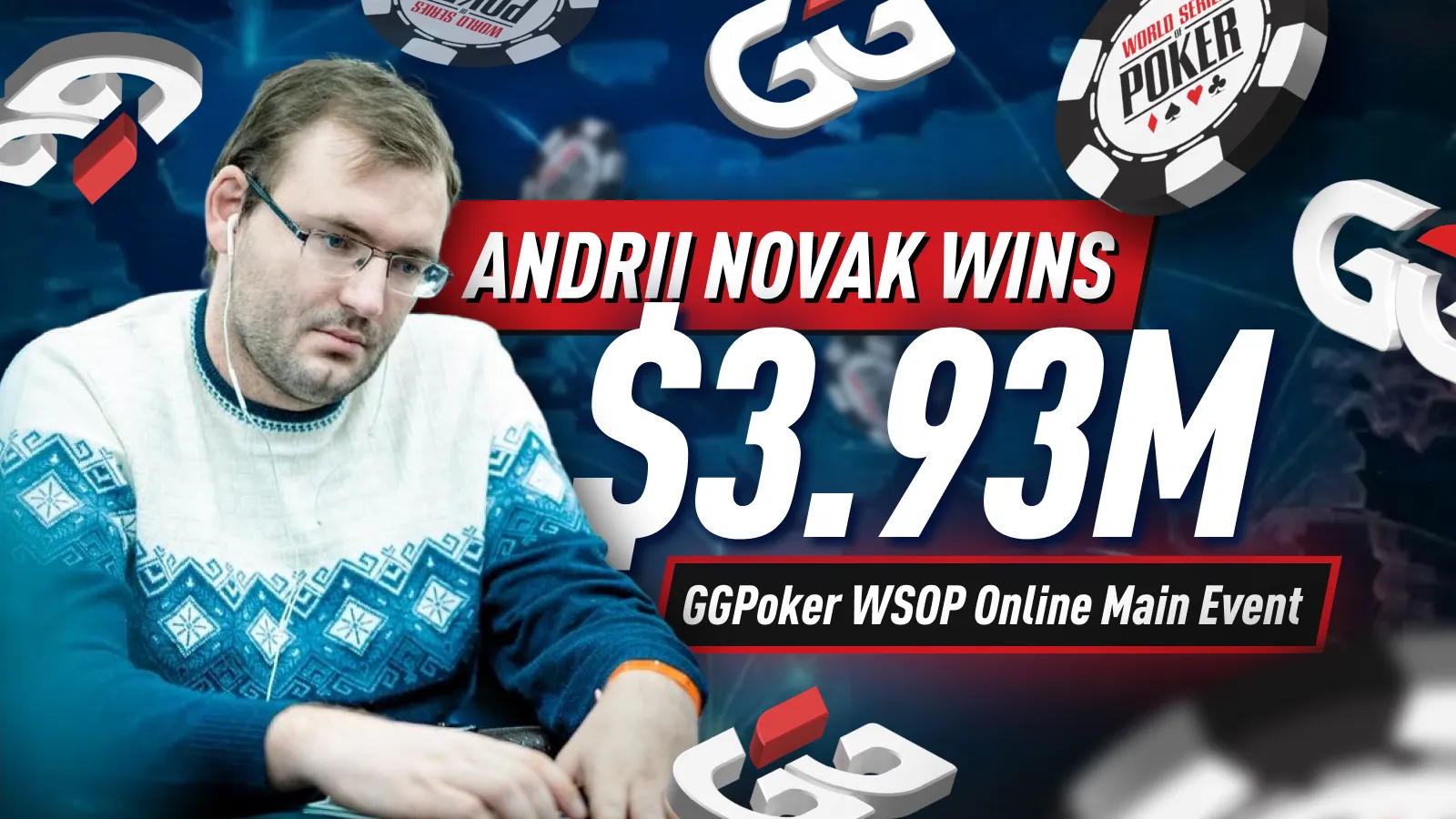
Andrii Novak Wins the GGPoker WSOP Online Main Event for $3.93M
Andrii Novak beats Simon Beckmann to win the 2026 GGPoker WSOP Online Main Event for $3.93M. Full final table results, payouts and stats.
 NewsOnline PokerLive PokeriGaming
QQPK Freeroll: Win a Poker Dream Malaysia Seat + $800
Win a MYR 3,200 Poker Dream Malaysia Main Event seat + $800 in the free Somuchpoker freeroll on QQPK. Sept 27 - sign up with code SMPBONUS.