Casino Shoe: Guide to This Card Dealing Box

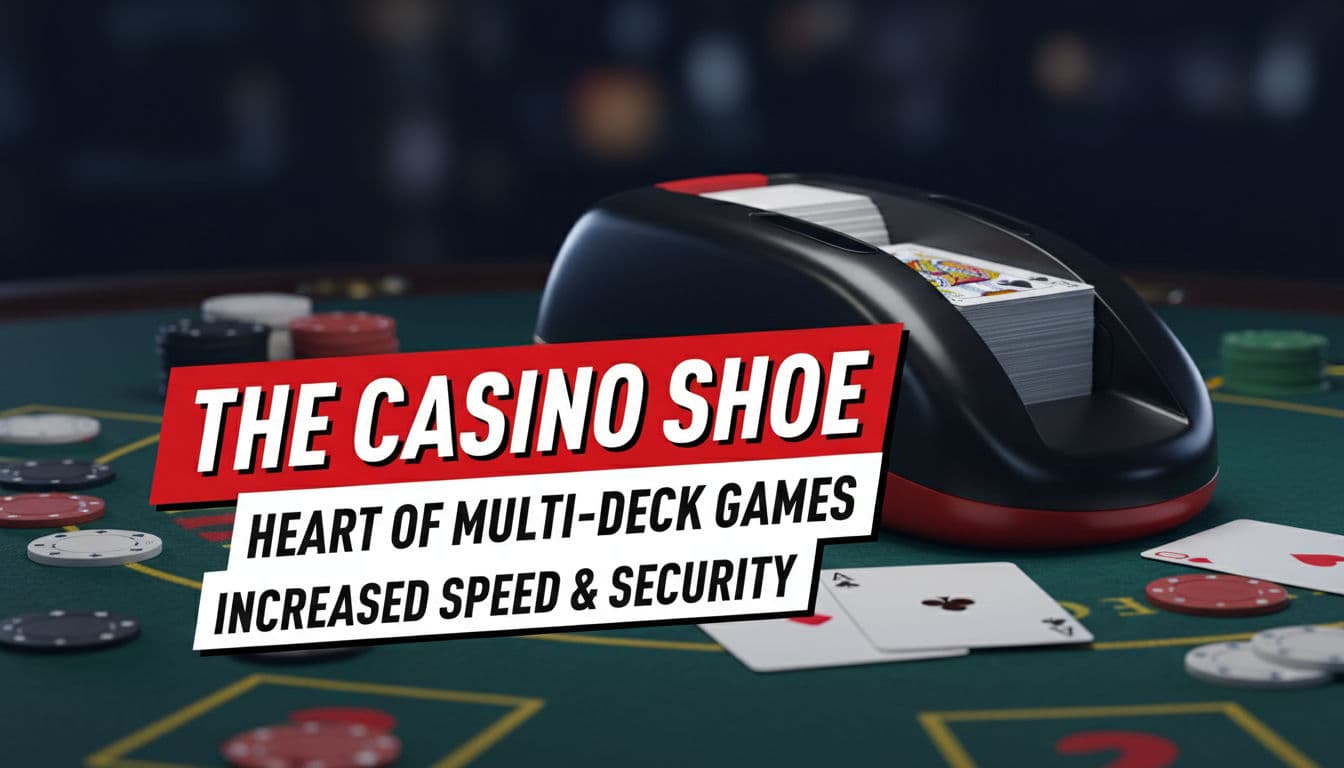
The casino shoe is the oblong box you see on casino tables, responsible for holding multiple decks of cards. Essential for games like blackjack and baccarat, this device ensures game integrity, speeds up play, and is a key piece of card game equipment that both players and dealers interact with constantly. Understanding the shoe is fundamental to understanding the flow of modern table games.
What is a Casino Shoe? The Heart of Multi-Deck Games
When you sit down at a blackjack or baccarat table, one of the first things you'll notice is the device the dealer draws cards from. This is known as the casino shoe or, more broadly, a dealing shoe. It's a simple yet critical piece of casino equipment designed to hold multiple decks of playing cards, enabling a smooth, continuous game without constant shuffling. Its primary purpose is to streamline gameplay and enhance security at the table.
The name is thought to have originated from the resemblance of its early designs to a woman's high-heeled shoe. Typically made of wood or sturdy plastic, a standard card shoe is a wedge-shaped box with a slot at the front from which the dealer can slide out one card at a time, face down. This simple mechanism is fundamental to the operation of many popular card games.
The Purpose and Function of a Dealing Shoe
A shoe in the casino serves several key functions vital to both the casino and the players. Without it, games like multi-deck blackjack would be slow and more susceptible to foul play.
Increased Game Speed: By holding up to eight decks of cards, the shoe eliminates the need to stop and shuffle after every few hands. This means more hands can be played per hour, which benefits the casino's revenue and keeps players engaged.
Enhanced Security: The shoe's design makes it difficult for players or dealers to manipulate the deck. It conceals the upcoming cards and ensures a random, one-at-a-time distribution, minimizing the risk of cheating tactics like bottom dealing or card marking.
Professionalism and Consistency: Using a shoe standardizes the dealing process across all tables. This creates a professional atmosphere and ensures that every player receives cards in the same consistent manner, which is a cornerstone of fair gaming.
Games That Rely on the Shoe
While not used in every card game, the shoe is a staple in several high-traffic casino offerings. Its presence is often a clear indicator of the type of game being played.
The Classic Blackjack Shoe
Blackjack is the game most commonly associated with the dealing shoe. Most casinos use a shoe holding six to eight decks. The use of multiple decks alters the game's strategy compared to single-deck versions and makes card counting significantly more challenging for advantage players, a key reason casinos favor it.
The Elegant Baccarat Shoe
Baccarat is another game where the shoe is indispensable. A baccarat shoe traditionally holds eight decks of cards. In many high-limit baccarat rooms, the shoe is passed among players, allowing them to take turns dealing cards and adding a unique, interactive element to the game.
"The shoe is the gatekeeper of the game's integrity. Its design is intentionally simple to be transparent, yet effective enough to prevent the most common forms of card manipulation." - Veteran Casino Floor Supervisor
Anatomy and Types of Card Shoes
While the basic concept is the same, not all shoes are created equal. They range from simple manual boxes to highly sophisticated electronic devices.
Manual vs. Automatic Shoes
The table below highlights the key differences between the traditional manual shoes and the modern automated versions, often called Continuous Shuffling Machines (CSMs).
Feature | Manual Shoe | Automatic Shuffler (CSM) |
|---|---|---|
Function | Holds pre-shuffled cards for dealing. | Holds, shuffles, and deals cards continuously. |
Game Speed | Fast, but requires stops for shuffling. | Uninterrupted gameplay, extremely fast. |
Player Perception | Generally trusted, allows for card counting. | Often viewed with suspicion by players. |
Impact on House Edge | Standard house edge. | Can slightly increase the house edge due to speed. |
How a Shoe Influences Player Strategy
For skilled players, especially card counters, the casino shoe is a central focus. The number of decks in the shoe directly impacts the effectiveness of counting. Furthermore, a concept known as 'deck penetration'-how many cards are dealt before the shuffle-is crucial. Deeper penetration gives counters a more accurate assessment of the remaining cards and a greater potential advantage. The presence of an automatic shuffler, however, renders traditional card counting completely useless, as the deck is constantly being randomized.
This challenge is even more pronounced in an online casino environment, where sophisticated software often reshuffles the virtual deck after every single hand to maintain a constant house edge.
| Pros | Cons |
|---|---|
A shoe holds multiple decks, drastically reducing the time spent on shuffling. This allows for more hands to be played per hour, keeping the game exciting and profitable for the casino. | From a player's perspective, multi-deck shoes significantly dilute the effectiveness of card counting strategies compared to single-deck games, giving the house a stronger advantage. |
The shoe's design makes it difficult for players or dealers to manipulate the deck. It helps prevent cheating methods like second dealing or base dealing, ensuring a fairer game. | The use of automatic shuffling machines (CSMs), which are a type of shoe, completely negates card counting and can increase the hands per hour to a level that favors the casino's long-term edge. |
It provides a consistent and professional way to deal cards, ensuring every player receives them in the same manner. This removes variables and builds trust in the game's integrity. |
Related Casino Terms
Best Online Casinos


Flóri Feterik is SoMuchPoker's Poker and Casino Strategy Analyst, writing about poker strategy, MTT dynamics, and casino gameplay across live and online formats. He has played in multiple WSOP events across several trips to Las Vegas, experience that shapes his analysis of poker psychology, table game mechanics, and the wider casino industry, from traditional poker rooms to crypto casino platforms.