

Poker Players Protest New IRS Gambling Tax Rule

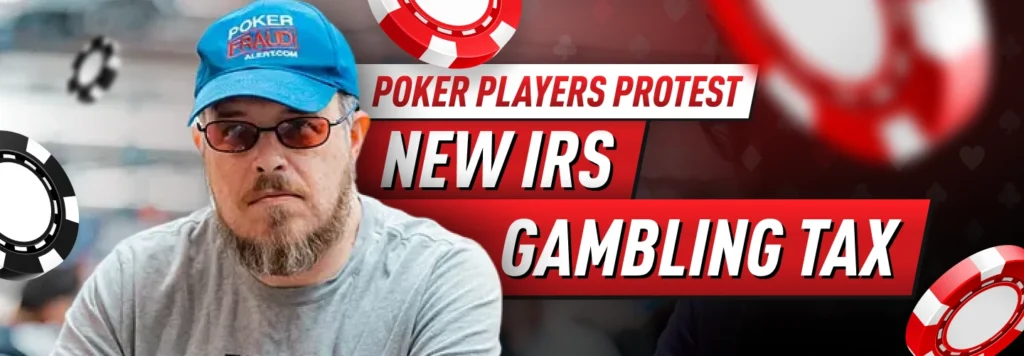
The recent changes to the United States tax code are causing a major uproar in the gaming community. At a recent IRS hearing, professionals and hobbyists alike voiced their concerns over a controversial new law. Known by many as the new gambling tax, this rule is already shaking up the entire industry.
Passed as part of the Big Beautiful Bill (OBBBA) in July 2025, the new regulation officially went into effect this past January. The law strictly limits gambling loss deductions to just 90% of your total winnings. This means gamblers are effectively taxed 10% on their gross winnings, regardless of whether they actually made a net profit, as explained in a Forbes article on the topic.
What the New Gambling Tax Means for You
For many poker players, this new gambling tax feels like a deeply unfair penalty. Instead of paying taxes on the actual money you take home at the end of the year, you are taxed on money you never truly earned. This is exactly why critics are loudly calling it a tax on "phantom income".
During the recent IRS hearing, ten out of twelve scheduled speakers showed up to explain the devastating impact of this change. From casual sports bettors to full-time poker players, the consensus was clear. If this law stays as it is, the financial consequences will be severe for everyone involved.
Some players fear it could even push tax-paying citizens out of the country entirely. Longtime poker professional Katie Stone reminded the panel about the aftermath of Black Friday in 2011. That event shut down online poker in the US, forcing many players, including her own family, to move abroad.
Key Concerns from Industry Experts
To understand the full scope of the problem, here is a quick summary of the main arguments presented against the new rule:
Speaker | Role | Main Argument Against the Tax |
|---|---|---|
Rep. Dina Titus | Congresswoman (Nevada) | Taxing phantom income unfairly burdens players and drives them to unregulated, offshore markets. |
Sara O'Connor | Poker Journalist | The strict rule punishes honesty and volume, giving people a reason not to report their gambling income. |
Joshua Thatcher | Content Creator | The severe limits on gambling loss deductions will encourage more off-the-grid, illegal betting behaviors. |
Katie Stone | Poker Professional | The heavy financial strain could force honest, tax-paying citizens to relocate outside the United States. |
Watchdog & Advocate | The implementation should be postponed to clarify rules around business expenses, which shouldn't be capped. |
In a May 11 letter, even UFC President Dana White urged Donald Trump to pressure Congress into repealing a provision in the One Big Beautiful Bill Act that caps gambling loss deductions at 90%. White argued that penalizing bettors actively harms the legal sports betting ecosystem that the UFC relies on for sponsorships and fan engagement, stating:
"The current law makes it irrational to bet in the United States because you could end up owing taxes even when you lose or having a tax bill that exceeds your winnings for the year."
Will Gambling Loss Deductions Improve?
Right now, the IRS is only responsible for enforcing the law, not repealing it. However, the pushback from poker players and tax advocates is growing stronger every day. Advocates like Todd Witteles have suggested delaying the law to properly study its long-term effects on the broader industry.
Witteles also highlighted a very crucial detail regarding professional business expenses. He argued that legitimate business expenses, like travel and buy-ins, shouldn't fall under the same 90% limit as standard gambling loss deductions. Clarifying these terms soon could save professionals thousands of dollars in unfair taxes.
How the New Gambling Tax Will Work in Practice?
A few days ago, a very simple and straightforward example was published by (since deleted) @amit32883 on Twitter. He explained clearly how unfair and controversial this tax rule is, using Daniel Negreanu's publicly listed tournament data.
This is @realkidpoker WSOP results for last 8 WSOPs.
Hendonmob shows ~$9.74M in WSOP payouts. Thus, he obv had $9.9M in buyins if he self reports ~$160k in aggregate profit over 8 years.
Under BBB, Daniel would owe tax on phantom income of $900k ($300k tax for $160k profit)
What Comes Next After the IRS Hearing?
The recent IRS hearing was just the first step in what promises to be a long battle for fairer tax laws. While there is no immediate fix on the table, the loud opposition from lawmakers like Rep. Dina Titus provides a lot of hope. She firmly believes that the federal tax code should reflect a person's actual, real-world economic gain.
For now, anyone who wagers money needs to pay extremely close attention to this gambling tax. Keeping pristine, accurate records of your sessions is more important today than it has ever been. As the community continues to fight the recent legislative changes, staying informed will be your best defense.
We will continue to monitor the situation as more news develops. Until then, consult with a certified tax professional to ensure you are fully compliant with the new regulations. Protecting your bankroll starts with understanding exactly how these rules impact your bottom line.
About the Editor

Beus Zsoldos is Somuchpoker's Senior Copywriter and Player Stories Editor, covering WSOP color moments, player profiles and poker personalities for the site's Stories section. She has spent more than 20 years around the game, first as a player, then as a live tournament director and localization manager for a major online poker room, before moving into full time poker writing.
Related News
 Side PotStories
Las Vegas Casino Photography Policy: Myth vs. Reality
Curious if taking photos in a casino is illegal? Discover the truth about the Las Vegas casino photography policy and how to safely snap your next selfie.
 Side PotLive PokerStories
The Ultimate Showdown: A Guide to the $250K WSOP Paradise Pro-Am
Get ready for the exciting $250,000 WSOP Paradise Pro-Am in the Bahamas! Learn the rules, schedule, and format of this 2026 gold bracelet event.
 Side PotStories
The Future of High Stakes: Inside the Deepstack Poker Show
Get ready for the new Deepstack poker show. Learn how advanced AI and poker heart rate monitoring will reveal the tension in high stakes poker.
 Side PotStoriesWSOP
WSOP 2026 - Moment of the Day - 15 June - Can you be quiet?
Martin Kabrhel and Martin Zamani shouting at each other, "Can you be quiet?" might be one of the worst nightmares of tournament personnel.
 WSOPSide PotStories
WSOP 2026 - Moment of the Day - 6 June - Family pot
Family pot of Kristen and Alex Foxen resulted in a sneak peak at the $25,000 event - Moment of the Day for 6 June WSOP 2026.
 Side PotStories
Rumours Confirmed: Caesars Entertainment Is Up for Sale!
The latest casino news shows that the massive $17.6 billion deal, as the Caesars Entertainment acquisition had been finalized, has drawn major attention.