

Japan Poker Tournament Arrests: Four Men Detained Over Unlicensed Event


Four men have been arrested in Japan over their alleged involvement in organizing a large-scale poker tournament without the required permit. The event, held in Kobe in July, attracted 541 participants and generated ¥10 million (approximately $63,000) in revenue. Japanese authorities describe the case as the first in which poker tournament organizers have been arrested on suspicion of violating the country's Entertainment Business Act.
The arrests have raised questions about the legal framework governing Japan's amusement poker industry and the permits required to organize commercial tournaments.
Four Men Arrested Over Kobe Poker Tournament
Hyogo Prefectural Police arrested four men between November 9 and 17, 2026, on suspicion of organizing an unauthorized poker tournament at a rented venue in Kobe.
The tournament ran from July 24 to 26 and drew 541 participants. According to reports, the event generated approximately ¥10 million (around $63,000) in revenue over the three days.
The Hyogo Poker Federation reportedly organized the event. Its prizes included:
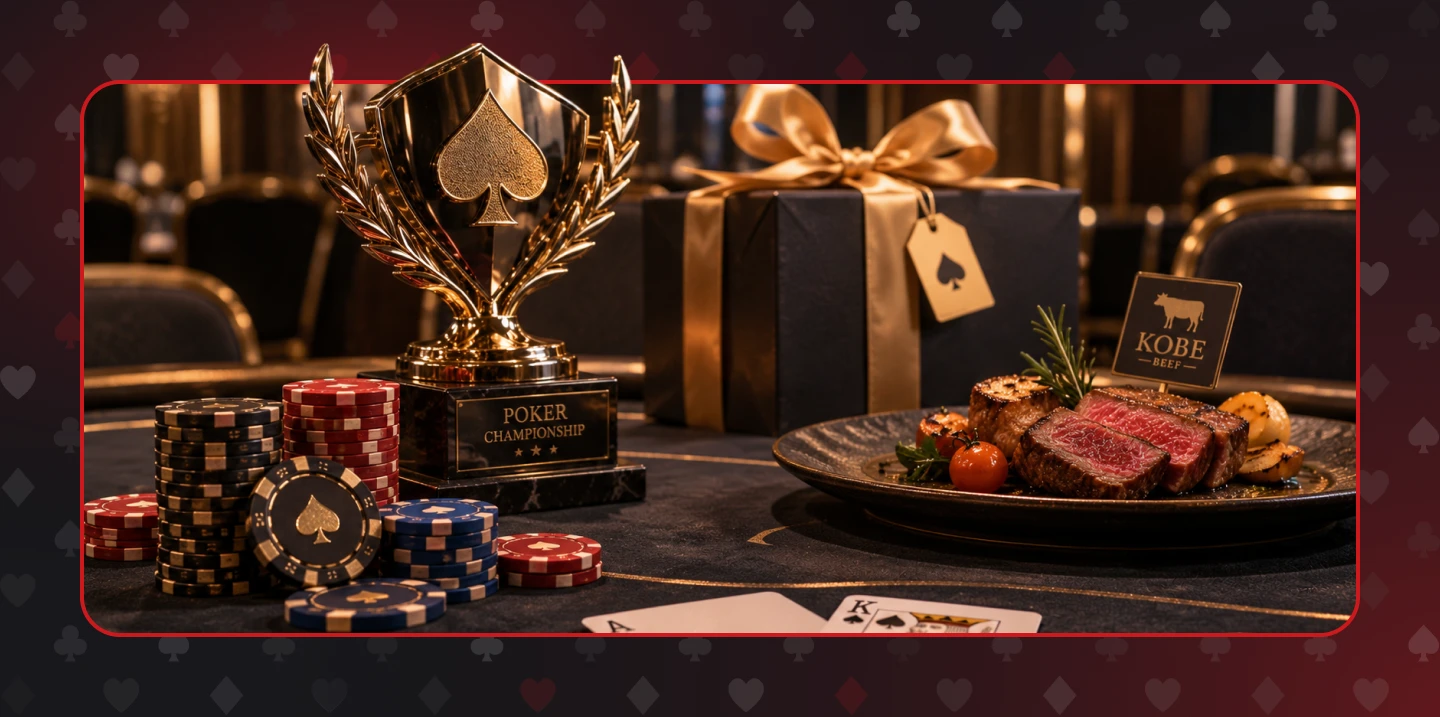
Kobe beef: Participants could win the local specialty instead of cash.
Entry credits: Winners could also receive credits for participation in other poker events.
Although the tournament did not offer conventional cash prizes, Japanese gambling regulations can treat anything of value awarded based on game results as potentially constituting gambling.
The four men have denied the allegations, reportedly saying they did not believe they needed a permit. According to The Japan Times, this is the first case in Japan in which poker tournament organizers have been arrested on suspicion of violating the Entertainment Business Act.
How Amusement Poker Works in Japan
Japan's poker industry has developed around a format known as amusement poker because cash gambling is generally prohibited under the country's Penal Code.
The model lets players participate in tournaments and ring games without gambling for money. Instead of cash prizes, organizers offer other rewards, while the chips used during play have no cash value.
The system works through several elements:
Participation fees: Players pay an entry or seat fee to join a tournament or ring game.
Tournament chips: Players receive chips that cannot be exchanged for money at the end of an event.
Non-cash prizes: Rewards can include trophies, merchandise, and packages connected to international poker tournaments.
Additional charges: Some events offer rebuys and add-ons, while ring game players can purchase chip packages from the venue.
Venue revenue: Establishments can also earn money through food and drink minimums.
The Japan Open Poker Tour (JOPT), one of the country's leading tournament circuits, offers packages to successful players that can include travel, accommodation, and buy-in costs for international events such as the World Series of Poker (WSOP) in Las Vegas. The All Japan Poker Championship operates under a similar model.
However, this business model does not automatically exempt tournaments from other legal requirements.
Why the Entertainment Business Act Matters
The four men are suspected of violating Japan's Entertainment Business Act, which regulates various entertainment businesses, including hostess clubs, dance venues, mahjong parlors, pachinko establishments, and amusement arcades.
Businesses covered by the legislation must obtain permission from their prefectural Public Safety Commission before operating.
According to police statements reported by Japanese media, this requirement may also apply to commercial poker tournaments. In particular, events held at rented venues can potentially violate the Act if they meet two conditions:
Two or more consecutive days: The tournament runs across at least two consecutive days.
Commercial operation: The event is organized as a business, which can include collecting entry fees.
The Kobe tournament allegedly met both requirements.
The allegations concern the failure to obtain a required permit, rather than a finding that the organizers conducted illegal cash gambling.
According to Japan's National Police Agency, amendments to the Entertainment Business Act that took effect in June 2025 increased the maximum penalties for operating a covered entertainment business without a permit to:
Up to five years in prison.
A fine of up to ¥10 million (approximately $63,000).
These are the potential penalties if the allegations are proven.
Police Issued Three Warnings Before the Tournament
The events leading up to the arrests provide further context. Police reportedly received an anonymous tip before the tournament and warned the organizers three times that their planned activities could violate the law.
Despite these warnings, the event went ahead as scheduled. According to the reports:
Anonymous tip: Police received information about the planned tournament before it took place.
Three warnings: Officers told the Hyogo Poker Federation on three occasions that the event could violate the law.
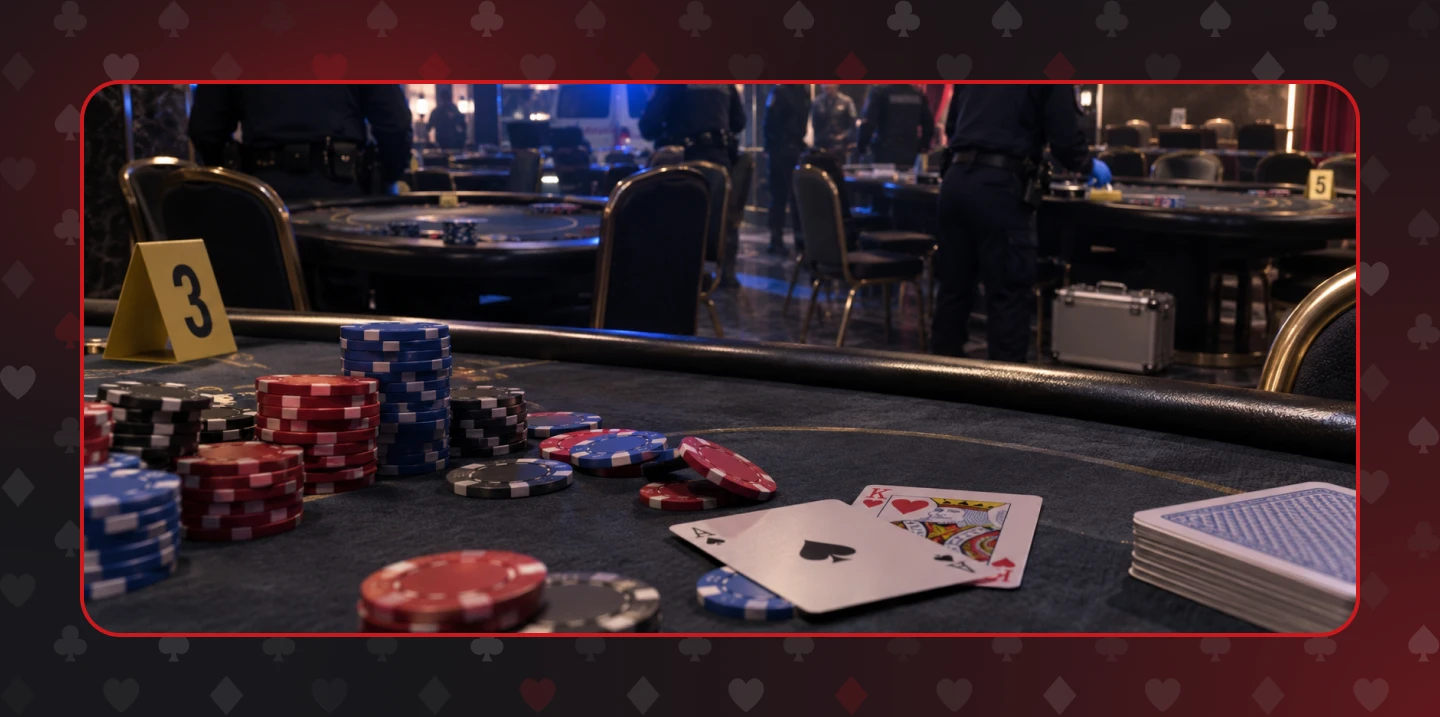
Police raid: Authorities reportedly raided the venue on the tournament's final day, July 26.
November arrests: The four men were taken into custody between November 9 and 17, approximately three to four months after the event.
Among those arrested was reportedly Tomoki Araki, a 51-year-old company executive from Kobe's Chuo Ward. According to Tokyo Reporter, he had previously organized poker tournaments, including events at venues that had obtained the necessary permits.
Following the incident, the organizers described the disagreement with police on social media as a difference in perception and apologized to participants.

Japan's Wider Crackdown on Gambling
The Kobe arrests come amid increased enforcement against gambling-related activities in Japan. Online gambling enforcement reached a record level in 2025, when police recorded 317 enforcement actions, the highest annual total since 2018.
The figures included:
196 suspected online casino users, an increase of 54 compared with the previous year.
317 total enforcement actions, representing the highest annual figure since 2018.
A revised anti-gambling-addiction law also took effect in September 2025, extending enforcement measures to affiliate marketers and payment processors involved in promoting illegal gambling.
Japanese authorities have also taken action against underground cash poker operations. These cases included a 2021 raid on an unlicensed venue in Tokyo's Kabukicho district and a separate investigation involving three Chinese nationals accused of running a cash game from a condominium in Toshima Ward.
The Kobe case, however, involves a different legal issue. While the earlier cases concerned real-money poker operations, the current allegations focus on the failure to obtain an entertainment-business permit for a commercial tournament.
What the Arrests Could Mean for Japan's Poker Industry
Japan's amusement poker industry has expanded significantly over the past decade. Major tournament circuits operate across the country, while independent venues organize their own competitions. The Japan Competitive Poker Federation, which began operations in May 2026, has also added another layer of organization to the industry.
The Kobe case could raise new questions for tournament organizers, particularly those running larger, multi-day events.
Some of the issues that remain unclear include:
Smaller tournaments: Would a two-day event with 200 participants also require a permit?
Larger one-day events: Could a single-day tournament with 1,000 players fall under the same regulations?
Recurring competitions: Would a series of separate one-day events at the same venue be treated differently?
Although the case does not resolve these questions, it highlights the regulatory uncertainty facing organizers of commercial amusement poker tournaments.
The case also comes as Japan prepares for its first licensed integrated resort casino. The MGM Osaka project broke ground in April 2025 and is expected to open in autumn 2030.
As the country's gambling industry develops, the distinction between permitted amusement activities and commercial gambling is becoming increasingly important.
For poker organizers, the Kobe case highlights the need to understand Japan's legal requirements for commercial tournaments. The outcome could help clarify how the Entertainment Business Act applies to amusement poker events.
About the Editor

Gyöngyi P. Tóth is Somuchpoker's Content Writer and Poker Stories Specialist, writing Side Pot features, WSOP storylines, and the site's Poker in Pop Culture and Legends of Poker series. She was introduced to poker 20 years ago through live tournament play, and what has kept her interest since is the psychology and human behavior behind the game as much as the cards themselves.
Related News
 Side Pot
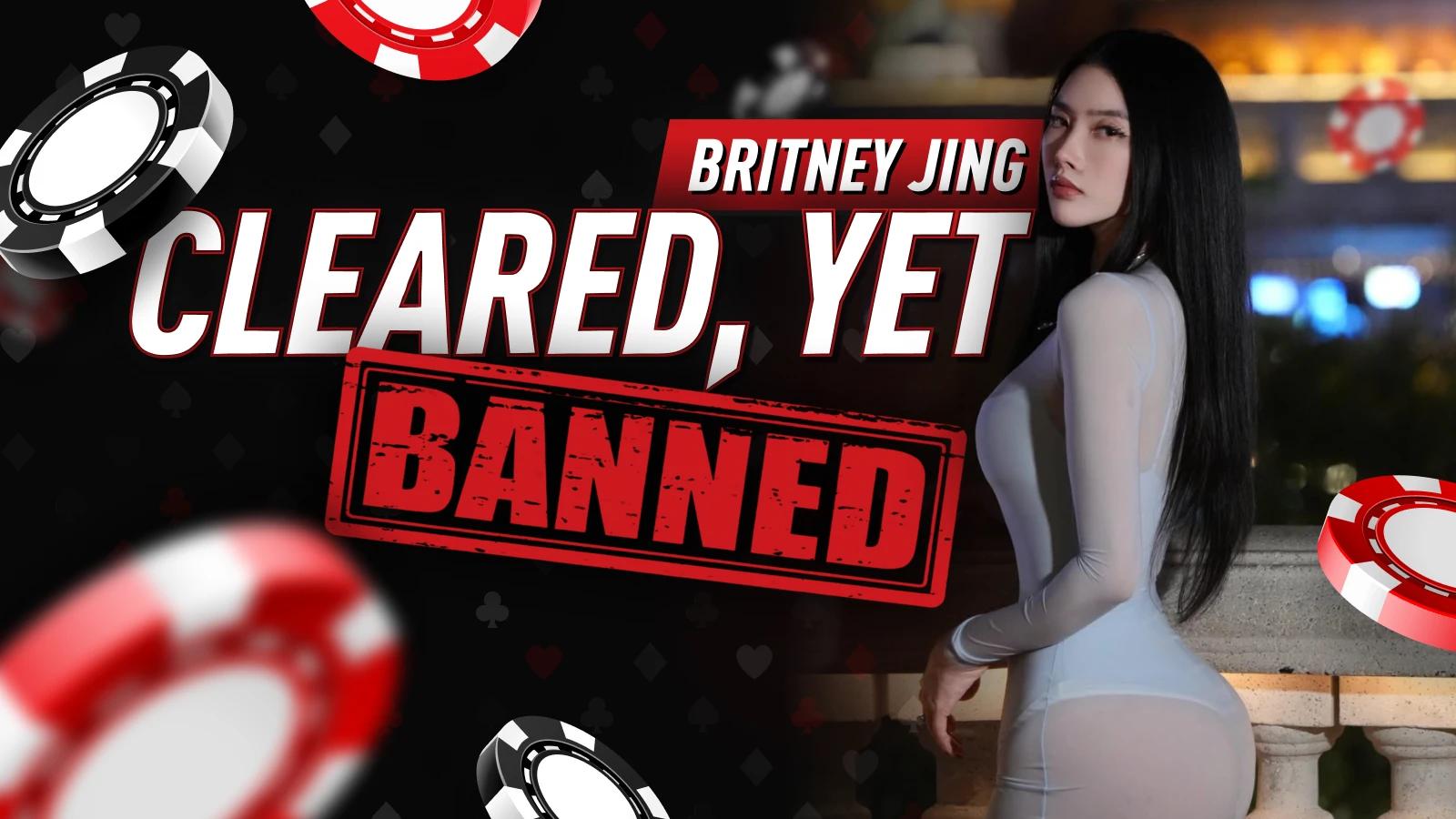
Britney Jing Cleared of Cheating but Suspended by HCL
Britney Jing was cleared of cheating after an HCL investigation, but she and C Ye were suspended by Hustler Casino Live over a conflict of interest.
 Side Pot
Poker Dealer Tips: Why Is It Still $1?
Why has the standard $1 poker dealer tip remained unchanged for 30 years while casino prices have increased? Chris Haynes sparks a debate about poker dealer tips, tipping etiquette, and dealer earnings.
 Side Pot
The Youngest Poker Baby: Daniel Negreanu's Son and the Next Generation of Poker Families
Daniel Negreanu and Amanda welcome their first child, Roman. Discover how poker runs through the Mizrachi, Brunson, and Hellmuth families.
 Side PotOnline Poker
Lex Veldhuis Joins GGPoker as a New Poker Ambassador
Lex Veldhuis joins GGPoker as Global Streaming Ambassador after 15 years with PokerStars. Find out why the popular poker streamer chose a new home.
 Side Pot
Las Vegas Casino Photography Policy: Myth vs. Reality
Curious if taking photos in a casino is illegal? Discover the truth about the Las Vegas casino photography policy and how to safely snap your next selfie.
 Side PotLive Poker
The Ultimate Showdown: A Guide to the $250K WSOP Paradise Pro-Am
Get ready for the exciting $250,000 WSOP Paradise Pro-Am in the Bahamas! Learn the rules, schedule, and format of this 2026 gold bracelet event.