Penny Ante

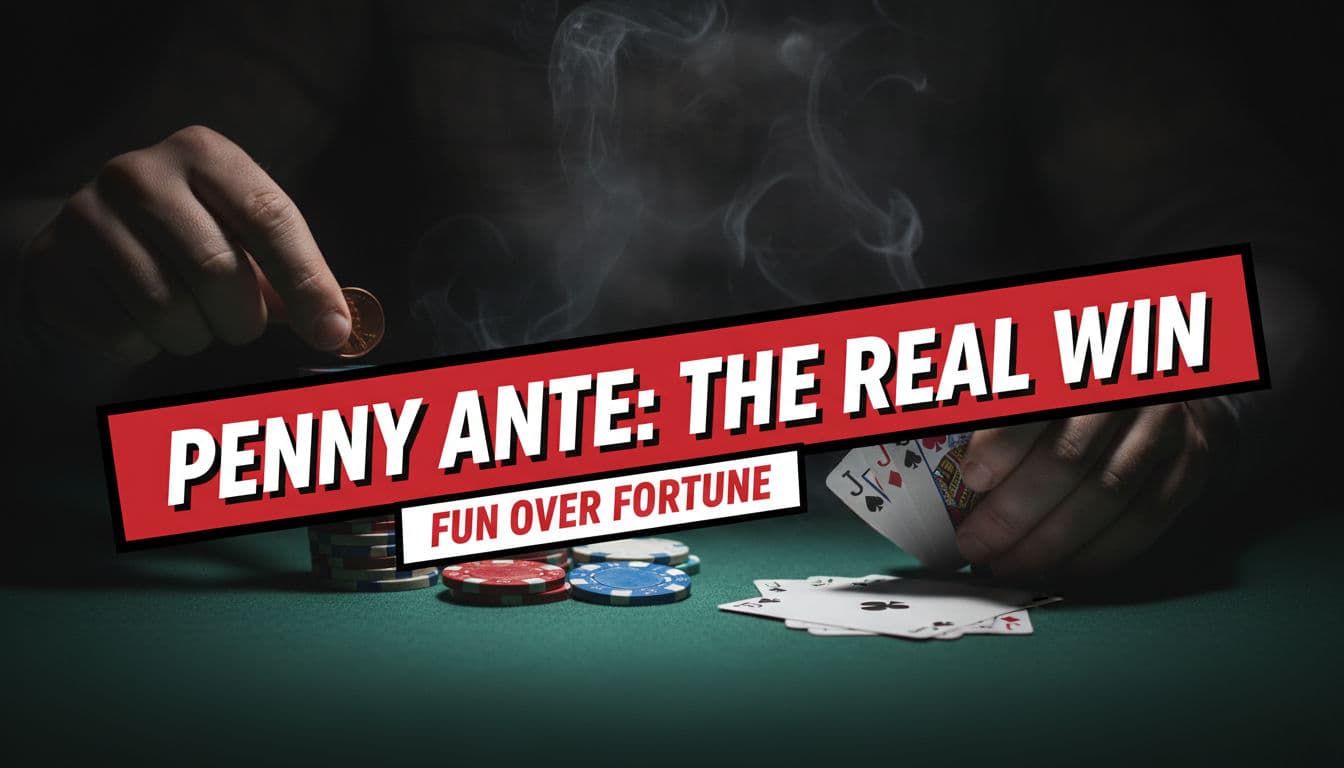
In the vast lexicon of card games and recreational activities, the term "penny ante" holds a distinctive and often nostalgic place. Far from being a mere descriptor for the financial scale of a game, "penny ante" encapsulates an entire philosophy of play: one rooted in accessibility, learning, and the intrinsic joy of social interaction over monetary gain. This analytical exploration delves into the essence of penny ante, dissecting its historical resonance, its undeniable advantages for diverse player demographics, and its enduring relevance in a gaming landscape often dominated by high-stakes competition and complex digital experiences.
Defining the Penny Ante Poker Phenomenon
At its core, what is penny ante? It is a game characterized by exceptionally low stakes, typically involving wagers of mere pennies or similarly negligible amounts. This financial minimalism is not incidental; it is the defining feature of low stakes card games that transforms a potentially intense competitive activity into a relaxed, inclusive, and fundamentally educational experience.
This accessible spirit is perfectly mirrored in online poker , where micro-stakes tables allow enthusiasts to join the action for just a few cents, bringing the classic penny ante experience to a global digital audience.
Unlike high-stakes games where financial pressure can cloud judgment and stifle enjoyment, penny ante creates an environment where the focus shifts from monetary outcomes to strategic thinking, social engagement, and the sheer pleasure of play. It is, in many ways, the ultimate form of risk-free gambling.
Historical Context and Evolution
The term itself evokes a bygone era, conjuring images of informal gatherings where friends and family would convene around a table, not for serious gambling, but for camaraderie and lighthearted competition. While its precise origins are difficult to pinpoint, the concept of playing for minimal stakes has likely existed as long as games of chance and skill themselves.
Historically, it served as an accessible entry point for new players to learn card games, understand probabilities, and develop strategic acumen without risking significant capital. This tradition continues today, providing a crucial stepping stone for individuals interested in more complex beginner friendly games like poker, bridge, or the famous rummy.
The Psychological Landscape of Low Stakes
One of the most compelling aspects of penny ante is its profound psychological impact. The absence of substantial financial risk significantly reduces stress and anxiety, allowing players to:
Experiment with different strategies.
Bluff without fear of heavy losses.
Learn from mistakes in a forgiving setting.
This environment fosters a unique blend of courage and cautiousness, enabling players to develop a solid casual poker strategy and emotional control - skills that are invaluable across various aspects of life, not just gaming. It encourages calculated risks and creative thinking, as the penalty for failure is negligible, while the reward of a well-executed play remains satisfyingly impactful.
Furthermore, it acts as a low-pressure social laboratory where players can observe behavioral cues without the distortion of high-stakes stress. This gradual exposure builds a foundation of patience, helping individuals to master the art of reading people while maintaining their own composure.
Benefits Beyond the Table
Beyond skill development, penny ante games excel as platforms for social interaction. They facilitate conversation, laughter, and shared experiences, strengthening bonds between participants. In an increasingly digital world, these social gaming benefits offer a refreshing antidote to isolation through tangible, face-to-face interactions.
Furthermore, they embody a sense of democracy in gaming, as wealth or previous experience become secondary to enthusiasm and a willingness to learn. Anyone can join, contribute, and enjoy, making it a truly inclusive pastime and one of the best beginner friendly games available.
Modern Relevance in a High-Stakes World
Despite the rise of professional poker circuits, online casinos, and high-roller tables, the spirit of penny ante remains vibrantly alive. It persists in family game nights, college dorm rooms, and casual get-togethers precisely because it offers something that high-stakes environments often cannot: pure, unadulterated fun driven by the game itself.
In essence, penny ante poker serves as a timeless reminder that the true value of a game lies not in its monetary stakes, but in the experiences it creates, the lessons it imparts, and the connections it forges. Whether you want to learn card games for the first time or simply enjoy a night with friends, the low-stakes approach remains a foundational pillar of gaming culture.
| Pros | Cons |
|---|---|
Players can enjoy the thrill of the game without the stress or anxiety associated with losing significant amounts of money. This makes it ideal for all budgets. | For serious gamblers or those seeking substantial winnings, the minimal stakes offer no significant financial reward, potentially leading to disinterest. |
Provides a perfect environment for beginners to learn game rules, strategy, and poker etiquette without the pressure of high stakes. Mistakes are cheap lessons. | Players accustomed to higher stakes might find the emotional and strategic intensity of penny ante games to be significantly diminished, leading to boredom. |
Fosters a relaxed and friendly atmosphere, promoting conversation, camaraderie, and laughter among participants, making it a great social activity. | More advanced or professional players might avoid penny ante games, seeking more challenging environments and higher potential returns. |
Shifts the emphasis from monetary gain to the joy of playing, developing strategic thinking, and enjoying the competitive spirit. |