

The Rise of the Card Sharp: Inside 19th-Century Gambling Cheating

When we think of gambling in the Wild West, crowded saloons, poker tables, high stakes and the trouble that sometimes followed probably come to mind. But as we explored in the previous article on Wild West gambling, the reality was far more complex. Gambling was deeply rooted in everyday life in frontier towns, and by the late 19th century, cheating had become much more than the occasional trick. Professional card sharps developed their own methods, tools and techniques. They understood the weaknesses of different games and could spend years perfecting moves that allowed them to gain an advantage without being noticed. But how did these professional gambling cheats operate, what tools and techniques did they use, and why were the best among them so difficult to catch?
Faro and the World of 19th-Century Gambling Cheating
Few games illustrate the world of 19th-century gambling cheating as clearly as Faro. One of the most popular and easiest games to follow at the time, Faro became associated with numerous cheating methods, from prepared cards to manipulated dealing boxes.
Players did not compete against each other but against the bank. The table displayed all 13 card ranks, from ace to king, and players placed their bets on them. The dealer drew two cards: the first was the bank's winning card, while the second was the players' winning card. The game was fast, many people could bet at the same time, and its rules were relatively easy to understand.
But that simple structure was also one of its weaknesses. The deck remained under the dealer's control, so a dishonest dealer could gain a significant advantage by identifying upcoming cards or influencing their order.
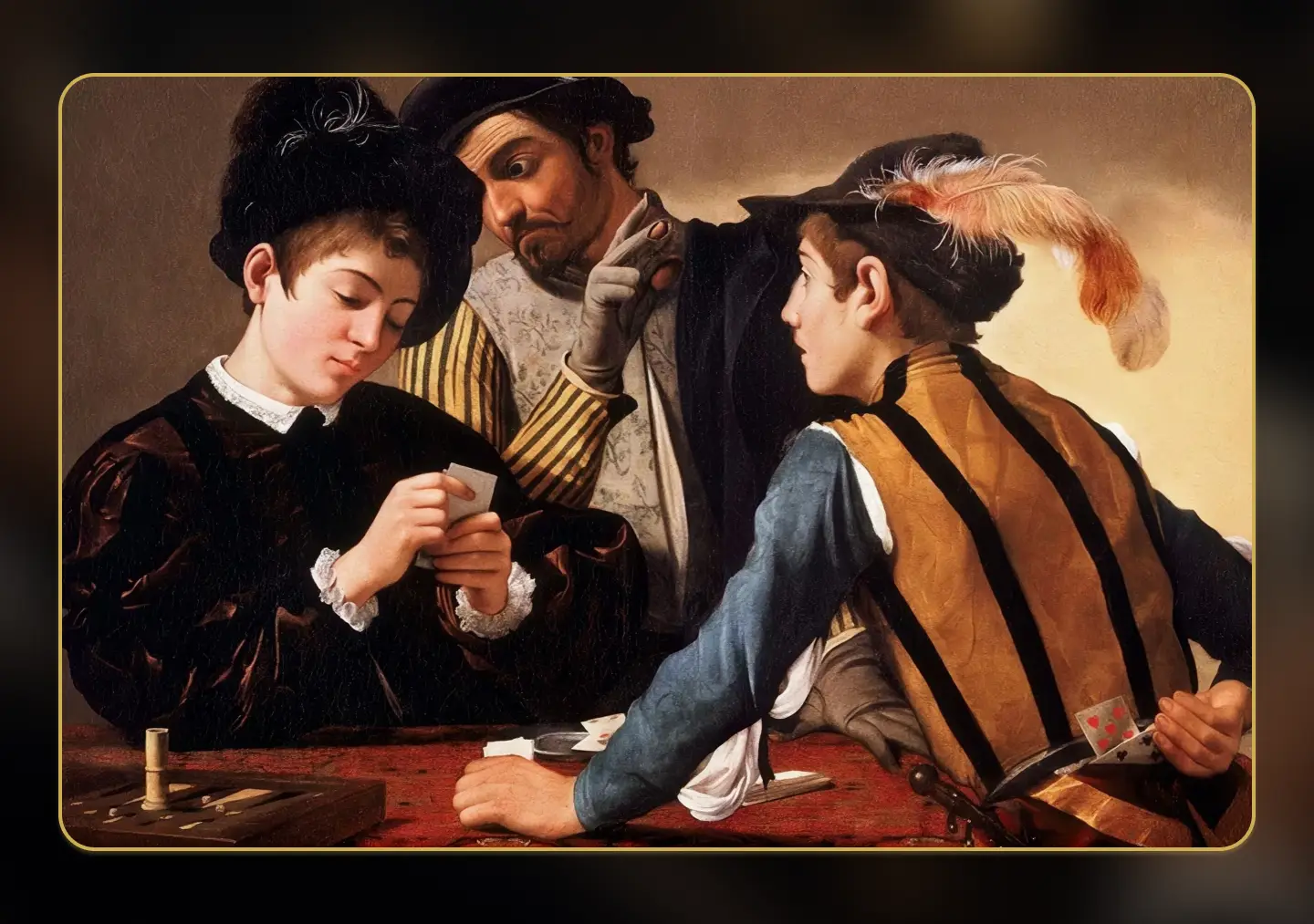
One way to do this was to prepare the cards in advance. The backs of certain cards could be slightly roughened, while the edges of others could be subtly trimmed, allowing the dealer to recognize or distinguish them more easily. An experienced cheat therefore did not necessarily need to see the face of a card to know which card he was handling.
Faro dealing boxes also became an important tool for limiting the dealer's ability to manipulate the deck by hand. Cards were drawn one at a time from the box, making some traditional forms of manipulation more difficult. But this did not eliminate cheating. Before long, the dealing boxes themselves were being manipulated. Some modified boxes could give the dealer information about the next card, while others made it possible to draw two cards at once, changing the sequence of the deck.
Faro therefore became part of a strange cat-and-mouse game: a new safeguard was introduced against one method of cheating, only for cheats to find a weakness in the solution itself. But Faro represented only one part of the gambling fraud of the period. Card sharps used many other methods in different card games, manipulating the cards themselves, the order of the deck, the shuffle and even the deal.
Prepared Cards: How Card Sharps Manipulated the Deck
These methods were not limited to the American West. By the late 19th century, gambling cheats on both sides of the Atlantic were using increasingly sophisticated ways to manipulate cards and games.
In his 1894 book Sharps and Flats, John Nevil Maskelyne (1839–1917), a well-known British magician, illusionist and inventor, described several methods for preparing cards before a game even began.
One of the simplest approaches was to make almost invisible changes to the size of certain cards. Some could be cut slightly narrower or shorter than the others. The difference was difficult for ordinary players to notice, but an experienced cheat could identify the altered cards while handling the deck.
More sophisticated versions included wedge and stripper cards. With wedge cards, one end of the card was slightly wider than the other. If an important card was turned around in the deck, its different orientation allowed the cheat to locate or separate it. Stripper cards were also trimmed so that the edges of selected cards differed slightly from the rest, allowing them to be pulled from the deck with the right technique.
Cutting the cards was not always necessary. Some methods involved treating their surfaces instead. Soap, wax or other substances could make certain cards slide more easily while others would stick slightly more than the rest.
Prepared decks had one obvious disadvantage, however: they had to be prepared in advance and somehow introduced into the game. The most skilled card sharps could go further. An ordinary deck could be enough if they had the sleight of hand needed to manipulate the shuffle and the deal.
False Shuffles, Second Deals and the Art of Sleight of Hand
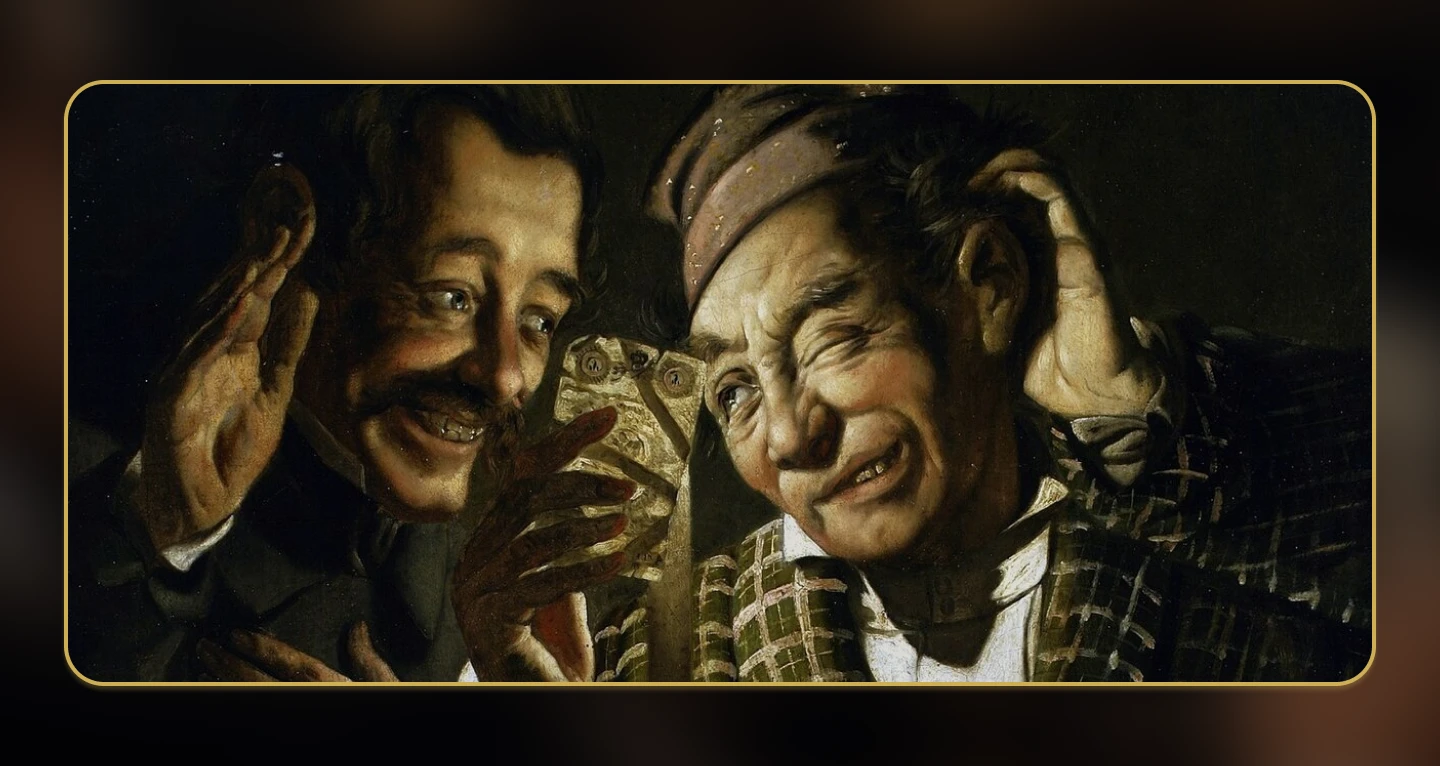
One of the card sharp's most important skills was the ability to change the course of a game through movements that looked completely ordinary to everyone else at the table. A shuffle, cut or deal could appear perfectly legitimate while the order of the deck was not changing in the way the other players believed.
False Shuffles and False Cuts
Techniques such as the false shuffle and false cut were designed to do exactly that. During a false shuffle, the cheat appeared to mix the cards thoroughly while actually preserving the entire order of the deck or a section that mattered to him. A false cut worked on a similar principle: the cut looked legitimate but ultimately left the important cards in the positions the cheat wanted.
Bottom Deals and Second Deals
One of the best-known forms of dealing manipulation was the bottom deal. The dealer appeared to deal the next card from the top of the deck but actually dealt the bottom card instead. If he already knew which card was on the bottom, he could deal it to himself or an accomplice at the right moment.
Another sophisticated technique was the second deal. Here, the dealer appeared to deal the top card but actually dealt the second card underneath it, leaving the top card in place. If the cheat knew the value of that top card, he could decide when to keep it there and when to finally deal it.
These techniques could provide an advantage on their own, but their real power came from combining them. A known card placed in the right position, a false shuffle and a well-timed second or bottom deal could allow a cheat to influence the deal while everything still looked perfectly normal from the other side of the table.
That was one of the professional card sharp's greatest weapons. The goal was not to make a spectacular move, but to make sure nobody realized that anything had happened at all.
Collusion: When Card Sharps Worked Together
Sleight of hand was only one way for a card sharp to gain an advantage. Manipulating a game could become even easier when several cheats worked together. Collusion and the use of accomplices were well-known features of 19th-century gambling fraud. Maskelyne described several methods and cases in which two or more cheats worked together against other players.
Secret Signals and Accomplices
Accomplices could communicate through prearranged signals, pass information about cards or help guide the game in a particular direction. The signals could involve completely ordinary movements: the position of a hand, a movement of the head, the placement of cards or even moving a glass could pass information to an accomplice. A well-developed system could therefore be extremely difficult to detect.
Collusion at the Poker Table
In poker, collusion could take other forms as well. Maskelyne described a method in which two partners could sit on either side of a targeted player and use repeated raises to drive that player and the rest of the table out of the pot. Once only the two accomplices remained, they could control how the hand ended and later divide the money between them.
In other cases, the entire situation could be arranged so that everything appeared natural to the intended victim even though several people were working against him. Maskelyne described one baccarat scheme in which accomplices staged what appeared to be an ongoing game before arranging for the target to take over the bank with a prearranged deck.
This was what made collusion particularly dangerous. Cheating did not have to depend on one suspicious or spectacular move. To the target, everyone at the table could appear to be an ordinary player, while several of them were actually working toward the same goal: making sure the money ended up in the right hands.
The Rise of the Professional Card Sharp
By the late 19th century, the card sharp had become much more than someone who occasionally tried to cheat in a card game. The best understood the games they played, knew how to manipulate cards and deals, learned to hide their movements and could work with accomplices when necessary. Deception was just as important as technique: they had to control the game while allowing their opponents to continue believing they were taking part in a fair contest.
But card sharps represented only one side of 19th-century gambling fraud. Cheating could go beyond the actions of individual players: games, dealing equipment and even gambling establishments could be designed or manipulated to give the house an unfair advantage.
The next article in the series will continue from there, exploring how crooked games, manipulated equipment and rigged gambling houses took gambling fraud to another level before the rise of the modern casino.
The card sharps of the 19th century relied on prepared cards, sleight of hand, false deals and collusion to gain an unfair advantage. The methods may have changed, but protecting the integrity of the game remains just as important in modern poker. Today, online poker rooms use security systems, game monitoring and other safeguards designed to detect suspicious play and protect players. If you want to see how the game has evolved, explore our guide to the best online poker sites.
Resources:
About the Editor

Zsolt is SoMuchPoker’s Content Writer and Interview Specialist, exploring poker beyond the cards and the tables through stories, interviews, profiles, historical pieces and curiosities. He focuses on the people, places and ideas that have shaped the game, while looking at the wider world around poker, how it has evolved, what makes its culture unique, and how the people within it think, compete and make decisions.
