

Crooked Games: How Gambling Was Rigged in the 19th Century

It is the 1880s, somewhere in the American West. Imagine walking into a crowded gambling house and sitting down at a Faro table. The dealer handles the cards with ease, while the people around you look like ordinary players just like you. The cards come from a dealing box, a device that is supposed to make it harder for the dealer to manipulate the deck. But the game may have been crooked long before you placed your first bet. The dealing box could be rigged, the dealer and the casekeeper, whose job was to keep track of the cards already played, could be working together, and the friendly stranger sitting next to you might actually be an accomplice.
In the previous parts of this series, we looked at how gambling became an important part of life on the 19th-century American frontier, and then at the methods used by professional card sharps. But cheating did not end with individual gamblers. There were also games in which a hidden advantage could be built into the equipment or created through cooperation between the people running the table. This takes us to another side of 19th-century gambling fraud: the world of crooked games.
What Was a Crooked Gambling Game?
A crooked gambling game used concealed manipulation—such as rigged equipment, prepared cards or collusion—to give one side an advantage beyond the stated rules. To the unsuspecting player, it could still look like an ordinary game of chance.
By contrast, a “square game” was conducted honestly under its stated rules. The bank could still have a mathematical advantage, known as the house edge, but that advantage did not depend on secretly manipulating the game. The same distinction applies to an online casino: a mathematical advantage built into the rules is different from concealed manipulation.
Other terms also appear in accounts from the period. In Fools of Fortune, John Philip Quinn distinguished between “square” and “brace” gambling houses and also used “skin game” to describe crooked play. The terminology varied, but the distinction between honest play and concealed manipulation was well established.
How Gambling Equipment Was Rigged
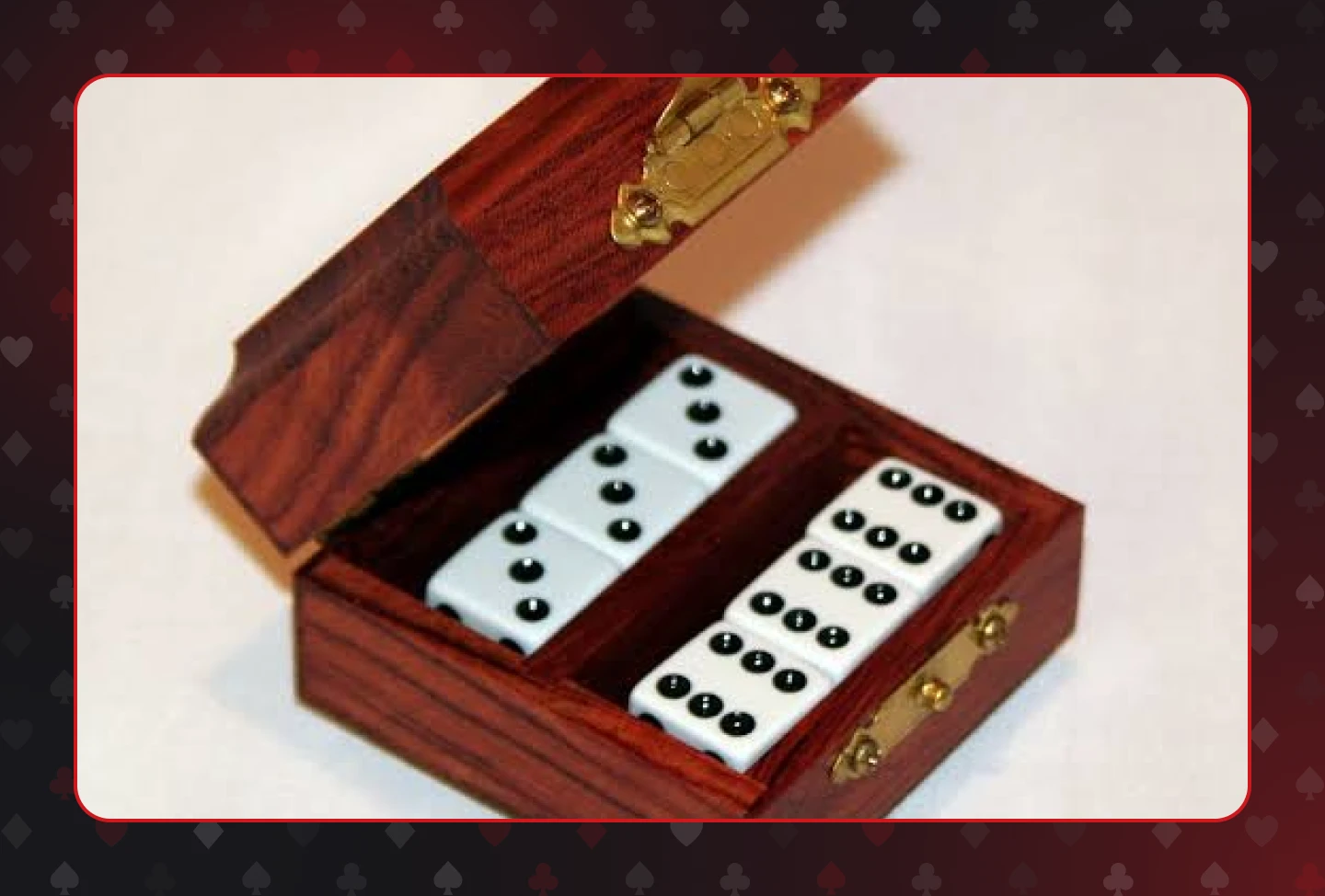
One feature of a crooked game was that cheating did not always require impressive sleight of hand. The manipulation could be built directly into the equipment used to play the game, although operating that equipment discreetly could still require skill.
Rigged Faro Dealing Boxes
This was particularly important in Faro. By using a manipulated dealing box, a dealer could gain access to information that would normally be hidden or influence how the cards came out of the box.
Some boxes, for example, allowed the dealer to withdraw two cards at once while making it appear that only one had been drawn. Used as part of a cheating setup, this could change which cards appeared next and help the dealer manipulate the game.
The record of the cards played could also be compromised. Quinn described cooperation between the dealer and the casekeeper, showing how an apparent safeguard could become part of the deception.
Cards and Faro boxes were only part of this world. The same basic principle could also be applied to dice games.
Loaded Dice and Rigged Dice Boxes
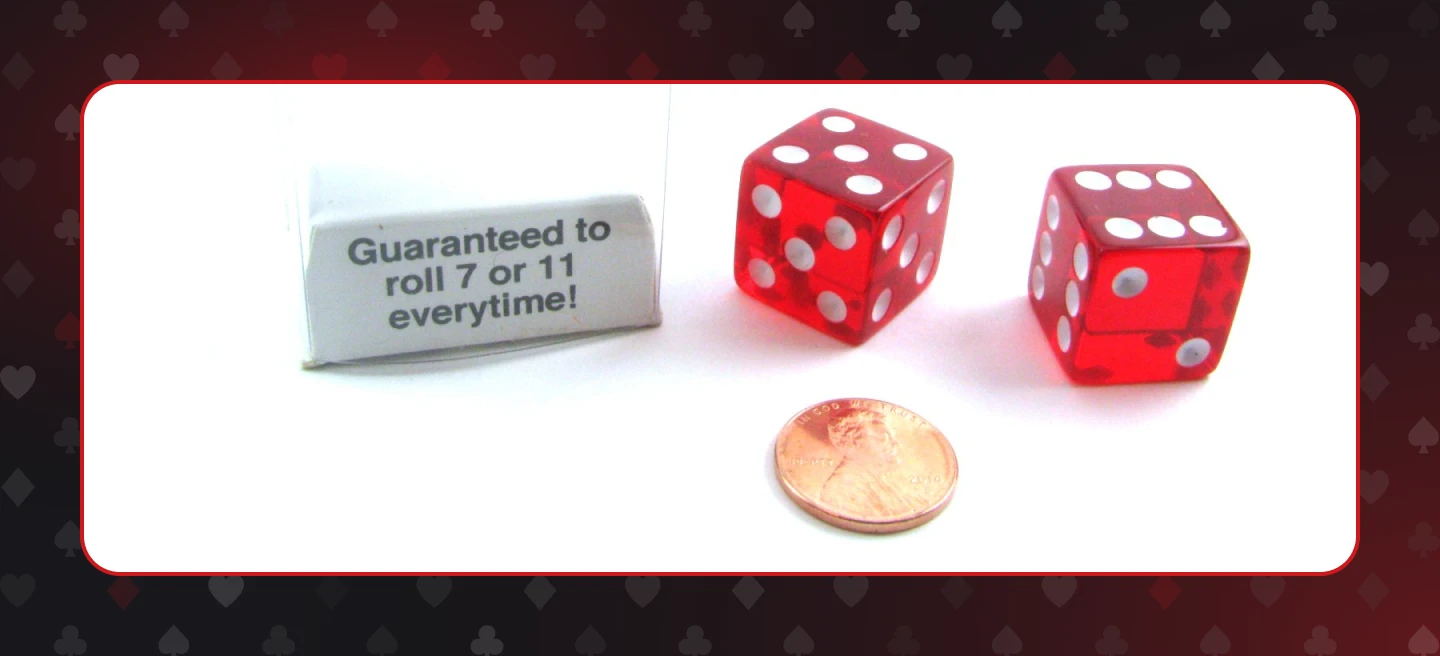
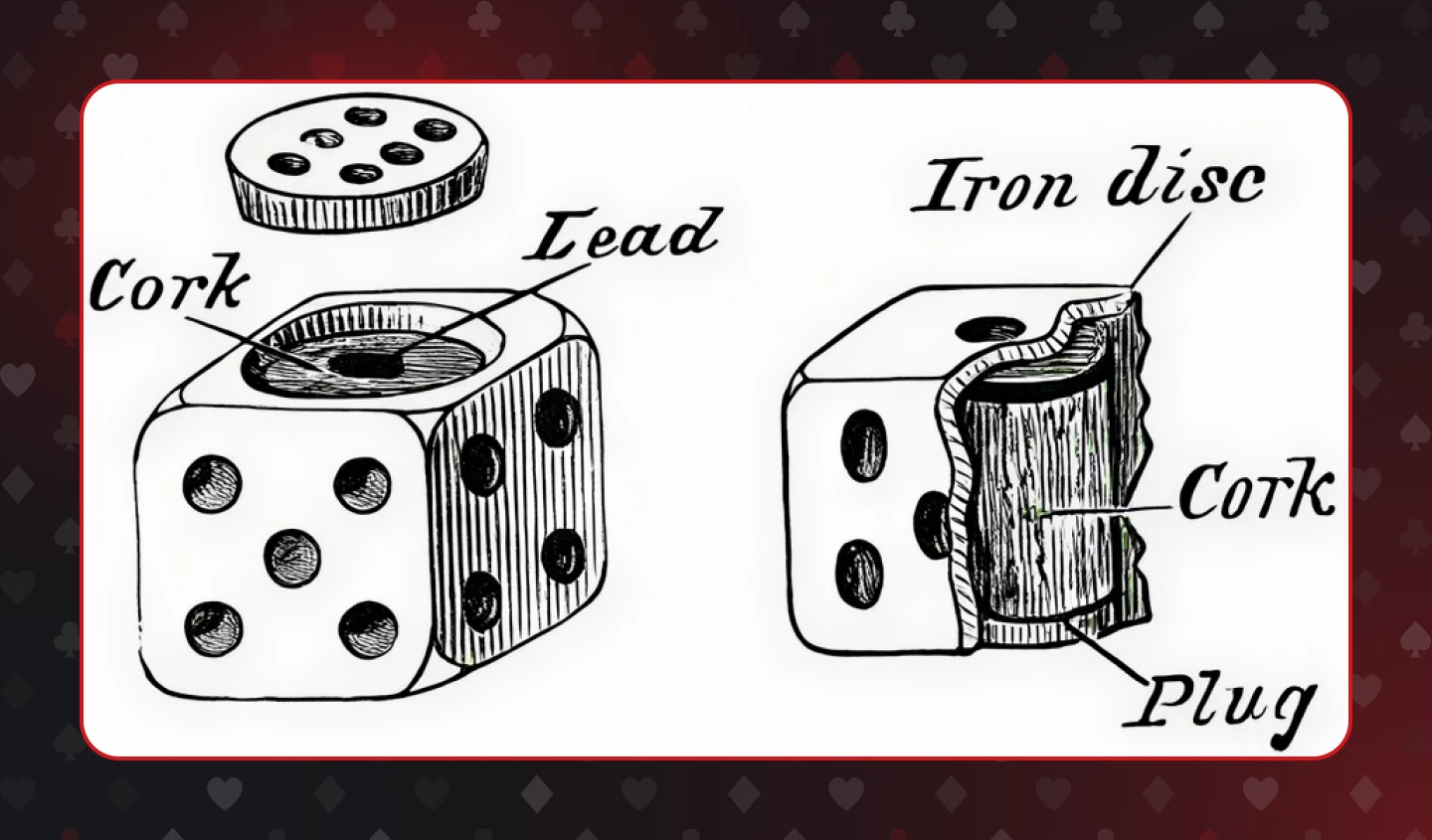
One of the best-known examples was loaded dice. By altering the weight distribution inside a die, certain results could be made more likely than others.
But loaded dice were not the only option. Cheats could substitute false dice for regular ones during a game, or use the dice box itself to help control the result.
One technique involved holding a die against the inside edge of the box while allowing another to move freely. The held die would not tumble with the other and, with careful handling, could be placed on the table in the intended orientation.
John Nevil Maskelyne, a British magician and illusionist, documented many gambling cheats and devices in his 1894 book Sharps and Flats. Describing a technique known as “securing,” used by English dice players, he explained how roughening the inner rim of a dice box helped prevent the held die from slipping.
The roughened edge assisted the trick, but it did not perform it automatically. The operator still needed to handle the box and release the die without revealing what was happening.
Electric Dice Tables
The technology went even further. Maskelyne also described an electric dice table. The system combined specially prepared dice containing iron inserts with electromagnets concealed beneath the playing surface. In Maskelyne’s account, activating the concealed electromagnets influenced how the specially prepared dice came to rest.
To the player, chance still appeared to be deciding the outcome. They saw what they expected to see: dice went into the box and then landed on the table. But the outcome could now be influenced by a concealed mechanism.
The Market for Crooked Gambling Equipment
Perhaps one of the most surprising things about this period is not that such devices existed, but that by the end of the 19th century, a business had developed around them.
Sporting Houses and Advantage Goods
Maskelyne described suppliers known as “sporting-houses,” some of which sold conventional gambling equipment, including cards, dice, Faro tables, and billiard tables. Alongside these legitimate products, they also dealt in equipment designed for cheating, known as “advantage goods.”
A contemporary San Francisco catalogue reproduced in Sharps and Flats gives a remarkable picture of this market. Customers could order loaded dice, rigged Faro boxes, marked cards, and electric dice tables. With dice, buyers could even specify which result they wanted to come up. Alongside ordinary “square” dealing boxes, the catalogue listed several manipulated versions, including combination Faro boxes designed to support multiple methods of cheating.
The catalogue documents what suppliers offered for sale, rather than how frequently each device was used. Even so, it shows that crooked games did not necessarily depend on a single cheat building their own tools. Equipment designed to manipulate gambling could be manufactured, advertised, and purchased. Cheating equipment had become a commercial product.
Why Crooked Games Were So Difficult to Detect
One of the greatest strengths of a crooked game was that, from the outside, it could still look like perfectly normal gambling. It did not have to produce the desired result every single time. A hidden advantage could be used selectively, allowing ordinary wins and losses to help keep the game convincing.
The methods often overlapped. Card sharps could use prepared equipment, while rigged games could still depend on sleight of hand and cooperation between accomplices. Here, however, the focus shifts to games in which concealed devices and organized manipulation could give the cheating side an advantage before the victim even placed a bet.
In the next part, we turn to Joseph Jagger and the story of how he exploited a biased roulette wheel at Monte Carlo, using a flaw in the casino’s equipment to gain an advantage without secretly altering it.
About the Editor

Zsolt is SoMuchPoker’s Content Writer and Interview Specialist, exploring poker beyond the cards and the tables through stories, interviews, profiles, historical pieces and curiosities. He focuses on the people, places and ideas that have shaped the game, while looking at the wider world around poker, how it has evolved, what makes its culture unique, and how the people within it think, compete and make decisions.
Related News
 Stories
The Rise of the Card Sharp: Inside 19th-Century Gambling Cheating
Explore how 19th-century card sharps used marked cards, false shuffles, second deals and collusion to cheat at Faro, poker and other popular gambling games.
 NewsStories
Wild West Gambling: Poker, Faro and the Rise of Cheating
Wild West Gambling: Discover how Faro ruled the saloons, why frontier towns bet on everything, and how card cheating became a profession out West.