Color Up in a Casino? Chip Exchange Explained

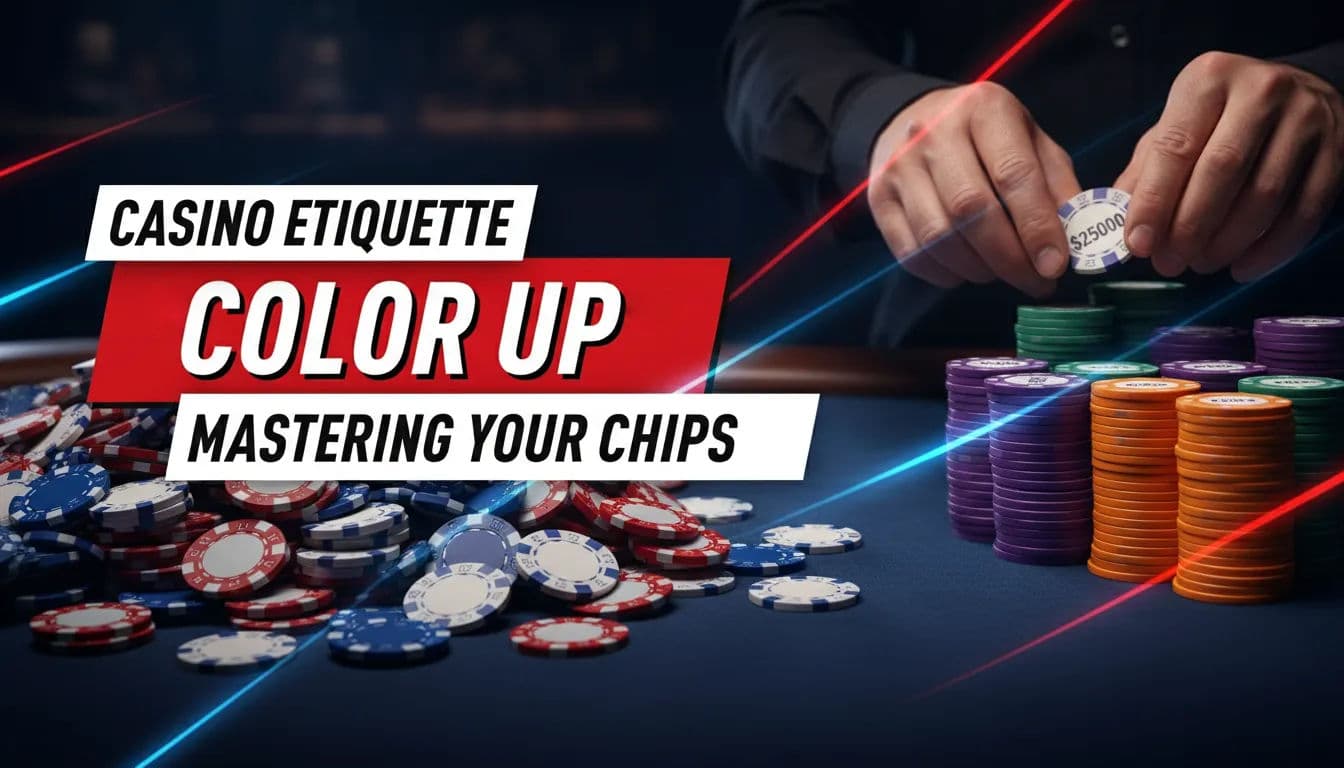
Understanding casino terminology is key to a smooth gaming experience, and knowing when and how to Color Up is a fundamental skill. This term simply refers to the process of exchanging a large number of lower-value casino chips for a smaller number of higher-value chips. It's a crucial part of table game etiquette that makes managing your winnings easier, helps the dealer maintain the table, and is a necessary step before you can head to the cashier's cage.
What Does 'Color Up' Mean in a Casino?
The term Color Up is a standard piece of casino slang you'll hear at table games like blackjack, poker, or roulette. In its simplest form, it means you're asking the dealer to exchange your stacks of small denomination chips for fewer, high denomination chips. For example, if you have twenty $5 chips (a total of $100), you would 'color up' to a single $100 chip. This process is essential for efficient casino chip management and demonstrates good table etiquette.
Interestingly, when you play at a modern online casino, this process happens automatically, as the software constantly updates your virtual balance into a single, easy-to-read total, eliminating the need for manual chip exchanges.
Why Do Players and Casinos Use This System?
Coloring up isn't just for player convenience; it serves several important functions for everyone at the table.
Player Convenience: Managing a huge stack of small chips is cumbersome. Exchanging them for larger chips makes it easier to track your bankroll, place larger bets, and transport your winnings from the table to the cashier.
Table Efficiency: For the dealer, managing a large inventory of chips is part of the job. When players have mountains of small chips, it can clutter the playing area. A casino color up helps the dealer keep their chip tray organized and ensures they have enough lower-value chips for payouts for other players.
Preparing to Cash Out: Before you leave a table, you must color your chips up. The cashier's cage prefers not to handle hundreds of small denomination chips and will often direct you back to the table if you haven't consolidated them first.
How to Color Up: A Step-by-Step Guide
Requesting it is straightforward, but doing it with proper etiquette ensures the game flows smoothly. Follow these simple steps for exchanging casino chips correctly.
Wait for the Right Moment: The most important rule is to never interrupt the game. Wait until the current round of play is completely finished, all bets have been paid, and the dealer is idle.
Stack Your Chips Neatly: Organize your chips into neat stacks of the same denomination, typically in piles of 10 or 20. This allows the dealer to quickly count and verify the total amount.
Make a Clear Request: Get the dealer's attention and clearly say, "Could you color this up, please?" Then, push your stacks forward into the betting area so the dealer can reach them.
Let the Dealer Handle the Exchange: The dealer will count your chips, announce the total, and then provide you with the equivalent value in higher denomination chips. Do not touch the new chips until the dealer pushes them across the table to you.
"Proper chip management, including knowing when to color up, separates experienced players from novices. It shows respect for the dealer, the game, and the other players at the table." - Seasoned Casino Floor Supervisor
Common Mistakes to Avoid When Coloring Up
To avoid looking like a beginner, steer clear of these common errors:
Mistake | Why It's Wrong |
|---|---|
Asking Mid-Hand | Interrupts the game flow and distracts the dealer and other players. It's considered poor table game etiquette. |
Handing Chips Directly to the Dealer | For security reasons, you should never hand anything directly to a dealer. Always place chips on the table. |
Being Messy | Pushing a jumbled pile of chips at the dealer slows everything down. Stacking them neatly is a sign of courtesy. |
What Is the Opposite of Coloring Up?
The opposite of coloring up is known as "coloring down" or getting "change." This is when you exchange a high-value chip for smaller ones, usually to place a specific bet or to tip the dealer. The process is similar: you wait for a lull in the action and slide the large chip forward, asking for "change."
| Pros | Cons |
|---|---|
Carrying a few high-value chips is far easier and more secure than managing a large, conspicuous pile of small-value chips when moving around the casino. | You cannot color up whenever you want. You must wait for a break in the game, which can sometimes be a slight inconvenience if you're in a hurry to leave. |
Having higher denomination chips makes it quicker and simpler to place large bets, which can speed up the pace of play. | New players might feel hesitant or unsure about the correct procedure and timing, causing them to avoid coloring up altogether. |
Properly coloring up shows that you understand casino procedures and respect the dealer's role in managing the table, which contributes to a better atmosphere. |
Related Casino Terms
(The) Cage
Banker
Bonus Hunting/Bonus Whoring
Casino
Chips
Cold Table
Color Up
Column Bet
Comp Points
Credit
Credit Button
Croupier
Dealer
Deposit
Deposit Bonus
Dolly
Down to the Felt
Dozen Bet
Drop Percentage
Eighty-Sixed (86'd)
En Prison
European Roulette
Eye-in-the-Sky
Face
Ficheur
Fifty Cents
Final
Final Schnaps
Fixed Odds
Flash
Flat Betting
Four Corners
Getting Down
Half-a-Dollar
Hardway
High Roller
Hot
Hot Table
House
House Edge
Jackpot
Junket
Keno
Limit
Lock
Longshot
Nosebleed
On
Online Casino
Outside Bet
Overdrawn
Overdue
Payoff
Playthrough Requirement
Postage Stamp
Rail
Re-Bet
Return
Roulette Wheel
Scared Money
Self-Exclusion
Shill
Straight Bet
Street Bet
Toke
Trey
Virgin
Wad
Wager
Wagering Requirement
Whale
Best Online Casinos

Vave
4.6Welcome Bonus150% up to 1.5 BTCCashback BonusVariable- Welcome Bonus
- 150% up to 1.5 BTC
- FTD Bonus
- 150% up to 1.5 BTC
- Cashback Bonus
- Variable
- Extra Bonus
- Free Spins
- Platforms


- Browser Support
- Yes
- Mobile Support
- No
- Crypto Support
- Yes
- License
- Republic of Costa Rica
Game types
 No Blackjack
 Baccarat
 No Bingo
 No Craps & dice
 Crash games
 eSports betting
 Jackpot games
 No Keno
 Live games
 Roulette
 No Scratch cards
 Slots
Slots Sports betting
 No Video poker
Payment methods


LTC Casino
4.4Welcome Bonus250% First Deposit Bonus up to $750Cashback BonusNo Cashback- Welcome Bonus
- 250% First Deposit Bonus up to $750
- FTD Bonus
- 250% up to $750
- Cashback Bonus
- No Cashback
- Platforms
- Browser Support
- Yes
- Mobile Support
- No
- Crypto Support
- Yes
- License
- No License
Game types
BlackjackBaccaratNo BingoNo Craps & diceCrash gamesNo eSports bettingJackpot gamesNo KenoLive gamesRouletteNo Scratch cardsSlotsNo Sports bettingNo Video pokerPayment methods


Jack
4.6Welcome Bonus100 Free Spins + Risk-Free Sports BetCashback BonusUp to 30%- Welcome Bonus
- 100 Free Spins + Risk-Free Sports Bet
- Cashback Bonus
- Up to 30%
- Extra Bonus
- 100 Free Spins
- Platforms
- Browser Support
- Yes
- Mobile Support
- No
- Crypto Support
- Yes
- License
- Curaçao Gaming Control Board
Game types
BlackjackBaccaratNo BingoNo Craps & diceCrash gameseSports bettingJackpot gamesNo KenoLive gamesRouletteScratch cardsSlotsSports bettingNo Video pokerPayment methods


Duel
4.2Welcome Bonus50% Instant RakebackCashback BonusFix 50%- Welcome Bonus
- 50% Instant Rakeback
- Cashback Bonus
- Fix 50%
- Extra Bonus
- 100% RTP Games
- Platforms
- Browser Support
- Yes
- Mobile Support
- No
- Crypto Support
- Yes
- License
- License No. ALSI-202411026-FI1.
Game types
No BlackjackBaccaratBingoCraps & diceCrash gameseSports bettingJackpot gamesNo KenoLive gamesRouletteNo Scratch cardsSlotsSports bettingVideo pokerPayment methods

Stake US
4.6Welcome BonusFree 25 SC + 250K Gold Coins- Welcome Bonus
- Free 25 SC + 250K Gold Coins
- Extra Bonus
- 1 Stake Cash + 10,000 Gold Coins Free - Every Day
- Platforms
- Browser Support
- Yes
- Mobile Support
- No
- Crypto Support
- Yes
- License
- Sweepstakes (US Federal Law)
Game types
BlackjackBaccaratNo BingoCraps & diceCrash gamesNo eSports bettingNo Jackpot gamesNo KenoLive gamesRouletteScratch cardsSlotsNo Sports bettingNo Video pokerPayment methods

Shuffle US
4.7Welcome BonusFree 1 Shuffle Coin + 25,000 GC- Welcome Bonus
- Free 1 Shuffle Coin + 25,000 GC
- Extra Bonus
- Daily Log in Bonus
- Platforms
- Browser Support
- Yes
- Mobile Support
- No
- Crypto Support
- Yes
- License
- Sweepstakes Model — Munyon Canyon Ltd (BVI)
Game types
BlackjackBaccaratNo BingoNo Craps & diceCrash gamesNo eSports bettingNo Jackpot gamesNo KenoLive gamesRouletteNo Scratch cardsSlotsNo Sports bettingNo Video pokerPayment methods