Outside Bet Explained: A Guide to Roulette Betting

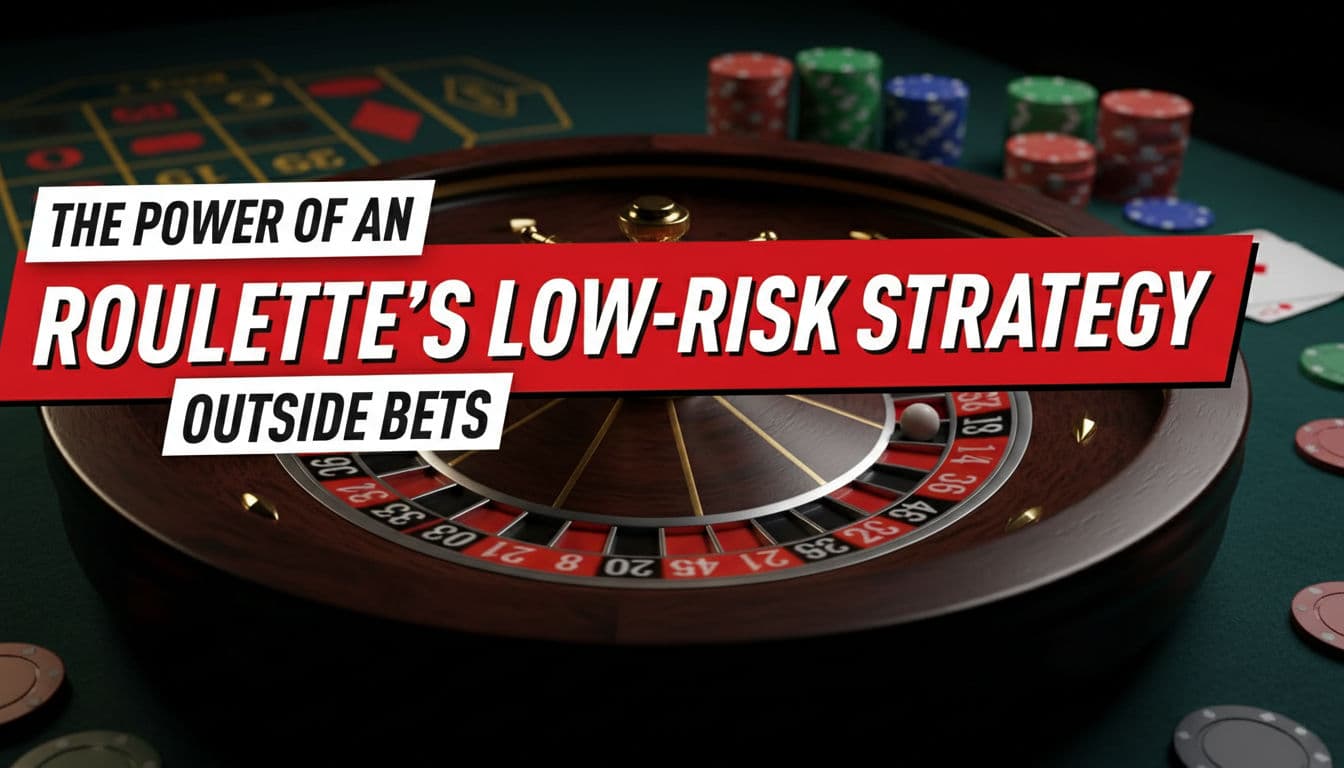
An outside bet in roulette is a popular wager placed on the sections outside the main number grid. These bets, such as Red/Black or Even/Odd, cover large groups of numbers. While they offer lower payouts, typically 1:1 or 2:1, they provide a significantly higher chance of winning, making them a cornerstone for many beginner and conservative roulette betting strategies.
What is an Outside Bet in Roulette?
When you approach a roulette table, the betting layout can seem complex. It's divided into two main areas: the inside, with individual numbers from 0 to 36, and the outside, with boxes for broader categories. An outside bet is any wager placed on these outer boxes. These bets don't target specific numbers but rather properties of the numbers.
For example, you can bet on whether the winning number will be red or black, even or odd. Because these wagers cover nearly half of the possible outcomes (excluding the 0 or 00), they have a much higher probability of winning compared to inside bets. This makes this bet a favorite for newcomers and players who prefer a lower-risk roulette betting strategy. The trade-off is that the payouts are significantly lower.
Whether you are standing at a physical table or browsing a premium online casino, outside bets remain the bread and butter of a balanced gaming session. The digital interface often makes placing these wagers even simpler, providing real-time statistics on 'hot' or 'cold' categories to help you decide. While you won't be retiring on a single 'even' bet win, these options allow you to stay in the action longer and enjoy the rhythmic flow of the wheel without the heart-pounding volatility of hunting for single numbers.
"Outside bets are the bedrock of conservative roulette play. They allow players to enjoy the game longer and manage their bankroll effectively by focusing on high-probability outcomes instead of chasing a single lucky number." - Casino Floor Manager
Contrasting with Inside Bets
The key difference lies in risk and reward. Inside bets (like a straight-up bet on a single number) offer huge payouts, often 35:1, but the chances of winning are very low. These bets are the opposite; they provide frequent, smaller wins that can help sustain your gameplay.
Types of Outside Bets Explained
There are five common types of outside puts you can make. Three of them are known as even money bets because they pay out at 1:1 and cover 18 of the 38 (American) or 37 (European) numbers.
Red or Black (Rouge ou Noir)
This is the most iconic roulette bet. You are simply wagering on the color of the pocket the ball will land in. There are 18 red numbers and 18 black numbers. If the ball lands on 0 or 00 (which are green), this bet loses.
Even or Odd (Pair ou Impair)
Similar to red or black, you are betting on whether the winning number will be even or odd. Again, this covers 18 numbers. The 0 and 00 do not count as either even or odd, so a bet on either loses if the ball lands there.
High or Low (Passe ou Manque)
This bet divides the number grid in half. A low bet (Manque) covers numbers 1-18, while a high bet (Passe) covers numbers 19-36. This is another type of even money bet with a nearly 50% chance of success.
Column Bets (Colonne)
The main number grid is arranged in three vertical columns of 12 numbers each. This bet involves placing a wager on one of these entire columns. This bet does not include the 0 or 00. Because it covers 12 numbers instead of 18, it has a lower chance of winning than the even money bet, but it offers a higher payout of 2:1.
Dozen Bets (Douzaine)
A dozen bet is similar to a column type bet, but it covers a block of 12 consecutive numbers. You can bet on the 1st dozen (1-12), the 2nd dozen (13-24), or the 3rd dozen (25-36). This wager also pays out at 2:1 and does not cover the zero pockets.
Payouts and Probabilities
Understanding the payout and your chances of winning is crucial. Here’s a simple breakdown for a standard European Roulette table (one zero).
Bet Type | Numbers Covered | Payout | Probability of Winning |
|---|---|---|---|
Red/Black | 18 | 1:1 | 48.6% |
Even/Odd | 18 | 1:1 | 48.6% |
High/Low (1-18/19-36) | 18 | 1:1 | 48.6% |
Column Bet | 12 | 2:1 | 32.4% |
Dozen Bet | 12 | 2:1 | 32.4% |
Note: In American Roulette, which has both a 0 and 00, the probabilities are slightly lower, increasing the house edge.
Strategies for Using It
Many popular roulette systems are built around bets on the perimeter of the layout due to their high probability. For instance, the Martingale strategy involves doubling your even-money wager after every loss. While no strategy can guarantee a win, using these broad-coverage options helps manage volatility.
A balanced approach often involves combining different types of even-money or column wagers or using them to supplement a few riskier inside bets. This allows you to stay in the game longer while still having a chance at a larger payout. Ultimately, the best strategy is to set a budget, understand the risks, and play for entertainment.
| Pros | Cons |
|---|---|
Outside bets cover large segments of the wheel (12 or 18 numbers), giving you a much better chance of winning on any given spin compared to inside bets. | The main drawback is the low return. Payouts of 1:1 or 2:1 mean you won't see massive, exciting wins from a single bet. |
The simplicity of bets like Red/Black or Even/Odd makes them very easy for new players to understand and enjoy the game without feeling overwhelmed. | The green 0 (and 00 in American roulette) does not fall into any outside bet category, meaning all outside bets lose if the ball lands there. This is the source of the house edge. |
The lower volatility and frequent small wins help preserve your bankroll, allowing for longer play sessions and more entertainment value. | For players seeking high-octane thrills and the chance for a life-changing payout, the conservative nature of outside betting can feel less engaging. |
Related Casino Terms
(The) Cage
Banker
Bonus Hunting/Bonus Whoring
Casino
Chips
Cold Table
Color Up
Column Bet
Comp Points
Credit
Credit Button
Croupier
Dealer
Deposit
Deposit Bonus
Dozen Bet
Drop Percentage
European Roulette
Face
Ficheur
Final
Fixed Odds
Flash
Flat Betting
Four Corners
Hardway
High Roller
House
House Edge
Jackpot
Keno
Limit
Longshot
Nosebleed
On
Online Casino
Outside Bet
Overdrawn
Overdue
Payoff
Playthrough Requirement
Postage Stamp
Re-Bet
Return
Roulette Wheel
Scared Money
Self-Exclusion
Straight Bet
Street Bet
Virgin
Wager
Wagering Requirement
Best Online Casinos


Flóri Feterik is SoMuchPoker's Poker and Casino Strategy Analyst, writing about poker strategy, MTT dynamics, and casino gameplay across live and online formats. He has played in multiple WSOP events across several trips to Las Vegas, experience that shapes his analysis of poker psychology, table game mechanics, and the wider casino industry, from traditional poker rooms to crypto casino platforms.